http://jfdatalinks.blogspot.ca/search?q=urban+tech:
http://www.streetline.com/blog/5-urban-technology-trends
http://mashable.com/2012/12/26/urban-tech-wish-list/#HtHB1R7ktaqh
http://postscapes.com/journal-of-urban-technology ,
http://www.researchgate.net/journal/1063-0732_Journal_of_Urban_Technology
http://www.urbantech.com
http://jf-databits.blogspot.ca/2015/11/urban-tech.html::
https://www.google.ca/search?q=urban+technology+and+science
Showing posts sorted by relevance for query urban. Sort by date Show all posts
Showing posts sorted by relevance for query urban. Sort by date Show all posts
Monday, November 23, 2015
Monday, October 13, 2025
Majority polled in Calgary and Edmonton are unhappy with the pace of population growth
If you are visiting Vancouver or Victoria from Calgary or Edmonton, you will be shocked as to how narrow most of the bridges are in Greater Vancouver and Victoria. Edmonton was wise in the 1970s to have 125 m long underground LRT stations. Foolish Vancouver opted to only have 80 m stations on its first 2 lines and an absurd 50 m for the 3rd line.
https://en.wikipedia.org/wiki/Green_Line_(Calgary) , https://www.calgary.ca/green-line.html
https://www.calgarytransit.com/plans---projects/lrt/green-line.html
https://engage.calgary.ca/greenline/UndergroundStations Fortunatly, any underground stations in Calgary will be closer in length to that of the Edmonton LRT and not backwards Vancouver.
https://www.railjournal.com/regions/north-america/tunnel-preferred-for-calgary-lrt-green-line/
https://www.calgary.ca/green-line/stations.html
The main roads and bridges in urban parts of Alberta are allowed to be wider than their counterparts in backwards BC. So while people in the urban parts of Alberta are concerned or even angry about rapid growth, at least Alberta can easily build more urban infrastructure. That's because Albertal isn't affect by the (unofficial) BC Mind Virus (BCMV).
A timely example is a new bridge between Surrey & NW. Despite Surrey being expected to become the largest city in BC, the new bridge will only open with 4 lanes. No 3rd or 4th lane each way for busses, HOVs and trucks. Thus, all the road traffic at either end is funneled into just 2 lanes each way. Plus, there are no breakdown or emergency lane, just like the old bridge.
While this new bridge can eventually be widened to 6 lanes, there is no provision for a lower deck for LRT, busses and trucks. Despite SW BC being a seaport area, trucks are funneled onto mostly narrow bridges. There has been a lack of interest to build bus bridges next to almost all of the bridges in Greater Vancouver. Yet, there is a Half-A$$ED attempt to have a better regional express bus network. This regional Rapid Bus attempt will always be a joke, unless a series of bus bridges are built. The Half-A$$ED approach is to try to have bus lanes on 4 to 6 lane bridges. Designating 2 bus lanes would reduce the narrow bridges to only 1 or 2 lanes each way for general traffic in what is suppose to be a major seaport and urban area.
Most of the worlds population is non-white and for a big part of the history of BC, there has been a refusal to build up bigtime infrastructure for everyone. While some Albertains might wish that there was a wall built around their province or a force-field like out of Star Trek, BC is almost pretending like there is. Thus, the keep things small and backwards mentality.
Several decades ago, BC implemented a symbolic slow-growth approach. Despite BC not having any control over immigration, or trying to establish an internal passport & checkpoint system, to KEEP PEOPLE OUT, it opted for the next best thing. Stunt or scale back the urban infrastructure to project a strong symbolic reluctance to growth and thinking big.
When you realize how much larger things are allowed to be in Alberta, Washington State and even Western Australia & compare them to watered down BC, you see quite a difference. Despite BC & Canada in general, being multicultural, BCs cities keep finding ways to water the scale of things down. Canada has yet to have even 1% of the world's population, despite its size.
While there are good arguments to occasionally slowdown immigration, that can eventually become problematic, just like too much immigration. Even in the 2020s, some people in the former White colonial parts of the world still wish that Canada & Australia, etc., could be a White Man's paradise. However, that seems so impractical on a planet that mostly has a non white population.
https://humanrights.ca/story/chinese-head-tax-and-chinese-exclusion-act
https://thecanadianencyclopedia.ca/en/article/chinese-head-tax-in-canada
https://royalalbertamuseum.ca/blog/chinese-head-tax-george-yees-story
https://www.musee-mccord-stewart.ca/en/blog/chinese-exclusion-act/
https://parks.canada.ca/culture/designation/evenement-event/exclusion-chinois-chinese
https://www.canada.ca/en/canadian-heritage/campaigns/asian-heritage-month/important-events.html
https://stanleyparkvan.com/stanley-park-van-monument-komagata-maru.html
https://vancouver.citynews.ca/2022/10/05/vancouver-komagata-maru-memorial
https://vancouver.citynews.ca/2023/01/30/vancouver-komagata-maru-memorial-vandalism/
Even if Alberta were to eventually become its own country, it would be extremely unlikely that it could ever impose a White Man's Paradise Agenda. The same could be stated for backwards BC. However, something very peculiar has been happening in BC for several generations.
Several BC cities and municipalities play off each other with various slow-growth agendas. Vancouver being one of the most restrictive & backwards on the the planet. Somehow the legitimate anti freeway fears of the 1960s & 70s didn't get the city & region to still build a series of bus & HOV bridges. Plus, a long-term, high capacity urban rail system.
While Montreal planned for 152.4 m stations to accomodate 9 car trains, backwards Vancouver only built 80 m Skytrain stations for the first 2 lines. Then to top that, was a plan to build a line to Richmond with only enough level clearance for 50 m stations. The 1st line only started to run 5 car trains in 2025. Eventually, the 2nd line will also have 5 car trains. However, the line to the airport was deliberately designed not to have 5 car trains. Just a Half-A$$ED 2.5 car train, someday. WTH?
For Greater Vancouver to mostly have narrow bridges, one would think the all the stations could ultimately be at least as long as a Montreal Metro train station. Indeed, Greater Vancouver should have built for 10 car trains, but will only have 5 car trains on the 1st two lines & a 2.5 car joke of a train on the 3rd line. As of 2025, the 2nd & 3rd lines are still only running 2 car trains. Such a great way to symbolically show the resistance to eventually link YVR to both of the main BC ferry terminals.
The inadequate 3 lane Lion Bridge still has no bus & HOV tunnels near it. Urban parts of Australia never seemed to have a similar reluctance to build tunnels as does backwards Vancouver. Tunnels for Montreal & Seattle aren't a problem either. At least BC is slated to have a new and improved tunnel by 2030, that's only a couple of generations late.
Oh, if only people would stop moving to BC, especially Vancouver & Victoria. Well, that's not the case, its just that various BC cities want to only build urban infrastructure that is inadequate. Despite the frustrations that some people have in Alberta, at lest wider bridges, longer trains & taller buildings are allowed there. This watering things down in BC approach is symbolically indicative to refuse to properly build for a growing population.
Surrey should have already had at least 1 hospital the size of VGH. At least Surrey like Burnaby, can build up taller in what is still mostly a mountain wilderness province.
BC is a long way from New England & Southern Quebec. The restrictive urban planning measures in Greater Vancouver keep preventing it from becoming a proper big metropolitan area like Greater Boston and Montreal.
Calgary and Edmonton each should have hand an airport+line by now.
https://en.wikipedia.org/wiki/Green_Line_(MBTA) Calgary will have its own version of a Green Line, eventually. https://jfdatalinks.blogspot.com/search?q=Calgary+Green+Line

Friday, June 14, 2024
Urban Density
https://en.wikipedia.org/wiki/Urban_density
https://www.straight.com/city-culture/why-urban-density-is-actually-good-for-us
https://www.cnu.org/publicsquare/2023/04/17/when-density-good-and-when-it-harmful-cities
https://theconversation.com/urban-density-matters-but-what-does-it-mean-58977
"In the 1970s, British Columbia cities adopted policies and processes to resist densification. As Mayor of Vancouver, Sam Sullivan started the EcoDensity Initiative to counter these." https://globalcivic.org/urban-density-urban-bc-vancouver/
Tuesday, December 6, 2016
Atlanta, ever-more-urban-even-and suburbs-becoming-newly-urban
https://wdanielanderson.wordpress.com/2014/12/11/atlanta-ever-more-urban-even-suburbs-becoming-newly-urban/
Urban planning and technology should always be used to improve the urban environment and the overall environment at large.
https://wdanielanderson.wordpress.com/2014/04/07/spring-18-soaring-skyscrapers-sprout-in-midtown/
https://wdanielanderson.wordpress.com/2015/07/09/30-historic-sites-to-save-as-midtown-atlanta-goes-sky-high/
https://wdanielanderson.wordpress.com/2014/04/07/spring-18-soaring-skyscrapers-sprout-in-midtown/
https://wdanielanderson.wordpress.com/2015/07/09/30-historic-sites-to-save-as-midtown-atlanta-goes-sky-high/
Monday, June 19, 2023
Congestive urban planning in backwards BC
Most bridges in Greater Vancouver are so narrow, because there was no provision to have bus and HOV lanes. The+Lion+Bridge+and+The+Iron+Bridge are 2 classic examples of not constructing additional infrastructure to accommodate bus lanes, HOV lanes and especially, rail rapid transit. That's because such improvements would actually go against the congestive urban planning agenda.
https://en.wikipedia.org/wiki/Lacey_V._Murrow_Memorial_Bridge , https://www.historylink.org/file/21298 A narrow 4 lane BC type bridge was upgraded to an 8 lane crossing, plus 2 LRT tracks for WA.
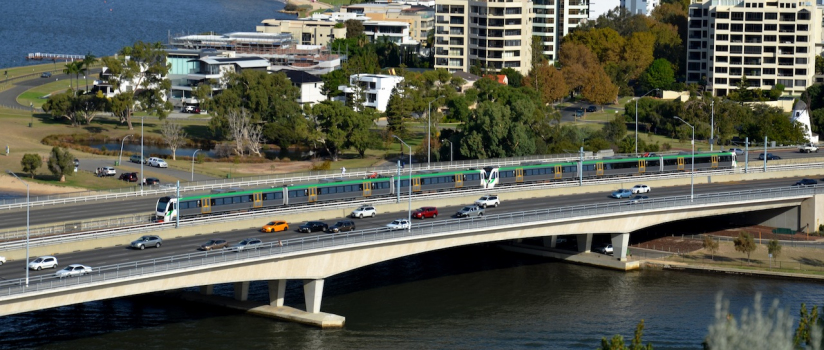
https://en.wikipedia.org/wiki/Narrows_Bridge_(Perth) From a basic bridge to a nice 10 lane crossing with 2 train tracks for WA. https://structurae.net/en/structures/narrows-bridge Its great that the horrible backwards Vancouver mentality never made it to Perth. https://www.abc.net.au/news/2019-11-13/perth-narrows-bridge-60-years-since-construction/11697812 Unfortunately, Vancouver & BC have done their darndest to prevent a similar nice, wide crossing, which also includes 6_car_trains. While backwards Vancouver & BC didn't want to build wider infrastructure simply to accommodate more drivers, the funds didn't seem to go towards a regional rapid bus or at least an express bus & HOV network with its own set of bridges. The SkyTrain should have been designed with a provision to eventually have stations at least as long as those on the Montreal Metro, which can accommodate 9 car trains on a 500 ft platform or 152.5 m. https://heritage.engineersaustralia.org.au/wiki/Place:Constructing_Narrows_Bridges
The old Champlain_Bridge_in Montreal just had 3 lanes each way & no provision for a train. Where as the new Samuel-De_Champlain_Bridge provides 4 lanes each way & has 2 REM train tracks. https://www.samueldechamplainbridge.ca Fortunately, Montreal, like Seattle & Perth was able to have a nice wide bridge with 2 train tracks in the middle. https://en.wikipedia.org/wiki/Samuel-De_Champlain_Bridge#Construction_method
Montreal, Seattle & Perth are allowed to exist on a larger scale than backwards Vancouver, because they don't have the same imposed restrictions. Urban Quebec and urban WA are able to do so much more, because they aren't hindered by anything like the backwards BC mentality.
Risk assessment model of bottlenecks for urban expressways using survival analysis approach https://www.sciencedirect.com/science/article/pii/S235214651730474X
https://jfdatalinks.blogspot.com/search?q=Perth+and+Seattle
Saturday, September 11, 2010
Urban Tech Links (UTL)
Urban+Tech+Links is about what makes (or allows) some cities to be BIG or remain small, or somewhere in between. Perhaps almost every city or town will have its peculiarities, myths or urban_legends & even some synchronicity.
UTL ranges from referencing old & new tech involving urban things, statistics & legends & sci-fi stories that are connected to the fusion of buildings, inventions & technology in general. An integral part of this blog network is exploring architecture & symbolism , coincidence and synchronicity. Some of the coolest sites are, http://ancientx.com , www.history.com/shows/ancient-aliens , www.cyberpunkreview.com , www.technovelgy.com , www.world-mysteries.com , www.wired.com , http://io9.com
https://en.wikipedia.org/wiki/John_Frankenheimer#Film ,
http://en.wikipedia.org/wiki/Jon_Favreau#Filmography
The Face of Serendipity
"The name stems either from Serendip, an old name for Ceylon (modern Sri Lanka), or from Arabic Sarandib, or from Skt. Simhaladvipa which literally translates to "Dwelling-Place-of-Lions Island."
http://en.wikipedia.org/wiki/Serendipity#Etymology,
http://www.etymonline.com/index.php?search=serendipity&searchmode=none
The_Roots & Interpretation_of_Coincidence
The Meaning of Synchronicity
UTL ranges from referencing old & new tech involving urban things, statistics & legends & sci-fi stories that are connected to the fusion of buildings, inventions & technology in general. An integral part of this blog network is exploring architecture & symbolism , coincidence and synchronicity. Some of the coolest sites are, http://ancientx.com , www.history.com/shows/ancient-aliens , www.cyberpunkreview.com , www.technovelgy.com , www.world-mysteries.com , www.wired.com , http://io9.com
https://en.wikipedia.org/wiki/John_Frankenheimer#Film ,
http://en.wikipedia.org/wiki/Jon_Favreau#Filmography
The Face of Serendipity
"The name stems either from Serendip, an old name for Ceylon (modern Sri Lanka), or from Arabic Sarandib, or from Skt. Simhaladvipa which literally translates to "Dwelling-Place-of-Lions Island."
http://en.wikipedia.org/wiki/Serendipity#Etymology,
http://www.etymonline.com/index.php?search=serendipity&searchmode=none
The_Roots & Interpretation_of_Coincidence
The Meaning of Synchronicity
Example:
Friday, September 15, 2023
The Spookiest Urban Legends from the USA
https://www.rd.com/list/scary-urban-legends/
Urban_legends can be in the most modern cities and buildings to the oldest cities from-around-the-world.
https://www.insider.com/urban-legends-us-2018-1
https://www.topuniversities.com/blog/5-creepy-university-urban-legends
Top 20 Scariest Urban Legends https://www.youtube.com/watch?v=sTJPtl9hjdY
Tuesday, March 31, 2009
Urban Tech Links .:. UTL
UTL - Personal observations of the urban world from a backwards Vancouver and backwater BC perspective. Indeed, it's always amazing to see what so many other cities can do, simply because they don't have anything like a Vancouver, Victoria & BC mentality to hold them back.
_(20897376415).jpg/640px-Flight_from_Honolulu_to_Hilo._Over_Sand_Island_and_Honolulu_(503729)_(20897376415).jpg)

Honolulu and
Perth, WA are in such nice climate zones. They are a couple of the most isolated major cities on the planet.
In some ways, Australia has been able to surpass Canada, despite it having a smaller land area & less population than Canada. Unlike Montreal & especially Vancouver, Perth & especially Melbourne, Sydney & Brisbane, have allowed several taller buildings than what is allowed in Montreal & Vancouver.
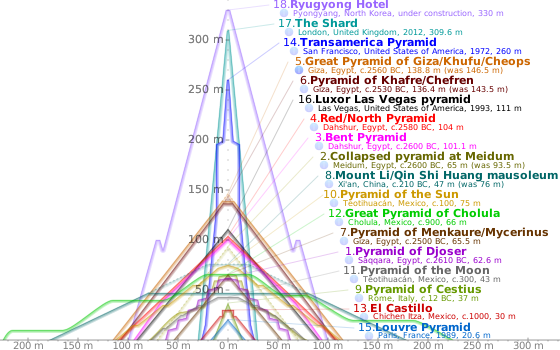
However, Honolulu's_tallest_buildings still haven't been permitted to even be as tall as the 2 tallest in the Giza_pyramid_complex in Cairo, Egypt.
Urban Tech Links is a basic blog about referencing tall buildings & urban technology in various cities in general. Thus, it's mostly just a list of various urban and tech links. It's also about comparing various cities & infrastructure.
Some cities like to have narrow bridges, short trains & small buildings, like Vancouver, while many others cities reach for the sky.
There is a point when a lot of major cities start to permit buildings to be taller than the 2 tallest pyramids in Egypt. https://en.wikipedia.org/wiki/Egyptian_pyramids
Paris & London, NYC & Chicago, Tokyo & Seoul...
The BC part of Canada has tried to keep its infrastructure as small as possible for as long as possible.
It wasn't until the 1970s when strict & stubborn Vancouver started to allow for some buildings to be almost as tall as the 2 tallest Egyptian pyramids. https://skyscraperpage.com/diagrams/?searchID=105524651&offset=50
1973 Royal_Centre_(Vancouver) not quite as tall as .:.
1977 Harbour_Centre not counting the flagpole, its still shorter than the original height of the tallest Egyptian pyramid.
2001 One_Wall_Centre, not including its spire, was the first building in Vancouver & BC to be taller than the tallest pyramid in Egypt.
For most of Vancouver's history, the city refused to permit any building to be taller than the pyramid on top of the 496' Custom_House_Tower in Boston, the 462' Smith_Tower in Seattle, the 453' Los_Angeles_City_Hall. Of course today they are all just like stumps. 481' and 471' are the original heights of the 2 tallest in the Giza_pyramid_complex.


"Initially standing at 146.6 metres (481 feet), the Great Pyramid was the world's tallest human-made structure for more than 3,800 years. Over time, most of the smooth white limestone casing was removed, which lowered the pyramid's height to the current 138.5 metres (454.4 ft)"
 {The origin of Al-Qahirah is said to come from the appearance of the planet Mars during the foundation of the City of Cairo. The planet Mars, which in Greek was called Ares, was associated with ruin or destruction and was called Al Najm Al Qahir in Arabic. Al Najm Al Qahir is transliterated as "the destroyer star [planet]".} http://en.wikipedia.org/wiki/Cairo#Etymology
| Height | Original: 146.6 m (481 ft) or 280 cubits Current: 138.5 m (454 ft) |
|---|
| Height | Currently: 136.4 metres (448 ft) Original: 143.5 m (471 ft; 274 cu) |
|---|
"The 1997 study noted that the opportunities for buildings significantly exceeding existing permitted heights were limited. There were a total of five sites where buildings exceeding the 450 foot height limit are possible and two sites in the northwest corner of the Central Business District where heights up to 400 feet (exceeding the 300 foot limit) could be considered." https://council.vancouver.ca/20030515/pe2.htm
Indeed, it's tough to believe that for the longest time, any building in the BC part of Canada had to be considerably shorter than the Washington_Monument in DC or the Philadelphia_City_Hall.
Then Vancouver wouldn't permit any building to be as tall as the Cairo_Tower.
https://en.wikipedia.org/wiki/Cairo_Tower "At 187 m (614 ft), it was the tallest structure in Egypt for 37 years until 1998..."
2016 was when a Hotel-Condo was allowed to be slightly taller than the Cairo-Tower.
The Cairo_Flagpole is the world's tallest flagpole, at 201.952 m (662 ft 7 in) tall. No building in Vancouver is allowed to be as tall.
The Living_Shangri-La tower is close, but not quite.
Of course Vancouver, BC & even Canada can't stop Egypt from building big & tall.
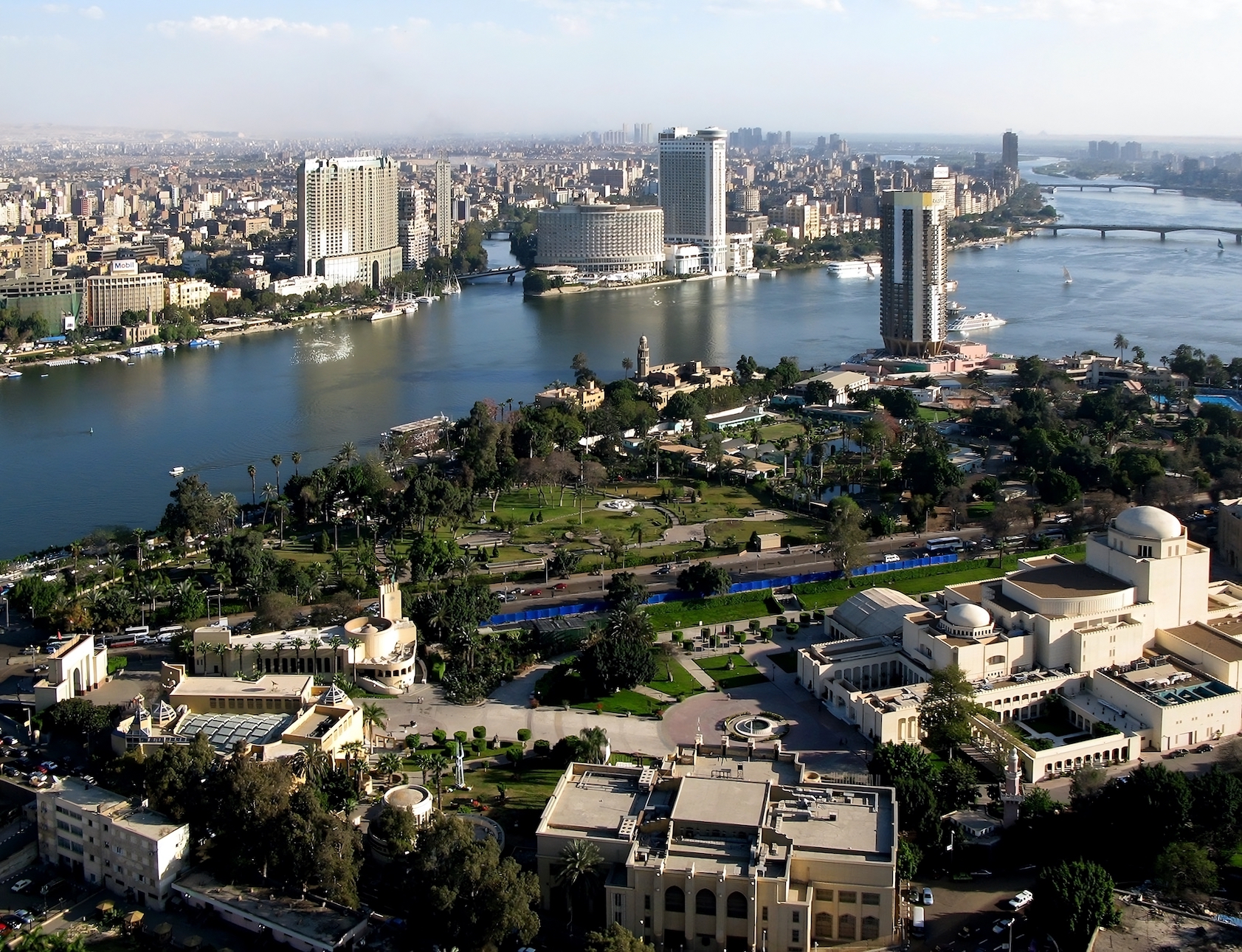
https://www.atlasobscura.com/places/the-cairo-washington-dc Washinton, DC made sure that going into the 20th century, it was going to have mostly low rise buildings like Paris & London or Berlin. However, the Greater Paris Region would eventually allow some tall buildings in certain areas. London even moreso. Yet, Greater London & Metropolitan Paris, certainly have allowed some tall buildings.
Vancouver has been under a multigenerational set of restrictions as well as a small thinking & planning agenda. Part of this might be attributed to a backwater BC mentality. However, some parts of Greater Vancouver are allowed to build on a grander scale.
Edmonton, Seattle, Portland & eventually Calgary will all have underground train stations longer than what's in Vancouver. Yet, Vancouver could have really benefited from having proper big city long stations. Most of the regions bridges are so narrow that its difficult to have a proper bus lane & HOV lane system. But Vancouver & BC are all about inefficiency. Things might eventually improve if enough people someday start to see the growing gap between what most cities allow vs. stubborn Vancouver.
https://metropolisfilm.fandom.com/wiki/Joh_Frederson
Alphaville is one of the best cautionary stories about the AI run, totalitarian smart-city scenario.
THX_1138 is the quintessential movie about AI & machines running an underground totalitarian city. https://en.wikipedia.org/wiki/THX_1138#Plot
Logan's_Run is another interesting totalitarian smart-city movie.
Blade_Runner is one of the best urban Sci-Fi movies ever made.
https://en.wikipedia.org/wiki/Blade_Runner#Plot
http://www.city-data.com/forum/religion-spirituality/845605-humans-originate-mars.html,
http://www.bibliotecapleyades.net/marte/esp_marte_14.htm,
http://mars-earth.com/earthpage.htm
http://fusionanomaly.net/orion.html, http://fusionanomaly.net/bladerunner.html,
http://vigilantcitizen.com/hidden-knowledge/connection-between-sirius-and-human-history
More about, UDL: https://jfdatalinks.blogspot.com/search?q=urban
https://www.polygon.com/gaming/2012/9/11/3318910/nasa-scientist-believes-we-could-all-be-in-a-video-game
 Civilization_(computer_game)
This reference blog is of a non profit nature.
Jacque_Fresco is one of many people throughout history with their own perspectives on civilization. https://www.forbes.com/2007/10/13/jacque-fresco-prediction-tech-future07-cx_1015fresco.html?sh=4107813c607f Some interesting ideas, but perhaps with a utopian angle.
http://www.city-data.com/forum/religion-spirituality/845605-humans-originate-mars.html,
http://www.bibliotecapleyades.net/marte/esp_marte_14.htm,
http://mars-earth.com/earthpage.htm
http://fusionanomaly.net/orion.html, http://fusionanomaly.net/bladerunner.html,
http://vigilantcitizen.com/hidden-knowledge/connection-between-sirius-and-human-history
More about, UDL: https://jfdatalinks.blogspot.com/search?q=urban
https://www.polygon.com/gaming/2012/9/11/3318910/nasa-scientist-believes-we-could-all-be-in-a-video-game
 Civilization_(computer_game)


http://www.mindmined.com/public_library/nonfiction/jake_horsley_gnosticism_reborn.html ,
http://hplusmagazine.com/2009/10/19/ghost-shell-why-our-brains-will-never-live-matrix ,
http://hplusmagazine.com/2009/10/19/ghost-shell-why-our-brains-will-never-live-matrix ,
The Universe seems to be a vast Multi-channel of space & time that originated from a central point of energy. But what or who started this Big_Bang of cosmic information? Its like a cosmic projection program running inside an immense planetarium. The energy of nature or part of a creators plan. Thus either nature or a conscious creator has set up a cosmic matrix of space & time. Humans are just beginning to try to understand how an intelligent force of creation set this all up. Computer models factor into the study of reality & VR helps to illustrate different phases & parts of the universe.

http://sciencenews.org/view/generic/id/34497/title/Building_The_Matrix,
http://www.wired.co.uk/news/archive/2012-10/11/universe-computer-simulation,
http://www.popsci.com/technology/article/2012-10/how-do-we-know-were-not-living-inside-massive-computer-simulation,
http://www.newscientist.com/article/mg21628950.300-the-idea-we-live-in-a-simulation-isnt-science-fiction.html
http://www.wired.co.uk/news/archive/2012-10/11/universe-computer-simulation,
http://www.popsci.com/technology/article/2012-10/how-do-we-know-were-not-living-inside-massive-computer-simulation,
http://www.newscientist.com/article/mg21628950.300-the-idea-we-live-in-a-simulation-isnt-science-fiction.html
-
http://en.wikipedia.org/wiki/Simulated_reality#Intermingled , Simcity, the Sims & more...
http://io9.com/5950543/physicists-say-there-may-be-a-way-to-prove-that-we-live-in-a-computer-simulation
http://io9.com/5950543/physicists-say-there-may-be-a-way-to-prove-that-we-live-in-a-computer-simulation
-
http://www.dailymail.co.uk/sciencetech/article-2216189/Do-live-Matrix-researchers-say-way-prove-do.html ,
http://www.extremetech.com/extreme/143180-probing-the-matrix-is-our-universe-simulated-and-if-so-by-who
http://thedigitallabyrinth.blogspot.ca/2012/03/cosmic-computer-hypothesis.html
Computer modeling provides the best way to extrapolate copious amounts of data.
http://www.extremetech.com/extreme/143180-probing-the-matrix-is-our-universe-simulated-and-if-so-by-who
http://thedigitallabyrinth.blogspot.ca/2012/03/cosmic-computer-hypothesis.html
Computer modeling provides the best way to extrapolate copious amounts of data.
The Hundredth_monkey_effect isn't supposed to be true, but in backwards Vancouver & backwater BC, it does seem to be happening. https://en.wikipedia.org/wiki/Hundredth_monkey_effect#History
Almost everything in Vancouver is like a watered down knockoff. So many people from different backgrounds keep wanting to hold Vancouver back. The NO FUN CITY mentality keeps emerging, but that's just part of the phenomenon.
This reference blog is of a non profit nature.
Tuesday, June 30, 2026
The 15-30 minute city concept
https://en.wikipedia.org/wiki/15-minute_city
https://www.sciencedirect.com/science/article/pii/S2590198222000641
Ideally, if most things are within 15 minutes, that's great.
https://unfccc.int/news/the-15-minute-city
Even in the case of urban sprawl, a lot of things can be built within 15-30 minute town centers.
https://policyoptions.irpp.org/2024/10/15-minute-cities-canada
No matter how big a city or urban region is, 15-30 minute town centers can be built, but it can require a lot of work.
https://www.planetizen.com/news/2022/07/117975-could-la-be-15-minute-city
However, sometimes people still have to get across town for various reasons.
https://medium.com/sybarite/escape-to-a-15-minute-city-ce3707baf145 While its not impossible, to even establish 30 minute urban focal points in Greater L.A. can be challenging. If a person living in L.A. is within 15 minutes of walking or biking, or a bus or train trip from the stores and other services, that's great. However, a lot of people are still a 30-60 minute drive away from work & other places to get to. Thus, a 1 hour+ city is still unavoidable in some cases.
https://www.reddit.com/r/Urbanism/comments/1gtlylo/what_city_is_californias_best_option_for_a/
Monday, July 4, 2011
Friday, August 28, 2020
Tuesday, May 2, 2017
Is Tsawwassen Mills is one of Metro Vancouver's worst urban planning mistakes?
http://dailyhive.com/vancouver/tsawwassen-mills-worst-urban-planning-metro-vancouver
Instead of having a train between the ferry terminal, the mall and YVR, Delta remains underserved by public transit, as well as inadequate roads. Had there been better urban transportation planning, Tsawwassen+Mills could have been an easy stop in-between the Delta ferry terminal and Richmond and the airport (YVR).
Greater Vancouver & BC continually opt for under capacity transportation choices. It's like there has been an unofficial, multi decade agenda to encourage congestive planning. Fortunately, most urban regions around the world refuse to follow the backwards BC approach to things.
Wednesday, January 29, 2025
Surrey city centre and its future downtown skyline
https://dailyhive.com/vancouver/surrey-city-centre-future-skyline-downtown
Having been forced to live in Cloverdale as a teenager, I would never want to live in Surrey again. However, whenever Surrey can become the biggest city in BC, then Langley & Delta will all become part of a nice urban area of well over a million people south of the Fraser River.
However, without the necessary urban infrastructure, it will just become another half-assed BC endeavor.
Even if most of the farmland can remain protected, huge farm conglomerates could eventually buy up all of the smaller farms from families that could use the extra cash. Then the farm & food conglomerates can have more leverage to do what they want with the land. Thus, the ALR should have had a provision to help keep the farms as a family business.
Urban densification can easily evolve around the farmland. The Metropolitan Vancouver Region is surrounded by mountains, forests, farmland & water. But that didn't stop Montreal & Seattle from becoming proper big urban areas.
Tuesday, March 31, 2009
Why is the urban scale of Vancouver, Canada being held back?
There has been a tremendous push to stunt or thwart the scale of Vancouver for generations.
https://skyscraperpage.com/cities/?buildingID=921 The Empire Landmark Hotel was the first building in Vancouver to be permitted to reach or exceed 40 floors in 1973. https://skyscraperpage.com/diagrams/?searchID=111091599&offset=50
https://skyscraperpage.com/cities/?buildingID=20415 Yacht Harbor Tower I (1972) 40 floors https://skyscraperpage.com/diagrams/?cityID=421&searchname=timeline Honolulu
While on the surface a no freeway mandate makes sense for not carving up the city, but the mostly narrow bridges don't have proper bus and HOV lanes.
This is a general URBAN referencing blog that is not intended to be used for spam purposes.
UTL:
Cities, people & things in general, all become part of a vast database.
https://en.wikipedia.org/wiki/Statistics#History_of_statistical_science
Essentially any technology, idea & concept becomes part of the global data-pool.
Cities, people & things in general, all become part of a vast database.
https://en.wikipedia.org/wiki/Statistics#History_of_statistical_science
Essentially any technology, idea & concept becomes part of the global data-pool.
Saturday, May 9, 2026
Golf courses and LARGE AI data server facilities
https://www.reddit.com/r/nanaimo/comments/1t6spq5/about_that/
While the BC part of Canada is notoriously heavy on various restrictions and especially reducing the scale of things, golf courses and AI server farms might be in a special category. As land in urban areas continue to rise, several urban golf courses could be repurposed for housing or parks. Thus, golf courses might be better suited to be farther away from urban areas.
An AI_data_center can be problematic if its too close to an urban area. However, if its even out in the wilderness, an AI_data_center can cause environmental damage and other problems. https://en.wikipedia.org/wiki/AI_data_center#Environmental_footprint
https://en.wikipedia.org/wiki/Opposition_to_AI_data_centers
https://en.wikipedia.org/wiki/AI_data_center#AI_data_centers_in_space
Saturday, June 19, 2021
Cities & Urban Tech Data
Urban Tech Data https://jf-databits.blogspot.com/search?q=Urban+Tech+Data ::
https://jfdatalinks.blogspot.com/search?q=city
https://en.wikipedia.org/wiki/List_of_largest_cities#List
https://en.wikipedia.org/wiki/Urban_area
https://www.weforum.org/agenda/2021/06/8-cities-rewilding-their-urban-spaces
Thursday, March 10, 2022
Sunday, June 28, 2015
Wednesday, November 3, 2021
Sunday, June 28, 2026
The urban-heat-island-effect
https://climateatlas.ca/urban-heat-island-effect
As several places get hot for the summer, Vancouver is usually stuck with a truncated summer season.
https://www.accuweather.com/en/ca/vancouver/v6c/june-weather/53286 Vancouver only got to have 2 days in June that were at least 30C.
https://mynasadata.larc.nasa.gov/basic-page/urban-heat-islands
Subscribe to:
Posts (Atom)