Showing posts sorted by date for query Cambie Bridge. Sort by relevance Show all posts

Wednesday, February 25, 2026

Vancouver council boosts budget for roads, sidewalks by $70M

More than 60 per cent of Vancouver’s arterial roads, local streets considered in fair to very poor condition https://www.biv.com/news/economy-law-politics/not-sexy-but-fundamental-vancouver-council-boosts-budget-for-roads-sidewalks-by-70m-11921125 

The cities roads and streets are so inadequate, but Vancouver isn't allowed to become a proper big city.

The decision to not carve up small Vancouver with freeways between the 1950s and 1970s was a wise and novel idea at the time. However, there wasn't any proper foresight over the past several generations to make sure that the cities mostly narrow bridges didn't become bottleneck-chokepoints. 

By now, every bridge should have had a bus and HOV bridge built next to it. Instead, 2 lanes were removed from the Burrard Bridge, 1 lane from the Cambie Bridge and 2 from the Granville Bridge. 

Conveniently, no bike bridges were ever built next to those bridges. Apparently, what was disguised as a cost saving measure by not building proper bike-bridges, the decision was made to remove traffic lanes from some bridges. This all seems to be part of the bottleneck planning mentality. 

It's amazing how several cities around the world are able to build bike-bridges, simply because they aren't under anything like the backwards Vancouver planning agenda. 

Saturday, January 31, 2026

Why Greater Toronto Has Several Skylines

 https://www.youtube.com/watch?v=eI9WJa9Q8dA 

Of course many large urban areas around the world have more than 1 or 2 skylines or tower clusters. 

For the longest time, no building in Vancouver or BC, was allowed to be as tall as the 1930s CIBC tower, which is now a stump.

https://www.blogto.com/city/2017/05/toronto-lost-observation-deck-commerce-court-north/

https://www.torontojourney416.com/canadian-bank-of-commerce-building/ 

https://www.25king.ca/the-history 

It wasn't until the early 1970s when stumpy, Vancouver allowed a building to be taller than the L.A. City Hall, or the Smith Tower in Seattle. 

The 1930s CIBC tower, the L.A. City Hall and the Smith Tower, would still be prominent towers in Vancouver, but stumps in their own cities. 

Despite Vancouver being divided by an inlet and a river, the city wasn't able to build a huge wall along Boundary Road. Thus, the KEEP THEM OUT agenda was a little thwarted. The various White city councils tried to do the next best thing. That was to symbolically impose various restrictions as a reluctance to think, plan and build on a BIG city scale. The time especially from 1960 to 2000 had predominantly White City Hall and its councils continually impose several overlapping restrictions. 

Since Vancouver can't control immigration or the movements of non-white people, keeping things small and backwards, means that less people will move there than to Toronto, Montreal, Calgary and Edmonton. However, with a mild winter climate, more and more people want to move to backwards BC, especially small-minded Vancouver and provincial Victoria. 

In spite of immigration and Multiculturalism, Vancouver was to perpetually promote its small scale agenda. 

While the first Skytrain line can finally run 5 car trains, the stations weren't designed to become long enough to eventually accomodate 9 car trains like the big city Montreal Metro has. 

The 2nd and 3rd Skytrain lines are still only running 2 car joke trains. Running 8-10 car trains is what a proper big city would do, but not backwards Vancouver. 

Narrow bridges provides strong symbolism of the cities narrow-mindedness. When bridges are too narrow, its difficult to have a proper express or rapid bus system. The reluctance to build parallel bus and HOV bridges helps to maintain the congestive planning approach that is vancouver and the Greater Region. 

Vancouver's refusal to build parallel bike bridges has meant that 2 lanes were removed from the Burrard Bridge, 1 lane from the Cambie Bridge and 2 lanes from the Granville Bridge. 

Keeping buildings symbolically short when compared to what scenic Sydney, Auckland, SF and Seattle allow, also helps to maintain Vancouver's reluctance to enter the big and tall urban scale. In fact, the scenic setting that Vancouver is in has been used as the main excuse to continually scale the city down. Yet, several scenic cities around the world are either able to have wider bridges, wider roads, longer trains or taller buildings. 

The world is mostly composed of non-white people. Canada has less than 1% of the world's population and stubborn Vancouver symbolically remains as a small provincial backwater on the Pacific Rim. 

https://centralparktower.com.au Unlike Perth, Vancouver forbids 50 story office towers and Brisbane, Sydney and Melbourne size residential towers. 

https://en.wikipedia.org/wiki/108_St_Georges_Terrace In fact, no office building in Vancouver has been permitted to have a 40th floor. However, since Burnaby and Surrey aren't under the restrictive controls of Vancouver, they will eventually allow office towers over 40 stories. 

Despite Australia having less people than Canada, Perth is allowed to have taller buildings, wider bridges and longer trains than Vancouver. Taller buildings, wider bridges and longer trains are even less likely in Halifax than whats in Brisbane or Queensland.

https://en.wikipedia.org/wiki/Q1_(building) To see buildings on a similar scale of what Brisbane allows, one has to get to Greater Toronto. Brisbane is allowed to have some buildings that would even be impressive in Melbourne and Sydney. 

While Montreal is allowed to have taller buildings than Vancouver, Montreal isn't allowed to have Sydney size towers. Especially not on the scale of what Melbourne and Toronto permit. 

Monday, December 29, 2025

No fireworks in downtown Vancouver for New Year's Eve or the rest of 2026

 https://dailyhive.com/vancouver/vancouver-fireworks-2026-new-years-eve-nye 

While Vancouver hasn't been able to get most other cities across Canada and around the world to stop, ban or cancel their NY Eve fireworks, strange Vancouver will retain this part of its NO FUN CITY mentality and agenda. 

https://www.vancouverisawesome.com/local-news/fireworks-banned-halloween-vancouver-fire-department-9726922 Why just ban them in October and January, when you can ban them throughout the year? 

https://www.ehnewspaper.ca/articles/third-year-of-vancouvers-fireworks-ban

For some strange reason, backwards Vancouver hasn't been able to get other cities around the world to adopt the same bizarre idiosyncrasies.  

Officially, there isn't supposed to be a Vancouver+Mind+Virus, but the backwards city is so stunted and strange. Other cities in a scenic setting such as SydneyAucklandSan_Francisco and Seattle are able to have wider bridges in or close to their city centers. 

Despite warm and scenic Honolulu having some very short bridges, they are still wider than what extremely restrictive Vancouver allows. These two short bridges in Honolulu provide 4 lanes each way. Thus, they form an 8 lane crossing and they aren't even part of a freeway.  

There is also a very short 6 lane bridge in Honolulu. In addition to its 6 lanes, there is a turning lane and a one lane wide median, which makes it equivalent to being 8 lanes wide. Plus, there are 2 wide sidewalks, which are wider than the original sidewalks on the Granville Bridge in Vancouver. In other words, no bridge in Vancouver is allowed to be as wide as it. Despite regional population growth, the Granville Bridge was reduced from 8 lanes to 6 lanes. 

Considering how Vancouver has such a narrow road system, one would think that a regional network of bus and bike bridges would be essential. Of course the backwards city and greater urban region is too cheap to fund such infrastructure and rather opted for a congestive transportation approach.

In contrast, The+Helix+Bridge in Singapore is fine example of what backwards Vancouver refuses to build. No lanes had to be removed from the 6 lane Bayfront+Bridge or the 10 lane Benjamin+Sheares+Bridge. Stubborn Vancouver could really benefit from something like the Helix Bridge. 

While Vancouver went backwards after Expo 86, Brisbane really took of after Expo 88. The Kangaroo_Point_Green_BridgeGoodwill_BridgeKurilpa_BridgeJack_Pesch_Bridge and the Go_Between_Bridge are all great examples of what strange Vancouver refuses to build. What's really amazing from a backwater Vancouver perspective is that those bike and foot bridges in Brisbane never required any lanes to be removed from the cities road bridges. 

In comparison, Vancouver removed 2 lanes from the Burrard Bridge, 1 lane from the Cambie Bridge and 2 lanes from the Granville Bridge. If urban planning in Vancouver was wise and the city never got rid of its trams or streetcars, perhaps something like the Tilikum_Crossing could have been built across False_Creek.


https://jfdatalinks.blogspot.com/search?q=fireworks

Tuesday, October 14, 2025

Granville Bridge, Vancouver, etc.

 https://vancouver.ca/streets-transportation/granville-bridge.aspx 

Even after 3 tries, Vancouver still couldn't quite get the Granville_Street_Bridge correct. Of course the 3rd bridge wasn't designed to have a lower deck for streetcars or tram-trains. Even though it was generally designed to be a car, truck and bus bridge, the sidewalks should have been double width and have an inner railing. If the city couldn't wait until late March, it should have had the official dedication in early March, not in crappy February 1954.

https://en.wikipedia.org/wiki/Granville_Street_Bridge#Third_bridge_(1954) "On February 4, 1954, the current Granville Street Bridge opened to traffic after five years of planning and construction; its dedication ceremony was attended by 5,000 spectators after it had been delayed a week due to heavy snow." 

https://en.wikipedia.org/wiki/Granville_Street_Bridge#21st_century Unfortunatly, new bike lanes and extra sidewalks couldn't be installed below the 8 lane deck. Thus, Vancouver went for strike 3 and removed 2 lanes from the bridge. The Burrard+Street+Bridge lost 2 lanes and the Cambie+Bridge lost 1 lane. A bike and foot bridge could have been built on the west side of the Burrard Bridge, then no lanes would have been removed. The Cambie Bridge already had a wide sidewalk on its east side. The west sidewalk should have been widened, then no lane would have been removed. 

The Granville+Bridge could have had 6 lanes and 2 bus lanes. Now, if there are ever 2 bus lanes, there will only be 2 general lanes each way.

Several cities around the world have bike & foot bridges and don't have to remove lanes from the existing bridges.

For a congested city to have removed 5 lanes from 3 bridges, could there even be more of a reduction of lanes Well, there are some who would like to have the LGB just for bike and foot traffic.

https://globalnews.ca/news/1946543/government-says-lions-gate-bridge-will-not-close-to-cars-come-2030 

That would be OK if an 8 lane tunnel could be built near it. As its projected, the new & improved tunnel between Richmond & Delta won't be ready unto 2030. Since things move so slow in constipated, backwater BC, a First_Narrows_Tunnel might not be completed until 2040.

Sunday, April 20, 2025

The Oak Street-Granville Street Corridor

 https://en.wikipedia.org/wiki/Oak_Street_(Vancouver) , https://www.youtube.com/watch?v=kXbUb7TMj6k

The Oak+Street-Granville+Street+Corridor are both 6 lanes wide for most of their lengths. Thus, this is mostly a 12 lane street corridor and is much less disruptive than if a 10-12 lane freeway had been pushed through in the 1950s or 60s.

https://en.wikipedia.org/wiki/Granville_Street , https://storeys.com/vancouver-granville-street-entertainment-district-history-renewal-planning-program

The yellow line is set for 3 lanes each way. However, if it was moved over 1 or 2 lanes, then there could be 4 or 5 main lanes one way & 1 or 2 lanes the other way. 

The Oak+Street+Bridge+and+Granville+Street+Bridge are still part of an incomplete corridor.

An improved 8 lane Granville+Street+Bridge with double-width sidewalks could have still worked, if there had also been a wide bike & foot bridge built next to it. Then, a roughly new paralel bridge next to the 4 lane Oak+Street+Bridge could have allowed for an 8 lane crossing there. Four lanes of Granville_Street southbound over the Fraser River and 4 lanes of Oak_Street northbound.

Unfortunatly 2 lanes were removed from the Burrard+Street+Bridge (BSB), 2 lanes removed from the Granville+Street+Bridge (GSB) and 1 lane from the Cambie+Street+Bridge (CSB). That didn't have to happen if a bike bridge was built next to the BSB and the GSB. While the east side of the Cambie-Street-Bridge has a nice, wide sidewalk, there wasn't enough foresight to also have a wide sidewalk on its west side. However, that narrow sidewalk could still be built out to be nice & wide so that the CSB can be restored to 6 lanes. 

When a city & metropolitan region mostly has narrow bridges, removing lanes or not having enough is utterly foolish! Case in point... https://www.pattullobridgereplacement.ca Instead of 2 bus & 2 HOV lanes, everything will be initially funneled into just 2 lanes each way. https://www.pattullobridgereplacement.ca/about/projectoverview Two nice sidewalks & 2 nice bike lanes, but no emergency lanes or bus lanes, right from the start. Its another classic BC bottleneck in the making. Since the SkyTrain doesn't run on a 24hr basis, 24hr bus lanes are essential, but that would go against the congestive planning methodology that is backwards BC.


https://jfdatalinks.blogspot.com/search?q=Oak+Street+and+Granville+Street

Thursday, April 3, 2025

The 5 or 6 lane Cambie Bridge

Unfortunatly, backwards Vancouver planning didn't allow for 2 very wide sidewalks on the Cambie_Bridge.

https://vancouver.ca/streets-transportation/cambie-street-bridge-upgrades.aspx

While the current bridge is a great improvement from the previous Cambie_Bridge, there still wasn't enough interest or motivation to really have an adequate bridge. A 5 lane bridge with only 1 wide sidewalk is too half-assed. Due to Vancouver's inability to properly plan & build for the future, the once 6 lane Cambie_Bridge only has 5 lanes & still has a narrow sidewalk on its west side. 

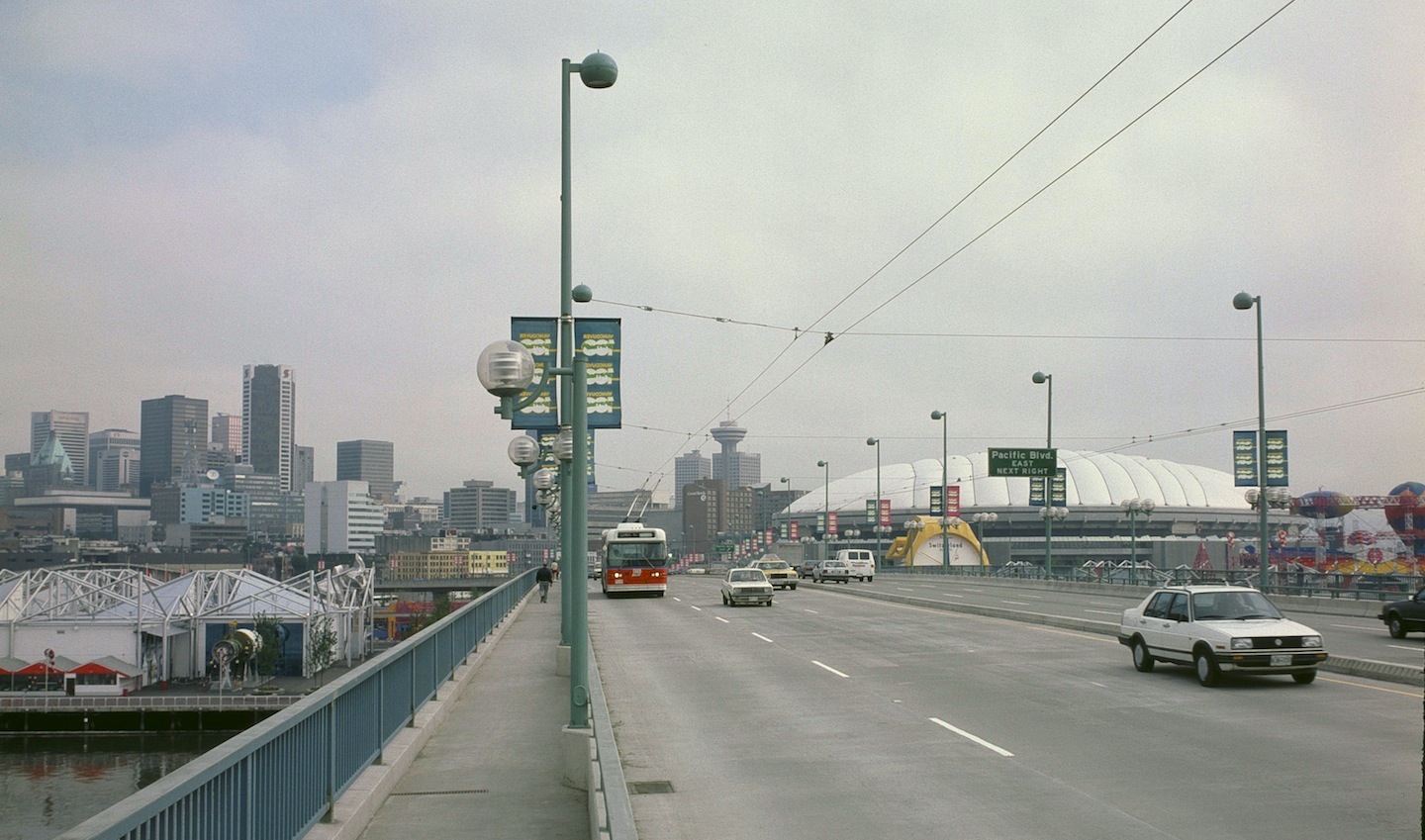
https://upload.wikimedia.org/wikipedia/commons/f/fd/Cambie_Br_in_1986%2C_street-level_view.jpg
If this western sidewalk can ever be built out to be much wider, then the bridge could have 2 proper bike lanes, as well as 2 sidewalks. Then the bridge might have all 6 lanes again. A 6 lane bridge would make it easier to accomodate 2 bus lanes. 


https://jfdatalinks.blogspot.com/search?q=Cambie+Street+Bridge

Sunday, January 19, 2025

Vancouver city council to hear recommendations for funding Cambie Street Bridge upgrade

 https://vancouver.citynews.ca/2025/01/18/vancouver-city-council-cambie-street-bridge-funding/

The Cambie-Street-Bridge should have been designed with very wide sidewalks so that a bike path & a walkway were on each side. Then, no lanes would have been removed, as was the case with the Burrard Street Bridge. Unfortunatly, there wasn't any concept to have wide sidewalks on the 1950s Granville Street Bridge, so now 2 lanes are removed, just like on the Burrard Bridge.


https://jfdatalinks.blogspot.com/search?q=Cambie+Street+Bridge

Monday, January 13, 2025

Cambie Street and Bridge

 https://vancouver.ca/streets-transportation/cambie-street-bridge-upgrades.aspx

https://en.wikipedia.org/wiki/Cambie_Bridge#The_present_bridge

Such utter foolishness to not have wide sidewalks on both sides to accommodate bike lanes. Then the bridge wouldn't have been reduced from 6 to 5 lanes.


https://jfdatalinks.blogspot.com/search?q=Cambie+Street+Bridge

The Erasmus Bridge (1996)

 https://en.wikipedia.org/wiki/Erasmusbrug

It carries 2 tramway tracks, 4 traffic lanes, 2 cycle tracks & 2 sidewalks. It's such a nice wide bridge.

https://en.wikipedia.org/wiki/Erasmusbrug#Design

https://en.wikipedia.org/wiki/Erasmusbrug#Gallery

https://structurae.net/en/structures/erasmus-bridge

The Tilikum+Crossing is an equally well designed bridge. Unfortunatly, such good multimodal bridges don't seem to be allowed in BC. 

If only the Cambie+Bridge and The+North+Arm+Bridge could have been built to a similar standard...

Unfortunatly, Vancouver & BC seems to be afraid to build bridges of a similar quality to the Erasmus Bridge.


https://jfdatalinks.blogspot.com/search?q=Cambie+Street+Bridge

Friday, January 10, 2025

Calgary’s drives, roads, streets and trails

 https://canada.constructconnect.com/joc/news/infrastructure/2025/01/strategy-funding-desperately-needed-to-tackle-calgarys-deteriorating-roads

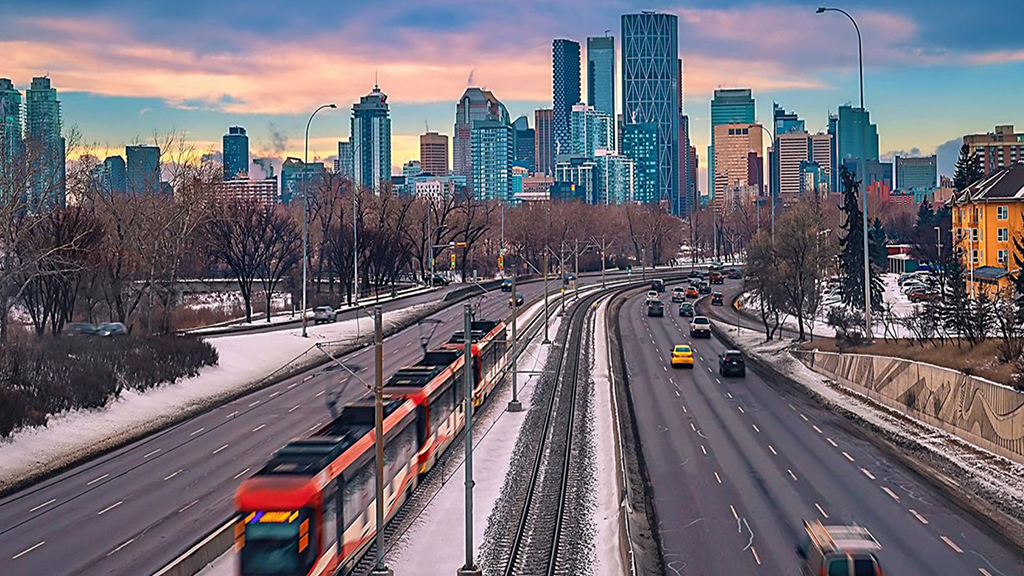
https://upload.wikimedia.org/wikipedia/commons/0/0f/Memorial-Drive1-Szmurlo.jpg , https://en.wikipedia.org/wiki/Memorial_Drive_(Calgary) , https://www.alamy.com/stock-photo-city-of-calgary-skyline-from-memorial-drive-st-georges-bridge-lrt-30350186.html , https://www.flickr.com/photos/davebloggs007/12160068335
The C-Train is essentially a modern LRT, tram-train or an interurban connection to various parts of the city.

https://www.reddit.com/r/Calgary/comments/bkevpf/memorial_drive_year_1900 Wow, one waggon road each way back then. If it were possible in the 2020s, Vancouver would like to go back to one waggon road each way.

https://cc-production-uploads-bucket.s3.amazonaws.com/uploads/2025/01/Calgary-courtesy-of-City-of-CalgaryMainWEB.png This is what Cambie Street in Vancouver could have become. Especially, since the Canada embarrassment Line was only designed to have 2.5 car trains. At least there should be an express bus line along Cambie. Eventually, there still might have to be an LRT line just south of the Cambie+Street+Bridge to Richmond. It would have been better to just build the Canada embarrassment Line to eventually handle a 5, 7 & 9 car train, not a 2.5 car joke of a train. 

Sarcastically...

At least no one from Vancouver has been able to convince Winnipeg to reduce Portage_and_Main to 4 lanes or even just 2 waggon roads in width.

https://upload.wikimedia.org/wikipedia/commons/f/f1/Portage_and_Main_as_seen_from_Portage_Ave_Eastbound.JPG Wow, 5 lanes in 1 direction is very tough to find in Vancouver. Being from Vancouver, its difficult to comprehend how so many cities around the world have such wide streets & boulavards.

https://winnipeg.citynews.ca/2023/04/25/public-insight-sought-on-future-of-winnipegs-portage-and-main This would have been such a great concept.


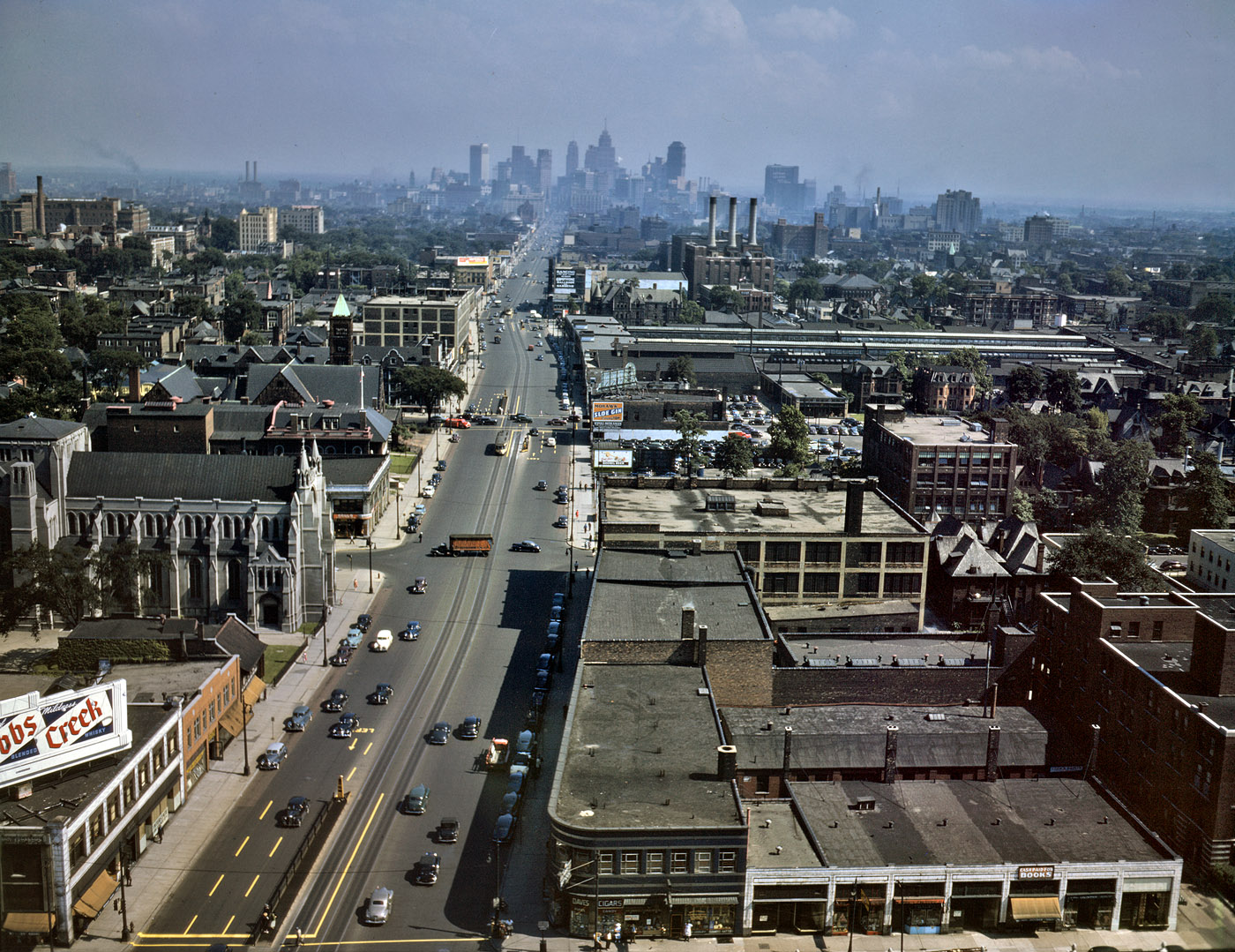
Woodward_Ave._Detroit was intended to be wide since the 1800's. It went from being a waggon road to becoming M-1_(Michigan_highway).

Market_Street_in_San_Francisco was easily 8 lanes wide, back in the day. Market_Street has wide sidewalks. https://en.wikipedia.org/wiki/Market_Street_(San_Francisco)#Traffic_changes Of course wide streets allow for the potential to be a multi-modal transportation corridor. 


https://en.wikipedia.org/wiki/Arc_de_Triomphe

https://upload.wikimedia.org/wikipedia/commons/thumb/9/99/Paris_-_Orthophotographie_-_2018_-_Place_Charles-de-Gaulle_02.jpg/480px-Paris_-_Orthophotographie_-_2018_-_Place_Charles-de-Gaulle_02.jpg 

So far, Vancouver hasn't sent a delegation to Paris advising that The Avenue des Champs-Élysées should be turned into a width of only 2 or 4 waggon roads. 

https://upload.wikimedia.org/wikipedia/commons/6/6d/Avenue_des_Champs-%C3%89lys%C3%A9es_July_24%2C_2009_N1.jpg Several wide streets around the world were done in the horse & waggon era. Thus, wide streets weren't for cars & trucks, they were part of a symbolic bustling city.

https://www.google.com/maps/place/Arc+de+Triomphe/@48.8734815,2.2946175,544m/data=!3m1!1e3!4m6!3m5!1s0x47e66fec70fb1d8f:0xd9b5676e112e643d!8m2!3d48.8737917!4d2.2950275!16zL20vMHp2Xw!5m1!1e2?entry=ttu&g_ep=EgoyMDI1MDExMC4wIKXMDSoASAFQAw%3D%3D

Thursday, January 2, 2025

Canada's population and its lacking infrastructure

https://www150.statcan.gc.ca/n1/pub/71-607-x/71-607-x2018005-eng.htm

Despite being the 2nd largest nation in overall area, Canada is far off from housing just 1% of the world's population. 

https://www.canada.ca/en/immigration-refugees-citizenship/corporate/mandate/corporate-initiatives/levels/population-growth-2014-2027.html 

There aren't enough big cities in the vastness of Canada.

It's strange that Halifax hasn't become a big city like Boston or Montreal. Since the 2020s, a lot more people work from home and there isn't always an industrial base in major urban areas. More people are retiring and like people working from home, might like living in a town of 1000-10,000 people just as easily as a city with over a 1,000,000 people. The point being, that the top 30 towns in Canada could be built up to at least a million people each. Winnipeg has yet to have a million people. Then the top 10 cities could be built up to 5-10 population regions. Greater Montreal has yet to reach the 5 million point and the Greater Toronto Area has yet to reach 10 million people like Greater Chicago or, CHICAGOLAND. The San_Francisco_Bay_Area is getting close to having 10 million people.

https://en.wikipedia.org/wiki/List_of_the_largest_municipalities_in_Canada_by_population Vancouver is only the 8th most populated city.

https://en.wikipedia.org/wiki/List_of_census_metropolitan_areas_and_agglomerations_in_Canada#List However, the Greater Vancouver Region is still the 3rd largest urban area in Canada. Yet, it's so far behind with the necessary infrastructure. Indeed, When Greater Toronto & Greater Montreal each exceeded the 3 million point, they had longer trains & wider roads. It seems that Vancouver & BC in general, have perpetually opted for a congestive planning approach.

Will Canada's Next Prime Minister be Pierre Poilievre? https://www.youtube.com/watch?v=Dck8eZCpglc

Why is anti-immigration sentiment on the rise in Canada? https://www.youtube.com/watch?v=txyjmNXcWiU

https://www.norden.org/en/information/population-nordic-region

https://www.nordicstatistics.org/news/population-growth-in-the-nordics Whether its Canada or the Nordic_Countries, places with cold winters can accommodate a lot of people. However, without setting up the proper amount of infrastructure first, its utterly foolish.

Canada hasn't kept up with building enough school & hospital facilities, as well as the overall necessary  infrastructure. 

https://www.definitivehc.com/resources/healthcare-insights/top-largest-canadian-hospitals

https://en.wikipedia.org/wiki/Hamilton_General_Hospital

https://en.wikipedia.org/wiki/Foothills_Medical_Centre

https://en.wikipedia.org/wiki/Vancouver_Hospital_and_Health_Sciences_Centre#Facilities

https://en.wikipedia.org/wiki/St._Paul's_Hospital_(Vancouver) , https://helpstpauls.com/why-give/new-st-pauls-hospital

https://www.infrastructurebc.com/projects/announced-in-procurement/richmond-hospital-redevelopment-project-phase-2-3

https://en.wikipedia.org/wiki/Fraser_Health#Regional_hospitals 

https://en.wikipedia.org/wiki/Surrey_Memorial_Hospital

https://en.wikipedia.org/wiki/Royal_Columbian_Hospital 

https://www.infrastructurebc.com/projects/projects-under-construction/burnaby-hospital-phase-2-and-bc-cancer-centre-project/


Unlike the Montreal Metro which can accommodate 9 car trains, the strained Skytrain is only running 4 new-car trains & the inept Canada Line only runs 2 car trains. The Skytrain stations should have been designed to gradually accomodate 8-10 car trains. The Montreal Metro was built with 500 foot long or 152.5m stations right from the start. Apparently, to save money, the first 2 Skytrain lines only have 80m stations & the line to Richmond only has 50m stations, not 152.5m like Montreal. 

The inadequate new Pattullo-Bridge was designed to be so narrow that there won't be any emergency lanes. There won't be any bus lanes, even though the Skytrain doesn't run 24 hours. There won't be any truck lanes, despite the region being a major port. Thus, everything is supposed to be funneled into just 2 lanes each way. https://www.pattullobridgereplacement.ca/about/projectoverview Apparently, the bridge can eventually be upgraded, but to only 3 lanes each way. Of course there is no provision for a lower train & truck deck. This is another fine example of backward BC planning. Even if small-thinking NW only wanted 2 lanes each way for cars, there still should have been an extra 2 lanes each way so that there is a dedicated bus lane & a truck lane each way. 

2 lanes were removed from the Burrard Bridge, 1 removed from the Cambie Bridge & 2 lanes removed from the Granville Bridge. Many other cities can actually build bike bridges so they don't have to take away any traffic lanes from their bridges. 

Even the new Highway-99-Tunnel is designed to become just another BC bottleneck. There will only be 3 lanes each way & a bus-lane each way. However, there won't be any truck lanes & no emergency lanes. https://www.highway99tunnel.ca/project-overview-frt Of course there won't be any provision for a train tunnel, because the government doesn't see a good reason to connect the Delta ferry terminal with Richmond & the airport. They never bothered to have a train from Horseshoe Bay to Park Royal & downtown Vancouver either.

So while the Federal Government charges a carbon tax, Greater Vancouver is left with short trains & mostly narrow bridges. It's utterly foolish to not properly upgrade the infrastructure & build a lot of affordable housing, yet encourage a bunch of people to move into a country that hasn't kept up with building more housing stock. I thought that some of the carbon tax would help to properly upgrade the BC infrastructure, because backward BC just can't seem to even catch up to what Calgary & Seattle have. The trains in Montreal, Toronto, Edmonton, Calgary & Seattle are all longer than the short Skytrains. Yet, there is more demand in Vancouver to have longer trains, due to the narrow roads & bridges. Frequent short trains arent enough, there has to be proper big city long trains. 


Friday, November 29, 2024

Cambie Street Bridge repairs choke traffic out of downtown Vancouver

 https://dailyhive.com/vancouver/cambie-bridge-repairs-choke-traffic-downtown

Of course Vancouver won't build anything like the Boorloo_Bridge for bikes & pedestrians. Apparently, it's much better to take a lane away from the Cambie Bridge. 

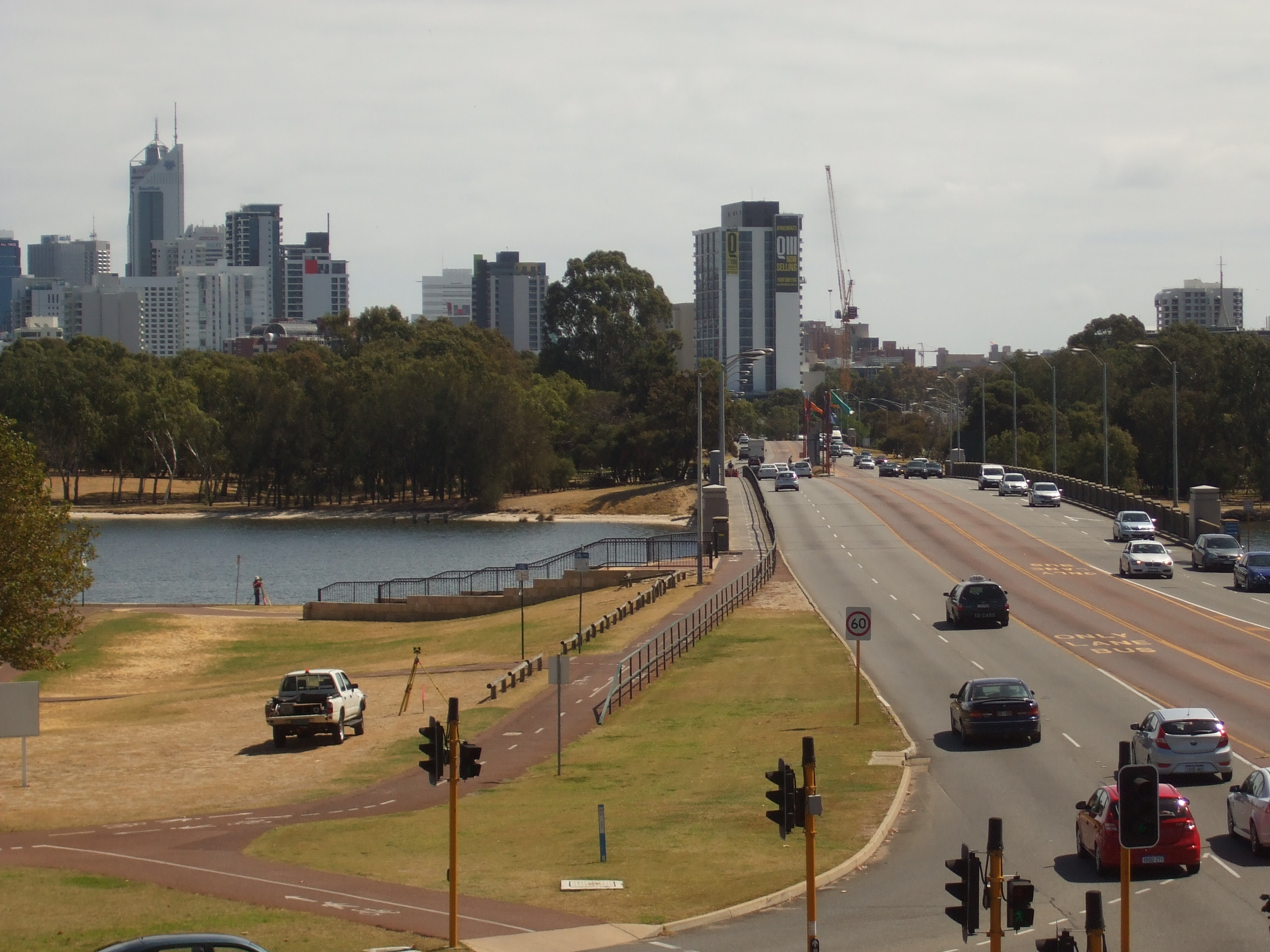
Fortunately, the backward Vancouver mentality never made it over to Perth. Otherwise, the The_Third_Causeway bridge would have had 1 or 2 lanes removed.

With 6 lanes, The_Causeway_in_Victoria_Park, Perth provides a nice 6 lane crossing. Unlike backward Vancouver the Causeway in Perth was allowed to have 3 lanes each way. The key component is that the 3rd lane each way is for busses. In contrast, absurd Vancouver won't allow for a proper bus & bike bridge network to be built, because it would rather keep its bridges as narrow & congested as possible. 

https://upload.wikimedia.org/wikipedia/commons/5/5a/Causeway_-_Victoria_Park.JPG

It's very strange that Vancouver refused to have something like the 6 lane Causeway+Bridge in the 21st century. A 3rd lane each way for buses on the Causeway+Bridge makes so much sense in Perth. However, for stubborn Vancouver, such measures might help to improve mobility.

Apparently, Vancouver has no plans to build something like the Boorloo_Bridge or the Esplanade+Riel+Footbridge next to the Cambie & Burrard Bridges. Thus, the Cambie has lost a lane & the Burrard has lost 2 lanes. Had both bridges been allowed to retain 6 lanes, they both could have provided 2 bus lanes.

The Cushing+Bridge is a 4 lane bridge in Calgary. Thus, like the Oak Bridge & Knight Bridge in Vancouver, there was no room for 2 bus lanes on them. Unlike, backward Vancouver, Calgary was able to build a 2 lane bus bridge right next to its Cushing+Bridge.

Fortunately, the horrible transportation planning mentality of Vancouver was never adopted in Perth & Calgary. Either you have a wide enough bridge for busses, or you build bus & bike bridges to help the existing bridges.

The Norwood+Bridge in Winnipeg provides at least 6 lanes, so a couple of bus lanes isn't a problem.

Singapore built its Helix_Bridge instead of removing lanes from the other bridges.


https://jfdatalinks.blogspot.com/search?q=Cambie+Street+Bridge

Wednesday, January 22, 2020

Burrard Street Bridge and Granville Street Bridge and Cambie Street Bridge

https://dailyhive.com/vancouver/granville-connector-bridge-pathway-design-configuration

The current Granville+Street+Bridge was built a generation after the Burrard+Street+Bridge. Both bridges should have had a lower deck for streetcars, tram-trains (LRT) and buses.  

The Cambie+Street+Bridge should have been built a couple of metres wider on its west side. Then a traffic lane didn't have to be reallocated for bikes. A slightly wider bridge would have allowed for 2 bike paths as well as 2 footpaths.

Somehow, Vancouver and BC keep doing a lot of things the wrong way.