Showing posts sorted by date for query HOV. Sort by relevance Show all posts

Monday, March 30, 2026

Its Not Just About Bus and Bike Bridges

Bike bridges might not be able to totally solve the transportation mess that is Vancouver. However, its quite odd how Vancouver Cycling_Infrastructure is missing a crucial bit of transportation infrastructure. Indeed, many cities will build least 1 proper bike bridge. The Vancouver approach is to take traffic lanes away from existing bridges, or not even bother to build a bike bridge next to a congested bridge. 

https://en.wikipedia.org/wiki/List_of_crossings_of_the_Fraser_River#North_Arm There should have been several bus and bike bridges in just this section alone. 

 https://bicyclenetwork.com.au/newsroom/2024/08/08/striking-perth-bridge-crosses-key-construction-milestone Unfortunatly, such a nice bike bridge in Perth isn't allowed in backwards Vancouver. 

https://www.mainroads.wa.gov.au/projects-initiatives/all-projects/metropolitan/causeway-path/

https://www.wsp.com/en-ca/projects/perths-boorloo-bridge If you are visiting Perth from Vancouver, you might cry when you realize what WA can do, simply because its not influenced or limited by the backwards BC mentality or mind virus.

https://www.destinationperth.com.au/listing/boorloo-bridge/3706 Unlike in backwards Vancouver, many cities build bike bridges so that they don't have to remove traffic lanes.

https://dissingweitling.com/en/project/swan-river-causeway-bridge 

https://www.buildingfortomorrow.wa.gov.au/projects/boorloo-bridge Unfortunatly, properly building-for-tomorrow is much more difficult in backwards BC than it is in WA. 

bike+bridge in the right spot can make a huge difference. A bus+and+bike+bridge can be a huge improvement, especially in the case of Vancouver and the Greater Vancouver Region. 

The Arthur_Laing_BridgeOak_Street_BridgeKnight_Street_Bridge and the Queensborough_Bridge all could be improved simply by building a bus+and+bike+bridge next to them. These bridges are simply too narrow to accommodate 2 bus lanes, 2 wide bike lanes and 2 wide footpaths.

The narrow North_Arm_Bridge for the very short Canada Line trains, is another lost opportunity. There should have been 2 express bus lanes, since the little train doesn't run 24 hours. There should have been 2 wide bike lanes as well as 2 sidewalks. 

Perhaps it was designed to be in the tradition of the narrow SkyBridge between NW and Surrey. Unfortunately, the SkyBridge wasn't designed to help the old Pattullo Bridge by accommodating 2 bus lanes, 2 bike lanes and 2 sidewalks.

While the Pattullo_Bridge_replacement opened with 2 nice bike lanes and 2 footpaths, there was a deliberate decision not to open it with 2 bus lanes and 2 HOV lanes. Especially, no wide emergency lanes or wide shoulders. Its another instant classic BC bottleneck-chokepoint. 

Somehow the Metro_Vancouver_Regional_District still hasn't realized that a regional network of bus and bike bridges can really help the region's mostly narrow bridges. Plus, proper big city long trains. 

https://en.wikipedia.org/wiki/Expo_Line_(SkyTrain) Only started to run some 5 car trains in 2025.

https://en.wikipedia.org/wiki/Millennium_Line Still usually only 2 car train with the option to run 4 and the potential to eventually run 5 car trains.

https://en.wikipedia.org/wiki/SkyTrain_(Vancouver)#Canada_Line Despite a building cost cutting measure, this joke of a train and its short stations still could have been designed with enough level clearance to allow for 5 car trains eventually. Unfortunately, this line was designed to ultimately just have 2.5 car, 50m trains. Since 2009, this line is still only running 2 car trains. 

Multigenerational congestion planning is all by design in backwards BC.


https://jfdatalinks.blogspot.com/search?q=bike+bridges

Sunday, March 29, 2026

YVR-Canada Line and REM Train

 https://www.youtube.com/watch?v=a1ouk0VifwM&t=42s Even if the YVR-Canada Line had to initially be built as a symbolically small city train, urban transportation infrastructure can be designed in ways that can double or even triple capacity to meet future demand. Unfortunately, its very difficult to build anything in BC with significant future capacity in mind.

Ultimately, the YVR-Canada Line should have had level station clearances to eventually be able to accommodate 10 car trains. Unfortunately, in typical backwards BC planning the stations weren't even designed with enough level clearance to accommodate 5 car trains. The joke that is the Canada Line only has a level station clearance of 50m to eventually accommodate just a 2.5 car train. 

Most other cities actually build long stations to accommodate long trains right in the first place. Or, at least allow for enough level clearance so that the stations can eventually be doubled or tripled in length. 

The YVR-Canada Line should have started with the Vancouver & Richmond segment, then the Vancouver and Horseshoe+Bay+ferry+terminal segment. Then finally, the YVR to Delta and the Tsawwassen+ferry+terminal

The SkyTrain Stations in Greater Vancouver https://www.youtube.com/watch?v=6Qg78Bmf1fk

Unfortunately, proper big city transportation planning is very difficult to achieve in backwards BC. So much is watered down in Vancouver.


Montreal’s Biggest REM Expansion Yet https://www.youtube.com/watch?v=4G1oeIAfxDU&t=106s 

The Montreal REM https://www.youtube.com/watch?v=g9O6RzsXIqQ 

While the REM was designed to help the Metro, it should have the capability to be gradually expanded. Eventually, REM trains should be lengthened from 4 car trains to 6 and even 8 car trains. 

In contrast, every Skytrain line should have been designed with enough level future station clearance to eventually accommodate a train as long as a 152.5 (500 ft.) long Montreal Metro train. The first 2 Skytrain lines have 80m stations and the joke that is the Canada Line only has 50m stations. 

While the first 2 lines can accommodate 5 car trains, the C Line wasn't designed to accommodate 5 car trains. Just 2.5 car trains, someday. 

Despite there being such a symbolic push for Vancouver to keep having short trains, narrow bridges and stumpy buildings, things are gradually changing in backwards BC. The Vancouver or BC Mind Virus should have been challenged decades ago, but too many loud people wanted to perpetuate the, KEEP THINGS SMALL AND INDEQUATE agenda.

Given how most of the bridges in Greater Vancouver are so narrow, there isn't enough room for proper bus and HOV lanes, or even wide emergency lanes. One would think that at least the trains & stations would have been designed to eventually be doubled or tripled in length. But that would go against the mutigenerational congestive planning agenda. That's why there still is only a 3 lane LGB when there should have been at least a parallel bus, HOV and train tunnel. The Pattullo+Bridge replacement didn't open with 2 bus and 2 HOV lanes, not even wide shoulders or emergency lanes. NW really likes the congestive planning approach. Of course the new tunnel between Richmond and Delta won't have an additional provision for a train tube. This will also help to perpetuate the congestive transportation mandate. 

Fortunately, Selective_door_operation technology can eventually allow more sensible transportation planners to enable longer trains. 

https://en.wikipedia.org/wiki/Selective_door_operation#International_variations , https://www.youtube.com/watch?v=YdH5d1ZthmM 

This means that a 5 car Skytrain (85m) could eventually become a 7 car train, despite the 80m stations. 

https://en.wikipedia.org/wiki/SkyTrain_(Vancouver)_rolling_stock#Alstom_Mark_V Thus, an 80m train can become a 117m train.

A two car and 2.5 car (50m) train on the multibillion dollar Canada Line is so absurd and inept! With some slight station modifications, there could be a potential to eventually accommodate three, 20m cars at such short platforms. Then, once 3 car trains could become possible, its just a matter of having an extra 20m car at both ends of each train. A 5 car train of 100m is so much better than a 50m joke of a train. 

https://en.wikipedia.org/wiki/SkyTrain_(Vancouver)#Alstom_Mark_V_fleet 


https://jfdatalinks.blogspot.com/search?q=SkyTrain-Canada+Line

https://jfdatalinks.blogspot.com/search?q=REM

Monday, March 9, 2026

The narrow Pattullo Bridge Replacement

https://www.pattullobridgereplacement.ca/construction/current-works Its a nice 4 lane bottleneck choakpoint. There should have been a provision for a lower deck for bus lanes, HOV lanes and LRT, but that would help to alleviate some transportation congestion.

It wasn't designed with that much future capacity in mind, just like the absurd Canada+Line. The SkyTrain-Canada+Line is still only running 2 car trains. The New stal̕əw̓asəm Bridge is only 2 lanes each way. This is congestive urban planning in BC at its best. Narrow bridges and short trains are some of the best ways to symbolically demonstrate a reluctance to accommodate future growth capacity. 

People aren't suppose to wonder where all the money went over the past several generations, because it seems that not enough funds have gone towards proper big city infrastructure.


Repairs on the Ironworkers Bridge

 https://dailyhive.com/vancouver/ironworkers-memorial-bridge-lane-closures-vancouver 

Unfortunatly, when this bridge was designed, there was no serious consideration to have 2 wide emergency lanes and 2 wide shoulders. Then, the Iron Bridge could have gradually been adapted to accommodate 2 bus lanes and 2 HOV lanes. At the very least, a bus, HOV and commuter train bridge should have been built next to the inadequate Iron Bridge back in the 20th century.

https://en.wikipedia.org/wiki/Ironworkers_Memorial_Second_Narrows_Crossing Opened August 25, 1960  

https://en.wikipedia.org/wiki/Granville_Street_Bridge Opened February 4, 1954 https://upload.wikimedia.org/wikipedia/commons/thumb/0/0c/View_of_downtown_Vancouver_from_the_Granville_Street_Bridge.JPG/960px-View_of_downtown_Vancouver_from_the_Granville_Street_Bridge.JPG

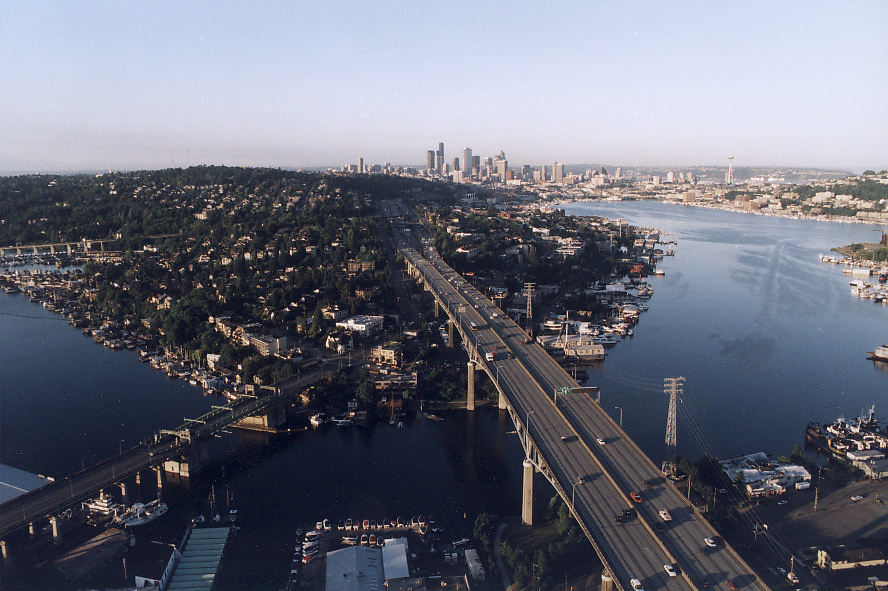
https://en.wikipedia.org/wiki/Oak_Street_Bridge Opened June 29, 1957 https://upload.wikimedia.org/wikipedia/commons/thumb/5/5f/Oak_Street_Bridge.jpg/960px-Oak_Street_Bridge.jpg  

https://en.wikipedia.org/wiki/Knight_Street_Bridge Opened January 15, 1974 https://upload.wikimedia.org/wikipedia/commons/f/f0/Knight_Street_Bridge.jpg

https://en.wikipedia.org/wiki/Arthur_Laing_Bridge Opened 27 August 1975 

https://evelazarus.com/third-crossing-here-we-go-again Somehow, Vancouver just never got around to building a bus and train tunnel or bridge in between the Lion Bridge and the Iron Bridge. Since Skytrain doesn't run 24 hours, there needs to be 24 hour bus lanes. 

https://www.pc.gc.ca/apps/dfhd/page_nhs_eng.aspx?id=11273 Some day, the Lion Bridge could become a nice bus and bike bridge, if a highway tunnel could ever be built under the park and beside the LGB. 

Unfortunately, the Vancouver Mind Virus (VMV) keeps getting in the way of progress. Just look at how short the Canada Line trains are.

Thursday, March 5, 2026

Why the Widest Freeway on Earth still Made Traffic Worse in Houston

 https://www.youtube.com/watch?v=vMwKgT4ZUvQ It is utterly foolish to not have enough space for a commuter train to run above, or in the middle or underneath the widest highways. 

https://kinder.rice.edu/urbanedge/houstons-15-year-growth-three-charts Simply building wide roads like in Houston, L.A. and Toronto is just as bad as having mostly narrow bridges in Greater Vancouver.  

Whether its 10 lanes or 20 lanes wide, there should always be 2 dedicated bus lanes and 2 HOV lanes. While the highway will get clogged up during the day, at least the buses and trains can still get through quickly. 

The Pattullo+Bridge+replacement is only 2 lanes each way with narrow shoulders. It should have opened with enough space for 2 bus lanes and 2 HOV lanes, but that would go against the congestive urban planning mentality of BC.

The Samuel-De+Champlain+Bridge in Montreal is just as good as similar wide highway and train bridges in Seattle+and+Perth. All were possible, simply because they aren't limited by anything like the Vancouver and BC Mind Virus.

The narrow-minded Vancouver and BC approach is to try to funnel everything into just 2 or 3 lanes each way. Then there just isn't enough space to have 2 bus lanes and 2 HOV lanes. Greater Vancouver has certainly gone in the extreme opposite direction of Houston, L.A. and Toronto...

A wide Greater Houston highway has lots of space, but without 2 bus lanes and 2 HOV lanes, everything gets plugged up. In contrast, Greater Vancouver has most of its bridges and highways so damn narrow, there isn't enough space to accomodate a proper express bus and HOV network. 

This deliberate backwards BC bottleneck-chokepoint planning approach is totally absurd. 

There is no commuter train tunnel near the Lions+Gate+Bridge or even for the Massey+Tunnel+replacement. Thus, they are the best examples of BC choke-point urban planning. Despite having twice the lanes as the inept 3 lane LGB, the newer Iron+Bridge never had any emergency lanes. A bus and HOV bridge was never built next to it. Plus, no commuter train bridge. It's another fine example of BC choke-point, bottleneck planning. 

A north and south Boundary+Road bridge system would provide direct access between the North+ShoreRichmond+and+Delta, but that's what a proper big city would do. Backwards BC has quite a problem with thinking and building big. The 2 car Canada+Line is another example. Don't build it to at least have a 5 car train, just design it to only have 2.5 car trains, someday.

https://en.wikipedia.org/wiki/Greater_Houston#Transportation

https://en.wikipedia.org/wiki/Interstate_610_(Texas)#Lane_configurations There is a point when simply adding more lanes won't provide long-term improvement. However, when combined with dedicated bus and HOV lanes, other options become available. Especially, if there is rail rapid transit and commuter rail as well. 

https://en.wikipedia.org/wiki/METRORail While not as extentise as DART_rail, it still works like a tram-train. 

Of course longer streetcars or tram-trains are still slow on the actual surface street segments.

https://en.wikipedia.org/wiki/Trams_in_Melbourne#System_upgrades 

https://en.wikipedia.org/wiki/Toronto_streetcar_system

https://en.wikipedia.org/wiki/Muni_Metro SF

Wednesday, March 4, 2026

Major expansion of B.C. Highway 1 in Fraser Valley to begin soon

 https://dailyhive.com/vancouver/bc-highway-1-fraser-valley-expansion Ideally, the section from Horseshoe Bay to Hope shouldn't be a hopeless joke. A main highway in an urban region of over 3 million people should have at least 3 general lanes each way. Plus, a rapid bus lane and a HOV lane each way, but that would be at least 5 lanes each way. 

https://transcanadahighway.com/british-columbia/bc-highway-itinerary-horseshoe-bay-to-hope When a highway is only 2-3 lanes each way, it's too damn narrow to accomodate 2 bus lanes and 2 HOV lanes.

https://en.wikipedia.org/wiki/British_Columbia_Highway_1#Lower_Mainland_section 

BC Hwy 1 - Trans-Canada Highway, Vancouver, BC https://www.youtube.com/watch?v=uf9QTmnxkqw

Wednesday, February 25, 2026

Vancouver council boosts budget for roads, sidewalks by $70M

More than 60 per cent of Vancouver’s arterial roads, local streets considered in fair to very poor condition https://www.biv.com/news/economy-law-politics/not-sexy-but-fundamental-vancouver-council-boosts-budget-for-roads-sidewalks-by-70m-11921125 

The cities roads and streets are so inadequate, but Vancouver isn't allowed to become a proper big city.

The decision to not carve up small Vancouver with freeways between the 1950s and 1970s was a wise and novel idea at the time. However, there wasn't any proper foresight over the past several generations to make sure that the cities mostly narrow bridges didn't become bottleneck-chokepoints. 

By now, every bridge should have had a bus and HOV bridge built next to it. Instead, 2 lanes were removed from the Burrard Bridge, 1 lane from the Cambie Bridge and 2 from the Granville Bridge. 

Conveniently, no bike bridges were ever built next to those bridges. Apparently, what was disguised as a cost saving measure by not building proper bike-bridges, the decision was made to remove traffic lanes from some bridges. This all seems to be part of the bottleneck planning mentality. 

It's amazing how several cities around the world are able to build bike-bridges, simply because they aren't under anything like the backwards Vancouver planning agenda. 

Tuesday, February 24, 2026

Vancouver port applies to dredge Burrard Inlet this year to fuel oil exports

 https://www.biv.com/news/transportation/vancouver-port-applies-to-dredge-burrard-inlet-this-year-to-fuel-oil-exports-11915974  

The Second Narrows Crossing Area

https://www.vmcdn.ca/f/files/glaciermedia/images/climate-enviro-solutions/oceans/proposed-burrard-inlet-dredging.jpg;w=960 A commuter rail, rapid bus and HOV bridge was never built next to the Iron Bridge, which doesn't even have any emergency lanes. The freight train bridge and tunnel east of it, wasn't designed to eventually accomodate 2 tracks. Taking a narrower bridge and tunnel approach symbolically fits right in with the narrow-minded mentality that is BC. 

https://www.bchydro.com/energy-in-bc/projects/second-narrows-crossing-project.html

Saturday, February 21, 2026

The Pattullo Bridge Replacement

 https://news.gov.bc.ca/releases/2026TT0025-000178 Its only 2 lanes each way for the foreseeable future. No bus lanes and no HOV lanes, it's just another classic BC funnel for congestion.

Wednesday, February 4, 2026

North Shore of Greater Vancouver

https://en.wikipedia.org/wiki/North_Shore_(Greater_Vancouver)

Is North Vancouver the most livable city in Canada? https://www.youtube.com/watch?v=gX89qkSRBvg 

https://www.vancouversnorthshore.com 

Unfortunatly, there still isn't a commuter train from the airport to the H Bay ferry terminal. 

https://en.wikipedia.org/wiki/North_Shore_(Greater_Vancouver)#Access 

There isn't even a train tunnel or a bus bridge between Downtown_Vancouver and the North Shore. Inept regional planning has been very slow to build rapid rail transit, or even a proper rapid bus bridge over the Inlet. An inadequate 3 lane Lion Bridge is so narrow that some people have living rooms or swimming pools wider than it. The 6 lane Iron Bridge that's so narrow, there isn't enough room for emergency lanes and no space for HOV lanes. Any attempt of a rapid bus will still have to be funneled into the inadequate single deck crossing. 

Saturday, January 31, 2026

Why Greater Toronto Has Several Skylines

 https://www.youtube.com/watch?v=eI9WJa9Q8dA 

Of course many large urban areas around the world have more than 1 or 2 skylines or tower clusters. 

For the longest time, no building in Vancouver or BC, was allowed to be as tall as the 1930s CIBC tower, which is now a stump.

https://www.blogto.com/city/2017/05/toronto-lost-observation-deck-commerce-court-north/

https://www.torontojourney416.com/canadian-bank-of-commerce-building/ 

https://www.25king.ca/the-history 

It wasn't until the early 1970s when stumpy, Vancouver allowed a building to be taller than the L.A. City Hall, or the Smith Tower in Seattle. 

The 1930s CIBC tower, the L.A. City Hall and the Smith Tower, would still be prominent towers in Vancouver, but stumps in their own cities. 

Despite Vancouver being divided by an inlet and a river, the city wasn't able to build a huge wall along Boundary Road. Thus, the KEEP THEM OUT agenda was a little thwarted. The various White city councils tried to do the next best thing. That was to symbolically impose various restrictions as a reluctance to think, plan and build on a BIG city scale. The time especially from 1960 to 2000 had predominantly White City Hall and its councils continually impose several overlapping restrictions. 

Since Vancouver can't control immigration or the movements of non-white people, keeping things small and backwards, means that less people will move there than to Toronto, Montreal, Calgary and Edmonton. However, with a mild winter climate, more and more people want to move to backwards BC, especially small-minded Vancouver and provincial Victoria. 

In spite of immigration and Multiculturalism, Vancouver was to perpetually promote its small scale agenda. 

While the first Skytrain line can finally run 5 car trains, the stations weren't designed to become long enough to eventually accomodate 9 car trains like the big city Montreal Metro has. 

The 2nd and 3rd Skytrain lines are still only running 2 car joke trains. Running 8-10 car trains is what a proper big city would do, but not backwards Vancouver. 

Narrow bridges provides strong symbolism of the cities narrow-mindedness. When bridges are too narrow, its difficult to have a proper express or rapid bus system. The reluctance to build parallel bus and HOV bridges helps to maintain the congestive planning approach that is vancouver and the Greater Region. 

Vancouver's refusal to build parallel bike bridges has meant that 2 lanes were removed from the Burrard Bridge, 1 lane from the Cambie Bridge and 2 lanes from the Granville Bridge. 

Keeping buildings symbolically short when compared to what scenic Sydney, Auckland, SF and Seattle allow, also helps to maintain Vancouver's reluctance to enter the big and tall urban scale. In fact, the scenic setting that Vancouver is in has been used as the main excuse to continually scale the city down. Yet, several scenic cities around the world are either able to have wider bridges, wider roads, longer trains or taller buildings. 

The world is mostly composed of non-white people. Canada has less than 1% of the world's population and stubborn Vancouver symbolically remains as a small provincial backwater on the Pacific Rim. 

https://centralparktower.com.au Unlike Perth, Vancouver forbids 50 story office towers and Brisbane, Sydney and Melbourne size residential towers. 

https://en.wikipedia.org/wiki/108_St_Georges_Terrace In fact, no office building in Vancouver has been permitted to have a 40th floor. However, since Burnaby and Surrey aren't under the restrictive controls of Vancouver, they will eventually allow office towers over 40 stories. 

Despite Australia having less people than Canada, Perth is allowed to have taller buildings, wider bridges and longer trains than Vancouver. Taller buildings, wider bridges and longer trains are even less likely in Halifax than whats in Brisbane or Queensland.

https://en.wikipedia.org/wiki/Q1_(building) To see buildings on a similar scale of what Brisbane allows, one has to get to Greater Toronto. Brisbane is allowed to have some buildings that would even be impressive in Melbourne and Sydney. 

While Montreal is allowed to have taller buildings than Vancouver, Montreal isn't allowed to have Sydney size towers. Especially not on the scale of what Melbourne and Toronto permit. 

Friday, January 30, 2026

Major upgrades for Queensborough Bridge in NW

 https://dailyhive.com/vancouver/queensborough-bridge-upgrades-new-westminster-richmond 

Another classic BC bottleneck-chokepoint. This bridge is so narrow, because there aren't any emergency lanes, let alone any bus & HOV lanes. The narrow and inadequate Queensborough+Bridge just wasn't designed for a properly growing seaport region. A twin or duplicate bridge should have been built immediately east of the first bridge, decades ago. A parallel 4 lane bridge would allow for 3 lanes on each bridge, plus a 4th lane for buses. However, that would go against the regional congestive planning agenda. 


https://jfdatalinks.blogspot.com/search?q=Queensborough+Bridge

Wednesday, January 21, 2026

New pedestrian and cyclist bridge above railway proposed for Brentwood in Burnaby

 https://dailyhive.com/vancouver/burnaby-brentwood-pedestrian-cyclist-overpass-proposal Not just in backwards Vancouver, but throughout the Greater Vancouver Region, is a lacking of bike and foot bridges. Of course there also needs to be a regional network of bus and HOV bridges. So many of the existing bridges are too damn narrow. 

Wednesday, January 7, 2026

Four Lane Pattullo Bridge Replacement Project

 https://www.youtube.com/watch?v=o-ING5Pfrdk 

The old bridge has 4 narrow lanes and no traffic divider. However, the new bridge won't have any bus or HOV lanes and no emergency lanes. 

Chokepoint-bottleneck planning remains firmly entrenched in backwards BC.

Saturday, January 3, 2026

The new bridge next to Pattullo Bridge

 https://www.youtube.com/watch?v=vUGCUqTphCU 

This new bridge should have had 2 wide emergency lanes and 2 bus lanes and 2 HOV lanes. While there is a potential for the bridge to eventually have 3 lanes each way, for the foreseeable future everything will just be crammed into 2 lanes each way. 

It was a mistake to not have designed this bridge to eventually have a lower deck for buses and LRT.

Wednesday, December 24, 2025

Partial opening of the Pattullo Bridge replacement

 https://www.youtube.com/watch?v=tDFkc9Oa-j0 

Unfortunatly, the old bridge is such bad shape that it can't be refurbished. Otherwise, each bridge could have provided 3 or 4 lanes each way. People will be in for a shock once the old bridge is dismantled. Then the new bridge will become just another classic 4 lane BC bottleneck-chokepoint. 

No bus lanes or HOV lanes and especially no wide emergency lanes. 


https://jfdatalinks.blogspot.com/search?q=Pattullo+Bridge

Wednesday, November 26, 2025

Pattullo to partially close for three nights as 4 lane replacement bridge opening draws near

 https://dailyhive.com/vancouver/pattullo-bridge-closures-replacement-opening 

No matter how much NW wants to be one of the smallest cities in backwards BC, it can't stop Surrey from eventually being the biggest city in what should be bustling BC. The SkyBridge was deliberately designed to not have any HOV or truck lanes. The narrow SkyBridge wasn't even designed to eventually become a bus and bike bridge. Just a train bridge without even any sidewalks. It really should have been given an award for one of the worlds best examples of inept urban infrastructure. 

It's like the SkyBridge (1990) was designed to be the first part of the new inadequate crossings between NW and Surry.

Indeed, just like its 1937 predecessor, the Pattullo_Bridge_replacement will open with only for lanes, but at least it will have 2 bike lanes and 2 sidewalks. The Pattullo_Bridge_replacement should have opened with 6 lanes and 2 wide shoulders or emergency lanes, but that would go against funneling everything into just 2 lanes each way. No emergency lanes or wide shoulders helps to reduce emergency vehicle inefficiency. No bus & HOV lanes helps to increase transportation congestion. Despite being a seaport region, there aren't any truck lanes. Perhaps the best feature of all is than the bridge wasn't designed to eventually have a lower deck for trains and trucks. 

Multibillion dollar bridges can be designed with future widening capabilities, or at least having a provision for a lower deck. Unfortunatly, it's very difficult for BC to design prober big city size transportation infrastructure. 

Saturday, November 22, 2025

Some Canada Mega-projects Under Construction

 https://www.youtube.com/watch?v=kwsOVZ-j7hg 

Oakridge_Park is on a much smaller scale than MetrotownBrentwood and Lougheed. It will especially be on a much smaller scale than Parramatta in NSW. 

Unfortunatly, the Oakridge-41st_Avenue_station was only designed to have 50m platforms, when it should have been at least 100m. Thus, the utter foolishness has meant that instead of allowing for a future level station clearance to accomodate 5 car trains, the Canada (embassament) Line was only designed to just have 2.5 car trains. While its extremely short stations might have been disguised as a cost saving measurer, there didn't seem to be any key people onboard to make sure that it could eventually become a proper big city train line. Its sad that a line which opened in 2009 is still only running 2 car trains. While the 2.5 car configuration is still a joke of a train, at least half of an extra coach-length is better than nothing. Plus, there should have been extra cars ordered by now so at least during the very busy times the trains could be operating at 1 minute headways. Unfortunatly, this goes against the Vancouver & BC congestion planning mentality.

Despite being built several years after the Sydney_Harbour_Bridge, the joke that is the Pattullo_Bridge was designed to only have 4 narrow lanes & only 1 sidewalk. Of course the replacement_bridge will only open with 2 lanes each way. It was as if someone really wanted to make sure that there won't be 2 bus lanes and no HOV lanes when the bridge opens. While the new bridge is designed to be expanded from a 4 lane joke to eventually having 6 lanes, it still won't be wide enough to accomodate 2 HOV lanes as well as 2 bus lanes. Of course the new bridge won't have any emergency lanes, just like the old bridge. However, it will have 2 bike lanes and 2 sidewalks. https://www.globalhighways.com/news/pattullo-bridge-completion-end-year Its only fitting that in backwards BC this new bridge wouldn't be designed to eventually have a lower deck to accomodate 2 bus lanes and 2 LRT tracks. 

If the planners were afraid to symbolically have a wide bridge between NW and Surrey, the old Pattullo_Bridge should have been designed to eventually have a lower deck for trams, trucks and busses. Even when the SkyBridge between NW and Surrey opened in 1990, it wasn't designed to have any bus lanes or emergency vehicle lanes and especially, no bike and footpaths. 

Is Vancouver the best city in North America? (2019) https://www.youtube.com/watch?v=P8dmVUrNt38

 One of the biggest mistakes in Vancouver & SW BC is to have short trains combined with mostly narrow bridges. Thus, the region doesn't get to have long, high capacity trains and there isn't a proper regional network of bus-bridges. The refusal to twin most of the bridges means that it's almost impossible to have a proper and efficient regional network of rapid-bus and HOV lanes.  

While Montreal built the REM to augment their long-train Metro system, Vancouver should have allowed for enough clearance to eventually have 500 foot long trains. 80m-50m Skytrain stations are going to become inadequate, when there should have been a 152.4m provision so that the trains could eventually become as long as the ones on the Montreal Metro. 

Is Regional Rail in the Future of British Columbia? https://www.youtube.com/watch?v=1PeIOVy6fFc

Wednesday, November 19, 2025

A Richmond encampment under the Oak Street bridge

 https://vancouver.citynews.ca/2025/11/19/growing-calls-to-clear-richmond-encampment 

Of course any neighborhood will be concerned when a bunch of people are living under a bridge and wandering around.

Living under a bridge is hardly affordable housing. There needs to be proper secure housing with plenty of security and staff to help people who are stuck living outside. 

That bridge is so narrow and inadequate. 

SW-Vancouver needs a proper transportation upgrade. Granville Street should be extended across the Fraser River on a parallel bridge to the Oak Street Bridge (OSB). Then, the 2 bridges could provide 4 general lanes each way. Plus, another 4-lane parallel bridge to accommodate 2 BRT lanes and 2 HOV lanes. 

Or, a totally built a new version of the Oak+St+Bridge that could provide 6 lanes northbound. Then, a Granville Street extension could provide 6 southbound lanes onto a new OSB. Four general lanes each way, plus a rapid bus lane each way & 1 HOV lane each way. 

For the most part, the Oak+Street-Granville+Street+Corridor has 12 lanes. A yellow paint strip designates 3 lanes each way. Instead, Oak could have 6 northbound lanes and Granville could have 6 southbound lanes. The 5th & 6th lanes could be for the Oak & Granville BRT lane & HOV lane on complete one way streets.

Unfortunately, the OSB remains as a 4 lane traffic bottleneck or chokepoint. 

The 2009 Canada (embarrassment) Line is still only using 2 car trains in 2025. A proper big city YVR-Canada Line should have been started with 5 car trains. Unfortunately, this joke of a train is only designed to ultimately run a 2.5 car train, someday. 

This stunted infrastructure approach is so absurd. Transportation planning in the most populated parts of BC is so inadequate, but its all part of backwards BC symbolism. The symbolism is all about showing a thwarted or watered down a city can be. Narrow bridges and short trains are some of the best ways to increase congestion and inefficiency in backwater BC.

Calgary ranked the top place for GTA families moving out of Ontario

 https://dailyhive.com/toronto/gta-families-move-to-calgary 

If you move from Toronto to Calgary, you will still be in a real city. However, Calgary has about a 3rd of the population. The GTA is so much more vast and dense than Calgary. The Calgary_Tower is only a 3rd of the height as the CN_Tower.

For those that move from Toronto, Montreal, Calgary or Edmonton to Vancouver, you will be shocked to see mostly 4 lane bottleneck-chokepoint bridges. The few 6 lane bridges in Greater Vancouver have no proper bus or HOV lanes, so its the epitome of congestion planning.