Showing posts sorted by date for query bridges. Sort by relevance Show all posts

Friday, July 3, 2026

Smith Tower in Seattle, WA (1914)

https://en.wikipedia.org/wiki/Smith_Tower "Completed in 1914, the 38-story, 462 ft (141 m) tower was among the tallest skyscrapers outside New York City at the time of its completion." 

https://upload.wikimedia.org/wikipedia/commons/thumb/6/68/L_C_Smith_Building%2C_Seattle%2C_1914

It would take almost 6 decades until stubborn Vancouver finally permitted a building to be of a similar height.

https://en.wikipedia.org/wiki/Royal_Centre_(Vancouver) "The skyscraper stands at just under 145m tall and 37 storeys. Royal Centre was the tallest building in Vancouver upon completion in 1973..." 

https://upload.wikimedia.org/wikipedia/commons/thumb/0/06/Royal_Centre_Vancouver.jpg/500px-Royal_Centre_Vancouver.jp 

Fortunately, Seattle+and+Perth never adopted anything like the VMV approach to things. Thus, they are able to have longer airport trains, wider bridges and significantly taller buildings.


https://jfdatalinks.blogspot.com/search?q=LC+Smith+Tower+in+Seattle

The Emerging BRT Network in Indianapolis

 https://www.youtube.com/watch?v=3T2bL1YPEVY 


In contrast, unless Greater Vancouver builds a regional network of BRT bridges, it will mostly just be another half-assed transportation joke in backwards BC. 

https://www.translink.ca/plans-and-projects/projects/rapid-transit-projects/bus-rapid-transit

https://translinklistens.ca/bus-rapid-transit-program 

https://www.translink.ca/-/media/translink/images/plans-and-projects/rapid-transit-projects/bus-rapid-transit/ct_regional_base_map_2.jpg?w=100%25&extension=avif&hash=C5327021BD9DC87024877CA69878F879

Saturday, June 27, 2026

How much will Vancouver change by 2036?

 https://www.youtube.com/watch?v=OJtotvMq2ls 

The Lion+Bridge will likely still not have an express bus and LRT tunnel near it. The+Iron+Bridge still might not have a proper BRT and LRT bridge next to it. The OSB and the KSB will likely not have a bus and bike bridge built beside them. There will still likely be no new Fraser Street Bridge for bikes and buses. No Boundary Road bridges to provide a direct link between the North Shore and Richmond for buses, trucks and bikes.

While the first 2 Skytrain lines will have 5 car trains, the stunted YVR-Canada Line will only have 2.5 car trains. Vancouver still might not permit any office tower to have a 40th floor, but might allow some residential towers to be on a Melbourne, Sydney, Brisbane & Toronto scale. 

However, BIG city thinking and planning in Vancouver has always been so difficult. Boston, SF and the City of Paris are ridiculously small cities like Vancouver with all 3 having a land area of less than 50 sq. mi. or 129.5 sq. km. Yet, Boston, SF and especially the City of Paris, have all been able to fit so much more into the same general space. That's because they aren't bound by anything like the inept and extreme Vancouver type restrictions. 


Thursday, June 25, 2026

Burrard Inlet dredging approved to boost Vancouver port's oil tanker capacity

 https://dailyhive.com/vancouver/burrard-inlet-second-narrows-dredging-vancouver-oil-tanker 

Its so difficult for Canada to even have even one proper major port city on the Pacific Rim when Australia has Brisbane, Sydney & Melbourne. 

Most of the Greater Vancouver bridges are only 2 lanes each way & single track freight train bridges, when they should have been doubletracked by now.

https://gvha.ca/deep-water-terminal/shore-power-project Small town.

https://www.rupertport.com/cargo-volumes Very small town.

Sunday, June 21, 2026

How the Seattle to Vancouver area could become a megaregion

 https://www.youtube.com/watch?v=POcg0oFvVf8 

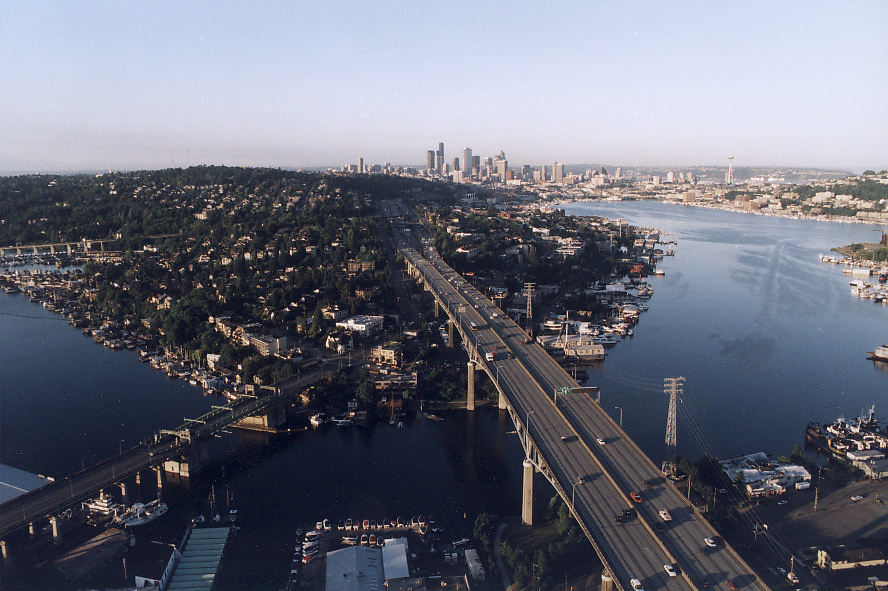
The larger Portland, Seattle and the Vancouver, BC (V-BC) region has a lot of growth potential. However, Seattle size buildings haven't been allowed in Portland and in Vancouver, BC. Nothing like a 12 lane Ship Canal Bridge has been allowed in Portland and Vancouver. While Oregon and backwater BC haven't been able to thwart the largest city in Washington State, Seattle might eventually become more of a magnet in pulling more people into the area between Portland and V-BC. 

Right now, Vancouver, WA (V-WA) still has a wider bridge than V-BC. Most of the V-BC bridges are so damn narrow that its not possible to have an efficient regional express bus network. As long as there is a refusal to build proper BRT bridges as part of a regional system, it remains a sad joke. 

The Skytrain (LRT) was built with shorter stations than what the underground stations in Seattle and Edmonton are at. Whenever possible, the Skytrain stations are shorter than the C Train stations in Calgary, DART stations in Dallas and even the Max in Portland. 

The biggest mistake of the Skytrain was to not build all of the stations with a future level clearance to eventually have Montreal Metro size stations of 500 feet or 152.5 m. Instead, the first 2 lines only have 80 m stations and the line to YVR (The Canada embarrassment Line) is only 50 m. Backwater BC logic is that a 5 car Skytrain could run twice as frequent as a 9 car Montreal Metro train. Someday, a 2.5 car YVR-Canada Line train could also run much more frequently than a 9 car Montreal Metro train. 

There is just one key problem with that type of BC logic. While initially constructing short stations and having short trains can save money, its not proper BIG city size infrastructure. In the long run, it costs more to try to lengthen stations for longer BIG city type trains. 

Monday, June 8, 2026

The Unusual transportation approaches used in Vancouver

 https://www.vancouverisawesome.com/history/5-of-a-kind-unusual-modes-of-transportation-used-or-nearly-used-in-vancouver-12388220 

Vancouver is such an unusual and backwards city with its inefficient and congestive approach towards transportation infrastructure.

Getting rid of the streetcars and interurban trams was utterly foolish! Fortunately, such MADNE$$ wasn't adopted in Melbourne, SF, Toronto, Boston, Philadelphia and New Orleans. 

Just because a no freeways mandate was chosen for Vancouver, the streets should have been kept wide enough for busses as well as other vehicles. 

https://movementyvr.ca/the-case-of-vancouvers-nine-missing-bus-lanes

Despite most of the Vancouver bridges being too narrow, some bridge lanes were removed, because the city wasn't interested in building parallel bike bridges. 

Since most of the bridges are so narrow, there isn't enough room for proper express bus lanes. Of course the city isn't interested in building parallel bus bridges next to the narrow bridges. 

Since Vancouver is supposed to be a major, properly functioning city in Western Canada, the city should have pressed the designers of the first 2 Skytrain lines to make sure that all of the 80 m stations could gradually be extended to 152.5 m, the same as the 500 foot long Montreal Metro stations and trains.

Unlike the first 2 Skytrain lines, the Canada Line was only designed to ultimately have 50 m stations and trains. A 2 billion dollar line to YVR could have been designed in such a way that would have allowed it to look and function like a proper big-city passenger train. 

A commuter train to the North Shore keeps taking a long time to be finalized.

https://northshoreconnects.ca/wp-content/uploads/2021/10/BIRT-Benefits-Assessment_Final.pdf

Think small and build backwards, or not at all. 

Friday, June 5, 2026

2 out of 3 is bad, but 4 bridges?

 Apparently, 2 of the 3 Skytrain bridges were never designed to also accommodate bikes.

https://www.google.ca/maps/place/North+Arm+Bridge/@49.2028331,-123.1189681,1005m/data=!3m1!1e3!4m14!1m7!3m6!1s0x548675f84f6c0721:0xbea3ccce242f45a8!2sMarpole+Bridge!8m2!3d49.1995219!4d-123.1268811!16zL20vMGZqMjYx!3m5!1s0x548675e222b072f3:0x1f4afd8a052e9fba!8m2!3d49.2030206!4d-123.1176091!16zL20vMGc1anZj?hl=en&entry=ttu&g_ep=EgoyMDI2MDYwMy4xIKXMDSoASAFQAw%3D%3D 

Unfortunately, all 3 Skytrain bridges weren't designed to have any express bus lanes, never mind any for a proper rapid bus network.

https://www.google.ca/maps/place/Middle+Arm+Bridge/@49.1956263,-123.1347899,597m/data=!3m1!1e3!4m6!3m5!1s0x548675e70cc6d0d1:0x203a51fa759dab7e!8m2!3d49.1957207!4d-123.1351442!16zL20vMGdna3px?hl=en&entry=ttu&g_ep=EgoyMDI2MDYwMy4xIKXMDSoASAFQAw%3D%3D   

In the 1980s, once it was revealed that Skytrain wouldn't be providing a 24 hour service, there wasn't a serious effort to convince the public of the importance of having a 24 hour regional express bus network. Transportation redundancy is difficult to grasp in backwards BC.

https://www.google.ca/maps/place/Marpole+Bridge/@49.2048651,-122.8949547,729m/data=!3m1!1e3!4m7!3m6!1s0x548675f84f6c0721:0xbea3ccce242f45a8!4b1!8m2!3d49.1995219!4d-123.1268811!16zL20vMGZqMjYx?hl=en&entry=ttu&g_ep=EgoyMDI2MDYwMy4xIKXMDSoASAFQAw%3D%3D 

All 3 of there's transportation bridges should have had enough future space for at least a 3rd track. Upon opening, each bridge should have had 2 bus lanes that also could be for emergency vehicles. Each bridge should have had 2 bike lanes and 2 sidewalks. 


https://www.google.ca/maps/place/Marpole+Bridge/@49.1996678,-123.1276435,848m/data=!3m1!1e3!4m6!3m5!1s0x548675f84f6c0721:0xbea3ccce242f45a8!8m2!3d49.1995219!4d-123.1268811!16zL20vMGZqMjYx?hl=en&entry=ttu&g_ep=EgoyMDI2MDYwMy4xIKXMDSoASAFQAw%3D%3D This was allowed to fall apart and eventually catch fire. It was never doubletracked and the interurban trams were phased out by the 1950s. Yet, most of the highways and general road system in SW BC cities are just 2 lanes each way. It was as if there was no need to have a 3rd lane for trucks and a 4th or 5th lane for buses & HOVs. 

https://stevestonheritage.ca/2024/06/21/marpole-cp-rail-bridge

https://jfdatalinks.blogspot.com/search?q=Oak+Street+Bridge

The transportation infrastructure was set up for congestion, right from the start. Having a short Skytrain & small stations might have made economic sense in its initial phase. However, there was a failure to not design it to eventually become a proper big-city size train with much longer stations.


https://jfdatalinks.blogspot.com/search?q=Stubborn+BC

Sunday, May 31, 2026

Vancouver 450 ft and Fahrenheit 451

Was a 450 foot height restriction just a chance, or was it intentionally made to be very close to 451 Fahrenheit? Honolulu is still stuck around that maximum, while San Diego is at 500 feet.

 https://en.wikipedia.org/wiki/Fahrenheit_451 (1953) By the 1950s, so many things were already banned, watered down or scaled back in provincial Vancouver. Generations later, there was the No Fun Vancouver mind virus that further tried to cancel out things in such a small city with so much red tape and other ridiculous obstacles.

https://en.wikipedia.org/wiki/Fahrenheit_451_(1966_film) By the mid and late1960s, the city made sure that its first office tower to have more than 29 floors wouldn't be until the 1970s. Its highly doubtful that Vancouver will have an office tower over 40 stories by 2030. However, Burnaby and Surrey could, because they aren't under the extreme restrictions of Vancouver. 

It wasn't until 1973 when Vancouver allowed its first building to be taller than the Los_Angeles_City_Hallhttps://en.wikipedia.org/wiki/Los_Angeles_City_Hall 

The Scotia_Tower (stump) is a good reference point to visualize the small scale of backwater Vancouver, as its about the same height as the Los_Angeles_City_Hall at 453'. 

https://www.skyscrapercenter.com/building/scotia-tower/4396 453'

https://skyscraperpage.com/b65/vancouver/the-scotia-tower 452'

https://en.wikipedia.org/wiki/Fahrenheit_451_(2018_film) By 2018 it was quite apparent that Vancouver was in the process of allowing for more buildings over 450 feet. However, nothing has been permitted to reach 700 feet, so far. A tower over 1000 feet would help to water down its provincial mindset. 

https://upload.wikimedia.org/wikipedia/commons/thumb/1/14/Vancouver_panorama_%2849988799796%29_%28cropped%29.jpg/3840px-Vancouver_panorama_%2849988799796%29_%28cropped%29.jpg

SF, Sydney & Auckland are just as scenic as Vancouver & warmer throughout the year. They all have taller building than what Vancouver currently permits. Seattle is just as scenic as Vancouver, but its allowed to function like a proper big city, because it doesn't have the imposed restrictions like Vancouver has. While its cold, damp & depressing like Vancouver during the fall & winter, Seattle usually gets noticeably hotter summers than Vancouver, BC. The tallest building in Seattle is the 76 story B of A office tower. 

https://upload.wikimedia.org/wikipedia/commons/thumb/5/57/LA_Skyline_Mountains2.jpg/1280px-LA_Skyline_Mountains2.jpg While the L.A. City Hall looks like a stump there, in Vancouver it would still be one of the prominent buildings.

Everything is so small or scaled back in Vancouver. Even the Greater Vancouver mountains aren't allowed to be as tall as the ones in L.A. While the San_Francisco_Bay & Port_Phillip Bay by Melbourne are big next to their cities, English_Bay in_Vancouver is so much smaller. Its even smaller than Elliott_Bay by Seattle. 

Vancouver really needs to have bus and HOV bridges built next to its mostly narrow & congested bridges. Only a 5 car Skytrain is the max on the first 2 lines and ultimately, just a 2.5 car joke of a train on the YVR-Canada Line. 

Selective+Door+Operation can allow a short train to have an extra car at each end, despite a shorter platform. 

https://upload.wikimedia.org/wikipedia/commons/thumb/5/5e/Vancouver_sunset_%28J%29.jpg/3840px-Vancouver_sunset_%28J%29.jpg 
https://upload.wikimedia.org/wikipedia/commons/thumb/6/69/Los_Angeles_with_Mount_Baldy.jpg/3840px-Los_Angeles_with_Mount_Baldy.jpg

Australia like the USA, has some big & tall cities on the Pacific Rim. However, Vancouver symbolically kept watering down its size, because that's how you demonstrate a reluctance towards proper urban planning & growth. 

Oddly enough, the small scale Vancouver mentality & agenda wasn't adopted by most cities around the world. Officially, there is no Vancouver Mind Virus (VMV), but somehow it keeps manifesting, just like the BCMV. 

Despite its size, Canada has less than 1% of the worlds population.

Friday, May 29, 2026

The Houston Galleria and Galleria Dallas

 https://en.wikipedia.org/wiki/The_Galleria 

https://en.wikipedia.org/wiki/Galleria_Dallas 

Texas is a place where thinking BIG has been going strong for almost a century. 

By the year 1900, NYC had to start thinking and building on a big-city scale, simply out of necessity.

https://www.nypl.org/blog/2015/03/11/nyc-big-apple 

https://en.wikipedia.org/wiki/Big_Apple 

In contrast, backwater BC has a tough time keeping up with Alberta and Washington State. Especially with Ontario and Quebec. BC is 75% mountainous and has a seawater barrier on its west side. Still, its almost as if some people would like to have a wall around BC, or even a forcefield like out of Star Trek. 

Keeping things small and backwards in BC whenever possible seems to be part of a multigenerational symbolic agenda. 

Its as if there is something like a BC Mind Virus (BCMV).

Texas has more people than Australia and California has more people than Canada. Despite its overall size, Canada has less than 1% of the worlds population. 

Singapore is on an island that's smaller than all of NYC or Chicago, even. Yet, it has proper big-city trains, bridges, roads and buildings.

Monday, May 25, 2026

Vancouver school set to open already over-capacity

 https://vancouver.citynews.ca/2026/05/24/vancouver-school-set-to-open-is-already-over-capacity/ 

Almost any big & medium size building in Vancouver should be designed with the possibility of adding more floors in the future. But that would be a little like designing bridges to eventually accommodate a couple of bus lanes, or even LRT. Thinking big and applying big-city planning in backwards BC is always difficult.

Saturday, May 23, 2026

Construction means stal̕É™w̓asÉ™m Bridge closures this weekend and next

 https://www.ctvnews.ca/vancouver/article/construction-means-stalwasm-bridge-closures-this-weekend-and-next/ 

Time in backwater BC doesn't matter, the old bridge just had 4 lanes and the new bridge will only have two lanes each way for quite a while. Of course no bus and HOV lanes, no wide emergency lanes and no wide shoulders. That would go against the BC bottleneck-chokepoint planning mentality. Just like an absurd 2 car train for the Canada Line and a 3 lane Lion Bridge with no bus and train tunnels to help it.

Apparently, narrow bridges and short trains are better for backwards BC.

That's the BC Mind Virus (BCMV) at work once again.

The Gardiner Expressway

 https://www.cbc.ca/news/canada/toronto/gardiner-expressway-construction-time-halved-1.7615052 

https://www.blogto.com/city/2025/04/gardiner-expressway-construction-time-lapse-toronto/

https://www.gftinc.com/project/gardiner-expressway-section-5-detailed-design/

https://www.toronto.ca/services-payments/streets-parking-transportation/road-maintenance/bridges-and-expressways/expressways/gardiner-expressway/gardiner-expressway-rehabilitation-strategy/

https://www.grascan.com/projects/new-ramp-construction/

https://undergardinerprp.ca/  https://thebentway.ca/

https://torontolife.com/city/admire-gardiner-expressway-not-tear/

Tuesday, May 19, 2026

Allegedly impaired driver arrested after crashing through Nanaimo sushi restaurant

 https://nanaimonewsnow.com/2026/05/19/allegedly-impaired-driver-arrested-after-crashing-through-nanaimo-sushi-restaurant/ 

https://nanaimobulletin.com/2026/05/19/car-crashes-into-sushi-restaurant-in-downtown-nanaimo/ 

https://vancouver.citynews.ca/2026/05/19/vehicle-crashes-into-downtown-nanaimo-restaurant/ 

https://www.timescolonist.com/local-news/driver-arrested-after-crashing-vehicle-into-nanaimo-restaurant-12302695 

https://www.reddit.com/r/nanaimo/comments/1thubmm/car_crashes_into_sushi_restaurant_in_downtown/ 

While side streets and regional major streets don't unusually have protective side barriers, bridges should, along with having a traffic divider.

George Washington Bridge

 https://en.wikipedia.org/wiki/George_Washington_Bridge 

https://www.panynj.gov/bridges-tunnels/en/george-washington-bridge/history.html , https://www.youtube.com/watch?v=JPVRdR4EKSY

https://en.wikipedia.org/wiki/George_Washington_Bridge#Planning

https://en.wikipedia.org/wiki/George_Washington_Bridge#Decks The upper level opened on October 25, 1931 - Although the lower level was part of the original plans for the bridge, it did not open until August 29, 1962. 

https://en.wikipedia.org/wiki/George_Washington_Bridge#Mid_1950s_to_mid-1960s:_lower_level_and_Approach_modernization 

https://en.wikipedia.org/wiki/George_Washington_Bridge#Road_connections 

https://en.wikipedia.org/wiki/George_Washington_Bridge#Non-motorized_access 

https://www.panynj.gov/bridges-tunnels/en/george-washington-bridge.html

Truck stuck under overpass on George Washington Bridge https://www.youtube.com/watch?v=Rw5pNZQQ3tU

Monday, May 18, 2026

Long lost traffic lanes of Greater Vancouver

 https://www.reddit.com/r/vancouver/comments/1tfsdxg/long_lost_days One of the few major streets within Vancouver to be at least 6 lanes wide. However, with curb lane parking it just becomes another 4 lane corridor in BC.

https://www.vancouverarchives.ca/wp-content/uploads/cropped-a9b22bf7-d985-4372-9650-7a51afbe5f94-2010-006.161-2-3.jpg This part of Granville used to have 6 lanes. The 1970s mall reduced it to just 2 lanes, causing an instant bus bottleneck-chokepoint. A 4 lane compromise still would have allowed for wider sidewalks. A 4 lane transit mall could have allowed for a constant passing lane when another bus has stopped. It was as if someone didn't want to have an efficient bus corridor for express buses, as well as local busses. When a local bus stops on a 2 lane street, its impossible for an express bus to pass, especially when there is a stopped bus on the other lane, also preventing any express bus to pass.

Several cities around the world still have wide streets, boulevards and avenues with 8-10 lanes. If Vancouver had allowed some 8 lane wide streets, 2 curb parking lanes would still provide 6 traffic lanes. Then, if 2 lanes were for buses, there would still be 2 lanes each way for general traffic.

The public and then the planning department (after being pressured) were firmly against having freeways within the city limits during the 1960s and 70s. However, there still should have been enough logic to allow for wider streets so that it would be easier and more efficient to have a bus lane each way. 

As of 2026, no bridge within the Vancouver city limits has 8 lanes and only two bridges have 6 lanes. One has 5 lanes and then there are four 4 lane bridges and the 3 lane Lion Bridge joke. 

All of the Vancouver bridges are so narrow that there was no provision for any future bus lanes. Plus, 2 bridges each had 2 lanes removed that could have been used for buses. Congestive transportation planning is the name of the game for backwards Vancouver. If there ever was a city that needs a series of bus bridges, it would be stubborn Vancouver. 

Even the Greater Vancouver region is lacking in having a series of bus bridges, especially since the Skytrain isn't a 24 hour system.


https://www.vancouverarchives.ca/2011/04/18/how-did-harland-bartholomews-ideas-shape-vancouver

https://archive.org/details/vancplanincgen00vanc The Bartholomew Plan published in 1928.

https://www.flickr.com/photos/vancouver-archives/albums/72157626484421302/ 

https://globalcivic.org/harland-bartholomew/

https://www.urbanstudio.sala.ubc.ca/2010/lectures/Sept21_presentations/2_TheBasics.pdf 

https://samsullivan.ca/taking-a-closer-look-at-the-legacy-of-harland-bartholomew-and-his-plan-for-vancouver-2 , https://www.youtube.com/watch?v=YIuAk1TIKHo

https://archive.org/details/planforcityofvan00vanc 1930

Sunday, May 17, 2026

The Broadway Subway-Mount Pleasant to Broadway City Hall

 https://www.youtube.com/watch?v=z64SisMwIuY 

Another illogical lane reduction project. Broadway was for the most part, always 6 lanes, 7, if you count the turning lane at major intersections. The train isn't a 24 hour service, so its important to always have 1 bus lane each way, especially if the train is shut down for an occasional emergency. Then there still should be 2 general lanes each way, because this isn't supposed to be a small town street or avenue. 

This, combined with so many 4 lane bridges, ensures that BC bottleneck-chokepoint planning remains firmly entrenched. 

A 5 car Vancouver train is expected to do the job of a 9 car Montreal Metro train. That's because a short Vancouver train can run a little more frequently than a 9 car Montreal Metro train, during even the most busy times of the day. Of course many proper cities have long big-city trains, because they aren't under anything like small thinking Vancouver, or a backwater BC mentality.

The standard short trains, narrow bridges & narrow streets and short buildings, are all part of holding the scale of Vancouver back. Apparently, if you can't build a wall around Vancouver, the next best thing is to continually plan and build symbolically for a provincial backwater of a city. 


https://jfdatalinks.blogspot.com/search?q=Selective+Door+Operation

Friday, May 15, 2026

Granville Bridge death was preventable, advocates say

 https://vancouver.citynews.ca/2026/05/14/granville-bridge-death-was-preventable-say-advocates/ 

While the Granville+Bridge needs to have a higher fence like the Burrard+Bridge, there is another remaining pending danger. 

https://vancouversun.com/news/iio-investigates-womans-death-after-9-hour-incident-on-granville-street-bridge 

There is no central safety barrier to prevent head-on collisions. Whether a person becomes disoriented, or actually wants to crash into traffic from the opposite direction, there is no traffic divider.

https://www.ctvnews.ca/vancouver/article/barrier-needed-on-vancouver-bridge-after-another-suicide-death-advocates-say/

The sidewalks could have been made a little wider in a way that there still could have been enough space for a traffic divider. 

https://www.reddit.com/r/vancouver/comments/1td85mt/iio_investigates_womans_death_after_ninehour/ 


https://jfdatalinks.blogspot.com/search?q=Granville+Bridge Was 8 lanes, now 6, but with 2 bike lanes and wider sidewalks.

https://jfdatalinks.blogspot.com/search?q=Burrard+Bridge Was 6 lanes, now 4, but with 2 bike lanes & already good sidewalks. 

Unfortunately, both bridges have no middle safety barrier to prevent head-on collisions, despite their recent modifications. 


The Pattullo+Bridge was too narrow to ever have a traffic divider. Fortunately, its 4 lane replacement does have a central divider. 

https://jfdatalinks.blogspot.com/search?q=Knight+Street+Bridge Only 4 lanes in the middle, but has a traffic safety barrier. The KSB really needs a bus and bike bridge next to it.

https://jfdatalinks.blogspot.com/search?q=Oak+Street+Bridge A traffic divider was eventually installed, but the narrow bridge was never designed to have 2 emergency lanes, or 2 wide shoulders. There especially was no consideration to have 2 bus lanes on the OSB. Since there is no 24 hour train service to the airport, there should be a parallel bus and bike bridge. 

https://jfdatalinks.blogspot.com/search?q=Arthur+Laing+Bridge While it does have a traffic divider, there are no wide emergency lanes or wide shoulders. There isn't even enough space for 2 bus lanes. Thus, a bus and bike bridge really should be built next to it.

North Shore CN Rail bridge

https://www.nsnews.com/local-news/agriculture-shippers-call-for-replacement-of-north-shore-cn-rail-bridge-12291086 This BC bottleneck-chokepoint mentality is ridiculous! 

Unfortunately, due to a lack of properly planning for future infrastructure needs, the Thornton_Tunnel and the Second_Narrows_Rail_Bridge weren't designed to be double tracked. 

The New_Westminster_Bridge is also another single track, bottleneck-chokepoint.

https://en.wikipedia.org/wiki/New_Westminster_Bridge#Proposed_changes

https://www.nsnews.com/economy-law-politics/vancouver-council-calls-for-reopening-of-container-truck-entrance-to-port-clark-drive-11231559 More trouble and in efficient B$.


https://www.reddit.com/r/vancouver/comments/1t9pgs8/lions_gate_bridge_at_night_oc The classic 3 lane BC bottleneck-chokepoint. No need for a bus and commuter train tunnel around there, because that's what a proper city would do. 

 https://www.reddit.com/r/vancouver/comments/1teae3s/another_beautiful_post  


The Race To Fix The World's Most Isolated Mega-Port https://www.youtube.com/watch?v=81CLKTJnw7I 

In Melbourne, its just a matter of finally getting around to getting a huge port upgrade accomplished.

Unfortunately, in Vancouver things are more difficult to do. Key freight rail bridges are still only single tracked.

Thursday, May 14, 2026

Vancouver mayor submits motion to cut back on some climate bylaws for the sake of affordability

 https://dailyhive.com/vancouver/vancouver-mayor-city-climate-bylaws 

So, after all threes years, no money went towards a city and a regional bus bridge network. The existing bridges are too narrow to accommodate 2 express bus lanes, so there should have been parallel bus bridges built by now. 

The Canada Line wasn't designed to have at least 5 car trains, only a 2.5 car joke of a train, someday. Since 2009, only 2 car trains have been running, when there should have been 3. Despite the ridiculously short stations, there should have been modifications to have at least 3 full-size cars by now. Its as if not enough funds still haven't been put towards such a short train , since 2009.