Showing posts sorted by date for query bus and bike. Sort by relevance Show all posts

Saturday, June 27, 2026

How much will Vancouver change by 2036?

 https://www.youtube.com/watch?v=OJtotvMq2ls 

The Lion+Bridge will likely still not have an express bus and LRT tunnel near it. The+Iron+Bridge still might not have a proper BRT and LRT bridge next to it. The OSB and the KSB will likely not have a bus and bike bridge built beside them. There will still likely be no new Fraser Street Bridge for bikes and buses. No Boundary Road bridges to provide a direct link between the North Shore and Richmond for buses, trucks and bikes.

While the first 2 Skytrain lines will have 5 car trains, the stunted YVR-Canada Line will only have 2.5 car trains. Vancouver still might not permit any office tower to have a 40th floor, but might allow some residential towers to be on a Melbourne, Sydney, Brisbane & Toronto scale. 

However, BIG city thinking and planning in Vancouver has always been so difficult. Boston, SF and the City of Paris are ridiculously small cities like Vancouver with all 3 having a land area of less than 50 sq. mi. or 129.5 sq. km. Yet, Boston, SF and especially the City of Paris, have all been able to fit so much more into the same general space. That's because they aren't bound by anything like the inept and extreme Vancouver type restrictions. 


Wednesday, June 17, 2026

Ironworkers Memorial Second Narrows Crossing Collapse of 1958

 https://en.wikipedia.org/wiki/Ironworkers_Memorial_Second_Narrows_Crossing#Collapse 

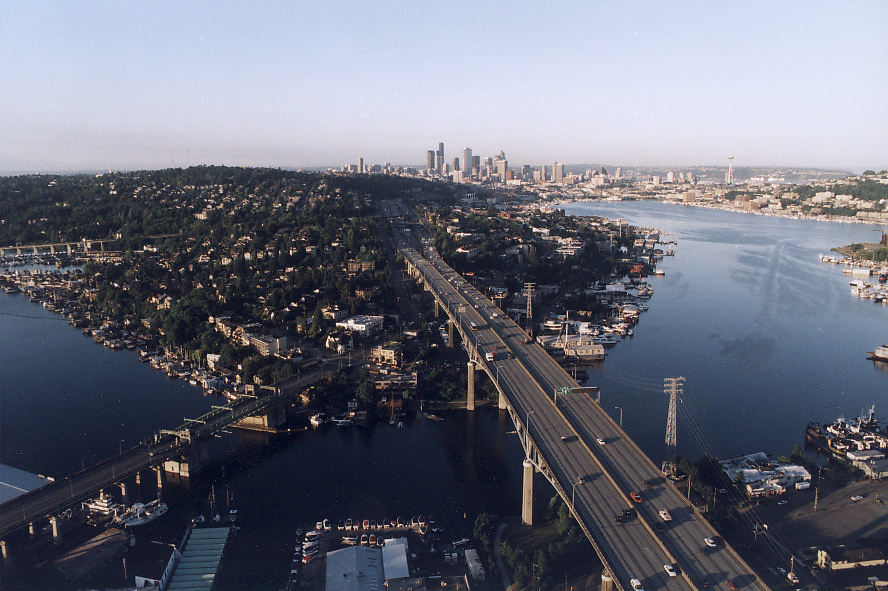
After the collapse, there was a chance that the Iron_Bridge (IwB) could have been totally redesigned, but this is BC. Its very difficult in BC to design transportation infrastructure with significant future capacity. The Iron Bridge should have been built along the lines of the 12 lane Ship_Canal_Bridge (SCB) in Seattle. https://en.wikipedia.org/wiki/Ship_Canal_Bridge 

Unlike Seattle and Washington State, so much in BC is built to a provincial backwater standard. Thus, nothing on the scale of the SCB has ever been allowed in BC. https://pauldorpat.com/2014/05/17/seattle-now-then-the-ship-canal-bridge Sunce an LRT line wasn't possible for the SCB, it runs sort of parallel in a tunnel to the UW. Of course LRT to UBC is still an incomplete BC pipe dream.

The IwB should have had at least 8 lanes on an upper deck and 4 lanes on a lower deck for extra bus and truck lanes. There should have also been a provision for 2 LRT tracks on a lower deck, but that would be properly planning for the future. 

Unfortunately, the Vancouver Mind Virus (VMV) ruined the Burrard-Bridge. The Burrard_Street Bridge (BSB) opened with 6 lanes and a lower level provision for a double track streetcar crossing.

https://www.vancouverisawesome.com/local-news/5-things-you-probably-didnt-know-about-the-burrard-bridge-7129420 

Foolishly, because the city didn't want to build a parallel bike bridge, 2 lanes were removed from the BSB. This has made it very unlikely that the BSB will be able to have 2 bus lanes. No lower level streetcar crossing was ever built. Yet, a streetcar line on both side of False Creek could have been a nice thing to have up and running. Ironically, Vancouver was one of the first cities to get rid of its streetcars and will likely be one of the last to bring them back. The VMV is such a horrible thing, yet it officially doesn't exist. 


https://jfdatalinks.blogspot.com/search?q=Second+Narrows+Bridge

Monday, June 8, 2026

The Unusual transportation approaches used in Vancouver

 https://www.vancouverisawesome.com/history/5-of-a-kind-unusual-modes-of-transportation-used-or-nearly-used-in-vancouver-12388220 

Vancouver is such an unusual and backwards city with its inefficient and congestive approach towards transportation infrastructure.

Getting rid of the streetcars and interurban trams was utterly foolish! Fortunately, such MADNE$$ wasn't adopted in Melbourne, SF, Toronto, Boston, Philadelphia and New Orleans. 

Just because a no freeways mandate was chosen for Vancouver, the streets should have been kept wide enough for busses as well as other vehicles. 

https://movementyvr.ca/the-case-of-vancouvers-nine-missing-bus-lanes

Despite most of the Vancouver bridges being too narrow, some bridge lanes were removed, because the city wasn't interested in building parallel bike bridges. 

Since most of the bridges are so narrow, there isn't enough room for proper express bus lanes. Of course the city isn't interested in building parallel bus bridges next to the narrow bridges. 

Since Vancouver is supposed to be a major, properly functioning city in Western Canada, the city should have pressed the designers of the first 2 Skytrain lines to make sure that all of the 80 m stations could gradually be extended to 152.5 m, the same as the 500 foot long Montreal Metro stations and trains.

Unlike the first 2 Skytrain lines, the Canada Line was only designed to ultimately have 50 m stations and trains. A 2 billion dollar line to YVR could have been designed in such a way that would have allowed it to look and function like a proper big-city passenger train. 

A commuter train to the North Shore keeps taking a long time to be finalized.

https://northshoreconnects.ca/wp-content/uploads/2021/10/BIRT-Benefits-Assessment_Final.pdf

Think small and build backwards, or not at all. 

Friday, June 5, 2026

2 out of 3 is bad, but 4 bridges?

 Apparently, 2 of the 3 Skytrain bridges were never designed to also accommodate bikes.

https://www.google.ca/maps/place/North+Arm+Bridge/@49.2028331,-123.1189681,1005m/data=!3m1!1e3!4m14!1m7!3m6!1s0x548675f84f6c0721:0xbea3ccce242f45a8!2sMarpole+Bridge!8m2!3d49.1995219!4d-123.1268811!16zL20vMGZqMjYx!3m5!1s0x548675e222b072f3:0x1f4afd8a052e9fba!8m2!3d49.2030206!4d-123.1176091!16zL20vMGc1anZj?hl=en&entry=ttu&g_ep=EgoyMDI2MDYwMy4xIKXMDSoASAFQAw%3D%3D 

Unfortunately, all 3 Skytrain bridges weren't designed to have any express bus lanes, never mind any for a proper rapid bus network.

https://www.google.ca/maps/place/Middle+Arm+Bridge/@49.1956263,-123.1347899,597m/data=!3m1!1e3!4m6!3m5!1s0x548675e70cc6d0d1:0x203a51fa759dab7e!8m2!3d49.1957207!4d-123.1351442!16zL20vMGdna3px?hl=en&entry=ttu&g_ep=EgoyMDI2MDYwMy4xIKXMDSoASAFQAw%3D%3D   

In the 1980s, once it was revealed that Skytrain wouldn't be providing a 24 hour service, there wasn't a serious effort to convince the public of the importance of having a 24 hour regional express bus network. Transportation redundancy is difficult to grasp in backwards BC.

https://www.google.ca/maps/place/Marpole+Bridge/@49.2048651,-122.8949547,729m/data=!3m1!1e3!4m7!3m6!1s0x548675f84f6c0721:0xbea3ccce242f45a8!4b1!8m2!3d49.1995219!4d-123.1268811!16zL20vMGZqMjYx?hl=en&entry=ttu&g_ep=EgoyMDI2MDYwMy4xIKXMDSoASAFQAw%3D%3D 

All 3 of there's transportation bridges should have had enough future space for at least a 3rd track. Upon opening, each bridge should have had 2 bus lanes that also could be for emergency vehicles. Each bridge should have had 2 bike lanes and 2 sidewalks. 


https://www.google.ca/maps/place/Marpole+Bridge/@49.1996678,-123.1276435,848m/data=!3m1!1e3!4m6!3m5!1s0x548675f84f6c0721:0xbea3ccce242f45a8!8m2!3d49.1995219!4d-123.1268811!16zL20vMGZqMjYx?hl=en&entry=ttu&g_ep=EgoyMDI2MDYwMy4xIKXMDSoASAFQAw%3D%3D This was allowed to fall apart and eventually catch fire. It was never doubletracked and the interurban trams were phased out by the 1950s. Yet, most of the highways and general road system in SW BC cities are just 2 lanes each way. It was as if there was no need to have a 3rd lane for trucks and a 4th or 5th lane for buses & HOVs. 

https://stevestonheritage.ca/2024/06/21/marpole-cp-rail-bridge

https://jfdatalinks.blogspot.com/search?q=Oak+Street+Bridge

The transportation infrastructure was set up for congestion, right from the start. Having a short Skytrain & small stations might have made economic sense in its initial phase. However, there was a failure to not design it to eventually become a proper big-city size train with much longer stations.


https://jfdatalinks.blogspot.com/search?q=Stubborn+BC

Friday, May 15, 2026

Granville Bridge death was preventable, advocates say

 https://vancouver.citynews.ca/2026/05/14/granville-bridge-death-was-preventable-say-advocates/ 

While the Granville+Bridge needs to have a higher fence like the Burrard+Bridge, there is another remaining pending danger. 

https://vancouversun.com/news/iio-investigates-womans-death-after-9-hour-incident-on-granville-street-bridge 

There is no central safety barrier to prevent head-on collisions. Whether a person becomes disoriented, or actually wants to crash into traffic from the opposite direction, there is no traffic divider.

https://www.ctvnews.ca/vancouver/article/barrier-needed-on-vancouver-bridge-after-another-suicide-death-advocates-say/

The sidewalks could have been made a little wider in a way that there still could have been enough space for a traffic divider. 

https://www.reddit.com/r/vancouver/comments/1td85mt/iio_investigates_womans_death_after_ninehour/ 


https://jfdatalinks.blogspot.com/search?q=Granville+Bridge Was 8 lanes, now 6, but with 2 bike lanes and wider sidewalks.

https://jfdatalinks.blogspot.com/search?q=Burrard+Bridge Was 6 lanes, now 4, but with 2 bike lanes & already good sidewalks. 

Unfortunately, both bridges have no middle safety barrier to prevent head-on collisions, despite their recent modifications. 


The Pattullo+Bridge was too narrow to ever have a traffic divider. Fortunately, its 4 lane replacement does have a central divider. 

https://jfdatalinks.blogspot.com/search?q=Knight+Street+Bridge Only 4 lanes in the middle, but has a traffic safety barrier. The KSB really needs a bus and bike bridge next to it.

https://jfdatalinks.blogspot.com/search?q=Oak+Street+Bridge A traffic divider was eventually installed, but the narrow bridge was never designed to have 2 emergency lanes, or 2 wide shoulders. There especially was no consideration to have 2 bus lanes on the OSB. Since there is no 24 hour train service to the airport, there should be a parallel bus and bike bridge. 

https://jfdatalinks.blogspot.com/search?q=Arthur+Laing+Bridge While it does have a traffic divider, there are no wide emergency lanes or wide shoulders. There isn't even enough space for 2 bus lanes. Thus, a bus and bike bridge really should be built next to it.

Sunday, May 3, 2026

The Cambie Bridge used to have 6 lanes when is opened in the 1980s.

 https://www.youtube.com/watch?v=n2m4n1tUYVM This is heading northbound and shows the proper wide sidewalk that's on the east side of the bridge.

For some reason the sidewalk on the west side of the bridge was made too narrow. Had the sidewalk been as wide as the one on the east side of the bridge, the Vancouver planning department wouldn't have likely reduced a lane. Of course if the city would ever build a proper bike bridge beside the Cambie Bridge, then perhaps the 6th lane might be reactivated. 

A 6 lane Cambie bridge is better than a 5 lane version, or a former 6 lane Burrard Bridge reduced to 4. If both bridges had bike bridges next to them, then 2 lanes of each original 6 lane bridge could have been for busses. However, that goes against the congestive planning agenda that is backwards Vancouver. 

The late 1950s, 6 lane Iron Bridge should have had 2 wide emergency lanes and 2 wide shoulders. Then, the Iron Bridge could have been gradually modified to have 4 lanes each way, plus a bus lane each way. However, having a 10 lane bridge is what a big city would do. Unfortunately, Vancouver city planning has become so engrossed with perpetuating a small city agenda over the decades. 

When most of the regional bridges were built, there was no concept or interest in having them wide enough for bus lanes and wide emergency lanes and wide shoulders. Congestive transportation planning or stunted infrastructure, is one of the best ways in demonstrating a local reluctance to properly build big for the future. Who knows where all the money went over the decades, because it doesn't look like enough of it went towards building wider bridges and having longer trains and stations. 

https://vancouver.citynews.ca/2026/05/02/expo-86-40-years-later-the-memories-live-on

Just mostly more stumps or some real Towers in Vancouver?

 https://cityhallwatch.wordpress.com/2026/05/02/opinion-the-yiyby-critique-bilsker 

https://www.skyscrapercenter.com/building/the-stack/35667 Only 38 floors.

https://en.wikipedia.org/wiki/Royal_Centre_(Vancouver) Just 37 stories. 

https://en.wikipedia.org/wiki/Columbia_Center Seattle's tallest has 76 stories. 

https://en.wikipedia.org/wiki/Ship_Canal_Bridge 12 lanes consisting of three 4 lane sections.

Mostly short buildings, short trains and narrow bridges are all part of the imposed symbolism to keep Vancouver small and backwards. 

While Seattle had its first 50 story office tower in 1969 and Calgary in 1984, stubborn Vancouver still won't permit any office tower to have a 40th floor. 

A 30-35 story office tower would be impressive if it was in Victoria, Kelowna, Kamloops and Prince George. However, what's impressive in backwards Vancouver & backwater BC isn't impressive in Alberta, Ontario, Quebec, Washington State, Victoria State, NSW, Queensland & WA... 

Stumpy buildings, short trains and narrow bridges makes for the Vancouver trifecta of B$ city planning.

https://www.google.com/maps/place/Fort+McMurray,+AB 10 lanes. Only the TCH bridge between Surrey and Coquitlam in BC has been allowed to have as many lanes as this. Some people still wish that everything could have remained funneled into just 2 or 3 lanes each way.

https://www.google.com/maps/place/Quesnell+Bridge 8 lanes in Edmonton. 

https://www.google.com/maps/place/Hwy.+2A+Red+Deer+City+Centre+Bridge 6 lanes.

https://www.google.com/maps/place/Calgary,+AB 10 lanes.

https://www.google.com/maps/place/Calgary,+AB 8 lanes.

https://www.google.com/maps/place/Lethbridge,+AB It has 6 lanes. Being from backwards Vancouver, its amazing that this 6 lane bridge wasn't funneled into just 2 lanes each way. That's what happened with the Knight_Street_Bridge.

https://www.google.com/maps/place/Hwy.+2A+Red+Deer+City+Centre+Bridge As a 5 lane TCH crossing, it only has 1 less lane than the 6 lane Iron Bridge in congested, backwards Vancouver. Since Alberta isn't under anything like the imposed BC restrictions, this crossing will likely be eventually upgraded to have 6 lanes, plus 2 wide emergency lanes & 2 wide shoulders that could provide 4 lanes each way, some day. 

https://www.google.com/maps/place/Winnipeg,+MB A TCH bridge with 9 lanes, because no one from narrow-minded Vancouver was able to get them to narrow this crossing. The TCH Iron Bridge in Vancouver just has 6 lanes. No bus and LRT bridge has ever been built next to it, so far.

https://www.google.com/maps/place/Winnipeg,+MB A 6 lane crossing. 

As of 2026, congested Vancouver only allows 2 bridges to have 6 lanes. A total of 5 lanes were removed from 3 Vancouver bridges. Had Vancouver built a series of proper bus and bike bridges, no lanes would have been removed. 

Despite NW trying to be one of the smallest cities in BC, Surrey is set to become the biggest city in BC. Fortunately, small NW & backwards Vancouver can't stop that from happening. However, narrowminded NW was able to force a narrower new bridge to Surrey. 

This bridge-replacement is one of the best examples of BC bottleneck-chokepoint planning today.

McBride_Blvd. and Royal_Ave_in_New_Westminster are mostly 4 lane corridors.

King_George_Boulevard and Scott_Road both are at least 4 lanes wide. One might think that the new bridge should have had 10 lanes, or at least 8 lanes, because two 4 lane boulevards, a 4 lane avenue and a 4 lane road, are all funneled into a bridge that opened with only 2 lanes each way. The old bridge that it replaced was also a 4 lane crossing. A congestive approach to transportation planning is the name of the game in backwards B.C.

https://upload.wikimedia.org/wikipedia/commons/thumb/d/d7/Stalewasem_Bridge_%282026-03%29.jpg/960px-Stalewasem_Bridge_%282026-03%29.jpg 
At the very least, this new 4 lane bridge should have had enough room for 2 wide emergency lanes, 2 wide shoulders and especially, 2 bus lanes. There should have been a provision for a lower deck for LRT, bus and truck lanes, given that this is supposed to be a seaport region.

The narrowmindedness planning by Greater Vancouver to still have mostly narrow crossings, has made it very difficult to implement a proper regional express bus network, let alone BRT. 

The first 2 Skytrain lines only have station lengths that can barely accommodate the new 5 car trains. The YVR Line or the C Line, has stations than can only accommodate a 2.5 car train, some day. Given that the Skytrain network is a multibillion dollar transit system, all of the stations should have been designed to gradually accommodate 8-10 car trains, but that's what a proper big city would do. 

https://vancouver.citynews.ca/2026/05/02/expo-86-40-years-later-the-memories-live-on 

Four decades later and Greater Vancouver remains so far behind with the scale of its infrastructure.

Wednesday, April 22, 2026

Temporary stal̕əw̓asəm Bridge closure will impact all traffic this weekend for construction

 https://dailyhive.com/vancouver/bridge-temporary-closure-surrey-new-westminster 

Lets open a bridge without 2 wide emergency lanes or 2 wide shoulders. Especially make sure that it didn't open with enough space for 2 bus lanes and 2 HOV lanes. Of course don't design the Bridge to have a potential lower deck for trucks and trains. Its an instant classic BC bottleneck chokepoint! 

https://www.pattullobridgereplacement.ca/about/projectoverview Just like the SkyBridge, apparently, there was no need to open it with 2 bus lanes, despite the train not running 24/7.

Unfortunately, the Bridges_over_the_Fraser_River in the BC Lower_Mainland just weren't designed to have proper bus lanes. Its so strange that the narrow SkyBridge was_for_SkyTrain only. 

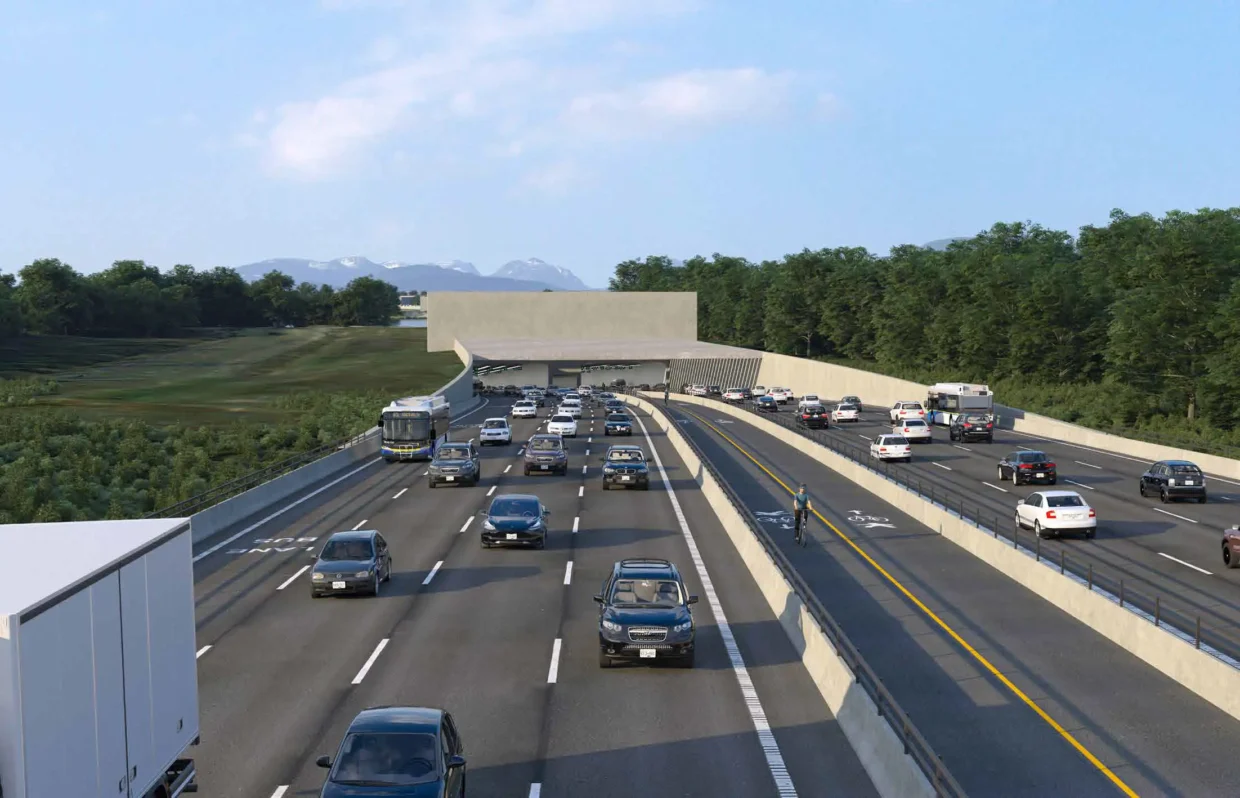
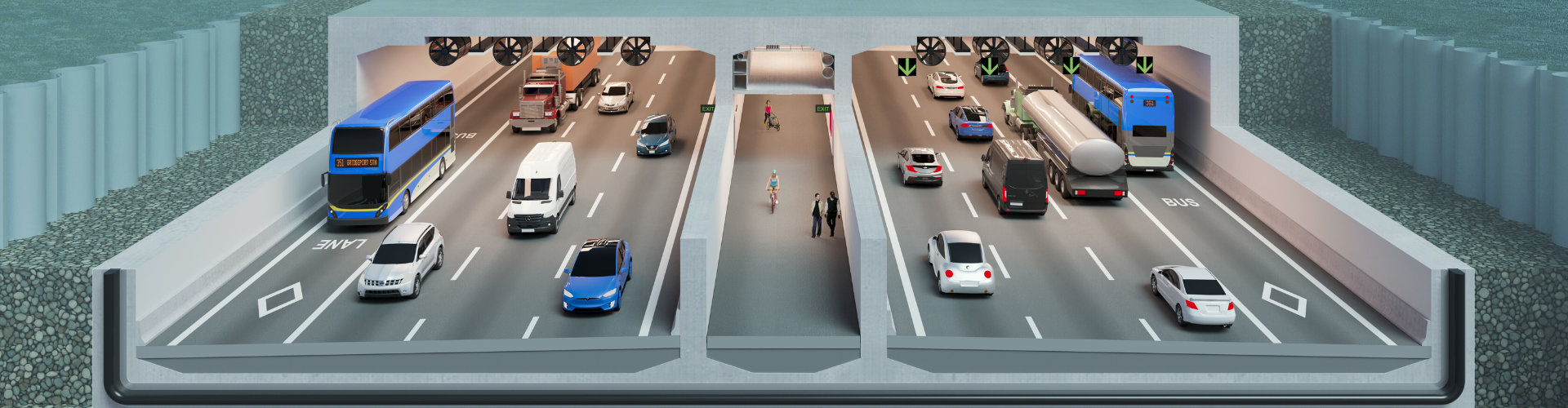
Just like the new tunnel between Richmond and delta, there is no provision for 2 train tracks. While there are 2 bus lanes, there won't be any exclusive HOV lanes. Eventually, there will have to be a proper train and rapid bus bridge or another tunnel beside it. 

https://www.highway99tunnel.ca/project-overview-frt "The Fraser River Tunnel Project includes a new, eight-lane immersed tube tunnel that will replace the existing George Massey Tunnel on Highway 99. The new tunnel will have three vehicle lanes and a dedicated transit lane in each direction, with a separated active transportation corridor for cyclists and pedestrians." 

Given that this is supposed to be a major port region, a train and rapid bus crossing needs to eventually be there. A train connecting YVR to the Tsawwassen Ferry terminal and 2 rapid bus lanes. Then the main tunnel could still provide 3 general lanes each way, plus a HOV lane each way. https://www.infrastructurebc.com/project/fraser-river-tunnel-project/  

Unfortunately, proper big city size infrastructure is a difficult thing to achieve in backwards BC. Since the decision was made to not have a rail component in the new highway99tunnel, the middle 2 bike lanes should have been wide enough to eventually become 2 rapid bus lanes. Then a new bridge or parallel tunnel could have a YVR to ferry terminal train, plus 2 truck lanes, 2 bike lanes an 2 sidewalks. 

This is what a proper big regional port crossing should be like, but for backwater BC, its a different set of priorities. 

Wednesday, April 8, 2026

TransLink to expand bus service on 42 routes across Metro Vancouver this spring

 https://dailyhive.com/vancouver/translink-metro-vancouver-bus-route-changes-spring-2026 

While more frequent bus service is great, unless there is a proper regional bus+and+bike+bridge network, the transit system will still be lacking in its efficiency.

Sunday, April 5, 2026

World Expo 88 in Brisbane

https://en.wikipedia.org/wiki/World_Expo_88 This city was able to do so much after their expo, because they didn't have the same restrictions imposed upon them like what Vancouver has.

 https://www.bie-paris.org/site/en/1988-brisbane 

https://en.wikipedia.org/wiki/Brisbane#Tourism_and_recreation 

https://en.wikipedia.org/wiki/Brisbane#Transport 

It would be disastrous if Brisbane took the Vancouver approach to things.

https://en.wikipedia.org/wiki/Busways_in_Brisbane

https://en.wikipedia.org/wiki/Eleanor_Schonell_Bridge Unfortunatly, such a nice bus and bike doesn't exist in backwards Vancouver. The whole region could greatly benefit from a proper bus and bike network. Most of the bridges in Greater Vancouver are so narrow, there isn't enough room for separate bus lanes. Most of the sidewalks and bike lanes are also too narrow.

https://en.wikipedia.org/wiki/Translink_(Queensland) 

https://en.wikipedia.org/wiki/Bridges_over_the_Brisbane_River#Major_bridges 

https://en.wikipedia.org/wiki/List_of_tallest_buildings_in_Brisbane#Tallest_buildings

Vancouverites have some of the longest commutes in Canada

 https://dailyhive.com/vancouver/vancouver-longest-commute-canada 

With most of the regional bridges being too narrow, there isn't enough space for proper express bus+lanes or BRT lanes. Plus, the first 2 Skytrain lines only have the potential to accommodate 5 car trains. The Canada (Embarrassment) Line wasn't designed to eventually have 5 car trains, only 2.5 car trains. Narrow bridges and short trains are all part of the symbolic reluctance towards having proper big city size infrastructure.


https://jfdatalinks.blogspot.com/search?q=bus+and+bike+bridge

Thursday, April 2, 2026

Major upgrades to busy Queensborough Bridge will close lanes until 2027

https://dailyhive.com/vancouver/queensborough-bridge-upgrades-lane-closures-new-westminster-richmond 

When the Queensborough_Bridge opened in 1960, there wasn't any serious consideration for future capacity. The QB should have had 2 wide shoulders and 2 wide emergency lanes. Then, by the 1980s 2 bus lanes could have been opened. Then, by around 2000 the QB could have had 3 lanes each way, plus 1 bus lane each way.

https://vancouver.citynews.ca/2026/04/02/construction-to-close-queensborough-bridge-lanes-overnight-until-2027

https://www2.gov.bc.ca/gov/content/transportation-projects/other-transportation-projects/queensboroughbridge

https://en.wikipedia.org/wiki/Queensborough_Bridge Unfortunatly in 2026, the QB remains as a 4 lane funnel. Just 2 lanes each way as its another classic BC bottleneck-chokepoint, by design. There is enough space east of the bridge for a new northbound bridge to be built. 

New_Westminster has always been a small city, because it never absorbed what would become the Tri-Cities. Thus, a narrow QB fits in with such a little provincial backwater. However, as part of the BC Lower_Mainland its part of a region with over 3 million people. This puts NW in the position of being a regional hub city. 

https://604now.com/queensborough-bridge-upgrades-richmond-new-westminster-2026-2027/

https://dailyhive.com/vancouver/queensborough-bridge-upgrades-new-westminster-richmond

https://www.patrickjohnstone.ca/2013/07/alas-queensborough-bridge-works.html

http://archives.newwestcity.ca/permalink/24422 , http://archives.newwestcity.ca/permalink/99415/  

https://en.wikipedia.org/wiki/Queensborough,_New_Westminster , https://www.newwestcity.ca/database/rte/122554-QB.PDF

Bike+bridges aren't a problem in many Australian cities and around the world. However, as usual, its more difficult to get such things done in backwards BC.

https://www.newwestcity.ca/database/files/library/Q2Q_Bridge_Brochure_2015_02_02.pdf  

https://www.patrickjohnstone.ca/2013/07/connecting-qb-to-quay.html There should have been a proper bike and foot bridge between Queensborough and downtown NW, decades ago. 

https://www.newwestcity.ca/planning-building-and-development/projects-on-the-go/articles/3475.php


 https://jfdatalinks.blogspot.com/search?q=Queensborough+Bridge

The Pattullo Bridge replacement, so far

 https://www.pattullobridgereplacement.ca/construction/bridge-opening/ 

There are still months of finishing touches.

https://www.pattullobridgereplacement.ca/construction/current-works/ 

Over the course of the year, many more people will start to realize that despite there being adequate bike lanes, there are no bus lanes, no wide shoulders and especially no emergency lanes. Its currently still too narrow for all of that.

https://www.reddit.com/r/SurreyBC/comments/1omufv6/the_new_pattullo_bridge_will_gradually_open_to/  

In fact, the bridge was deliberately designed to be so narrow that there is only enough future deck space for either 2 bus lanes or 2 emergency lanes, but not both. For now, its just another 4 lane BC funnel.

https://www.google.com/maps/place/New+Westminster,+BC 

No lower deck for a potential truck connection between Surrey and Front Street and especially, no lower deck for a future LRT crossing.

https://www.vancouverisawesome.com/highlights/pattullo-bridge-renamed-stalwasm-set-to-open-soon-11595501

It seems that whenever its possible, a 4 lane BC bottleneck-chokepoint is all that's necessary.

https://www.reddit.com/r/SurreyBC/comments/1rb4nmd/bus_connect_surrey_and_coquitlam/ 

It really would be a good idea to eventually have a couple of bus lanes on that bridge, especially since the Skytrain doesn't run 24 hours a day.

https://www.google.com/maps/place/New+Westminster,+BC/@49.2037496,-122.8791442,674m/data=!3m1!1e3!4m6!3m5!1s0x5485d8753ddb5097:0xeca8e918f64dfeee!8m2!3d49.2057179!4d-122.910956!16zL20vMDF2cXEx!5m1!1e1?entry=ttu&g_ep=EgoyMDI2MDMzMS4wIKXMDSoASAFQAw%3D%3D 

Its still amazing how the SkyBridge (1990) was never built with 2 bus lanes, 2 bike lanes and 2 sidewalks. Such is the narrowminded planning methodology that is backwards BC.  

https://en.wikipedia.org/wiki/SkyBridge_(TransLink)#Details   


https://jfdatalinks.blogspot.com/search?q=Pattullo+Bridge+replacement 

https://jfdatalinks.blogspot.com/search?q=Queensborough+Bridge 

https://jfdatalinks.blogspot.com/search?q=SkyBridge

Tuesday, March 31, 2026

List of crossings of the Fraser River on the South Arm

 https://en.wikipedia.org/wiki/List_of_crossings_of_the_Fraser_River#South_Arm  

The Alex_Fraser_Bridge should have opened with 8 lanes with enough width to eventually have 10 lanes. Plus, 2 wide bike lanes and 2 footpaths. A wide emergency lane or wide shoulder that could have eventually become 2 bus lanes.

https://en.wikipedia.org/wiki/Alex_Fraser_Bridge So, instead of an ultimate design of 10 lanes with 2 emergency lanes and a provision for a lower deck, everything was squeezed into only 2 lanes each way. There wasn't even enough planning logic to have a wide shoulder or wide emergency lane on each side in the first phase of construction. It was an instant classic 4 lane BC bottleneck-chokepoint. 

Fortunately, there was at least a provision for it to eventually accommodate 6 lanes and ultimately, a 7th lane was squeezed in. Its still a far cry from being 12 lanes wide or having a lower deck. 

The British_Columbia_Highway_91 should have been properly been built as an effective bypass to the joke that is the 4 lane George_Massey_Tunnel chokepoint. The H-91 and the Alex_Fraser_Bridge should have had 4 lanes each way, plus a bus lane each way. Especially, since there is no train along that corridor and there still isn't enough government interest to have a train next to the George_Massey_Tunnel-Replacement. While the new tunnel will have a bus lane each way, there is no provision for a train tunnel or bridge. This isn't just another case of BC planning shortsightedness, its indicative of the BC Mind Virus. 

The BCMV isn't supposed to be real, but something like it always seems to show up whenever there is a chance to build some proper big city size infrastructure.

Monday, March 30, 2026

Its Not Just About Bus and Bike Bridges

Bike bridges might not be able to totally solve the transportation mess that is Vancouver. However, its quite odd how Vancouver Cycling_Infrastructure is missing a crucial bit of transportation infrastructure. Indeed, many cities will build least 1 proper bike bridge. The Vancouver approach is to take traffic lanes away from existing bridges, or not even bother to build a bike bridge next to a congested bridge. 

https://en.wikipedia.org/wiki/List_of_crossings_of_the_Fraser_River#North_Arm There should have been several bus and bike bridges in just this section alone. 

 https://bicyclenetwork.com.au/newsroom/2024/08/08/striking-perth-bridge-crosses-key-construction-milestone Unfortunatly, such a nice bike bridge in Perth isn't allowed in backwards Vancouver. 

https://www.mainroads.wa.gov.au/projects-initiatives/all-projects/metropolitan/causeway-path/

https://www.wsp.com/en-ca/projects/perths-boorloo-bridge If you are visiting Perth from Vancouver, you might cry when you realize what WA can do, simply because its not influenced or limited by the backwards BC mentality or mind virus.

https://www.destinationperth.com.au/listing/boorloo-bridge/3706 Unlike in backwards Vancouver, many cities build bike bridges so that they don't have to remove traffic lanes.

https://dissingweitling.com/en/project/swan-river-causeway-bridge 

https://www.buildingfortomorrow.wa.gov.au/projects/boorloo-bridge Unfortunatly, properly building-for-tomorrow is much more difficult in backwards BC than it is in WA. 

bike+bridge in the right spot can make a huge difference. A bus+and+bike+bridge can be a huge improvement, especially in the case of Vancouver and the Greater Vancouver Region. 

The Arthur_Laing_BridgeOak_Street_BridgeKnight_Street_Bridge and the Queensborough_Bridge all could be improved simply by building a bus+and+bike+bridge next to them. These bridges are simply too narrow to accommodate 2 bus lanes, 2 wide bike lanes and 2 wide footpaths.

The narrow North_Arm_Bridge for the very short Canada Line trains, is another lost opportunity. There should have been 2 express bus lanes, since the little train doesn't run 24 hours. There should have been 2 wide bike lanes as well as 2 sidewalks. 

Perhaps it was designed to be in the tradition of the narrow SkyBridge between NW and Surrey. Unfortunately, the SkyBridge wasn't designed to help the old Pattullo Bridge by accommodating 2 bus lanes, 2 bike lanes and 2 sidewalks.

While the Pattullo_Bridge_replacement opened with 2 nice bike lanes and 2 footpaths, there was a deliberate decision not to open it with 2 bus lanes and 2 HOV lanes. Especially, no wide emergency lanes or wide shoulders. Its another instant classic BC bottleneck-chokepoint. 

Somehow the Metro_Vancouver_Regional_District still hasn't realized that a regional network of bus and bike bridges can really help the region's mostly narrow bridges. Plus, proper big city long trains. 

https://en.wikipedia.org/wiki/Expo_Line_(SkyTrain) Only started to run some 5 car trains in 2025.

https://en.wikipedia.org/wiki/Millennium_Line Still usually only 2 car train with the option to run 4 and the potential to eventually run 5 car trains.

https://en.wikipedia.org/wiki/SkyTrain_(Vancouver)#Canada_Line Despite a building cost cutting measure, this joke of a train and its short stations still could have been designed with enough level clearance to allow for 5 car trains eventually. Unfortunately, this line was designed to ultimately just have 2.5 car, 50m trains. Since 2009, this line is still only running 2 car trains. 

Multigenerational congestion planning is all by design in backwards BC.


https://jfdatalinks.blogspot.com/search?q=bike+bridges

Sunday, March 29, 2026

RAPID Regional Transit in the Sea to Sky: Connecting Vancouver to Squamish, Whistler, and Pemberton

 https://www.youtube.com/watch?v=OE_W5Vj6OeQ With Greater Vancouver having so many narrow bridges, there must be a regional network of bus and bike bridges, otherwise it all just remains a sad joke.

How bike lanes has affected Vancouver's urban infrastructure https://www.youtube.com/watch?v=LvkifuIjq9I Many cities don't have to remove traffic lanes, because they build proper bike bridges. 

Bike Lanes https://www.youtube.com/watch?v=oez4TTpIQWg With Vancouver being so obsessed with removing lanes from bridges, it becomes much more difficult to have bus lanes on the narrow bridges. 

A bike bridge should be built next to the Burrard, Granville and Cambie bridges. Then there would be enough room for each of them to accommodate 2 bus lanes. Things are so mixed up in backwards Vancouver.

Saturday, March 28, 2026

Vancouver 1960s vs Today: The Shocking Difference

 https://www.youtube.com/watch?v=JnMLMp_gf1w 

Unlike Toronto, SF and Melbourne, Vancouver was one of the first cities to get rid of streetcars and tram-trains or interurbans. Backwards Vancouver will likely be one of the last cities to ever bring them back. 

No office tower in Vancouver was allowed to have a 30th floor before the 1970s. https://en.wikipedia.org/wiki/TD_Tower_(Vancouver) The first 30 story office tower in backwater BC opened in 1972. As of 2026, no office tower in Vancouver, or anywhere in BC has been permitted to have a 40th floor. 

As of 2026, no Skytrain stations are even close to the length of the Montreal Metro, TTC subway and underground Edmonton LRT stations. 

Unfortunately, almost every city around the world is expensive. Its just that you get less of things in Vancouver. Short trains, short buildings, narrow bridges and mostly narrow streets. 

Thus, its no surprise that there isn't a regional network of bus-bridges. Congestive transportation planning is what Vancouver does best. 

Vancouver seems to be reluctant in constructing a network of bike-bridges. The city would rather remove a total of 5 lanes from 3 bridges for bike lanes. 

Broadway will eventually be reduced from 6 lanes to 4 lanes so that even some small towns will have wider major streets.  

https://en.wikipedia.org/wiki/Vancouver

https://en.wikipedia.org/wiki/List_of_the_largest_municipalities_in_Canada_by_population 

https://en.wikipedia.org/wiki/Lower_Mainland

Monday, March 9, 2026

Repairs on the Ironworkers Bridge

 https://dailyhive.com/vancouver/ironworkers-memorial-bridge-lane-closures-vancouver 

Unfortunatly, when this bridge was designed, there was no serious consideration to have 2 wide emergency lanes and 2 wide shoulders. Then, the Iron Bridge could have gradually been adapted to accommodate 2 bus lanes and 2 HOV lanes. At the very least, a bus, HOV and commuter train bridge should have been built next to the inadequate Iron Bridge back in the 20th century.

https://en.wikipedia.org/wiki/Ironworkers_Memorial_Second_Narrows_Crossing Opened August 25, 1960  

https://en.wikipedia.org/wiki/Granville_Street_Bridge Opened February 4, 1954 https://upload.wikimedia.org/wikipedia/commons/thumb/0/0c/View_of_downtown_Vancouver_from_the_Granville_Street_Bridge.JPG/960px-View_of_downtown_Vancouver_from_the_Granville_Street_Bridge.JPG

https://en.wikipedia.org/wiki/Oak_Street_Bridge Opened June 29, 1957 https://upload.wikimedia.org/wikipedia/commons/thumb/5/5f/Oak_Street_Bridge.jpg/960px-Oak_Street_Bridge.jpg  

https://en.wikipedia.org/wiki/Knight_Street_Bridge Opened January 15, 1974 https://upload.wikimedia.org/wikipedia/commons/f/f0/Knight_Street_Bridge.jpg

https://en.wikipedia.org/wiki/Arthur_Laing_Bridge Opened 27 August 1975 

https://evelazarus.com/third-crossing-here-we-go-again Somehow, Vancouver just never got around to building a bus and train tunnel or bridge in between the Lion Bridge and the Iron Bridge. Since Skytrain doesn't run 24 hours, there needs to be 24 hour bus lanes. 

https://www.pc.gc.ca/apps/dfhd/page_nhs_eng.aspx?id=11273 Some day, the Lion Bridge could become a nice bus and bike bridge, if a highway tunnel could ever be built under the park and beside the LGB. 

Unfortunately, the Vancouver Mind Virus (VMV) keeps getting in the way of progress. Just look at how short the Canada Line trains are.

Saturday, March 7, 2026

Burrard Street Bridge closes for Sen̓áḵw crane removal

 https://www.ctvnews.ca/vancouver/article/burrard-street-bridge-closes-for-senakw-crane-removal 

Several cities have parallel bike bridges, then the city planners don't have to remove traffic lanes. 

https://vancouversun.com/news/vancouver-burrard-street-bridge-temporarily-closure 

Unfortunatly, the Burrard_Bridge (BB) was hit hard by the multigenerational Vancouver Mind Virus (VMV). The Burrard_Bridge was designed to have a lower level for streetcars or tram-trains, but the city never followed through. Fortunately, the VMV was unable to stop Portland and Seattle from reviving some of their streetcar lines.  

The Burrard_Street_Bridge used to have 6 lanes and 2 wide sidewalks. However, since the city has a problem of not building separate bike bridges, 2 potential bus lanes were removed from the Burrard_Bridge. Now, if the city ever wants to have 2 dedicated bus lanes, the BB will only have 1 general lane each way. That's the VMV at work.

https://en.wikipedia.org/wiki/Burrard_Bridge#History

Wednesday, February 25, 2026

Vancouver council boosts budget for roads, sidewalks by $70M

More than 60 per cent of Vancouver’s arterial roads, local streets considered in fair to very poor condition https://www.biv.com/news/economy-law-politics/not-sexy-but-fundamental-vancouver-council-boosts-budget-for-roads-sidewalks-by-70m-11921125 

The cities roads and streets are so inadequate, but Vancouver isn't allowed to become a proper big city.

The decision to not carve up small Vancouver with freeways between the 1950s and 1970s was a wise and novel idea at the time. However, there wasn't any proper foresight over the past several generations to make sure that the cities mostly narrow bridges didn't become bottleneck-chokepoints. 

By now, every bridge should have had a bus and HOV bridge built next to it. Instead, 2 lanes were removed from the Burrard Bridge, 1 lane from the Cambie Bridge and 2 from the Granville Bridge. 

Conveniently, no bike bridges were ever built next to those bridges. Apparently, what was disguised as a cost saving measure by not building proper bike-bridges, the decision was made to remove traffic lanes from some bridges. This all seems to be part of the bottleneck planning mentality. 

It's amazing how several cities around the world are able to build bike-bridges, simply because they aren't under anything like the backwards Vancouver planning agenda.