Showing posts sorted by date for query trains. Sort by relevance Show all posts

Wednesday, August 5, 2026

The office stumps of Vancouver, BC

No office tower in Vancouver has eve been permitted to have a 40th floor.

https://skyscraperpage.com/b106925/vancouver/the-stack

https://skyscraperpage.com/b63/vancouver/royal-centre

https://skyscraperpage.com/b5828/vancouver/b5

https://skyscraperpage.com/b66/vancouver/park-place

https://skyscraperpage.com/b64/vancouver/four-bentall-centre

https://skyscraperpage.com/b65/vancouver/the-scotia-tower

https://skyscraperpage.com/b98113/vancouver/the-exchange

https://skyscraperpage.com/b67/vancouver/toronto-dominion-tower-at-pacific-centre

https://skyscraperpage.com/b41476/vancouver/b6

https://skyscraperpage.com/b100729/vancouver/vancouver-centre-2 

https://skyscraperpage.com/b7191/vancouver/200-granville-square

https://skyscraperpage.com/b68/vancouver/three-bentall-centre

https://skyscraperpage.com/b6162/vancouver/320-granville 

https://skyscraperpage.com/b60/vancouver/harbour-centre The office floors don't even get above 28. https://www.skyscrapercenter.com/vancouver/harbour-centre/4144 If the Harbour_Centre office floors had continued right up to the base of the flag-pole, it would be equivalent to 40 stories. However, the revolving_restaurant is more equivalent to 35 floors. With the height to the tip of the antenna as being 177.1 m (581 ft), the flag could be considered to be at the equivalent of 48th floors. But there are no floors in the flag-pole.

Had the flag-pole or antenna not been built, the Harbor Centre would have been slightly shorter than the original height of the tallest Giza_pyramid.

https://en.wikipedia.org/wiki/Great_Pyramid_of_Giza "Initially standing at 146.6 metres (481 feet), the Great Pyramid was the world's tallest human-made structure for more than 3,700 years." https://en.wikipedia.org/wiki/Great_Pyramid_of_Giza#Pyramidion_and_missing_tip

https://skyscraperpage.com/diagrams/?searchID=117075754&page=1 

Only 2 buildings in restrictive Vancouver have been allowed to be taller than the Cairo_Tower and the Space_Needle. Only 1 building in Vancouver has been allowed to be taller than the Calgary_Tower

Vancouver is about implementing short buildings, short trains and narrow bridges. Since the multigenerational power structure can't build a wall around the city to keep people out, the next best thing is to symbolically take a small scale approach to things. Thus, its very difficult for proper BIG city stuff to get built in backwards Vancouver. 

BC is 23 times larger than Switzerland, yet it doesn't even have the population of one CH. 

Despite Canada being the 2nd largest nation in overall area, it has less than half of 1% of the worlds population. Thus, Canada is but a spec of the worlds population. 

Saturday, July 25, 2026

Friday, July 24, 2026

Concept for Western Canada's tallest tower in Vancouver may need to be shortened to comply with federal aviation requirements

 https://dailyhive.com/vancouver/holborn-bay-parkade-vancouver-supertall-tower-nav-canada-federal-aviation 


https://en.wikipedia.org/wiki/Billy_Bishop_Toronto_City_Airport 

In addition to Toronto having much taller buildings than Vancouver, Boston and LV have buildings taller than the current tallest in Vancouver.

https://en.wikipedia.org/wiki/Logan_International_Airport 

https://en.wikipedia.org/wiki/Harry_Reid_International_Airport 


Once again, its like the Vancouver Mind Virus is getting charged up. Whenever a proper big city size project is planned the VMV interferes to stop or at lest water things down. 

You can't have tall buildings in Vancouver, just like you can't have long trains or proper big city bridges. 

Friday, July 3, 2026

Smith Tower in Seattle, WA (1914)

https://en.wikipedia.org/wiki/Smith_Tower "Completed in 1914, the 38-story, 462 ft (141 m) tower was among the tallest skyscrapers outside New York City at the time of its completion." 

https://upload.wikimedia.org/wikipedia/commons/thumb/6/68/L_C_Smith_Building%2C_Seattle%2C_1914

It would take almost 6 decades until stubborn Vancouver finally permitted a building to be of a similar height.

https://en.wikipedia.org/wiki/Royal_Centre_(Vancouver) "The skyscraper stands at just under 145m tall and 37 storeys. Royal Centre was the tallest building in Vancouver upon completion in 1973..." 

https://upload.wikimedia.org/wikipedia/commons/thumb/0/06/Royal_Centre_Vancouver.jpg/500px-Royal_Centre_Vancouver.jp 

Fortunately, Seattle+and+Perth never adopted anything like the VMV approach to things. Thus, they are able to have longer airport trains, wider bridges and significantly taller buildings.


https://jfdatalinks.blogspot.com/search?q=LC+Smith+Tower+in+Seattle

Saturday, June 27, 2026

How much will Vancouver change by 2036?

 https://www.youtube.com/watch?v=OJtotvMq2ls 

The Lion+Bridge will likely still not have an express bus and LRT tunnel near it. The+Iron+Bridge still might not have a proper BRT and LRT bridge next to it. The OSB and the KSB will likely not have a bus and bike bridge built beside them. There will still likely be no new Fraser Street Bridge for bikes and buses. No Boundary Road bridges to provide a direct link between the North Shore and Richmond for buses, trucks and bikes.

While the first 2 Skytrain lines will have 5 car trains, the stunted YVR-Canada Line will only have 2.5 car trains. Vancouver still might not permit any office tower to have a 40th floor, but might allow some residential towers to be on a Melbourne, Sydney, Brisbane & Toronto scale. 

However, BIG city thinking and planning in Vancouver has always been so difficult. Boston, SF and the City of Paris are ridiculously small cities like Vancouver with all 3 having a land area of less than 50 sq. mi. or 129.5 sq. km. Yet, Boston, SF and especially the City of Paris, have all been able to fit so much more into the same general space. That's because they aren't bound by anything like the inept and extreme Vancouver type restrictions. 


Sunday, June 21, 2026

How the Seattle to Vancouver area could become a megaregion

 https://www.youtube.com/watch?v=POcg0oFvVf8 

The larger Portland, Seattle and the Vancouver, BC (V-BC) region has a lot of growth potential. However, Seattle size buildings haven't been allowed in Portland and in Vancouver, BC. Nothing like a 12 lane Ship Canal Bridge has been allowed in Portland and Vancouver. While Oregon and backwater BC haven't been able to thwart the largest city in Washington State, Seattle might eventually become more of a magnet in pulling more people into the area between Portland and V-BC. 

Right now, Vancouver, WA (V-WA) still has a wider bridge than V-BC. Most of the V-BC bridges are so damn narrow that its not possible to have an efficient regional express bus network. As long as there is a refusal to build proper BRT bridges as part of a regional system, it remains a sad joke. 

The Skytrain (LRT) was built with shorter stations than what the underground stations in Seattle and Edmonton are at. Whenever possible, the Skytrain stations are shorter than the C Train stations in Calgary, DART stations in Dallas and even the Max in Portland. 

The biggest mistake of the Skytrain was to not build all of the stations with a future level clearance to eventually have Montreal Metro size stations of 500 feet or 152.5 m. Instead, the first 2 lines only have 80 m stations and the line to YVR (The Canada embarrassment Line) is only 50 m. Backwater BC logic is that a 5 car Skytrain could run twice as frequent as a 9 car Montreal Metro train. Someday, a 2.5 car YVR-Canada Line train could also run much more frequently than a 9 car Montreal Metro train. 

There is just one key problem with that type of BC logic. While initially constructing short stations and having short trains can save money, its not proper BIG city size infrastructure. In the long run, it costs more to try to lengthen stations for longer BIG city type trains. 

Wednesday, June 17, 2026

Can the SkyTrain in BC, Canada ever become a very high capacity system?

 Why BC, Canada Got it Right With its New SkyTrain https://www.youtube.com/watch?v=dqo_KAEF81k 

The argument is that a mostly elevated train can move more people than an 8-10 lane elevated freeway, at much less the cost. However, any major urban grade-separated LRT system should be designed to eventually become a very high capacity conduit.

The first 2 lines only have 80 m stations, which are just a little more than half the length of a 152.5 m Montreal Metro station. Unfortunately, the line to Richmond only has a designed level clearance for 50 m stations, not even quite a 3rd of the length of a Montreal Metro station platform. 

While it might seem economical to opt for short trains and stations, the Skytrain stations should have still been designed to eventually become more like a proper big city train station allowing for much higher capacity. 

The first 2 lines can run the newest 5 car trains, but the 3rd line can only run 2.5 car trains, some day.

Monday, June 8, 2026

The Unusual transportation approaches used in Vancouver

 https://www.vancouverisawesome.com/history/5-of-a-kind-unusual-modes-of-transportation-used-or-nearly-used-in-vancouver-12388220 

Vancouver is such an unusual and backwards city with its inefficient and congestive approach towards transportation infrastructure.

Getting rid of the streetcars and interurban trams was utterly foolish! Fortunately, such MADNE$$ wasn't adopted in Melbourne, SF, Toronto, Boston, Philadelphia and New Orleans. 

Just because a no freeways mandate was chosen for Vancouver, the streets should have been kept wide enough for busses as well as other vehicles. 

https://movementyvr.ca/the-case-of-vancouvers-nine-missing-bus-lanes

Despite most of the Vancouver bridges being too narrow, some bridge lanes were removed, because the city wasn't interested in building parallel bike bridges. 

Since most of the bridges are so narrow, there isn't enough room for proper express bus lanes. Of course the city isn't interested in building parallel bus bridges next to the narrow bridges. 

Since Vancouver is supposed to be a major, properly functioning city in Western Canada, the city should have pressed the designers of the first 2 Skytrain lines to make sure that all of the 80 m stations could gradually be extended to 152.5 m, the same as the 500 foot long Montreal Metro stations and trains.

Unlike the first 2 Skytrain lines, the Canada Line was only designed to ultimately have 50 m stations and trains. A 2 billion dollar line to YVR could have been designed in such a way that would have allowed it to look and function like a proper big-city passenger train. 

A commuter train to the North Shore keeps taking a long time to be finalized.

https://northshoreconnects.ca/wp-content/uploads/2021/10/BIRT-Benefits-Assessment_Final.pdf

Think small and build backwards, or not at all. 

Tuesday, June 2, 2026

Seoul's Subway System Is Decades Ahead of many others

 https://www.youtube.com/watch?v=PPlGQDpx4xg 

While there could be a reasonable argument that if a subway or elevated line isn't expected to be that busy in its first few years, then just build half-size stations and run half-length trains. However, in the case of backwards Vancouver, what should have been stations that were designed to accommodate at least 5 car trains, were only designed for an eventual 2.5 car train. Thus, it will be challenging enough just to modify the incredibly short Canada Line stations to gradually accommodate 3 full-size 20 m cars, not just some 2.5 car joke of a train for a 50 m station. 

Fortunately the Skyline_(Honolulu) stations can accommodate a 4 car train right from the start. Someday, with SDO a 4 car train could become a 6 car train.

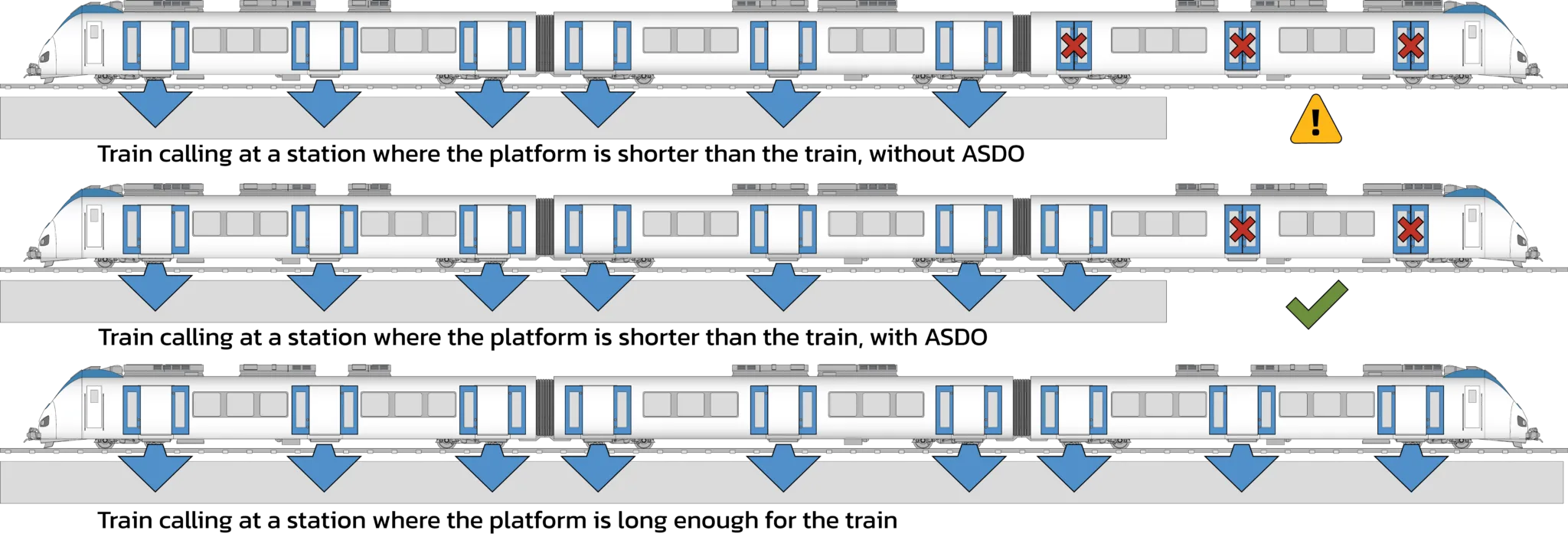
If Selective+Door+Operation (SDO) can ever be implemented on the YVR-Canada Line then it can go from being a 2 car joke of a train to a 3 car attempt of a train. Then, once people got used to 3 car trains, an extra car could be added at both ends, thus allowing for a 5 car train. 

Ultimately, the YVR-Canada+Line should have been designed as a proper big-city size train with 8-10 cars. There seems to be such a lack of proper long-term transportation infrastructure planning in BC. To just build a small-scale line as a symbolic demonstration of reluctance towards the Pacific Rim is so absurd. 

Fortunately, Melbourne, Sydney and Brisbane never opted for such a short train.  


There Is a Hidden City Under Seoul Nobody Talks About. https://www.youtube.com/watch?v=pIewf8sOZ0I

Metro Manila trains

 https://www.youtube.com/watch?v=aUoRrZOC0Lk

Monday, June 1, 2026

Yaletown–Roundhouse station's fare gate capacity increased by 66%

 https://dailyhive.com/vancouver/skytrain-yaletown-roundhouse-station-additional-fare-gates-completed 

The Canada line is such a watered down version of what should have been a proper big city airport and ferry rapid transit link. Just because this infrastructure project had to be scaled down during its first phase, the stations still could have been designed to eventually accommodate 5-6 car trains. Unfortunately, the stations were only designed to accommodate a 2.5 car train. While this perfectly fits in with the inept urban transportation mentality and especially fits in with the BC congestive transportation agenda, this is another sad result. 

https://dailyhive.com/vancouver/skytrain-yaletown-roundhouse-station-fare-gate-expansion

Despite being downtown with several condominiums around, the Yaletown-Roundhouse_station is too small for an inner-city station.

https://en.wikipedia.org/wiki/Yaletown-Roundhouse_station#Station_information 

https://upload.wikimedia.org/wikipedia/commons/thumb/f/f4/Yaletown_Roundhouse_Stn.jpg/1280px-Yaletown_Roundhouse_Stn.jpg 

There is barely enough level clarence beyond the short platform for another car. To remedy this inadequate situation, this line needs to have three full-size cars, not just some eventual 2.5 car joke of a train. 

https://www.eke-electronics.com/automatic-selective-door-operation-asdo 

Then eventually, once people got used to a 3 car train, an extra car could be added at each end, resulting in a 5 car train. Its a workaround that can eventually enable the 3rd line or the C Line to run 3-5 cars trains to meet demand. 

Then the Exp. Line and Mil. Line, or what could become A & B lines with standard 5 car trains. However, during the busy times, a 7 car train could be possible with selective-door-operation technology. 

It would have been better to have just built all of the Skytrain stations long enough for 5 car trains in the first place, with enough level track clearance for 10 car trains eventually.

Friday, May 29, 2026

First train now rolling on Broadway Subway for active testing ahead of late 2027 opening

https://dailyhive.com/vancouver/broadway-subway-millennium-line-skytrain-extension-train-testing

Nothing like testing with trains from the 1980s in the 2020s.

 https://www.vancouverisawesome.com/local-news/broadway-subway-project-first-run-vancouver-2026-12350017 


https://jfdatalinks.blogspot.com/search?q=Skytrain

The Houston Galleria and Galleria Dallas

 https://en.wikipedia.org/wiki/The_Galleria 

https://en.wikipedia.org/wiki/Galleria_Dallas 

Texas is a place where thinking BIG has been going strong for almost a century. 

By the year 1900, NYC had to start thinking and building on a big-city scale, simply out of necessity.

https://www.nypl.org/blog/2015/03/11/nyc-big-apple 

https://en.wikipedia.org/wiki/Big_Apple 

In contrast, backwater BC has a tough time keeping up with Alberta and Washington State. Especially with Ontario and Quebec. BC is 75% mountainous and has a seawater barrier on its west side. Still, its almost as if some people would like to have a wall around BC, or even a forcefield like out of Star Trek. 

Keeping things small and backwards in BC whenever possible seems to be part of a multigenerational symbolic agenda. 

Its as if there is something like a BC Mind Virus (BCMV).

Texas has more people than Australia and California has more people than Canada. Despite its overall size, Canada has less than 1% of the worlds population. 

Singapore is on an island that's smaller than all of NYC or Chicago, even. Yet, it has proper big-city trains, bridges, roads and buildings.