https://dailyhive.com/vancouver/car-public-transit-commuters-transportation-mode-canada-statistics
Friday, August 25, 2023
Tuesday, August 22, 2023
Thursday, August 17, 2023
Wednesday, August 16, 2023
Monday, August 14, 2023
Sunday, August 13, 2023
Friday, August 11, 2023
Wednesday, August 9, 2023
6.4bil-extension-project-for-montreal-s-blue-metro-line-gets-underway
https://www.mtlblog.com/montreal/everything-we-know-about-the-montreal-metros-blue-line-extension
https://www.stm.info/en/about/major_projects/major-metro-projects/blue-line-extension
https://mtlcityweblog.com/the-blue-line-extension-a-timeline/

Saturday, August 5, 2023
Friday, August 4, 2023
Thursday, August 3, 2023
Tuesday, August 1, 2023
The Montreal (REM) light rail line on the 8 lane Samuel-De Champlain Bridge
https://www.planetizen.com/news/2023/08/124945-new-rem-light-rail-launches-montreal
As long as the REM trains can eventually become double their length, then Montreal can avoid the Vancouver LRT delema. While short and frequent trains can be an initial cost saving measure, there should always be a provision to eventually have longer stations and trains. The joke that is the Canada Line wasn't designed to ever have stations long enough to accomodate 5 car trains. The ridiculous 2 car trains can only be lengthened up to a 2.5 car train, due to the absurd 50m stations.
https://rem.info/en/reseau-express-metropolitain
https://en.wikipedia.org/wiki/Samuel-De_Champlain_Bridge
https://jfdatalinks.blogspot.com/search?q=REM+Train
https://jfdatalinks.blogspot.com/search?q=Samuel-De+Champlain+Bridge
Monday, July 31, 2023
Montreal Metro, REM train vs. Vancouver SkyTrain comparison
https://dailyhive.com/vancouver/montreal-rem-vancouver-skytrain-comparison
https://en.wikipedia.org/wiki/R%C3%A9seau_express_m%C3%A9tropolitain#Main_line
If the SkyTrain could ever have significantly longer stations & longer trains, then it might become on a similar capacity level as the Montreal Metro. Indeed, the SkyTrain should not only be significantly longer that the REM train, but eventually as long as a Montreal Metro train.
The first 2 SkyTrain lines should have had stations that could eventually accommodate 10 car trains. The slightly upgraded stations will only be able to accommodate the newest 5 car trains, not 10 or even 8 cars.
https://en.wikipedia.org/wiki/Alstom_Metropolis_Saint-Laurent#Comparison_with_Montreal_Metro_trains
The YVR-Canada_Line should have been started with 5 car trains, but the stations were only designed to accommodate a 2.5 car joke of a train. The absurdly short stations are only 50 m and don't have enough level clearance to become 100 m, especially not 150 m. Its a fine example of how Vancouver just can't seem to properly plan for growing infrastructure demands. The Montreal Metro has stations that are 152.5 m (500'), which can accommodate 9 car trains.
https://en.wikipedia.org/wiki/R%C3%A9seau_express_m%C3%A9tropolitain#Stations
A 4 car REM train with selective door technology could allow an extra car at each end to become a 6 car train. If there is enough level station clearance for significant extension, then the REM could easily run 6 or maybe even 8 car trains. Selective door technology is really good for trains limited to short platforms. It easily allows a 2 car extension of a shorter train. However, its still better that any half-length station has enough space for proper expansion.
Fortunately, the Edmonton_LRT underground stations were far enough away from the influence of the backwards BC planning mentality.
https://en.wikipedia.org/wiki/Capital_Line#Stations
| Churchill | Underground |  Metro Line Metro Line Valley Line[a] Valley Line[a] | Downtown | April 22, 1978 | 53°32′39″N 113°29′21″W |
| Central | Underground | Metro Line | Downtown | April 22, 1978 | 53°32′28″N 113°29′31″W |
| Bay/Enterprise Square | Underground | Metro Line | Downtown | June 21, 1983 | 53°32′27″N 113°29′54″W |
| Corona | Underground | Metro Line | Downtown | June 21, 1983 | 53°32′27″N 113°30′21″W |
| Government Centre | Underground | Metro Line | Downtown | September 1989 | 53°32′10″N 113°30′37″W |
| University | Underground | Metro Line |

https://en.wikipedia.org/wiki/Metro_Line#Stations
Despite the Seattle Link_light_rail being much closer to backwards Vancouver than Edmonton is, Seattle had no problem with having longer underground stations than what's in shortsighted BC.
https://en.wikipedia.org/wiki/1_Line_(Sound_Transit)#Stations
https://en.wikipedia.org/wiki/2_Line_(Sound_Transit)#Stations
Fortunately, the Skyline_(Honolulu) like the REM can easily run 4 car trains, while the YVR-Canada Line is still just running 2 car joke trains.
https://en.wikipedia.org/wiki/Skyline_(Honolulu)#Route
https://en.wikipedia.org/wiki/Skyline_(Honolulu)#Rolling_stock
https://en.wikipedia.org/wiki/Skyline_(Honolulu)#Timeline_of_progress
The backwards BC mindset, or the BC Mind Virus hasn't been able to influence Alberta & Washington State, Hawaii & Australia...
Thursday, July 27, 2023
Wednesday, July 26, 2023
Tuesday, July 18, 2023
West Georgia Street in Vancouver
https://www.pinterest.ca/pin/west-georgia-street-rush-hour-vancouver-bc--72550243987409307
https://dailyhive.com/vancouver/skytrain-north-vancouver-west-vancouver-north-shore
The Lions+Gate+Bridge is a classic 3 lane bottleneck, or the quintessential urban chokepoint. The LGB could become an excellent foot, bus & bike bridge, if only a tunnel could be built close to it.
Five-blocks east of the park, Georgia Street is continually seven lanes wide.
https://vancouver.ca/streets-transportation/west-georgia-complete-street.aspx
While that segment of W. Georgia_Street is 7 lanes wide, an 8 lane tunnel could cross the 1st Narrows. A 7 lane tunnel might be a little cheaper with a middle centre lane section & barrier, two 4 lane compartments would be much better. During the morning, all 4 lanes could be heading into Vancouver with 1 as a HOV lane. Then, during the afternoon, all 4 northbound lanes would be open with the 4th being a HOV lane.
The 4 lane northbound tunnel could emerge just north of the LGB. Then the surface route could connect to Marine Drive and then turn onto Capilano Road. The Cap interchange is already there. Simply moving the yellow line over one lane would allow 3 lanes of northbound traffic on Capilano Road.
A reconfigured TCH & Taylor Way interchange could allow for 3 southbound lanes right down to the mall, simply by moving the yellow line over 1 lane. Then, a 3 lane Taylor Way southbound tunnel could start just south of the Marine Drive intersection. A southbound HOV lane would have to be routed into it.
https://vancouversun.com/news/local-news/this-week-in-history-the-great-georgia-harris-viaduct-opens-in-1915 Aparently, no one bothered to make sure that the 4 lane structure could properly support streetcars. Thus, the inept city couldn't use it as a major east-west streetcar route.
https://spacing.ca/vancouver/2011/06/16/the-viaducts-past-present-and-future-part-1 Even in the 1970s there was no concept to have an express bus corridor betwen Vancouver, Burnaby & Coquitlam.
https://viewpointvancouver.ca/2015/01/13/john-mackie-the-georgia-viaduct-and-the-freeway-fight-1972
Then when the first 2 SkyTrain lines were built, the stations were barely half the length of the 152.5 meter Montreal Metro stations. Evidently, this was to save money, but the stations should have still been built to proper big city standards. Then to further reinforce the symbolism of congestive planning agenda, the 3rd line only has enough clearance for 50 meter stations.
Sydney started to have taller buildings than Vancouver by the early 1960s. https://ca.pinterest.com/pin/west-georgia-street-1960--497647827546801125 It took until the end of the 1960s for Melbourne to start having taller buildings than Vancouver. Then as Melbourne soared into the 1970s, Vancouver started to create a series of overlapping restrictions to thwart the city.
https://www.pinterest.ca/pin/british-columbia-vancouver-skyline-1970s-with-possible-building-site-of-west-coast-transmission-building--716424253196467928 Despite being a Pacific city, Vancouver & Canada don't seem to be interested in having a proper metropolis on the scale of Sydney, Melbourne & Brisbane. The tallest buildings in Vancouver must be shorter than even the tallest in Perth, Seattle & Calgary. Most of the roads & bridges are to be half the width & the trains are also to be a half-length joke. Thus, Greater Vancouver has been in a perpetual state of congestion.
Sunday, July 16, 2023
Saturday, July 15, 2023
Thursday, July 13, 2023
CenterPoint Energy Tower, Houston
https://en.wikipedia.org/wiki/CenterPoint_Energy_Plaza
https://skyscraperpage.com/cities/?buildingID=1089
https://www.houstonarchitecture.com/Building/2164/CenterPoint%20Energy%20Tower.php

https://www.keatingarchitecture.com/center-point-energy
https://en.wikipedia.org/wiki/List_of_tallest_buildings_in_Houston
Tuesday, July 11, 2023
Monday, July 10, 2023
Wednesday, July 5, 2023
Tuesday, July 4, 2023
Friday, June 30, 2023
Thursday, June 29, 2023
Friday, June 23, 2023
Monday, June 19, 2023
Congestive urban planning in backwards BC
Most bridges in Greater Vancouver are so narrow, because there was no provision to have bus and HOV lanes. The+Lion+Bridge+and+The+Iron+Bridge are 2 classic examples of not constructing additional infrastructure to accommodate bus lanes, HOV lanes and especially, rail rapid transit. That's because such improvements would actually go against the congestive urban planning agenda.
https://en.wikipedia.org/wiki/Lacey_V._Murrow_Memorial_Bridge , https://www.historylink.org/file/21298 A narrow 4 lane BC type bridge was upgraded to an 8 lane crossing, plus 2 LRT tracks for WA.
https://en.wikipedia.org/wiki/Narrows_Bridge_(Perth) From a basic bridge to a nice 10 lane crossing with 2 train tracks for WA. https://structurae.net/en/structures/narrows-bridge Its great that the horrible backwards Vancouver mentality never made it to Perth. https://www.abc.net.au/news/2019-11-13/perth-narrows-bridge-60-years-since-construction/11697812 Unfortunately, Vancouver & BC have done their darndest to prevent a similar nice, wide crossing, which also includes 6_car_trains. While backwards Vancouver & BC didn't want to build wider infrastructure simply to accommodate more drivers, the funds didn't seem to go towards a regional rapid bus or at least an express bus & HOV network with its own set of bridges. The SkyTrain should have been designed with a provision to eventually have stations at least as long as those on the Montreal Metro, which can accommodate 9 car trains on a 500 ft platform or 152.5 m. https://heritage.engineersaustralia.org.au/wiki/Place:Constructing_Narrows_Bridges
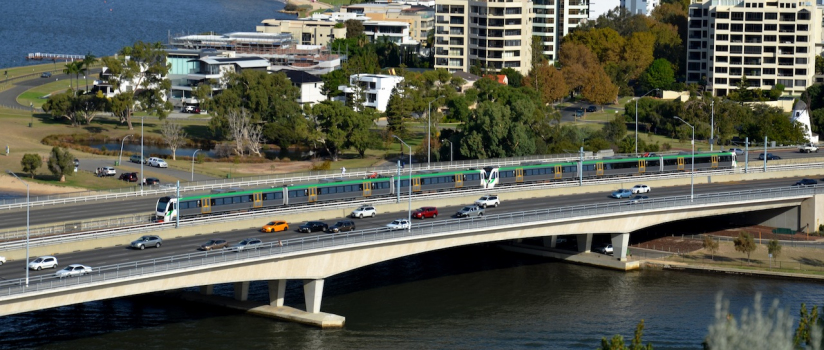
The old Champlain_Bridge_in Montreal just had 3 lanes each way & no provision for a train. Where as the new Samuel-De_Champlain_Bridge provides 4 lanes each way & has 2 REM train tracks. https://www.samueldechamplainbridge.ca Fortunately, Montreal, like Seattle & Perth was able to have a nice wide bridge with 2 train tracks in the middle. https://en.wikipedia.org/wiki/Samuel-De_Champlain_Bridge#Construction_method
Montreal, Seattle & Perth are allowed to exist on a larger scale than backwards Vancouver, because they don't have the same imposed restrictions. Urban Quebec and urban WA are able to do so much more, because they aren't hindered by anything like the backwards BC mentality.
Risk assessment model of bottlenecks for urban expressways using survival analysis approach https://www.sciencedirect.com/science/article/pii/S235214651730474X
https://jfdatalinks.blogspot.com/search?q=Perth+and+Seattle
Perth, WA and Seattle, WA
Perth and Seattle are fine examples of what hasn't been allowed in Vancouver, BC. Perth has good year round weather & better infrastructure than Vancouver. While Seattle can almost have as much cold & crappy damp Vancouver weather, it's not a thwarted city. Perth & especially Seattle permit taller buildings, wider bridges & have longer trains.
https://www.westernaustralia.com/en/places-to-visit/perth-and-surrounds/travel-to-and-around-perth
https://en.wikipedia.org/wiki/Perth#Transport
https://en.wikipedia.org/wiki/Narrows_Bridge_(Perth) 10 lanes with 2 commuter train tracks in the middle. This was possible, because WA isn't thwarted by anything like the imposed restrictions in the BC part of Canada.

https://en.wikipedia.org/wiki/Windan_Bridge , https://en.wikipedia.org/wiki/Goongoongup_Bridge
https://en.wikipedia.org/wiki/Railways_in_Perth#Routes_and_services
https://en.wikipedia.org/wiki/Airport_line,_Perth#Stations
https://en.wikipedia.org/wiki/Airport_line,_Perth#Rolling_stock
https://en.wikipedia.org/wiki/Mandurah_line
https://upload.wikimedia.org/wikipedia/commons/a/a8/High_Wycombe_train_gn1.jpg

https://en.wikipedia.org/wiki/Perth_railway_station#/media/File:Perth_station_platform2.jpg

https://en.wikipedia.org/wiki/Seattle#Transportation
https://www.soundtransit.org/blog/platform/making-i-90-floating-bridge-stronger-longer-lasting-trains This crossing provides 4 Lanes each way with 2 tracks for LRT.
https://www.reddit.com/r/Washington/comments/qr4avd/i90_floating_bridges_in_seattle_in_fall/#lightbox Unfortunatly, Vancouver isn't allowed to have such a wide highway and train crossing. WA is able to plan and build on a much larger scale than what restrictive BC permits.

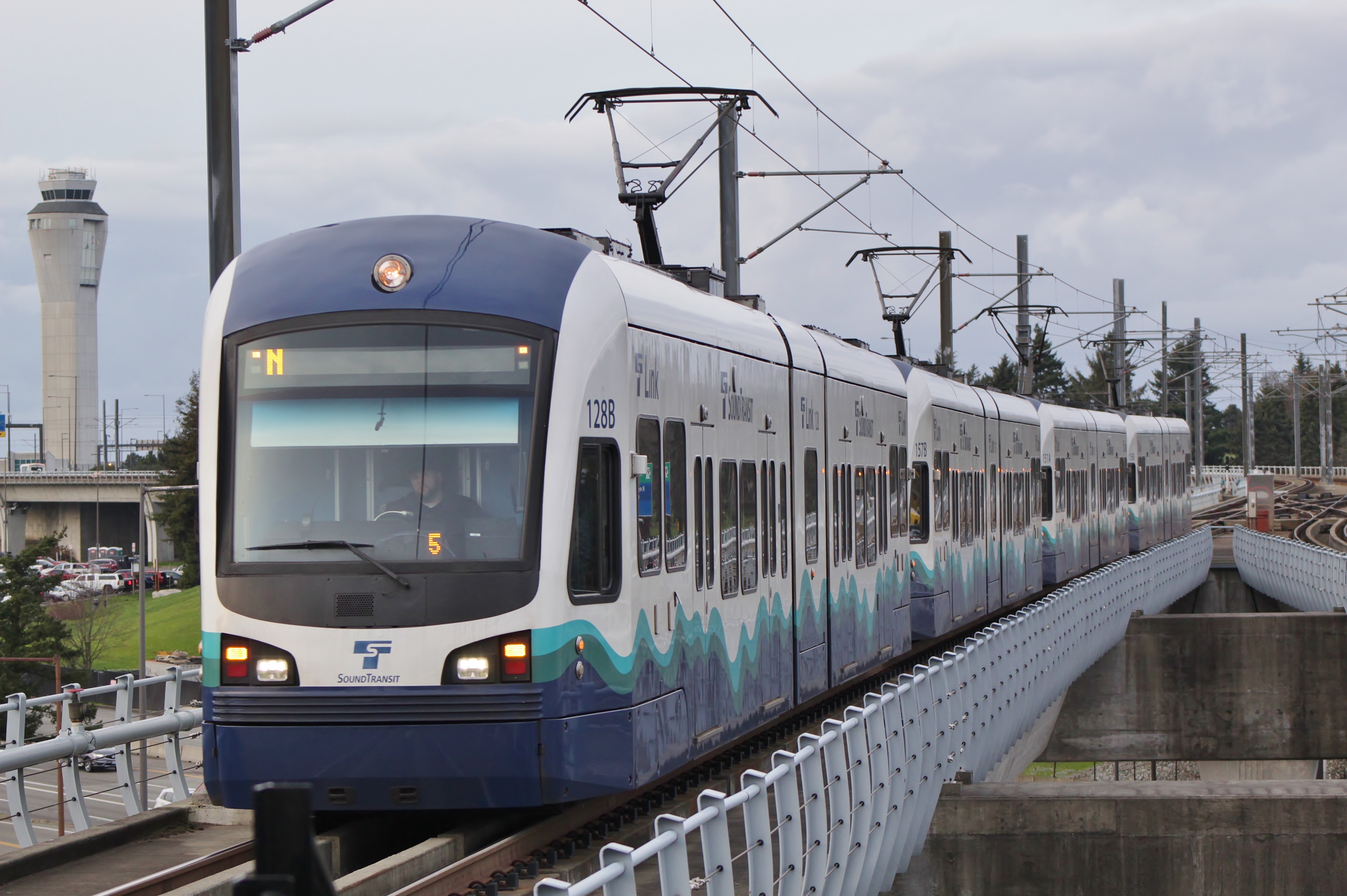
Essentially, Perth+and+Seattle both have been able to develop on a grander urban scale than what the restrictive Vancouver Mind Virus allows. There is just something about the small-scale thinking of backwater BC that hasn't caught on with, or been adopted by WA.
Albany, Western Australia
https://en.wikipedia.org/wiki/Albany,_Western_Australia
https://gsdc.wa.gov.au/our-region/city-of-albany
https://en.wikipedia.org/wiki/Port_of_Albany
https://www.westernaustralia.com/en/places/albany/56b266bb2cbcbe7073ae06bd
https://www.wa.gov.au/system/files/2021-11/LST-Albany.pdf
https://profile.id.com.au/albany/population-estimate
https://www.google.com/maps/place/Vancouver+Peninsula+WA+6330,+Australia
https://www.google.com/maps/place/West+Cape+Howe+National+Park
https://www.icontainers.com/us/2020/01/20/top-10-ports-australia
https://www.marineinsight.com/know-more/8-major-ports-in-australia
https://www.porttechnology.org/news/top-5-ports-in-australia-2021
https://container-news.com/top-10-the-busiest-container-ports-in-oceania
https://en.wikipedia.org/wiki/List_of_busiest_ports_by_cargo_tonnage
Friday, June 16, 2023
Thursday, June 15, 2023
Wednesday, June 14, 2023
Tuesday, June 13, 2023
Sunday, June 11, 2023
The 6 and then 4 lane Burrard St. Bridge (BSB)
https://www.vancouverisawesome.com/local-news/5-things-you-probably-didnt-know-about-the-burrard-bridge-7129420 The BSB used to have 6 lanes, but was reduced to 4, because the city didn't want to build a parallel bike bridge.
https://vancouverhistory.ca/places/burrard-bridge
Hopefully, the VMV will never cause the removal of 2 lanes from the congested 6 lane Second+Narrows+Bridge.
https://vancouverhistory.ca/events/collapse-of-the-second-narrows-bridge
https://jfdatalinks.blogspot.com/search?q=Burrard+Bridge A parallel bike bridge could allow the BSB to have 6 lanes again, with 2 of them for buses.
https://jfdatalinks.blogspot.com/search?q=Second+Narrows+Bridge A parallel express bus or BRT bridge with 2 truck lanes and 2 LRT tracks would greatly improve crossing capacity.
Friday, June 9, 2023
Monday, June 5, 2023
Saturday, June 3, 2023
Monday, May 29, 2023
Saturday, May 27, 2023
Thursday, May 25, 2023
Chicago eL
https://interactive.wttw.com/chicago-by-l/sidetracks/history-l , https://www.youtube.com/watch?v=7NPCFnF4csA
https://www.947wls.com/2022/02/28/this-is-where-the-cta-el-train-is-its-loudest/
https://interactive.wttw.com/chicago-by-l/sidetracks/how-cta-map-got-its-colors
https://www.youtube.com/watch?v=n6xJFpPY_7s&t=2019s CTA
https://www.youtube.com/watch?v=sLti1BiNCPE OH
Saturday, May 20, 2023
Wednesday, May 17, 2023
Sunday, May 14, 2023
Saturday, May 13, 2023
Wednesday, May 10, 2023
Monday, May 8, 2023
Friday, May 5, 2023
The new Highway 99 Tunnel with an eight-lane immersed tube tunnel.
https://www.highway99tunnel.ca/
https://news.gov.bc.ca/releases/2022TRAN0012-000176
https://globalnews.ca/tag/massey-tunnel/
https://dailyhive.com/vancouver/steveston-interchange-george-massey-tunnel-vs.-bridge-richmond
https://globalnews.ca/news/9112754/massey-crossing-replacement-delay/
Surrey-Langley-Skytrain Line
https://www.surrey.ca/services-payments/parking-streets-transportation/surrey-langley-skytrain
https://www2.gov.bc.ca/gov/content/transportation-projects/surrey-langley-skytrain
https://www2.gov.bc.ca/gov/content/transportation-projects
https://jfdatalinks.blogspot.com/search?q=Surrey-Langley+SkyTrain
Thursday, May 4, 2023
Tuesday, May 2, 2023
Monday, May 1, 2023
Saturday, April 29, 2023
Thursday, April 27, 2023
Wednesday, April 19, 2023
Sunday, April 16, 2023
TTC
https://www.metrolinx.com/en/projects-and-programs/union-station
https://en.wikipedia.org/wiki/Ontario_Line
https://www.metrolinx.com/en/projects-and-programs/ontario-line
https://www.infrastructureontario.ca/en/what-we-do/projectssearch/ontario-line/
https://www.metrolinx.com/en/projects-and-programs/finch-west-lrt
https://www.metrolinx.com/en/projects-and-programs/eglinton-crosstown-west-extension
https://www.metrolinx.com/en/projects-and-programs/eglinton-crosstown-lrt
https://www.metrolinx.com/en/projects-and-programs/scarborough-subway-extension
Thursday, April 13, 2023
Wednesday, April 12, 2023
Tuesday, April 11, 2023
Friday, April 7, 2023
Thursday, April 6, 2023
Wednesday, April 5, 2023
Sunday, April 2, 2023
Seattle Underground Stations
Beacon Hill's 400-foot-long (120 m) split island platform is located between the two Beacon Hill Tunnel tubes, with a small cross-tunnel passageway between the two sections of the platform.
https://en.wikipedia.org/wiki/Beacon_Hill_station_(Sound_Transit)#Station_layout , https://en.wikipedia.org/wiki/1_Line_(Sound_Transit)#Stations , https://en.wikipedia.org/wiki/Capitol_Hill_station#Station_layout , https://en.wikipedia.org/wiki/Westlake_station_(Sound_Transit)#Station_layout , https://en.wikipedia.org/wiki/1_Line_(Sound_Transit)#Route
https://en.wikipedia.org/wiki/Link_light_rail#Rolling_stock
seattle metro
train stations
Subscribe to:
Posts (Atom)