http://jfdatalinks.blogspot.ca/search?q=urban+tech:
http://www.streetline.com/blog/5-urban-technology-trends
http://mashable.com/2012/12/26/urban-tech-wish-list/#HtHB1R7ktaqh
http://postscapes.com/journal-of-urban-technology ,
http://www.researchgate.net/journal/1063-0732_Journal_of_Urban_Technology
http://www.urbantech.com
http://jf-databits.blogspot.ca/2015/11/urban-tech.html::
https://www.google.ca/search?q=urban+technology+and+science
Showing posts sorted by relevance for query Urban Technology. Sort by date Show all posts
Showing posts sorted by relevance for query Urban Technology. Sort by date Show all posts
Monday, November 23, 2015
Friday, September 15, 2023
Urban Technology intersection
https://therabbitportal.blogspot.com/search?q=The+15+Minute+City
https://www.tandfonline.com/toc/cjut20/current
https://www.youtube.com/watch?v=nnyRZotnPSU
UTi is at...
https://jfdatalinks.blogspot.com/search?q=Urban+Technology
https://therabbitportal.blogspot.com/search?q=Urban+Technology

Saturday, September 11, 2010
Urban Tech Links (UTL)
Urban+Tech+Links is about what makes (or allows) some cities to be BIG or remain small, or somewhere in between. Perhaps almost every city or town will have its peculiarities, myths or urban_legends & even some synchronicity.
UTL ranges from referencing old & new tech involving urban things, statistics & legends & sci-fi stories that are connected to the fusion of buildings, inventions & technology in general. An integral part of this blog network is exploring architecture & symbolism , coincidence and synchronicity. Some of the coolest sites are, http://ancientx.com , www.history.com/shows/ancient-aliens , www.cyberpunkreview.com , www.technovelgy.com , www.world-mysteries.com , www.wired.com , http://io9.com
https://en.wikipedia.org/wiki/John_Frankenheimer#Film ,
http://en.wikipedia.org/wiki/Jon_Favreau#Filmography
The Face of Serendipity
"The name stems either from Serendip, an old name for Ceylon (modern Sri Lanka), or from Arabic Sarandib, or from Skt. Simhaladvipa which literally translates to "Dwelling-Place-of-Lions Island."
http://en.wikipedia.org/wiki/Serendipity#Etymology,
http://www.etymonline.com/index.php?search=serendipity&searchmode=none
The_Roots & Interpretation_of_Coincidence
The Meaning of Synchronicity
UTL ranges from referencing old & new tech involving urban things, statistics & legends & sci-fi stories that are connected to the fusion of buildings, inventions & technology in general. An integral part of this blog network is exploring architecture & symbolism , coincidence and synchronicity. Some of the coolest sites are, http://ancientx.com , www.history.com/shows/ancient-aliens , www.cyberpunkreview.com , www.technovelgy.com , www.world-mysteries.com , www.wired.com , http://io9.com
https://en.wikipedia.org/wiki/John_Frankenheimer#Film ,
http://en.wikipedia.org/wiki/Jon_Favreau#Filmography
The Face of Serendipity
"The name stems either from Serendip, an old name for Ceylon (modern Sri Lanka), or from Arabic Sarandib, or from Skt. Simhaladvipa which literally translates to "Dwelling-Place-of-Lions Island."
http://en.wikipedia.org/wiki/Serendipity#Etymology,
http://www.etymonline.com/index.php?search=serendipity&searchmode=none
The_Roots & Interpretation_of_Coincidence
The Meaning of Synchronicity
Example:
Tuesday, March 31, 2009
Why is the urban scale of Vancouver, Canada being held back?
There has been a tremendous push to stunt or thwart the scale of Vancouver for generations.
https://skyscraperpage.com/cities/?buildingID=921 The Empire Landmark Hotel was the first building in Vancouver to be permitted to reach or exceed 40 floors in 1973. https://skyscraperpage.com/diagrams/?searchID=111091599&offset=50
https://skyscraperpage.com/cities/?buildingID=20415 Yacht Harbor Tower I (1972) 40 floors https://skyscraperpage.com/diagrams/?cityID=421&searchname=timeline Honolulu
While on the surface a no freeway mandate makes sense for not carving up the city, but the mostly narrow bridges don't have proper bus and HOV lanes.
This is a general URBAN referencing blog that is not intended to be used for spam purposes.
UTL:
Cities, people & things in general, all become part of a vast database.
https://en.wikipedia.org/wiki/Statistics#History_of_statistical_science
Essentially any technology, idea & concept becomes part of the global data-pool.
Cities, people & things in general, all become part of a vast database.
https://en.wikipedia.org/wiki/Statistics#History_of_statistical_science
Essentially any technology, idea & concept becomes part of the global data-pool.
Urban Tech Links .:. UTL
UTL - Personal observations of the urban world from a backwards Vancouver and backwater BC perspective. Indeed, it's always amazing to see what so many other cities can do, simply because they don't have anything like a Vancouver, Victoria & BC mentality to hold them back.
_(20897376415).jpg/640px-Flight_from_Honolulu_to_Hilo._Over_Sand_Island_and_Honolulu_(503729)_(20897376415).jpg)

Honolulu and
Perth, WA are in such nice climate zones. They are a couple of the most isolated major cities on the planet.
In some ways, Australia has been able to surpass Canada, despite it having a smaller land area & less population than Canada. Unlike Montreal & especially Vancouver, Perth & especially Melbourne, Sydney & Brisbane, have allowed several taller buildings than what is allowed in Montreal & Vancouver.
However, Honolulu's_tallest_buildings still haven't been permitted to even be as tall as the 2 tallest in the Giza_pyramid_complex in Cairo, Egypt.
Urban Tech Links is a basic blog about referencing tall buildings & urban technology in various cities in general. Thus, it's mostly just a list of various urban and tech links. It's also about comparing various cities & infrastructure.
Some cities like to have narrow bridges, short trains & small buildings, like Vancouver, while many others cities reach for the sky.
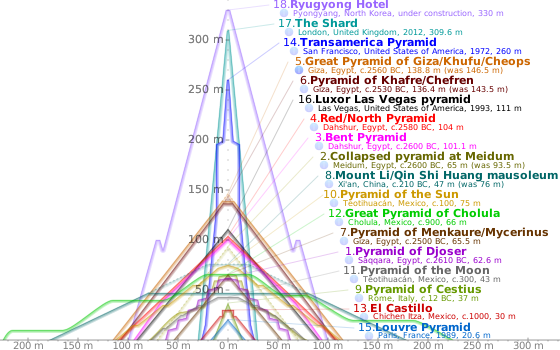
There is a point when a lot of major cities start to permit buildings to be taller than the 2 tallest pyramids in Egypt. https://en.wikipedia.org/wiki/Egyptian_pyramids
Paris & London, NYC & Chicago, Tokyo & Seoul...
The BC part of Canada has tried to keep its infrastructure as small as possible for as long as possible.
It wasn't until the 1970s when strict & stubborn Vancouver started to allow for some buildings to be almost as tall as the 2 tallest Egyptian pyramids. https://skyscraperpage.com/diagrams/?searchID=105524651&offset=50
1973 Royal_Centre_(Vancouver) not quite as tall as .:.
1977 Harbour_Centre not counting the flagpole, its still shorter than the original height of the tallest Egyptian pyramid.
2001 One_Wall_Centre, not including its spire, was the first building in Vancouver & BC to be taller than the tallest pyramid in Egypt.
For most of Vancouver's history, the city refused to permit any building to be taller than the pyramid on top of the 496' Custom_House_Tower in Boston, the 462' Smith_Tower in Seattle, the 453' Los_Angeles_City_Hall. Of course today they are all just like stumps. 481' and 471' are the original heights of the 2 tallest in the Giza_pyramid_complex.


"Initially standing at 146.6 metres (481 feet), the Great Pyramid was the world's tallest human-made structure for more than 3,800 years. Over time, most of the smooth white limestone casing was removed, which lowered the pyramid's height to the current 138.5 metres (454.4 ft)"
 {The origin of Al-Qahirah is said to come from the appearance of the planet Mars during the foundation of the City of Cairo. The planet Mars, which in Greek was called Ares, was associated with ruin or destruction and was called Al Najm Al Qahir in Arabic. Al Najm Al Qahir is transliterated as "the destroyer star [planet]".} http://en.wikipedia.org/wiki/Cairo#Etymology
| Height | Original: 146.6 m (481 ft) or 280 cubits Current: 138.5 m (454 ft) |
|---|
| Height | Currently: 136.4 metres (448 ft) Original: 143.5 m (471 ft; 274 cu) |
|---|
"The 1997 study noted that the opportunities for buildings significantly exceeding existing permitted heights were limited. There were a total of five sites where buildings exceeding the 450 foot height limit are possible and two sites in the northwest corner of the Central Business District where heights up to 400 feet (exceeding the 300 foot limit) could be considered." https://council.vancouver.ca/20030515/pe2.htm
Indeed, it's tough to believe that for the longest time, any building in the BC part of Canada had to be considerably shorter than the Washington_Monument in DC or the Philadelphia_City_Hall.
Then Vancouver wouldn't permit any building to be as tall as the Cairo_Tower.
https://en.wikipedia.org/wiki/Cairo_Tower "At 187 m (614 ft), it was the tallest structure in Egypt for 37 years until 1998..."
2016 was when a Hotel-Condo was allowed to be slightly taller than the Cairo-Tower.
The Cairo_Flagpole is the world's tallest flagpole, at 201.952 m (662 ft 7 in) tall. No building in Vancouver is allowed to be as tall.
The Living_Shangri-La tower is close, but not quite.
Of course Vancouver, BC & even Canada can't stop Egypt from building big & tall.
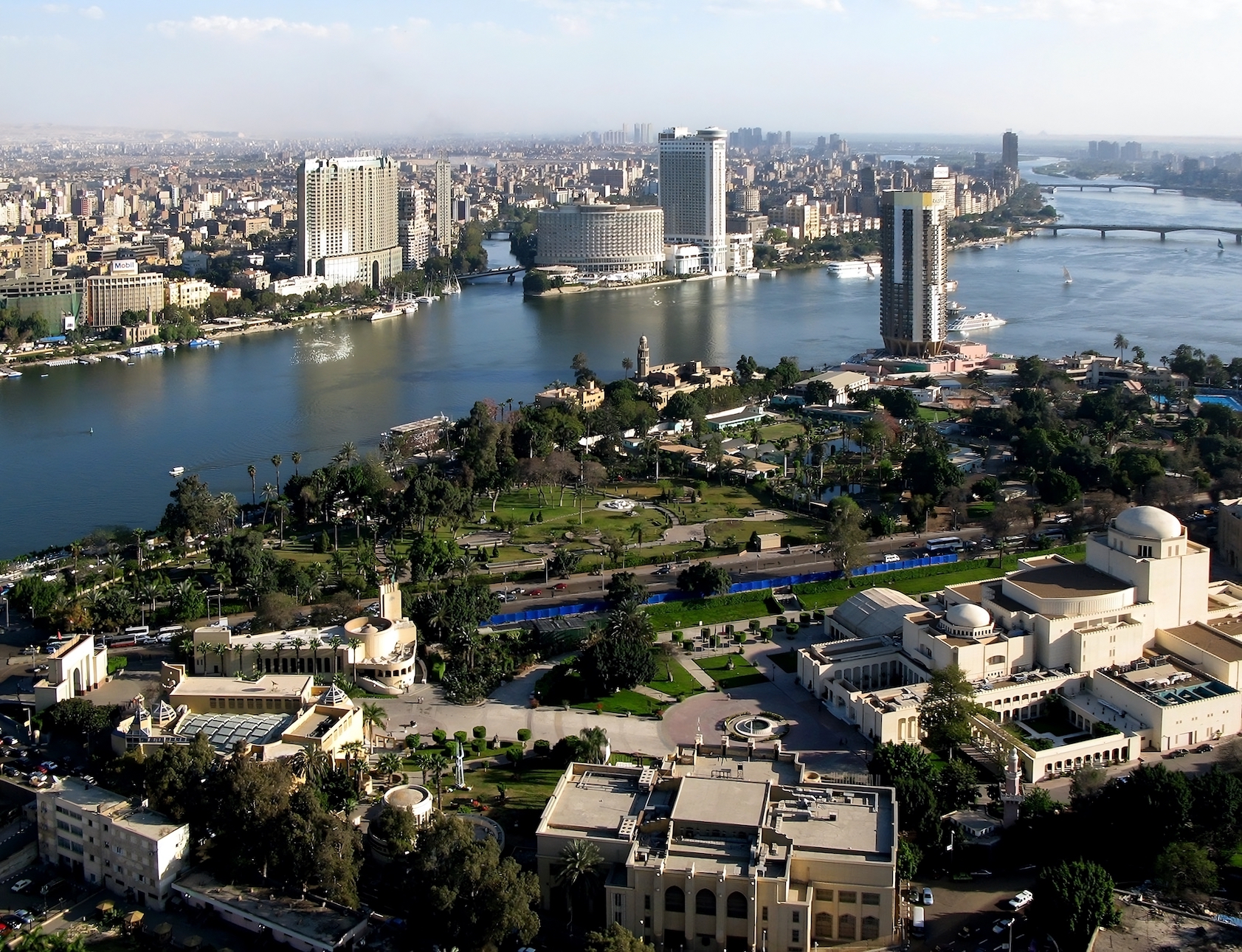
https://www.atlasobscura.com/places/the-cairo-washington-dc Washinton, DC made sure that going into the 20th century, it was going to have mostly low rise buildings like Paris & London or Berlin. However, the Greater Paris Region would eventually allow some tall buildings in certain areas. London even moreso. Yet, Greater London & Metropolitan Paris, certainly have allowed some tall buildings.
Vancouver has been under a multigenerational set of restrictions as well as a small thinking & planning agenda. Part of this might be attributed to a backwater BC mentality. However, some parts of Greater Vancouver are allowed to build on a grander scale.
Edmonton, Seattle, Portland & eventually Calgary will all have underground train stations longer than what's in Vancouver. Yet, Vancouver could have really benefited from having proper big city long stations. Most of the regions bridges are so narrow that its difficult to have a proper bus lane & HOV lane system. But Vancouver & BC are all about inefficiency. Things might eventually improve if enough people someday start to see the growing gap between what most cities allow vs. stubborn Vancouver.
https://metropolisfilm.fandom.com/wiki/Joh_Frederson
Alphaville is one of the best cautionary stories about the AI run, totalitarian smart-city scenario.
THX_1138 is the quintessential movie about AI & machines running an underground totalitarian city. https://en.wikipedia.org/wiki/THX_1138#Plot
Logan's_Run is another interesting totalitarian smart-city movie.
Blade_Runner is one of the best urban Sci-Fi movies ever made.
https://en.wikipedia.org/wiki/Blade_Runner#Plot
http://www.city-data.com/forum/religion-spirituality/845605-humans-originate-mars.html,
http://www.bibliotecapleyades.net/marte/esp_marte_14.htm,
http://mars-earth.com/earthpage.htm
http://fusionanomaly.net/orion.html, http://fusionanomaly.net/bladerunner.html,
http://vigilantcitizen.com/hidden-knowledge/connection-between-sirius-and-human-history
More about, UDL: https://jfdatalinks.blogspot.com/search?q=urban
https://www.polygon.com/gaming/2012/9/11/3318910/nasa-scientist-believes-we-could-all-be-in-a-video-game
 Civilization_(computer_game)
This reference blog is of a non profit nature.
Jacque_Fresco is one of many people throughout history with their own perspectives on civilization. https://www.forbes.com/2007/10/13/jacque-fresco-prediction-tech-future07-cx_1015fresco.html?sh=4107813c607f Some interesting ideas, but perhaps with a utopian angle.
http://www.city-data.com/forum/religion-spirituality/845605-humans-originate-mars.html,
http://www.bibliotecapleyades.net/marte/esp_marte_14.htm,
http://mars-earth.com/earthpage.htm
http://fusionanomaly.net/orion.html, http://fusionanomaly.net/bladerunner.html,
http://vigilantcitizen.com/hidden-knowledge/connection-between-sirius-and-human-history
More about, UDL: https://jfdatalinks.blogspot.com/search?q=urban
https://www.polygon.com/gaming/2012/9/11/3318910/nasa-scientist-believes-we-could-all-be-in-a-video-game
 Civilization_(computer_game)


http://www.mindmined.com/public_library/nonfiction/jake_horsley_gnosticism_reborn.html ,
http://hplusmagazine.com/2009/10/19/ghost-shell-why-our-brains-will-never-live-matrix ,
http://hplusmagazine.com/2009/10/19/ghost-shell-why-our-brains-will-never-live-matrix ,
The Universe seems to be a vast Multi-channel of space & time that originated from a central point of energy. But what or who started this Big_Bang of cosmic information? Its like a cosmic projection program running inside an immense planetarium. The energy of nature or part of a creators plan. Thus either nature or a conscious creator has set up a cosmic matrix of space & time. Humans are just beginning to try to understand how an intelligent force of creation set this all up. Computer models factor into the study of reality & VR helps to illustrate different phases & parts of the universe.

http://sciencenews.org/view/generic/id/34497/title/Building_The_Matrix,
http://www.wired.co.uk/news/archive/2012-10/11/universe-computer-simulation,
http://www.popsci.com/technology/article/2012-10/how-do-we-know-were-not-living-inside-massive-computer-simulation,
http://www.newscientist.com/article/mg21628950.300-the-idea-we-live-in-a-simulation-isnt-science-fiction.html
http://www.wired.co.uk/news/archive/2012-10/11/universe-computer-simulation,
http://www.popsci.com/technology/article/2012-10/how-do-we-know-were-not-living-inside-massive-computer-simulation,
http://www.newscientist.com/article/mg21628950.300-the-idea-we-live-in-a-simulation-isnt-science-fiction.html
-
http://en.wikipedia.org/wiki/Simulated_reality#Intermingled , Simcity, the Sims & more...
http://io9.com/5950543/physicists-say-there-may-be-a-way-to-prove-that-we-live-in-a-computer-simulation
http://io9.com/5950543/physicists-say-there-may-be-a-way-to-prove-that-we-live-in-a-computer-simulation
-
http://www.dailymail.co.uk/sciencetech/article-2216189/Do-live-Matrix-researchers-say-way-prove-do.html ,
http://www.extremetech.com/extreme/143180-probing-the-matrix-is-our-universe-simulated-and-if-so-by-who
http://thedigitallabyrinth.blogspot.ca/2012/03/cosmic-computer-hypothesis.html
Computer modeling provides the best way to extrapolate copious amounts of data.
http://www.extremetech.com/extreme/143180-probing-the-matrix-is-our-universe-simulated-and-if-so-by-who
http://thedigitallabyrinth.blogspot.ca/2012/03/cosmic-computer-hypothesis.html
Computer modeling provides the best way to extrapolate copious amounts of data.
The Hundredth_monkey_effect isn't supposed to be true, but in backwards Vancouver & backwater BC, it does seem to be happening. https://en.wikipedia.org/wiki/Hundredth_monkey_effect#History
Almost everything in Vancouver is like a watered down knockoff. So many people from different backgrounds keep wanting to hold Vancouver back. The NO FUN CITY mentality keeps emerging, but that's just part of the phenomenon.
This reference blog is of a non profit nature.
Tuesday, December 6, 2016
Atlanta, ever-more-urban-even-and suburbs-becoming-newly-urban
https://wdanielanderson.wordpress.com/2014/12/11/atlanta-ever-more-urban-even-suburbs-becoming-newly-urban/
Urban planning and technology should always be used to improve the urban environment and the overall environment at large.
https://wdanielanderson.wordpress.com/2014/04/07/spring-18-soaring-skyscrapers-sprout-in-midtown/
https://wdanielanderson.wordpress.com/2015/07/09/30-historic-sites-to-save-as-midtown-atlanta-goes-sky-high/
https://wdanielanderson.wordpress.com/2014/04/07/spring-18-soaring-skyscrapers-sprout-in-midtown/
https://wdanielanderson.wordpress.com/2015/07/09/30-historic-sites-to-save-as-midtown-atlanta-goes-sky-high/
Monday, February 4, 2013
Detroit and Windsor
The Detroit-Windsor region has the potential to become as big & vibrant as Chicago & Toronto.
http://www.guardian.co.uk/world/2013/jan/12/detroit-technology-fresh-hope,
http://www.cnbc.com/id/47609237/Detroit_From_Urban_Blight_to_Tech_Might
However, Chicago & Toronto were almost always more than a one industry town.
http://www.time.com/time/photogallery/0,29307,1882089,00.html
While it seems difficult to get most of the manufacturing jobs back to Detroit, there can be may other types of jobs in a diversified urban region.
So the question remains, could Detroit eventually become another Chicago or Toronto?
http://www.infowars.com/bankrupt-decaying-and-nearly-dead-24-facts-about-the-city-of-detroit-that-will-shock-you
There are still so many obstacles & challenges on the way to ever becoming a big thriving urban region.
http://www.guardian.co.uk/world/2013/jan/12/detroit-technology-fresh-hope,
http://www.cnbc.com/id/47609237/Detroit_From_Urban_Blight_to_Tech_Might
However, Chicago & Toronto were almost always more than a one industry town.
http://www.time.com/time/photogallery/0,29307,1882089,00.html
While it seems difficult to get most of the manufacturing jobs back to Detroit, there can be may other types of jobs in a diversified urban region.
So the question remains, could Detroit eventually become another Chicago or Toronto?
http://www.infowars.com/bankrupt-decaying-and-nearly-dead-24-facts-about-the-city-of-detroit-that-will-shock-you
There are still so many obstacles & challenges on the way to ever becoming a big thriving urban region.
Thursday, March 21, 2024
How technology changing the way to experience cities
Are people becoming like mice in a maze? Some say that the urban environment has been like a rat cace for the past several decades.
Tuesday, September 19, 2023
The Multiverse Perspective on the Cyberpunk MATRIX
Themultiverseperspective.wordpress.com has been dormant for several years.
No new links about urban legends or cyberspace technology for quite a while at TMP.
No_Maps_for_These_Territories and half of U2 could have been part of a supertech series exploring the urban MATRIX around the world.
https://en.wikipedia.org/wiki/No_Maps_for_These_Territories#Content , https://www.youtube.com/watch?v=qIDVvhy9Z0I , https://www.youtube.com/watch?v=ib6siNUJbx0
Neuromancer: The Origin of Cyberpunk | A Horrifying Dystopia https://www.youtube.com/watch?v=HGW_7HTXuQo
Cyberpunk Documentary PART 1 | Neuromancer, Blade Runner, RoboCop, Akira, Shadowrun... https://www.youtube.com/watch?v=sttm8Q9rOdQ
William Gibson: The New Cyber/Reality https://www.youtube.com/watch?v=WVEUWfDHqsU
Blade Runner, Altered Carbon, and the Relevancy of Cyberpunk https://www.youtube.com/watch?v=YK6IjJkjkiI
CyberPunk Cities: Fiction or Reality? https://www.youtube.com/watch?v=p93lMyCCYig
The Peripheral - Season 1 | RECAP https://www.youtube.com/watch?v=h6DAZ3Nax7E
The_Peripheral_(TV_series) could have gone on for a few years, but...
https://variety.com/2023/tv/news/the-peripheral-canceled-amazon-season-2
Wednesday, January 15, 2025
The BC carbon tax and the lack of proper big city infrastructure
The British_Columbia_carbon_tax doesn't seem to have greatly improved the transportation infrastructure for Vancouver, as it's the largest city and urban area in BC. It's very strange that the Greater Vancouver Metropolitan Region is still so far behind with its infrastructure, when compared to several other urban areas around the world.
https://www.taxpayer.com/newsroom/b.c.-carbon-tax-not-reducing-emissions-as-promised
The first 2 Skytrain lines only have stations that are barely half the length of a Montreal Metro train. Indeed, the Montreal Metro & the Toronto Subway built most of their stations to be 152.5m or 500 ft long, not the 80m & 50m joke that is Skytrain. All of the Skytrain lines should have been designed to eventually accomodate 8-10 car trains. Despite Vancouver & backward BC not taking a big city planning approach, there is a potential remedy, in the form of Selective_door_operation technology. This would allow for the potential of 7 car trains with only the middle 5 cars accessing the short station platforms.
https://en.wikipedia.org/wiki/British_Columbia_carbon_tax#Effects
The Canada embarrassment Line was only designed to ultimately just have 2.5 car trains, not 5 & certainly not 8-10 car trains. The first significant challenge would be to adapt the extremely short stations to accommodate 3 car trains. Then again with Selective_door_operation, the middle 3 cars of a 5 car train could access the station.
Most bridges in BC are so narrow that it's almost impossible to have a proper regional express bus network.
https://www2.gov.bc.ca/gov/content/environment/climate-change/clean-economy/carbon-tax
It's as if somehow not enough funds went towards The+Pattullo+Bridge+replacement. Despite having some good bike lanes & sidewalks on both sides of the bridge, when it opens it will be too narrow to accomodate 2 bus & HOV lanes. Thus, cars, trucks & busses will all have to squeeze into just 2 lanes each way. There didn't even seem to be any proper communication & planning to ensure that there would be 2 emergency lanes. So good luck in trying to get ambulances across what is supposed to be a major regional crossing. There is no provision for a lower deck, which could allow for rapid rail transit & extra truck & bus lanes. Thus, this new PB bridge is one of the best examples of the symbolic resistance in BC to build proper infrastructure that can accommodate future demand.
https://www2.gov.bc.ca/gov/content/taxes/sales-taxes/motor-fuel-carbon-tax
The 3 lane Lions+Gate+Bridge just might be the best example of congestive planning in modern human civilization. At least the Benjamin_Franklin_Bridge in Philadelphia has 7 lanes & 2 train tracks. The Sydney_Harbour_Bridge has 8 lanes & 2 train tracks. Homer_M._Hadley_Memorial_Bridge in Seattle is part of an 8 lane crossing with 2 LRT tracks. The 10 lane Narrows_Bridge_(Perth) also has 2 train tracks. The San_Francisco-Oakland_Bay_Bridge has 10 lanes with 10 car BART trains running under the SF Bay.
https://thenarwhal.ca/bc-carbon-tax-drama/
https://www.pembina.org/pub/bc-carbon-tax
https://cleanenergycanada.org/wp-content/uploads/2014/12/Carbon-Tax-Fact-Sheet.pdf
Wednesday, July 31, 2024
LRT, Semi-metro and Heavy Rail Rapid Transit...
https://en.wikipedia.org/wiki/Light_rail , https://en.wikipedia.org/wiki/Light_rail#Types ,
https://en.wikipedia.org/wiki/Light_rail#Comparison_to_other_rail_transit_modes
https://en.wikipedia.org/wiki/Premetro
https://en.wikipedia.org/wiki/Semi-metro
https://en.wikipedia.org/wiki/Rapid_transit
Of course when Vancouver & the greater urban region became obsessed with keeping the roads & bridges narrow, it was as if there wasn't a proper concept of having express bus lanes & dedicated rapid bus lanes. Short trains is just another example of the congestive transportation approach to things in BC.
https://dailyhive.com/vancouver/translink-funding-issues-impacts-traffic-congestion
The 1959 George_Massey_Tunnel should have opened with 3 lanes each way. Plus, 2 wide emergency lanes. Then over the course of its first 2 decades, it could have become a 6 lane crossing with 2 bus & HOV lanes.

By the 1980s, the inept 4 lane George_Massey_Tunnel should have had a parallel higher & wider bus & HOV tunnel consisting of at least another 4 lanes & at least 2 emergency lanes. Thus making it more capable as an eventual replacement to the old tunnel. Then by around 2000, there should have been a bike, truck & train bridge or tunnel as well.
A George_Massey_Tunnel#Replacement by the 2030s? The first phase of this really should have been started by the 1980s. Of course the new tunnel with 8 lanes & 2 bike lanes, won't have 2 truck lanes & there won't be 2 HOV lanes. Plus, in accordance with a perpetual congestive planning mentality, there is no provision for an extension of the Canada Line to Delta.
The new Richmond-Delta+Tunnel should not only have had 3 general lanes each way & 1 bus lane each way, there should be 1 truck lane each way as well. Plus, 2 wide emergency lanes which could eventually be repurpose for a north & southbound rapid bus transit corridor. That's because, even if there is ever a YVR-Canada-Line to the ferry terminal, it won't be open 24 hours.
Someday the YVR-Canada-Line should not only have 2.5 car trains, but an actual 5 car train consisting of five, 20m coaches. Selective_Door_Operation (SDO) technology would make this possible. Of course it would have simply been much better to have designed all the stations to already be at least 100m, instead of the inept 50m. Unfortunately, backward BC thinking keeps getting in the way.
https://www.richmond-news.com/local-news/province-considering-filling-george-massey-tunnel-with-sand-8777369 Despite the old tunnels height restrictions, a slightly smaller version of the Road_Train could have been ideal for it. https://en.wikipedia.org/wiki/Road_train#Trailer_arrangements
Keeping the old tunnel as a freight corridor between Delta & Richmond would be of tremendous benefit. Delta has the Roberts_Bank_Superport & the Tsawwassen_ferry_terminal.
Richmond has the Vancouver_International_Airport & the inept Canada_Line.
Despite budget limits at the time, the Canada_Line should have been designed to eventually have 5 car trains & ultimately, 10 car trains. It should have been envisioned as a high capacity rail link between downtown Vancouver, YVR, Richmond & Delta. With an ultimate connection between the Tsawwassen_ferry_terminal and the Horseshoe_Bay_ferry_terminal.
For some reason Vancouver & BC never seemed to really take off in the 1980s like Calgary, Seattle & Perth. Indeed, while Vancouver seemed to continue on its sleepwalking path after Expo_86, Brisbane really started to boom after its World_Expo_88.


Unlike SW BC, the Brisbane Airport & seaport are much closer to each other. Being from Vancouver, its hard to fathom how the Brisbane Airport train can be like a proper big city train an station. In backwards BC, its so difficult to get proper big city size infrastructure built.

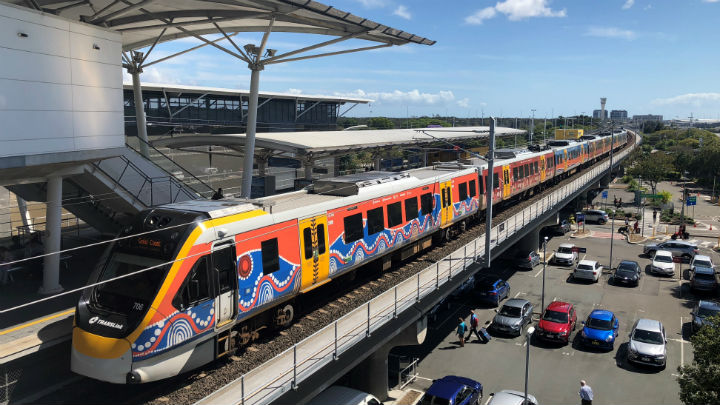
https://upload.wikimedia.org If you are from Brisbane & visiting Vancouver, you will be shocked to see such a short airport train. Being from Vancouver, its difficult to grasp how Brisbane was able to build such nice long trains. This is something to be very proud of, as it can move a lot of people in both directions. https://en.wikipedia.org/wiki/International_Airport_railway_station,_Brisbane This opened in 2001 & Vancouver's inept version had to be ready by 2010 with just 2 car trains. Yet, Brisbane designed their train to be high capacity capable as soon as it open for service. From a backwards BC perspective, it's amazing how Queensland is able to think & function on such a grand scale & to properly allocate the necessary funds. Who knows where so much of the funds went in BC? That's because not enough of it seems to have gone into the infrastructure.

https:://en.wikipedia.org/wiki/Vancouver_International_Airport#Rapid_transit_(SkyTrain)
Unfortunately, this is an embarrassment line because, that's not a 4 car train, its only two, 2 car trains on a single track. How can Vancouver ever rank as a proper city & metropolitan area, when the trains are so short & most of the bridges are so narrow?
https://www.google.com/maps/place/Sir+Leo+Hielscher+Bridges,+Queensland,+Australia

https://en.wikipedia.org/wiki/Sir_Leo_Hielscher_Bridges This has the potential to still have 4 lanes each way. Plus, 1 bus lane & 1 HOV lane each way.
https://en.wikipedia.org/wiki/Port_of_Brisbane , https://www.portbris.com.au ,
https://www.portbris.com.au/portbris-2060
Unlike backwards BC, Queensland is able to properly think, plan & build for the future. Queensland just isn't hindered by anything like the BC Mind Virus (BCMV).
The YVR-Canada+Line is almost the worlds shortest train, because it only has 2 cars on a 2 billion dollar line of B$.
https://jfdatalinks.blogspot.com/search?q=old+and+new+narrow+bridges
https://jfdatalinks.blogspot.com/search?q=Brisbane+Airport+Railway+Line
Monday, June 1, 2026
Yaletown–Roundhouse station's fare gate capacity increased by 66%
https://dailyhive.com/vancouver/skytrain-yaletown-roundhouse-station-additional-fare-gates-completed
The Canada line is such a watered down version of what should have been a proper big city airport and ferry rapid transit link. Just because this infrastructure project had to be scaled down during its first phase, the stations still could have been designed to eventually accommodate 5-6 car trains. Unfortunately, the stations were only designed to accommodate a 2.5 car train. While this perfectly fits in with the inept urban transportation mentality and especially fits in with the BC congestive transportation agenda, this is another sad result.
https://dailyhive.com/vancouver/skytrain-yaletown-roundhouse-station-fare-gate-expansion
Despite being downtown with several condominiums around, the Yaletown-Roundhouse_station is too small for an inner-city station.
https://en.wikipedia.org/wiki/Yaletown-Roundhouse_station#Station_information

There is barely enough level clarence beyond the short platform for another car. To remedy this inadequate situation, this line needs to have three full-size cars, not just some eventual 2.5 car joke of a train.
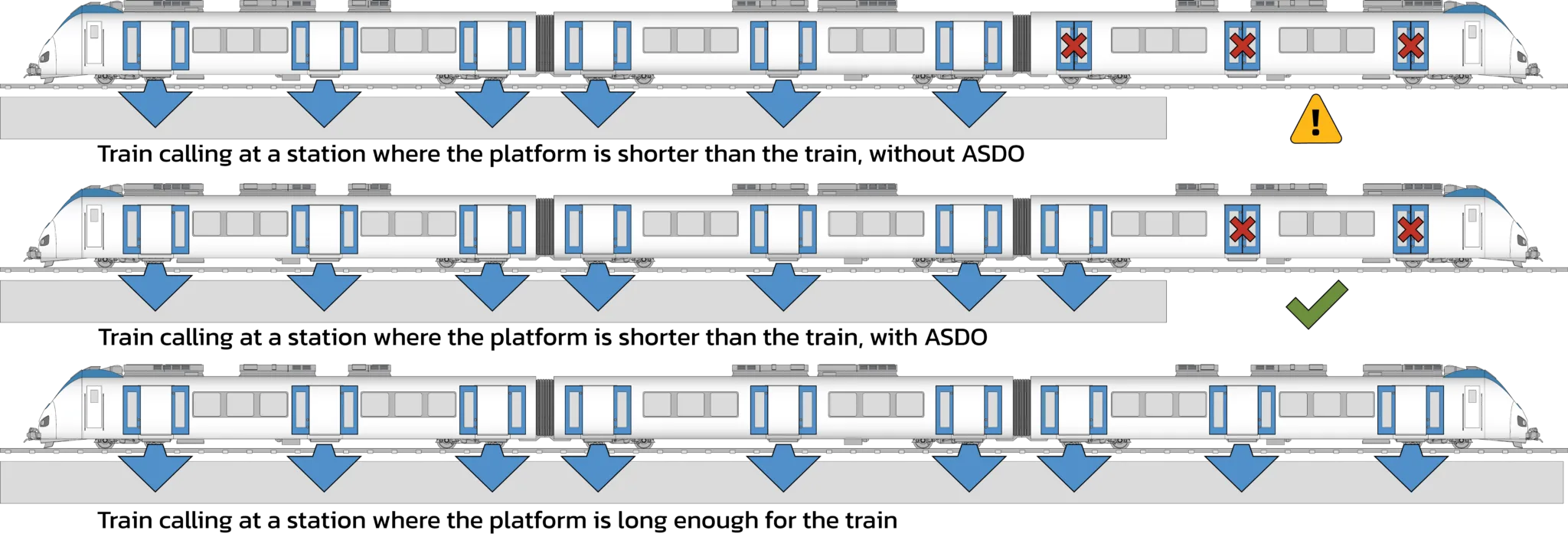
https://www.eke-electronics.com/automatic-selective-door-operation-asdo
Then eventually, once people got used to a 3 car train, an extra car could be added at each end, resulting in a 5 car train. Its a workaround that can eventually enable the 3rd line or the C Line to run 3-5 cars trains to meet demand.
Then the Exp. Line and Mil. Line, or what could become A & B lines with standard 5 car trains. However, during the busy times, a 7 car train could be possible with selective-door-operation technology.
It would have been better to have just built all of the Skytrain stations long enough for 5 car trains in the first place, with enough level track clearance for 10 car trains eventually.
Sunday, March 29, 2026
YVR-Canada Line and REM Train in Montreal
https://www.youtube.com/watch?v=a1ouk0VifwM&t=42s Its as if the YVR-Canada Line had to be built as a symbolically small city train for provincial Vancouver. Urban transportation infrastructure can be designed in ways that can double or even triple capacity to meet future demand. Unfortunately, its very difficult to build anything in backwards BC with significant future capacity in mind.
Ultimately, the YVR-Canada Line should have had level station clearances to eventually be able to accommodate 5-10 car trains. Unfortunately, in typical backwards BC planning the stations weren't even designed with enough level clearance to accommodate 5 car trains. The joke that is the Canada Line only has a level station clearance of 50m to eventually accommodate just a 2.5 car train.
Most other cities actually build long stations to accommodate long trains, right in the first place. Or, at least allow for enough level clearance so that the stations can eventually be doubled or tripled in length.
The YVR-Canada Line should have started with the Vancouver & Richmond segment, then the Vancouver and Horseshoe+Bay+ferry+terminal segment. Then finally, the YVR to Delta and the Tsawwassen+ferry+terminal through a proper Richmond-Delta+Tunnel or bridge crossing.
The short SkyTrain Stations in Greater Vancouver https://www.youtube.com/watch?v=6Qg78Bmf1fk
Unfortunately, proper big city transportation planning is very difficult to achieve in backwards BC. So many things are watered down in small-scale Vancouver.
-----------------------------------------------------------------------
Montreal’s Biggest REM Expansion Yet https://www.youtube.com/watch?v=4G1oeIAfxDU&t=106s
The Montreal REM https://www.youtube.com/watch?v=g9O6RzsXIqQ
While the REM was designed to help the Metro, it should have the capability to be gradually expanded. Eventually, REM trains should be lengthened from 4 car trains to 6 car trains, perhaps even 8.
In contrast, every Skytrain line should have been designed with enough level future station clearance to eventually accommodate a train as long as a 152.5 m (500 ft.) long Montreal Metro train. The first 2 Skytrain lines have 80m stations and the joke that is the Canada Line only has 50m stations.
While the first 2 lines can accommodate 5 car trains, the C Line wasn't designed to accommodate 5 car trains. Just 2.5 car trains, someday.
Despite there being such a symbolic push for Vancouver to keep having short trains, narrow bridges and stumpy buildings, things are gradually changing in backwards BC. The Vancouver or BC Mind Virus should have been challenged decades ago, but too many loud people wanted to perpetuate the, KEEP THINGS SMALL AND INDEQUATE agenda.
Given how most of the bridges in Greater Vancouver are so narrow, there isn't enough room for proper bus and HOV lanes, or even wide emergency lanes. One would think that at least the trains & stations would have been designed to eventually be doubled or tripled in length. But that would go against the mutigenerational congestive planning agenda. That's why there still is only a 3 lane LGB when there should have been at least a parallel bus, HOV and train tunnel. The Pattullo+Bridge replacement didn't open with 2 bus and 2 HOV lanes, not even wide shoulders or emergency lanes. NW really likes the congestive planning approach. Of course the new tunnel between Richmond and Delta won't have an additional provision for a train tube. This will also help to perpetuate the congestive transportation mandate.
Fortunately, Selective_door_operation technology can eventually allow more sensible transportation planners to enable longer trains.
https://en.wikipedia.org/wiki/Selective_door_operation#International_variations , https://www.youtube.com/watch?v=YdH5d1ZthmM
This means that a 5 car Skytrain (85m) could eventually become a 7 car train, despite the 80m stations.
https://en.wikipedia.org/wiki/SkyTrain_(Vancouver)_rolling_stock#Alstom_Mark_V Thus, an 80m train can become a 117m train.
A two car and 2.5 car (50m) train on the multibillion dollar Canada Line is so absurd and inept! With some slight station modifications, there could be a potential to eventually accommodate three, 20m cars at the very short platforms. Then, once 3 car trains could become possible, its just a matter of having an extra 20m car at both ends of each train. Thus, a 5 car train of 100m is so much better than a 50m joke of a train.
https://en.wikipedia.org/wiki/SkyTrain_(Vancouver)#Alstom_Mark_V_fleet
https://jfdatalinks.blogspot.com/search?q=SkyTrain-Canada+Line
Saturday, August 22, 2026
The 14 lane George Washington bridge vs...
https://www.youtube.com/watch?v=tH6Q8yWjYpM There are wider sections of freeways in the US, but the double deck GWB has the most lanes.
Wow, in backwards Vancouver, or almost anywhere in backwater BC, just having 2 lanes each way is tough enough. A consistent 3rd lane each way could be for busses and a 4th lane for HOVs. Given that Greater Vancouver is supposed to be a major port region, several of the bridges should also have a truck lane each way. However, there is only one bridge in backwards BC that has 5 lanes each way.
https://en.wikipedia.org/wiki/Port_Mann_Bridge#New_bridge Unfortunatly, it wasn't designed to have a lower deck. Such a lower deck could have had 2 freight train tracks, 2 commuter train tracks and even a provision for 2 BRT lanes.
Essentially, in any proper big urban area, the bridges should not only provide at least 3 general lanes each way, but a bus and HOV lane each way. That's 5 lanes each way, plus on some crossings that are closer to port activity, there should even be a 6th lane each way. That's the case with the Sir_Leo_Hielscher_Bridges. Unfortunately, unlike Queensland, BC has been very reluctant towards bridge duplication or twinning.
https://www.nsnews.com/local-news/bus-hov-lanes-different-2918490
https://www.reddit.com/r/vancouver/comments/1d3fixq/hov_and_bus_lanes_how_to_deter_abuse/
While Australia has Melbourne, Sydney and Brisbane as its major Pacific Rim gateways, Canada just has provincial Vancouver, Victoria and Prince Rupert as port gateway cities.
https://en.wikipedia.org/wiki/Sir_Leo_Hielscher_Bridges#Design

https://upload.wikimedia.org/wikipedia/commons/thumb/6/6e/Gateway_Bridge_aerial4.JPG
https://en.wikipedia.org/wiki/Sir_Leo_Hielscher_Bridges#Duplication A 12 lane crossing.
The Port_of_Brisbane and the Brisbane_Airport are excellent port facilities in Queensland.
https://en.wikipedia.org/wiki/Port_of_Brisbane#Facilities
https://en.wikipedia.org/wiki/Brisbane_Airport#Rail Far away from the inept transportation planning in Greater Vancouver, Brisbane was able to do things correctly.
https://en.wikipedia.org/wiki/Airport_line,_Brisbane Unfortunatly, backwards BC just can't seem to properly plan big city type infrastructure.
The YVR-Canada_Line is a total embarrassment!
https://en.wikipedia.org/wiki/Canada_Line#Stations Not 150 m, not 100 m, only a 50 m level clarence was allowed for the stations. Even the first 2 Skytrain lines only have 80 m stations, when they should have almost been twice as long.
https://en.wikipedia.org/wiki/Canada_Line#Technology Aparently, the inept planning was due to cost saving measures. Thus, instead of designing the stations to be long enough to accommodate 5 car trains, they were only designed to ultimately have 2.5 car trains. Since 2009, the Canada_Line still only has 2 car joke trains.

The Tilikum_Crossing in Portland vs the North_Arm_Bridge between Vancouver and Richmond. The Tilikum_Crossing accommodates 2 bike lanes, 2 footpaths, 2 MAX-LRT tracks, 2 articulated_bus lanes and even streetcars can cross on it. Such a fine bridge just hasn't been allowed in BC.


https://en.wikipedia.org/wiki/North_Arm_Bridge#Details This bridge should have been wide enough to eventually accommodate 2 bike lanes, 2 footpaths and especially, 2 BRT lanes, the the Skytrain doesn't run on a 24hr schedule.
Given that most of the bridges in BC are so narrow, there needs to be proper bus, bike & HOV bridges built.
Transportation infrastructure doesn't have to be such a sad joke in backwards BC.
Tuesday, February 18, 2025
REM’s snow struggles persist in Montreal
https://www.montrealgazette.com/news/article760907.html
https://en.wikipedia.org/wiki/Reseau_express_metropolitain
https://en.wikipedia.org/wiki/Alstom_Metropolis_Saint-Laurent
| Train length | 38.1 m (125 ft) per unit |
|---|---|
| Car length | 19.05 m (62 ft 6 in) over coupler faces |
https://en.wikipedia.org/wiki/Alstom_Metropolis_Saint-Laurent#Design_and_construction Two 125 foot trains = 250 feet, or half the length of a 9 car Metro train.
An 8 car [19.05 m (62 ft 6 inch)] REM train version of this would be great for Vancouver, but an improved Skytrain could be just as good. Unfortunatly, BC has a tough time thinking big for the future.
https://montreal.citynews.ca/2025/02/18/rem-service-disruptions-continue/
However, any elevated line or exposed rapid transit train in Montreal, is always potentially disrupted during the winter.
https://www.cbc.ca/news/canada/montreal/montreal-rem-out-of-service-1.7461000
https://en.wikipedia.org/wiki/R%C3%A9seau_express_m%C3%A9tropolitain#Future_sections
The genius of the Montreal_Metro trains is that they are all underground.
https://montreal.citynews.ca/2025/02/17/stormy-weather-continues-in-montreal/
Vancouver & BC always have a difficult time in properly planning & building infrastructure for significant future capacity. Thus, just because the SkyTrain is considered to be a Light Rail Vehicle, it still should have been designed to eventually have (152.5m) long trains, like the Montreal Metro has. If you are visiting from Montreal or Toronto, you will be shocked as to how short the Vancouver SkyTrains & stations are.
It's not that BC is in some kind of a timewarp, it's just that there has been some kind of a strange multigenerational mentality or agenda. Since the BC part of Canada doesn't have the authority or the technology to generate a force_field around its perimeter, the next best thing was to have very restrictive laws. That's especially the case for Vancouver & Victoria. Plus, a general encouragement to symbolically think small & backwards.
Having short trains, narrow bridges & mostly short buildings, all fits in with the symbolism of a reluctance to accommodate significant urban growth. Canada it self is also part of this larger predicament. Despite its size, Canada is nowhere close to containing even just 1% of the worlds population. Given that most of the human population is non-white, this poses an interesting dilemma.
Of course during tougher economic times, immigration is generally frowned upon. However, even during various economic boom-times, Vancouver & Victoria continued to lag behind with the scale of its infrastructure development.
Tuesday, May 26, 2020
The Urban A.I. Intersection
https://www.forbes.com/sites/danielaraya/2019/01/04/artificial-intelligence-and-the-end-of-government/#3a185e40719b ,
https://www.oxfordinsights.com/insights/ailegitimacy ,
https://channels.theinnovationenterprise.com/articles/ai-and-the-future-of-government ,
https://www.wired.com/story/opinion-ai-is-an-ideology-not-a-technology
https://www.scientificamerican.com/article/will-democracy-survive-big-data-and-artificial-intelligence/
https://civilization.fandom.com/wiki/Synthetic_Technocracy_(Civ6)
Friday, December 13, 2024
Tuesday, May 2, 2017
Some Urban Trains
Fortunately, Toronto & Montreal had enough vision to plan & build 152.45m or 500 foot long subway & metro stations. Even Edmonton & Seattle have much longer underground train stations than the Vancouver-Richmond train or the YVR Canada+Line. The Vancouver C-Line is a fine example of congestive & inept planning and should be studied all around the world as a warning. It could be called the, FINANCIAL DRAINAGE LINE, or the, CATHETER LINE. That's because the ridiculous 50m stations aren't even quite a 3rd of the length of the 152.5m Montreal Metro trains & stations. Thus, it will be difficult to lengthen these very short stations.
It's one thing if the C+Line was started off with absurdly, short 2.5 car trains, but at least the stations were already built to gradually accomodate 5 car trains, plus still have extra clearance for even 5 more coaches. That would have been a reasonable attempt of planning for future capacity, but that's something BC just isn't that good at. The stations should have been designed to be ultimately accomodate 10 car trains, not some quarter-length joke.
Eventually, three 20m coaches could be linked together. Then an extra 20m coach at both ends of each 3 car, 60m train. While a five car, 100m train would seem too long for 50m, inadequate BC stations, a walkthrough train makes it a possibility. That and Selective_door_operation makes a 5 car train quite possible.
It is very sad that the backward BC mentality never properly envisioned a 10 car train to provide a high capacity link between the Tsawwassen_ferry_terminal, Bridgeport_station & the YVR-Airport_station, Downtown_Vancouver, Park_Royal_Exchange and the Horseshoe_Bay_ferry_terminal. Only a properly functioning metropolitan region can do something like that. The Greater Vancouver Region just isn't at that level yet.
https://en.wikipedia.org/wiki/
"The operation of the Central Circle is similar to the S-Train systems in Germany and other countries."
https://upload.wikimedia.org/w
Russians aren't afraid to use good German technology.
I wish that they would allow some of that German tech in BC but BC still strives to maintain and keep things at a smaller scale.
The Moscow Circle Line is a much more recent development than the one in London.
"Since the beginning, platforms have been at least 155 metres (509 ft) long to accommodate eight-car trains. The only exceptions are on the Filyovskaya Line: Vystavochnaya, Mezhdunar
There is suppose to be secret deeper level subway around Moscow.
Of course when severe flooding occurs, the subways are among the first things to be affected.
How in the hell is the 3rd SkyTrain line constructed to have such small stations, in-spite of increasing future demand?
No city has spent billions of dollars just to have 2 car trains, except Vancouver & Richmond.
Apparently, the 50 m platforms are only long enough to accommodate 2.5 car trains as capacity demand increases. http://www.railfort
Sure, in the early years, Montreal could run a little 3 car train, but their Metro stations were designed to accommodate a 9 car train during the very busy times & 6 car trains for intermediate demand.
So the BC inept planning process never allowed for a future demand of at least 152.5 m or 500 foot long stations & platforms. Instead, they designed the max potential to be only 50m or 164 feet. That's pathetic & only adds to the deliberate bottleneck planning approach that backwards BC aspires to.
30-100 year plans http://www.cbc.ca/news/canada/
As long as a line above ground & especially underground, has level sections of 500, 600 or 700 feet, then full length stations can be constructed.
When BC planers only allowed for a 50m or 164 foot level section for each Catheter Line,
If a system starts out with little trains but has designed the ability to triple or quadruple the length of the station platforms, then its just a matter of building that future extension right from the start or at some point later on.
Chicago & BART can still run ridiculous 4 car trains but the capacity to run 10 car trains was built in right from the start.
SYDNEY and its metro
Not only does Sydney have much longer trains & platforms, they are double level trains! Its like BC has made sure that it must never match the capacity that NSW & New_England has allowed for.
TOP 10 of the most beautiful trains in Japan
V-BC strives to perpetually be one of the most stunted or underbuilt major cities on the planet.
Subscribe to:
Posts (Atom)