Showing posts sorted by relevance for query transit. Sort by date Show all posts

Tuesday, September 13, 2022

SF BART


For as long as the Bay Area Rapid Transit system’s trains have screeched across the region, a feeling has lingered among its loyal and would-be riders that the transit service could be so much more.

It was initially envisioned as a system that would reach across the Golden Gate Bridge and into Wine Country while also stretching into the western neighborhoods of San Francisco. BART, however, has never quite lived up to the designs of its original muses — despite being, perhaps, the most influential manufactured system in the region.

The pandemic didn’t help matters. BART ridership numbers dropped off a cliff after March 2020, and a prominent bond rating company recently warned that BART and other U.S. transit systems heavily reliant on fares are “expected to face sizable budget gaps” in years to come.


For as long as the Bay Area Rapid Transit system’s trains have screeched across the region, a feeling has lingered among its loyal and would-be riders that the transit service could be so much more.

It was initially envisioned as a system that would reach across the Golden Gate Bridge and into Wine Country while also stretching into the western neighborhoods of San Francisco. BART, however, has never quite lived up to the designs of its original muses — despite being, perhaps, the most influential manufactured system in the region.

The pandemic didn’t help matters. BART ridership numbers dropped off a cliff after March 2020, and a prominent bond rating company recently warned that BART and other U.S. transit systems heavily reliant on fares are “expected to face sizable budget gaps” in years to come. 

I’s not just the stuff of dreams. Numerous studies and reports published throughout its first 50 years tease at this potential idealistic future for BART and its riders. But even as BART continues to plan for future expansion, achieving some version of that vision has never felt more tenuous than it does on the 50th birthday of the region’s most popular rail system.

Of course, the COVID-19 pandemic spiraled BART toward an uncertain future on many fronts.

Today, roughly 38% of BART’s pre-pandemic ridership has returned since April 2020, when it cratered to just 6%. The historic drop in ridership brought more urgent questions to the forefront about how BART will financially recover from a pandemic that has severely undercut fares, BART’s main pre-COVID revenue source, and how the system will reinvent itself.

Then there’s the lesson of history that many plans for expansion and development of the BART system materialized in times of unprecedented growth in ridership.

It means forecasts about the future remain muddy, more than two years out from the pandemic, and a firm picture of what the region’s new transportation patterns will be in a post-pandemic world have yet to fully come into sharp relief.

“Our role in the region is evolving,” Val Menotti, BART’s chief planning and development officer, said. “On remote work, we know that will be part of our future. But at what level, to me, it’s not clear, and it may not be clear for a couple of years.”

Still, even in these trying times, the region’s planners and transportation leaders view BART as an important linchpin that better connects the Bay Area’s disconnected rail and bus transit networks together to build a future “world-class rail system.”

Once-in-a-generation expansion projects, such as BART’s extension to Silicon Valley, are under way. The four-station expansion will take riders deep underground to Downtown San Jose and Santa Clara, at an estimated cost of $9.8 billion, when it tentatively opens at the end of this decade.

The pandemic also hasn’t stopped BART from planning for its second Transbay Tube. The transformational project, if realized, could create a new BART line and boost its capacity to transport people across the bay while better connecting the fragmented rail networks in the Northern California “megaregion.” It’s an issue that reached a critical point in 2016 when ridership peaked at all-time highs...  


e-in-a-generation expansion projects, such as BART’s extension to Silicon Valley, are under way. The four-station expansion will take riders deep underground to Downtown San Jose and Santa Clara, at an estimated cost of $9.8 billion, when it tentatively opens at the end of this decade.

The pandemic also hasn’t stopped BART from planning for its second Transbay Tube. The transformational project, if realized, could create a new BART line and boost its capacity to transport people across the bay while better connecting the fragmented rail networks in the Northern California “megaregion.” It’s an issue that reached a critical point in 2016 when ridership peaked at all-time highs. Few, if any, meaningful details have been decided in that project, which has a placeholder completion date of 2040.

But pandemic or no pandemic, the extraordinary costs of building rail expansions in the Bay Area and the region’s dismal track record in delivering on these sorts of massive projects on time and under budget is key to why many of these plans remain pie in the sky.

It will have taken almost half a century for BART’s Silicon Valley extension to reach conception to completion. The second Transbay Tube will have taken longer and will require BART and the Bay Area’s patchwork of local governments to raise the tens of billions in funding it needs to become reality. //www.sfchronicle.com/bayarea/article/bart-future-17428345.php

https://sf.streetsblog.org/2022/09/28/eyes-on-the-future-of-caltrain/

Tuesday, September 17, 2024

Metro Vancouver transit facing 'drastic cuts'

 https://www.vancouverisawesome.com/highlights/metro-vancouver-mayors-council-demands-action-on-transit-funding-brad-west-9533754

After decades of imposing narrow streets, roads, highways & bridges, it's still difficult for the region to have a proper express bus network. Most of the bridges in the region need to have a bus & bike bridge built right next to them. 

https://bc.ctvnews.ca/this-is-not-a-bluff-translink-mayors-council-calls-on-b-c-political-parties-to-share-plans-to-avoid-transit-cuts-1.7041435

The first 2 SkyTrain lines still only have 80m stations & the 3rd line, the C-Line, only has 50m stations. In contrast, the Montreal Metro was designed to have almost 153m long stations. Thus, a 500 foot long station can accommodate a 9 car train. Unfortunately, the first 2 SkyTrain lines can only accommodate the newer 4 car trains with a potential for a 5 car train, someday. The 3rd line or the C-Line, can only accomodate a 2 car joke of a train, but it has the potential to become a 2.5 car joke of a train.

This absurdity of congestive planning must be challenged & stopped in backward BC. Unfortunately, there are some influential people that continually like to maintain the symbolism of short trains and narrow bridges. They don't want the Greater Vancouver Region to become a proper urban area. That mentality apparently justifies the inadequate or underbuilt infrastructure in the region. 

So now with looming transit cuts, the narrow roads & bridges will become even more congested.

https://www.rtands.com/tag/translink

The $2BN Megaproject Under Vancouver https://www.youtube.com/watch?v=D4YFFtTEUQc

What Greater Vancouver Needs https://www.youtube.com/watch?v=qZavPFZ9H1E

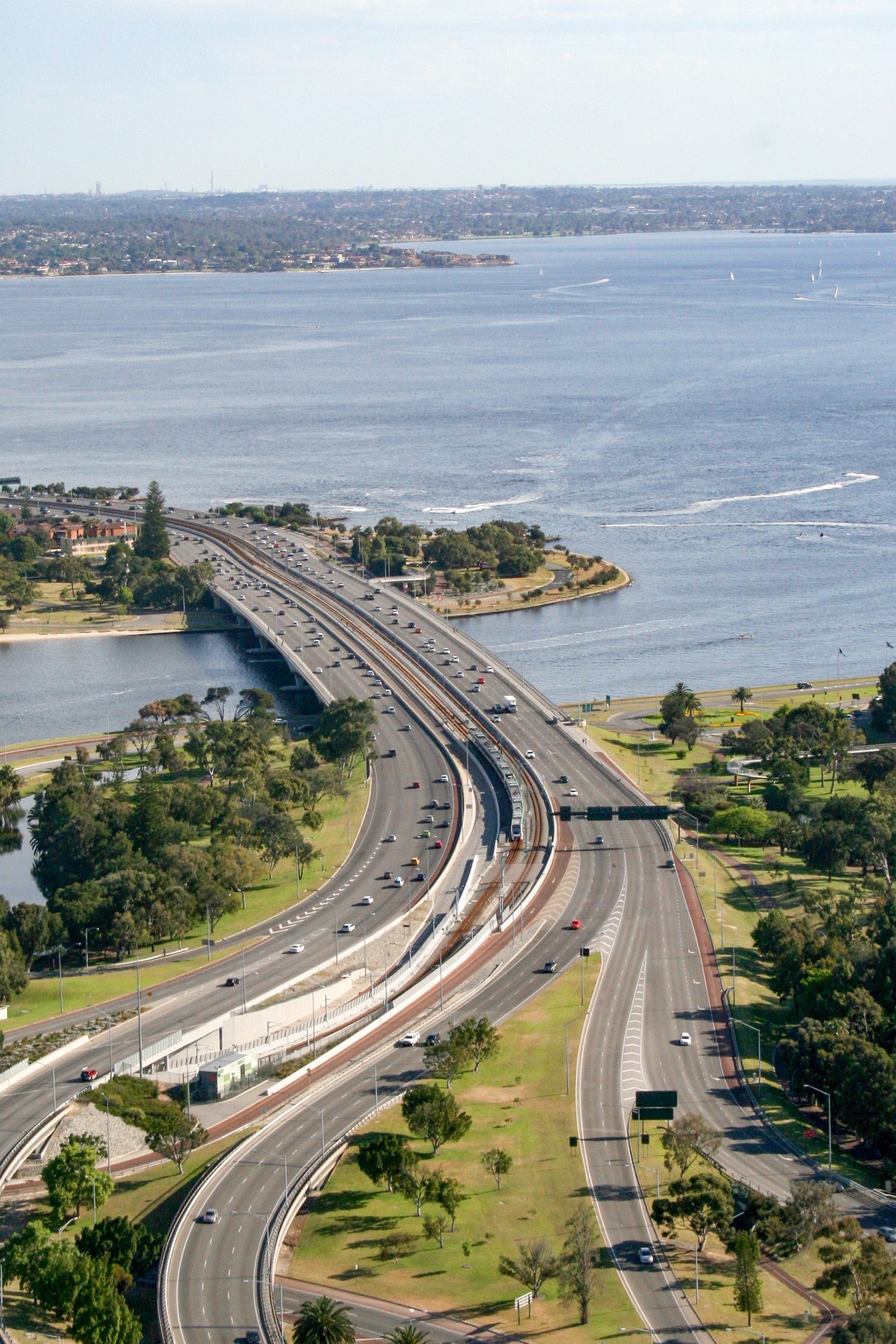
Whether its a bridge or a tunnel, Perth and Seattle have excellent wide crossings which allow for rail rapid transit. Fortunately, the congestive Vancouver mentality never reached into those cities.

https://www.highway99tunnel.ca/tunnel-construction Unfortunatly, BC missed another opportunity to have rapid rail transit through the tunnel.

https://vancouver.citynews.ca/2024/09/17/highway-91-spun-out-richmond Even back in the 1980s, BC_Highway_91 should have been designed to be at least 4 lanes each way. 3 general lanes each way with the 4th as a bus & HOV lane. There also should have been 2 wide shoulders or emergency lanes. The Alex_Fraser_Bridge should have been designed to be at least 10 lanes wide. 3 general lanes each way & a bus-HOV lane & a truck lane each way. Plus, 2 emergency lanes & a provision for a lower rail transit deck. Unfortunatly, bottleneck or chokepoint planning won out. Plus, the symbolism for BC is to not properly plan for large, efficient infrastructure. 

How can the Greater Vancouver Region have an efficient express bus & rapid bus network, when the highways & bridges are kept narrow? Why wasn't the SkyTrain designed to eventually have 153m or 500 foot long stations like the Montreal Metro? That would be symbolic of a proper big thinking city wanting to have high capacity transportation corridors. BC is about taking the congestive planning approach instead.

Perth+and+Seattle have been able to do so much more, because they aren't under anything like the imposed Vancouver restrictions and the overall backward BC mentality.

Friday, December 13, 2024

City of North Vancouver Top’s List of Canada’s Liveable Cities in 2024

 https://www.cnv.org/City-Hall/News-Room/News-Releases/2024/12/12/City-of-North-Vancouver-Top%E2%80%99s-List-of-Canada%E2%80%99s-Liveable-Cities-in-2024

There is North_Vancouver_(city) and then there is North_Vancouver_(district_municipality).

https://dailyhive.com/canada/canada-most-liveable-cities-ranking-2024

As long as you have everything you need on the North Shore, you are fine. Otherwise, you will be punished for using the inadequate The+Lion+Bridge+and+The+Iron+Bridge.

https://www.upperlonsdale.ca/blog/87130/north-vancouver-ranked-1-in-canada

https://www.theglobeandmail.com/investing/article-canada-most-livable-city-north-vancouver/

Unfortunatly, transportation planners haven't seen a need to link Horseshoe Bay and Park Royal with downtown Vancouver. Indeed, a direct LRT connection from the North_Shore_of Greater_Vancouver to YVR might as well be part of a Sci-Fi story. However, multigenerational congestive planning in Vancouver is a harsh reality.

A 3 lane Lion Bridge never had any bus tunnels & especially an LRT line built far under it. The bridge is too narrow to accommodate one, let alone 2 proper bus lanes. This is the finest in BC bottleneck stagnation planning. 

The Iron_Bridge was built too narrow for an urban TCH crossing. Unfortunatly, no one planned or designed it to eventually have a lower deck for buses, trains & trucks.

https://www.cnv.org/streets-transportation/travel-options/transit A bus and truck bridge should have been built next to the Iron Bridge, decades ago. Why do that, when you can cram everything into just 3 lanes each way? 

https://www.nsnews.com/local-news/north-shore-bus-rapid-transit-at-the-front-of-the-line-translink-says-7843788

https://www.translink.ca/plans-and-projects/projects/rapid-transit-projects/bus-rapid-transit

https://dailyhive.com/vancouver/north-shore-skytrain-burrard-inlet-rapid-transit-brt-lrt-study

https://www.burnabynow.com/local-news/opinion-lrt-remains-the-best-option-for-north-shore-rapid-transit-9643033 Of course a train would be able to move many more people efficiently. 


https://jfdatalinks.blogspot.com/search?q=Horseshoe+Bay  

https://jfdatalinks.blogspot.com/search?q=North+Shore

Thursday, October 24, 2024

Appreciative transit culture in BC, etc.

 https://dailyhive.com/vancouver/canadian-transit-shout-out-reaction

People are happy whenever public transit is working reasonably well and running at an appropriate level of capacity. Unfortunatly, that's not always the case and its not the fault of the transit operators and attendants. It's the inept planning that refuses to improve bottleneck water crossings and other chokepoints. Various BC governments providing limited construction budgets and or not providing structures with built-in higher capacity capabilities. 

Fortunately unlike in BC, most real cities around the world have longer trains & wide enough roads & bridges to accommodate proper bus & HOV lanes. 

Saturday, December 16, 2023

Transit Malls

The transit_mall is a great concept, but there is always the potential for improvement.

Nicollet_Avenue in Minneapolis, was never wide like Woodward_Ave_in_Detroit. https://www.mlive.com/entertainment/erry-2018/04/57da31c03d/woodward_avenue_detroit.html

Back in the day, there just wasn't any reason to have Nicollet_Avenue to be as wide as Canal_Street,_New_Orleans or Market_Street_(San_Francisco).

However, Nicollet_Mall should have had 2 passing lanes, instead of only two lanes. Whenever a bus breaks down or there is some emergency, half of the Nicollet_Mall can easily get blocked up.

Fortunately, Portland,_Oregon decided not to follow the Minneapolis and Vancouver, BC examples. MAX_and_bus_side-by-side_on_Portland_Mall, this is so much better than funneling everything into just 2 lanes. The Portland_Transit_Mall remains as one of the best transit corridor examples. https://en.wikipedia.org/wiki/Portland_Transit_Mall#Renovation_and_rebuilding

Granville_Street in downtown Vancouver used to be 6 lanes wide. While the initial concept of the Granville_Mall was a good idea, cramming everything into only 2 lanes became another quintessential Vancouver example of bottleneck & congestive planning. It's all part of the narrow-minded BC mentality.

https://en.wikipedia.org/wiki/Granville_Mall,_Vancouver Of course right at some crucial blocks, the 2 lane segments provide great spots for congestion, all by design. Whenever a bus breaks down or there is some emergency, there isn't a passing lane. Thus, one side of the street remains blocked until the bus can be towed away. Of course it was considered to be a wise decision to have so many bus routes funneled through such a narrow corridor & then remain stubborn about improving the situation.

Reducing the downtown section of Granville_Street from 6 lanes to 4 would have allowed passing lanes for busses & the sidewalks could have still been widened. Plus, it would have been so much easier for emergency vehicles to get through as well. Unfortunately, Metro_Vancouver is all about creating congestion & inefficiency.

If one side of the street has a bus breakdown & the other side has some emergency requiring a bus to remain parked, there isn't an extra couple of lanes for emergency vehicles to pass on some blocks of Granville_Street. Again, it was deemed essential & appropriate to have such a bottleneck on what is suppose to be a high volume bus corridor.


https://therabbitportal.blogspot.com/search?q=The+Transit+Mall

Thursday, September 28, 2023

TransLink ridership recovery reaches 90% of pre-pandemic volumes

 https://dailyhive.com/vancouver/translink-ridership-recovery-vancouver-public-transit-september-2023

While the recovery is great, the Skytrain network should have been designed to have 152m stations like Montreal & Toronto, but that would mean big city thinking. So the 50m to 80m stations provide a constant reminder of the refusal to think big.

https://dailyhive.com/vancouver/bc-transit-ridership-recovery-record

Just like the region should have a proper big city train, there should have also been a proper express bus & HOV system by now. However, with such a refusal to have wider bridges or parallel crossings, it's almost impossible to have a proper rapid bus network.

https://dailyhive.com/vancouver/ironworkers-memorial-bridge-replacement There should be a couple of HOV lanes, as well as 2 bus lanes. Thus, any replacement for the Ironworkers+Memorial+Bridge should have 10 lanes. 

However, congestive planning always wins out & who know where all the money has gone over the past several decades?

https://dailyhive.com/vancouver/skytrain-vancouver-demand-extensions

https://dailyhive.com/vancouver/commercial-broadway-station-broadway-grandview-woodland-plan-skytrain Brentwood Station, no problem. However, allowing such a crossroads station at a similar scale is too upsetting for the backwater Vancouver mentality.

https://dailyhive.com/vancouver/city-of-vancouver-car-vehicle-traffic-reductions-broadway Another fine example of the conjestive mentality. Since the train isn't allowed to run 24/7, it's a good idea to still have a wide street for express buses & 24hr traffic, which is common for most major cities.

https://dailyhive.com/vancouver/skytrain-metro-vancouver-expansion

https://dailyhive.com/vancouver/canada-public-transit-system-comparison

Sunday, July 21, 2024

Metro Vancouver expected to grow by 50,000 people a year

 https://vancouversun.com/news/local-news/metro-vancouver-expected-grow-50,000-people-year

Of course all the real big cities around the world are able to properly plan & build up an appropriate level of infrastructure, were as Greater Vancouver keeps taking a scaled back approach. Especially within the small city limits of  Vancouver.

Little backwater NW should have been properly planned as a gateway between Surrey, Burnaby & Coquitlam, decades ago. However, there has been a multi-generational resistance mentality & its quite apparent in the stunted infrastructure.

https://globalnews.ca/news/9489375/pattullo-replacement-six-lanes-debate Open the new P Bridge with only 4 lanes & no emergency lanes, because 2 extra bus & HOV lanes would be what a proper big city would do. Make sure that there is no provision for a LRT deck, because NW & Surrey only needs one rail transit line. A provision for a 2nd deck would ensure future truck capacity, but that would mean to properly plan for growth. This multi-generational congestive planning approach in BC is so absurd. 

https://dailyhive.com/vancouver/pattullo-bridge-replacement-crossing-capacity-small

https://en.wikipedia.org/wiki/Skybridge_(TransLink) When the SkyBridge between NW & Surrey opened in 1990, there was no provision to have 2 bus & HOV lanes. Of course there were no bike lanes & footpaths on the bridge. Apparently, it was better to just squeeze all bike & foot traffic onto the very narrow Pattullo_Bridge, which only has 1 sidewalk no wider than a bathtub.

https://evelazarus.com/aborted-plans-a-third-crossing-for-the-north-shore While V-BC celebrated the cancelation of a series of freeway plans through the small city between the 1950s & into the early 70s, there was never a proper follow-up to a North Shore rapid-transit crossing.

https://www.nsnews.com/opinion/letters-lets-get-going-on-a-third-crossing-for-north-shore-6436538 It is pathetic & embarasing that a bike, bus & train bridge wasn't built across the North+Shore inlet at least by the mid 1980s.

https://www.nsnews.com/opinion/almost-two-thirds-of-north-shore-readers-say-a-new-bridge-is-needed-6423723 It is absurd that there wont be a train, bus & bike bridge crossing the inlet by 2025 or even 2030. https://council.vancouver.ca/010313/tt2.htm

The only hope seems to be an eventual replacement or some kind of upgrade to the Iron Bridge. Transportation_in_Vancouver has always been on a smaller scale than what it should be. 

https://vancouversun.com/news/local-news/a-look-at-six-possible-routes-for-rapid-transit-across-burrard-inlet

https://globalnews.ca/news/3765300/little-hope-of-third-crossing-to-north-shore-as-traffic-woes-worsen/

https://viewpointvancouver.ca/2016/08/26/first-rule-for-a-third-crossing

https://vancouversun.com/news/local-news/this-week-in-history-1967-wacky-bennett-and-tom-terrific-team-up-to-push-for-a-third-crossing Of course a new bus and train bridge should have still been built. Having a freeway system within the city limits of Vancouver would have been too damaging. People got so freaked out about it and didn't properly realize that there still should have been 2 bus lanes and 2 HOV lanes crossing the inlet. The plan should have also included 2 truck lanes and at least 2 train tracks in a bridge or tunnel, no freeway required, just a link to the surface streets of Vancouver & North Vancouver.

BC doesn't even have the population of one Switzerland. Yet, many local people already say that BC is too populated. WTH? Most of the worlds population is non-white. Keeping the infrastructure short, small & narrow is a strange way to symbolically refuse to build for more people on a mostly non-white world. 


https://jfdatalinks.blogspot.com/search?q=North+Shore+of+Greater+Vancouver

https://jfdatalinks.blogspot.com/search?q=V-BC

https://jfdatalinks.blogspot.com/search?q=Pattullo+Bridge

Sunday, March 29, 2026

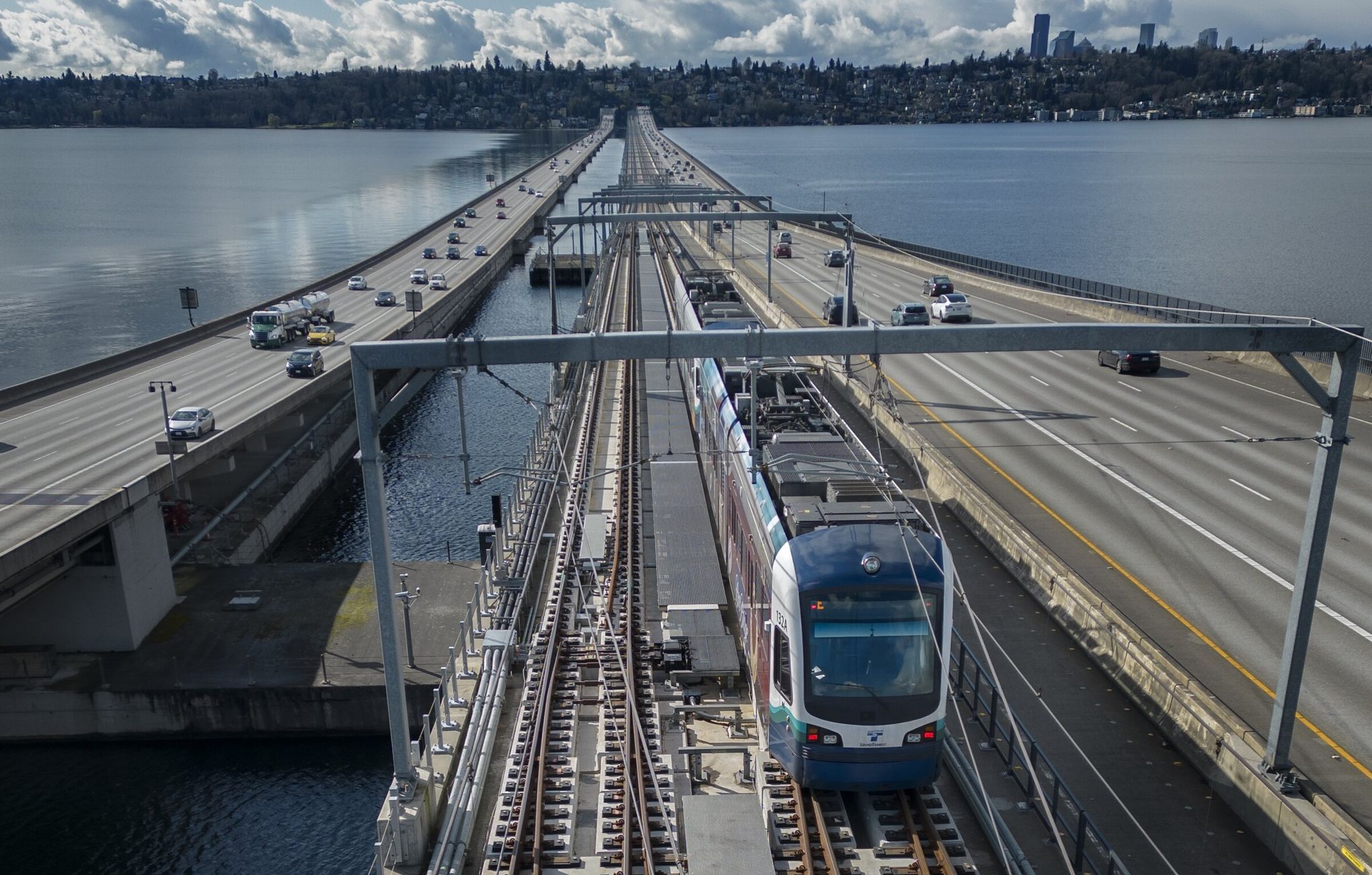
Seattle's 'Crosslake Connection' draws steady crowds on second day

 https://www.youtube.com/watch?v=jabSGw2M4tA 

Seattle's New Light Rail On a FLOATING BRIDGE https://www.youtube.com/watch?v=vmh5uVguIlM  

Seattle's Sound Transit just expanded their Link Light Rail system by running the 2 Line across a floating bridge https://www.youtube.com/watch?v=vmh5uVguIlM&t=2s

https://www.seattletimes.com/seattle-news/transportation/seattle-light-rail-finally-opens-across-lake-washington/ 

https://www.railwayage.com/passenger/light-rail/sound-transit-readies-for-crosslake-connection-launch 

Seattle has a good extensive regional train system and its getting bigger and better.


Some years after Montreal and so many years after Perth, but still better than backwards Vancouver. 

https://montrealgazette.com/news/the-rem-what-you-need-to-know-about-the-new-era-in-montreal-transit/ 

https://www.railway-technology.com/projects/reseau-express-metropolitain-rem-light-rail-system-canada 


Perth Narrows_Bridge 

https://en.wikipedia.org/wiki/Narrows_Bridge_(Perth)#Railway_bridge:_2005

https://commons.wikimedia.org/wiki/File:6_car_train_on_narrows.JPG 

https://www.alamy.com/stock-photo-a-train-and-traffic-on-the-mitchell-freeway-crossing-over-narrows-127193937.html 

Unfortunately, all of these nice train and wide highway bridges aren't allowed in narrowminded Vancouver. A congestive transportation approach was implemented decades ago. 


https://jfdatalinks.blogspot.com/search?q=Second+Narrows+Bridge