Showing posts sorted by date for query BRT. Sort by relevance Show all posts

Saturday, June 27, 2026

How much will Vancouver change by 2036?

 https://www.youtube.com/watch?v=OJtotvMq2ls 

The Lion+Bridge will likely still not have an express bus and LRT tunnel near it. The+Iron+Bridge still might not have a proper BRT and LRT bridge next to it. The OSB and the KSB will likely not have a bus and bike bridge built beside them. There will still likely be no new Fraser Street Bridge for bikes and buses. No Boundary Road bridges to provide a direct link between the North Shore and Richmond for buses, trucks and bikes.

While the first 2 Skytrain lines will have 5 car trains, the stunted YVR-Canada Line will only have 2.5 car trains. Vancouver still might not permit any office tower to have a 40th floor, but might allow some residential towers to be on a Melbourne, Sydney, Brisbane & Toronto scale. 

However, BIG city thinking and planning in Vancouver has always been so difficult. Boston, SF and the City of Paris are ridiculously small cities like Vancouver with all 3 having a land area of less than 50 sq. mi. or 129.5 sq. km. Yet, Boston, SF and especially the City of Paris, have all been able to fit so much more into the same general space. That's because they aren't bound by anything like the inept and extreme Vancouver type restrictions. 


Sunday, June 21, 2026

How the Seattle to Vancouver area could become a megaregion

 https://www.youtube.com/watch?v=POcg0oFvVf8 

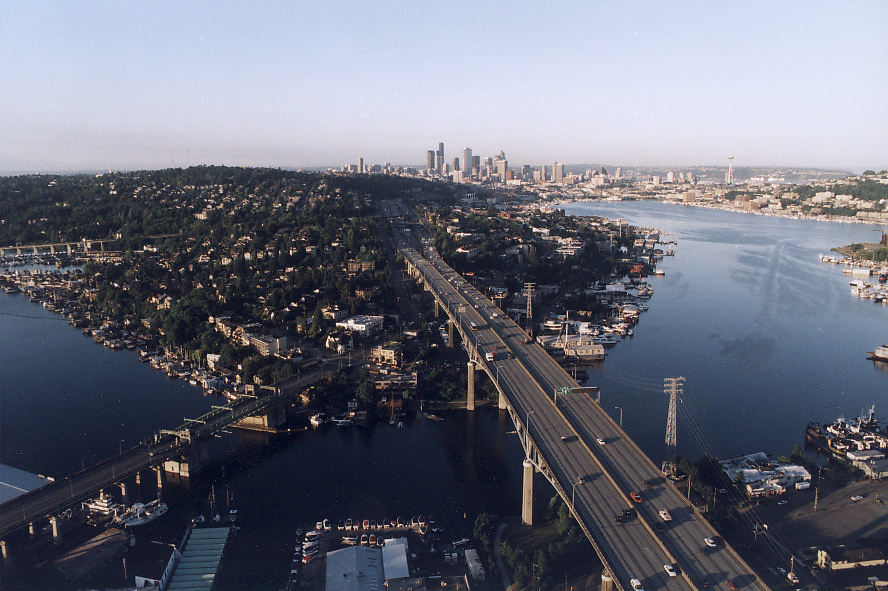
The larger Portland, Seattle and the Vancouver, BC (V-BC) region has a lot of growth potential. However, Seattle size buildings haven't been allowed in Portland and in Vancouver, BC. Nothing like a 12 lane Ship Canal Bridge has been allowed in Portland and Vancouver. While Oregon and backwater BC haven't been able to thwart the largest city in Washington State, Seattle might eventually become more of a magnet in pulling more people into the area between Portland and V-BC. 

Right now, Vancouver, WA (V-WA) still has a wider bridge than V-BC. Most of the V-BC bridges are so damn narrow that its not possible to have an efficient regional express bus network. As long as there is a refusal to build proper BRT bridges as part of a regional system, it remains a sad joke. 

The Skytrain (LRT) was built with shorter stations than what the underground stations in Seattle and Edmonton are at. Whenever possible, the Skytrain stations are shorter than the C Train stations in Calgary, DART stations in Dallas and even the Max in Portland. 

The biggest mistake of the Skytrain was to not build all of the stations with a future level clearance to eventually have Montreal Metro size stations of 500 feet or 152.5 m. Instead, the first 2 lines only have 80 m stations and the line to YVR (The Canada embarrassment Line) is only 50 m. Backwater BC logic is that a 5 car Skytrain could run twice as frequent as a 9 car Montreal Metro train. Someday, a 2.5 car YVR-Canada Line train could also run much more frequently than a 9 car Montreal Metro train. 

There is just one key problem with that type of BC logic. While initially constructing short stations and having short trains can save money, its not proper BIG city size infrastructure. In the long run, it costs more to try to lengthen stations for longer BIG city type trains. 

Sunday, May 3, 2026

Just mostly more stumps or some real Towers in Vancouver?

 https://cityhallwatch.wordpress.com/2026/05/02/opinion-the-yiyby-critique-bilsker 

https://www.skyscrapercenter.com/building/the-stack/35667 Only 38 floors.

https://en.wikipedia.org/wiki/Royal_Centre_(Vancouver) Just 37 stories. 

https://en.wikipedia.org/wiki/Columbia_Center Seattle's tallest has 76 stories. 

https://en.wikipedia.org/wiki/Ship_Canal_Bridge 12 lanes consisting of three 4 lane sections.

Mostly short buildings, short trains and narrow bridges are all part of the imposed symbolism to keep Vancouver small and backwards. 

While Seattle had its first 50 story office tower in 1969 and Calgary in 1984, stubborn Vancouver still won't permit any office tower to have a 40th floor. 

A 30-35 story office tower would be impressive if it was in Victoria, Kelowna, Kamloops and Prince George. However, what's impressive in backwards Vancouver & backwater BC isn't impressive in Alberta, Ontario, Quebec, Washington State, Victoria State, NSW, Queensland & WA... 

Stumpy buildings, short trains and narrow bridges makes for the Vancouver trifecta of B$ city planning.

https://www.google.com/maps/place/Fort+McMurray,+AB 10 lanes. Only the TCH bridge between Surrey and Coquitlam in BC has been allowed to have as many lanes as this. Some people still wish that everything could have remained funneled into just 2 or 3 lanes each way.

https://www.google.com/maps/place/Quesnell+Bridge 8 lanes in Edmonton. 

https://www.google.com/maps/place/Hwy.+2A+Red+Deer+City+Centre+Bridge 6 lanes.

https://www.google.com/maps/place/Calgary,+AB 10 lanes.

https://www.google.com/maps/place/Calgary,+AB 8 lanes.

https://www.google.com/maps/place/Lethbridge,+AB It has 6 lanes. Being from backwards Vancouver, its amazing that this 6 lane bridge wasn't funneled into just 2 lanes each way. That's what happened with the Knight_Street_Bridge.

https://www.google.com/maps/place/Hwy.+2A+Red+Deer+City+Centre+Bridge As a 5 lane TCH crossing, it only has 1 less lane than the 6 lane Iron Bridge in congested, backwards Vancouver. Since Alberta isn't under anything like the imposed BC restrictions, this crossing will likely be eventually upgraded to have 6 lanes, plus 2 wide emergency lanes & 2 wide shoulders that could provide 4 lanes each way, some day. 

https://www.google.com/maps/place/Winnipeg,+MB A TCH bridge with 9 lanes, because no one from narrow-minded Vancouver was able to get them to narrow this crossing. The TCH Iron Bridge in Vancouver just has 6 lanes. No bus and LRT bridge has ever been built next to it, so far.

https://www.google.com/maps/place/Winnipeg,+MB A 6 lane crossing. 

As of 2026, congested Vancouver only allows 2 bridges to have 6 lanes. A total of 5 lanes were removed from 3 Vancouver bridges. Had Vancouver built a series of proper bus and bike bridges, no lanes would have been removed. 

Despite NW trying to be one of the smallest cities in BC, Surrey is set to become the biggest city in BC. Fortunately, small NW & backwards Vancouver can't stop that from happening. However, narrowminded NW was able to force a narrower new bridge to Surrey. 

This bridge-replacement is one of the best examples of BC bottleneck-chokepoint planning today.

McBride_Blvd. and Royal_Ave_in_New_Westminster are mostly 4 lane corridors.

King_George_Boulevard and Scott_Road both are at least 4 lanes wide. One might think that the new bridge should have had 10 lanes, or at least 8 lanes, because two 4 lane boulevards, a 4 lane avenue and a 4 lane road, are all funneled into a bridge that opened with only 2 lanes each way. The old bridge that it replaced was also a 4 lane crossing. A congestive approach to transportation planning is the name of the game in backwards B.C.

https://upload.wikimedia.org/wikipedia/commons/thumb/d/d7/Stalewasem_Bridge_%282026-03%29.jpg/960px-Stalewasem_Bridge_%282026-03%29.jpg 
At the very least, this new 4 lane bridge should have had enough room for 2 wide emergency lanes, 2 wide shoulders and especially, 2 bus lanes. There should have been a provision for a lower deck for LRT, bus and truck lanes, given that this is supposed to be a seaport region.

The narrowmindedness planning by Greater Vancouver to still have mostly narrow crossings, has made it very difficult to implement a proper regional express bus network, let alone BRT. 

The first 2 Skytrain lines only have station lengths that can barely accommodate the new 5 car trains. The YVR Line or the C Line, has stations than can only accommodate a 2.5 car train, some day. Given that the Skytrain network is a multibillion dollar transit system, all of the stations should have been designed to gradually accommodate 8-10 car trains, but that's what a proper big city would do. 

https://vancouver.citynews.ca/2026/05/02/expo-86-40-years-later-the-memories-live-on 

Four decades later and Greater Vancouver remains so far behind with the scale of its infrastructure.

Sunday, April 5, 2026

Vancouverites have some of the longest commutes in Canada

 https://dailyhive.com/vancouver/vancouver-longest-commute-canada 

With most of the regional bridges being too narrow, there isn't enough space for proper express bus+lanes or BRT lanes. Plus, the first 2 Skytrain lines only have the potential to accommodate 5 car trains. The Canada (Embarrassment) Line wasn't designed to eventually have 5 car trains, only 2.5 car trains. Narrow bridges and short trains are all part of the symbolic reluctance towards having proper big city size infrastructure.


https://jfdatalinks.blogspot.com/search?q=bus+and+bike+bridge

Tuesday, January 13, 2026

About 90% of TransLink's first two Bus Rapid Transit lines will have bus-only lanes

 https://dailyhive.com/vancouver/translink-king-george-langley-haney-place-brt-bus-lanes-proposal 

Since the metropolitan area has rivers and an inlet, there should have been a regional network of bus bridges by now. Instead, BC insists on overloading the mostly narrow bridges in the Greater Vancouver Region.

https://dailyhive.com/vancouver/translink-surrey-king-george-boulevard-langley-haney-place-brt-route-station-maps

Wednesday, November 19, 2025

A Richmond encampment under the Oak Street bridge

 https://vancouver.citynews.ca/2025/11/19/growing-calls-to-clear-richmond-encampment 

Of course any neighborhood will be concerned when a bunch of people are living under a bridge and wandering around. 

Living under a bridge is hardly affordable housing. There needs to be proper secure housing with plenty of security and staff to help people who are stuck living outside. 

That bridge is so narrow and inadequate. 

SW-Vancouver needs a proper transportation upgrade. Granville Street should be extended across the Fraser River on a parallel bridge to the Oak Street Bridge (OSB). Then, the 2 bridges could provide 4 general lanes each way. Plus, another 4-lane parallel bridge to accommodate 2 BRT lanes and 2 HOV lanes. 

Or, a totally built a new version of the Oak+St+Bridge that could provide 6 lanes northbound. Then, a Granville Street extension could provide 6 southbound lanes onto a new OSB. Four general lanes each way, plus a rapid bus lane each way & 1 HOV lane each way. 

For the most part, the Oak+Street-Granville+Street+Corridor has 12 lanes. A yellow paint strip designates 3 lanes each way. Instead, Oak could have 6 northbound lanes and Granville could have 6 southbound lanes. The 5th & 6th lanes could be for the Oak & Granville BRT lane & HOV lane on complete one way streets.

Unfortunately, the OSB remains as a 4 lane traffic bottleneck or chokepoint. 

The 2009 era Canada (embarrassment) Line is still only using 2 car trains in 2025. A proper big city YVR-Canada Line should have been started with 5 car trains. Unfortunately, this joke of a train is only designed to ultimately run a 2.5 car train, someday. 

This stunted infrastructure approach is so absurd. Transportation planning in the most populated parts of BC is so inadequate, but its all part of backwards BC symbolism. The symbolism is all about showing a thwarted or watered down a city can be. Narrow bridges and short trains are some of the best ways to increase congestion and inefficiency in backwater BC. 


https://jfdatalinks.blogspot.com/search?q=Oak+Street+Bridge

Sunday, September 14, 2025

The Boundary Road bridges (BRB)

Unfortunatly, there doesn't seem to be any BRB plan in place.

A North Boundary Road Bridge could provide an excellent BRT crossing between Burnaby and North+Vancouver. This would help to relieve pressure on the Iron Bridge.

https://movementyvr.ca/bby-heights-brt

The same with a South Boundary Roade Bridge with a BRT route between Vancouver and Richmond

Then another BRT bridge between Richmond and Delta to the ferry terminal. This could help to relieve some of the pressure on the new tunnel, because it wasn't designed to have 2 HOV lanes & no train section.

https://www.translink.ca/plans-and-projects/projects/bus-projects/rapidbus-projects 


https://jfdatalinks.blogspot.com/search?q=Boundary+Road 

https://jfdatalinks.blogspot.com/search?q=BRT 

https://jfdatalinks.blogspot.com/search?q=Richmond+and+Delta

Sunday, April 20, 2025

The Oak Street-Granville Street Corridor

Burrard_Street and the Burrard St._Bridge (BSB) were originally designed to be 6 lanes wide, but then the VMV got ahold and changed that.

Fortunately, the VMV hasn't reduced the 6 lanes of Oak St. and 6 lanes of Granville St. Thus, when combined, they still form a 12 lane, north-south corridor. 

 https://en.wikipedia.org/wiki/Oak_Street_(Vancouver) , https://www.youtube.com/watch?v=kXbUb7TMj6k

Since the Oak+Street-Granville+Street+Corridor are still both 6 lanes wide for most of their lengths, this is essentially a 12 lane street corridor and is much less disruptive than if a 10-12 lane freeway had been pushed through in the 1950s or 60s.

https://en.wikipedia.org/wiki/Granville_Street , https://storeys.com/vancouver-granville-street-entertainment-district-history-renewal-planning-program

The yellow line is set for 3 lanes each way. However, if it was moved over 2 lanes, or just removed, then there could be 5 or 6 main lanes one way & 1 or no lanes the other way. Having 6 lanes each way would be best, because then 1 lane on Oak & 1 lane on Granville would always be just for busses. Then, there could also be an HOV lane on northbound Oak and on southbound Granville. This would still allow 4 north and 4 southbound general traffic lanes. 

A 1950s or 60s freeway would have been so disruptive. Its always better to make surface streets more efficient than to rip up neighborhoods.

The Oak+Street+Bridge+and+Granville+Street+Bridge (OSB-GSB) are still part of an incomplete corridor for what is supposed to be a major port city and region.

An improved 8 lane Granville+Street+Bridge with double-width sidewalks could have still worked, if there had also been a wide bike & foot bridge built next to it. Then, a roughly new parallel bridge next to the 4 lane Oak+Street+Bridge, or a new 8 lane crossing altogether. Either way, that could have allowed for an 8 lane crossing there. Four lanes of Granville_Street southbound over the Fraser River and 4 lanes of Oak_Street northbound. A separate BRT bridge could run parallel. Unfortunately, such improvements go against the congestive transportation planning agenda.

2 lanes were removed from the Burrard+Street+Bridge (BSB), 2 lanes removed from the Granville+Street+Bridge (GSB) and 1 lane from the Cambie+Street+Bridge (CSB). That didn't have to happen if a bike bridge was built next to the BSB and the GSB. While the east side of the Cambie-Street-Bridge has a nice, wide sidewalk, there wasn't enough foresight to also have a wide sidewalk on its west side. However, that narrow sidewalk could still be built out to be nice & wide so that the CSB can be restored to 6 lanes. 

When a city & metropolitan region mostly has narrow bridges, removing lanes or not having enough is utterly foolish! Case in point... https://www.pattullobridgereplacement.ca Instead of extra width for 2 bus & 2 HOV lanes, everything will be initially funneled into just 2 lanes each way. https://www.pattullobridgereplacement.ca/about/projectoverview Two nice sidewalks & 2 nice bike lanes, but no emergency lanes & especially, no bus lanes, right from the start. Its another classic BC bottleneck in the making. Since the SkyTrain doesn't run on a 24hr basis, 24hr bus lanes are essential, but that would go against the congestive planning methodology that is backwards BC.

Grater Vancouver isn't officially against having a proper regional express bus system and a proper BRT network. Its just without having a proper regional bus and bike bridge network, it all remains as a Half-A$$ED joke.


https://jfdatalinks.blogspot.com/search?q=Oak+Street+and+Granville+Street 

https://jfdatalinks.blogspot.com/search?q=Oak+Street+Bridge OSB

Thursday, April 3, 2025

Bridges over the Bow River in Calgary

https://everydaytourist.ca/calgary-visitor-information/2015/3/2/bridges-over-the-bow

https://en.wikipedia.org/wiki/List_of_bridges_in_Calgary#Crossings

The 4 lane Louise_Bridge has a 2 track counterpart. 

https://calgary.skyrisecities.com/news/2017/04/two-louise-bridges.26322

The Louise+Bridge & its LRT bridge is a good example of how a road & passenger rail corridor can work well.

The 4 lane Cushing+Bridge wasn't widened for buses, so the next best thing was done. A 2 lane bus bridge was built next to the Cushing+Bridge. What is easy & straightforward for Calgary to do seems to be very difficult for Vancouver & BC to achieve. Several bridges in Greater Vancouver should have bus & bike bridges built next to them.


https://jfdatalinks.blogspot.com/search?q=Cushing+Bridge

https://jfdatalinks.blogspot.com/search?q=BRT

Friday, March 28, 2025

Maple Ridge planning transit-oriented development around future Bus Rapid Transit line

 https://dailyhive.com/vancouver/lougheed-transit-corridor-area-plan-maple-ridge-translink-brt

The Golden_Ears_Bridge should have been built with 2 wide shoulders, which could have eventually become 2 bus lanes. https://en.wikipedia.org/wiki/Golden_Ears_Bridge

The Pitt_River_Bridge also should have had 2 wide shoulders, so that they easily could have become bus lanes.

https://en.wikipedia.org/wiki/Pitt_River_Bridge

Most of the existing bridges are too narrow, so there needs to be a regional framework of bus-bridges.

Saturday, March 15, 2025

B.C. government to abolish its carbon tax after 17 years

 https://dailyhive.com/vancouver/bc-carbon-tax-abolish

The carbon tax was mostly another sad B$ joke in the history of backwards BC! Such a carbon tax should have gone towards the transportation infrastructure in the most populated parts of BC. Backwater BC has been so far behind in resolving transportation bottlenecks for several generations. Thus, an infrastructure carbon tax could have really improved things.

Instead, after 17 years, Greater Vancouver is still struggling to have a proper regional network of bus+lanes. In order the have such a proper regional BRT network, there has to be a series of bus-bridges and that hasn't happened yet. Most of the existing bridges are so narrow that there was no consideration for bus lanes, let alone HOV lanes.

The two SkyTrain bridges don't have 2 bus-lanes, despite the lines not being open 24-7. The first SkyBridge doesn't even have 2 sidewalks & 2 bike-lanes. However, the 2nd bridge has a shared bike & footpath, but there should be 2 of each. 

The first 2 SkyTrain lines have stations that are barely half the length of a Montreal Metro station. The Canada embarrassment Line only has 50m station vs. the 152.5m Montreal Metro stations. Having half-length & one 3rd length stations is not indicative of planning for high volume rapid transit. But this is half-assed BC, so apparently its OK.

Where did all the money go? Evidently, not enough of it went towards the transportation infrastructure, because almost everything is still half-size, or worse.

Monday, February 24, 2025

Watered-down Vancouver and BC

Auckland & Seattle and especially Sydney and SF are very scenic cities. Yet, none of them has taken a watered-down approach to the extent that Vancouver has. Indeed, a mandate to thwart, restrict & limit things, has been part of the water-down Vancouver agenda for generations. This watered-down approach or agenda, has become a clever way to hold back all kinds of infrastructure in the Metro_Vancouver_Regional_District. The mentality to keep things small & backwards is all part of the horrible symbolic desire to not build for a big future. 

https://en.wikipedia.org/wiki/Metro_Vancouver_Regional_District#Geography

https://en.wikipedia.org/wiki/Metro_Vancouver_Regional_District#Regional_planning Not planning to have trains as long as the Montreal Metro or the Toronto Subway, was an utterly foolish and inept decision. However, it makes sense from a congestive planning perspective.

In the meantime, a short train system can still work efficiently. Thus, there is no good reason as to why the SkyTrain can't be upgrades to the same level as the 24hr Copenhagen_Metro. However, BC is so stubborn & isolated with its approach to things, it would be quite a challenge to get to the standard of the Copenhagen_Metro, but it should be possible. https://en.wikipedia.org/wiki/Copenhagen_Metro#Route Eventually, backwards Vancouver will require proper long trains like on the Stockholm_Metro and the Montreal_Metro

https://en.wikipedia.org/wiki/Stockholm_Metro#Rolling_stock

https://en.wikipedia.org/wiki/Montreal_Metro#Models

Not planning & building a regional network of express bus and HOV bridges, was also foolish and inept decision. However, that also makes sense from a congestive planning perspective. Indeed, bottleneck or chokepoint planning is something that commuters don't like, but BC urban planners seem to perpetuate it every year. Of course the lack of infrastructure funding is also a big problem.

Unfortunatly, with Greater Vancouver having such an anti-bridge mentality, it makes it difficult to have a proper regional Bus_Rapid_Transit network. Yet officially, the region isn't against having a proper BRT network. Funneling busses onto the same narrow bridges with cars & trucks is idiotic. 

https://en.wikipedia.org/wiki/Sustainable_transport#Environmental_impact

Monday, February 17, 2025

The Lacey V. Murrow Memorial Bridge in Seattle

The Lacey_V._Murrow_Memorial_Bridge opened in 1940 with 4 lanes. Once the Homer_M._Hadley_Memorial_Bridge opened in 1989, the Lacey_V._Murrow_Memorial_Bridge could be renovated. This was all part of a plan to have an 8 lane crossing with 2 train tracks. 

The Samuel-De_Champlain_Bridge in Montreal opened in 2019. https://en.wikipedia.org/wiki/Samuel-De_Champlain_Bridge#Specifications

Vancouver might eventually try to have its own version of train & highway bridge to the North Shore. However, what's straightforward for Seattle & Montreal is difficult to accomplish in backwards Vancouver.

https://www.nsnews.com/local-news/study-reveals-potential-replacement-options-for-ironworkers-bridge-8926848

However, it takes a long time to get things done in BC. At least an 8 lane crossing with 2 train tracks should have been built there decades ago, but there is such a reluctance to think big & build BIG in Vancouver & BC, in general.

https://vancouver.citynews.ca/2023/05/18/ironworkers-memorial-replacement-bc-transit/

https://dailyhive.com/vancouver/north-shore-skytrain-burrard-inlet-rapid-transit-brt-lrt-study

https://dailyhive.com/vancouver/upper-levels-highway-north-shore-upgrades-study

https://dailyhive.com/vancouver/north-shore-rapid-transit-study-skytrain

Of course Seattle & Montreal would have an 8 lane crossing with 2 train tracks long before slow Vancouver would consider an upgrade to the inadequate Ironworkers+Memorial+Bridge.


https://jfdatalinks.blogspot.com/search?q=North+Shore