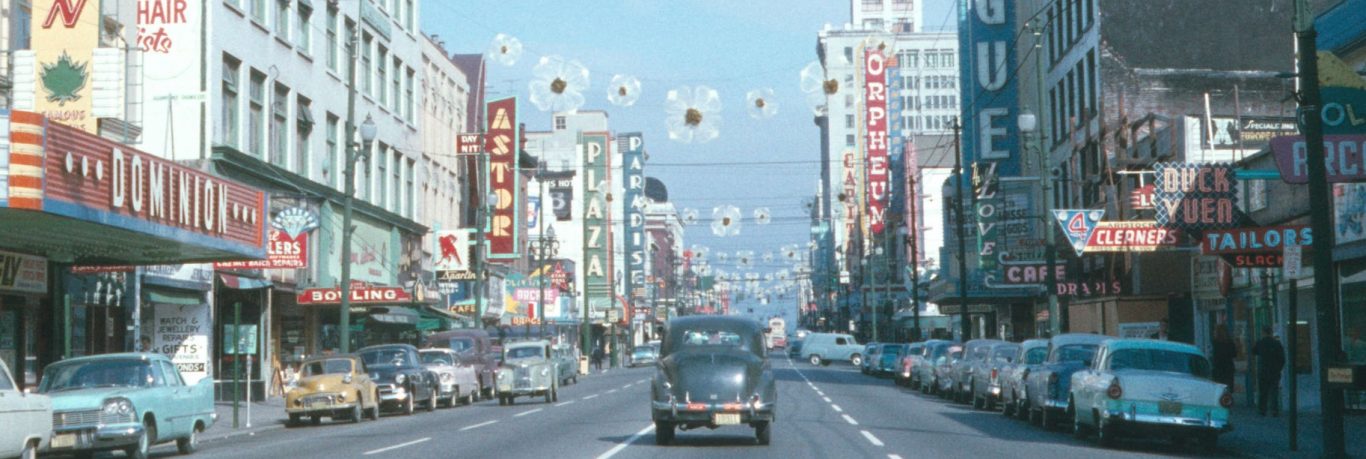
Unfortunately, it's no laughing matter for backwards Vancouver. The metropolitan region is stunted with its transportation infrastructure. While there was a serious concern between the late 1950s into the early 1970s about a few planned swaths of freeways, which would have torn Vancouver a series of gashes, something else happened. Bridges were kept narrow, or traffic lanes were removed. The ALB, Oak, Knight & Iron Bridges all should have had bus and bike bridges next to them, with enough space for truck lanes, because this is supposed to be a major port region.
Decades of environmental extremism has held the city and region back from having proper big city infrastructure. Indeed, the environment has been used as an excuse to thwart and stunt the growth of the Greater Vancouver Region.
While most of the imposed, KEEP THINGS SMALL agenda are within Vancouver, it's also in other parts of backwards BC.
Somehow the Vancouver anti-freeway movement between the 1960s and 1970s, also prevented Vancouver from having wide enough bridges for a proper express bus network and especially an efficient regional BRT system. No LRT line between Of course the trains are half or even a 3rd of the length of a proper big city train.
The few blocks of Georgia Street closest to Stanley Park are 7 lanes wide, it's all still funneled into the 3 lane Lions+Gate+Bridge. An 8 lane tunnel should have been built next to the LGB a few decades ago. Such a tunnel would not only provide 2 express or BRT lanes, but an extra section for LRT and trucks.
The 6 lane Iron+Bridge should have also had a bus and LRT bridge built next to it decades ago.
Vancouver seems to have a serious problem with bike+bridges, because the city hasn't built a proper series of bike bridges. Instead, the city has repurposed some traffic lanes from its limited bridges. While this might seem like a cheaper solution, it makes things more difficult to have bus lanes on those bridges.
If a bike bridge was built next to the Burrard+Street+Bridge, it could have still had 6 lanes. Apparently, it was more important to have 2 bike lanes on the BSB than having 2 bus lanes with a bike bridge built next to it.
Instead of widening the western sidewalk on the Cambie+Street+Bridge, so that there could be a bike lane and a footpath on each side, a traffic lane was repurposed for bikes. Having a 3rd lane each way on the CSB would have made it easier for buses.
It's strange that the sidewalks on the Granville+Street+Bridge weren't made to be double their width. Then each side of the GSB could have a bike lane and a sidewalk. Half of each curb lane could have become built-up for a bike lane. Then there would still have been enough space to have a center traffic divider. Instead, the GSB & the BSB are set up for head-on collisions.
If a 10 car train was considered to be too close towards big city size infrastructure, the YVR-Canada+Line still should have opened with 5 car trains. Instead, a cost saving measure meant that all of the underground stations can only accommodate a 2.5 car joke of a train.
There is still no train link from YVR to the Horseshoe+Bay+ferry+terminal and YVR to the Tsawwassen+ferry+terminal. Indeed, there should have already been a train between the North_Shore, Downtown Vancouver, Richmond and Delta.
https://604now.com/massey-bridge-vs-massey-tunnel-which-is-better-for-metro-vancouver

https://upload.wikimedia.org/wikipedia/commons/e/eb/BC99_at_BC17_Aerial_-_Delta This should have been twinned or duplicated by the 1980s.
The Pattullo+Bridge+replacement should have opened with 6 lanes, with a provision to become at least 8 lanes. Plus, having a lower deck for a future LRT crossing.
https://vancouver.ca/parks-recreation-culture/vancouver-aquatic-centre-renewal.aspx A new 25 m pool, instead of a 50 m pool is another example of the VMV. It all fits in with the warped symbolism of keeping things stunted, small and backwards in Vancouver. Since a wall can't be built around the provincial backwater of a city, imposing smallness symbolism is the next best thing.
Any carbon taxes in BC should have gone towards BC infrastructure. Instead, a few of the biggest cities in BC remain so far behind with transportation funding and development.
Unfortunately, the VMV and the BCMV keeps watering things down into a Half-A$$ attempt of big city infrastructure. The strange thing is, where has so much of the money gone? How come several other cities around the world are able to have the funds to build proper big city infrastructure? Well, they aren't hindered by anything like the Vancouver Mind Virus!