Showing posts sorted by relevance for query BSB. Sort by date Show all posts

Wednesday, June 24, 2015

Burrard Street Bridge (BSB)

https://en.wikipedia.org/wiki/Burrard_Bridge

It's unlikely that the Burrard+Bridge will ever be restored or completed, because of the backwards Vancouver mentality, or VMV. 

https://cityhallwatch.wordpress.com/2015/06/07/burrard-bridge-details-revealed-at-open-house-second-event-planned-for-june-16th

The city was too cheap to build a nice, wide bike-bridge next to the BSB.

https://voony.wordpress.com/2015/06/02/burrard-bridge-the-war-on-transit-continues

Thus, instead of removing 2 lanes, the BSB could have still had 6 lanes, which 2 lanes could have been for buses. Then a lower deck for 2 streetcar tracks.  

https://www.google.ca/search?q=Burrard+Bridge+Proposed+widening+plans&es_sm=93&tbm=isch&tbo=u&source=univ&sa=X&ei=VZiLVbSUAozzoAS9jLC4Bg&ved=0CB0QsAQ&biw=1600&bih=799

Sunday, June 11, 2023

The 6 and then 4 lane Burrard St. Bridge (BSB)

 https://www.vancouverisawesome.com/local-news/5-things-you-probably-didnt-know-about-the-burrard-bridge-7129420 The BSB used to have 6 lanes, but was reduced to 4, because the city didn't want to build a parallel bike bridge.

https://vancouverhistory.ca/places/burrard-bridge

Hopefully, the VMV will never cause the removal of 2 lanes from the congested 6 lane Second+Narrows+Bridge

https://vancouverhistory.ca/events/collapse-of-the-second-narrows-bridge 


https://jfdatalinks.blogspot.com/search?q=Burrard+Bridge A parallel bike bridge could allow the BSB to have 6 lanes again, with 2 of them for buses.

https://jfdatalinks.blogspot.com/search?q=Second+Narrows+Bridge A parallel express bus or BRT bridge with 2 truck lanes and 2 LRT tracks would greatly improve crossing capacity.

Wednesday, February 26, 2025

Park board votes to request 50-metre pool at Vancouver Aquatic Centre

Amended motion came after dozens of people spoke out against a redesign plan that would cut the pool in half https://www.cbc.ca/news/canada/british-columbia/aquatic-centre-50-metre-pool-1.7468681

This horrible multigenerational half-size Vancouver and BC mentality is so firmly entrenched. At least if a half-size Vancouver Aquatic Centre, like the half-size Canada+Line, was designed to eventually become a proper big city facility, that's one thing. However, certain people just wanted to have a half-size Vancouver Aquatic Centre, just like a half-size Canada Line. Indeed, the objective was to have infrastructure deliberately designed to just be another Half-A$$ED small-scale backwater BC joke.

Let it fall-apart like the crappy & inadequate Pattullo+Bridge, then just build a half-size joke. It's all part of the mentality to not want more people living in BC, which is almost 2 dozen times larger than Switzerland.

Fortunately, enough people believe in a growing Vancouver & BC, so the new Vancouver+Aquatic+Centre will be a proper big city infrastructure redevelopment. While the argument to just build a half-size facility to save money might make sense to some people, unless it was designed to eventually be brought up to a full-size standard, it's a sad joke.

The Burrard+Street+Bridge (BSB) was originally planned to have a permanent 6 lane upper deck & 2 streetcar tracks on a lower deck. Unfortunatly, the BSB was Vancouverized to become scaled back & remain incomplete. Had there been a nice & wide bike-bridge built next to it, then the BSB could have still had a 6 lane deck. Then there could have been either 2 bus lanes or 2 HOV lanes. Unfortunatly, everything is funneled into just another 4 lane BC bridge. 

Since backwards Vancouver wants to be one of the last major cities to bring back streetcars & tram-trains, there has been a mutigenerational lack of interest in completing the lower streetcar deck. 

Sunday, April 20, 2025

The Oak Street-Granville Street Corridor

Burrard_Street and the Burrard St._Bridge (BSB) were originally designed to be 6 lanes wide, but then the VMV got ahold and changed that.

Fortunately, the VMV hasn't reduced the 6 lanes of Oak St. and 6 lanes of Granville St. Thus, when combined, they still form a 12 lane, north-south corridor. 

 https://en.wikipedia.org/wiki/Oak_Street_(Vancouver) , https://www.youtube.com/watch?v=kXbUb7TMj6k

Since the Oak+Street-Granville+Street+Corridor are still both 6 lanes wide for most of their lengths, this is essentially a 12 lane street corridor and is much less disruptive than if a 10-12 lane freeway had been pushed through in the 1950s or 60s.

https://en.wikipedia.org/wiki/Granville_Street , https://storeys.com/vancouver-granville-street-entertainment-district-history-renewal-planning-program

The yellow line is set for 3 lanes each way. However, if it was moved over 2 lanes, or just removed, then there could be 5 or 6 main lanes one way & 1 or no lanes the other way. Having 6 lanes each way would be best, because then 1 lane on Oak & 1 lane on Granville would always be just for busses. Then, there could also be an HOV lane on northbound Oak and on southbound Granville. This would still allow 4 north and 4 southbound general traffic lanes. 

A 1950s or 60s freeway would have been so disruptive. Its always better to make surface streets more efficient than to rip up neighborhoods.

The Oak+Street+Bridge+and+Granville+Street+Bridge (OSB-GSB) are still part of an incomplete corridor for what is supposed to be a major port city and region.

An improved 8 lane Granville+Street+Bridge with double-width sidewalks could have still worked, if there had also been a wide bike & foot bridge built next to it. Then, a roughly new parallel bridge next to the 4 lane Oak+Street+Bridge, or a new 8 lane crossing altogether. Either way, that could have allowed for an 8 lane crossing there. Four lanes of Granville_Street southbound over the Fraser River and 4 lanes of Oak_Street northbound. A separate BRT bridge could run parallel. Unfortunately, such improvements go against the congestive transportation planning agenda.

2 lanes were removed from the Burrard+Street+Bridge (BSB), 2 lanes removed from the Granville+Street+Bridge (GSB) and 1 lane from the Cambie+Street+Bridge (CSB). That didn't have to happen if a bike bridge was built next to the BSB and the GSB. While the east side of the Cambie-Street-Bridge has a nice, wide sidewalk, there wasn't enough foresight to also have a wide sidewalk on its west side. However, that narrow sidewalk could still be built out to be nice & wide so that the CSB can be restored to 6 lanes. 

When a city & metropolitan region mostly has narrow bridges, removing lanes or not having enough is utterly foolish! Case in point... https://www.pattullobridgereplacement.ca Instead of extra width for 2 bus & 2 HOV lanes, everything will be initially funneled into just 2 lanes each way. https://www.pattullobridgereplacement.ca/about/projectoverview Two nice sidewalks & 2 nice bike lanes, but no emergency lanes & especially, no bus lanes, right from the start. Its another classic BC bottleneck in the making. Since the SkyTrain doesn't run on a 24hr basis, 24hr bus lanes are essential, but that would go against the congestive planning methodology that is backwards BC.

Grater Vancouver isn't officially against having a proper regional express bus system and a proper BRT network. Its just without having a proper regional bus and bike bridge network, it all remains as a Half-A$$ED joke.


https://jfdatalinks.blogspot.com/search?q=Oak+Street+and+Granville+Street 

https://jfdatalinks.blogspot.com/search?q=Oak+Street+Bridge OSB

Wednesday, June 17, 2026

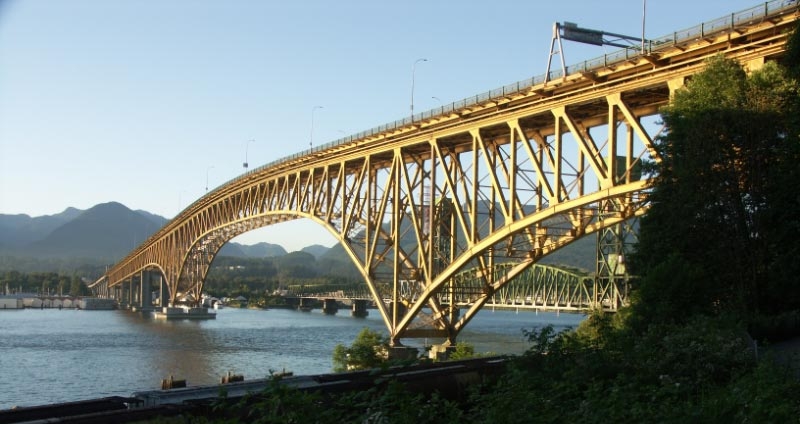
Ironworkers Memorial Second Narrows Crossing Collapse of 1958

 https://en.wikipedia.org/wiki/Ironworkers_Memorial_Second_Narrows_Crossing#Collapse 

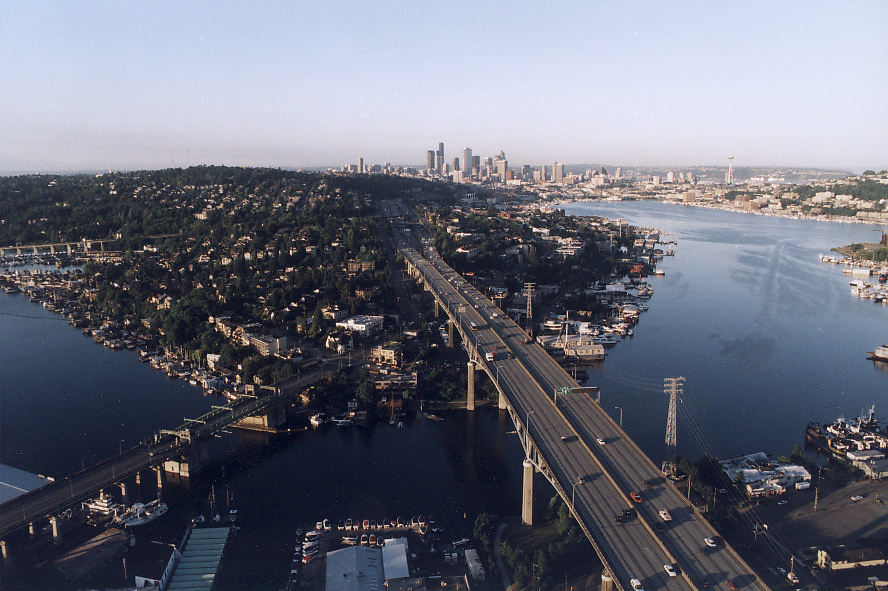
After the collapse, there was a chance that the Iron_Bridge (IwB) could have been totally redesigned, but this is BC. Its very difficult in BC to design transportation infrastructure with significant future capacity. The Iron Bridge should have been built along the lines of the 12 lane Ship_Canal_Bridge (SCB) in Seattle. https://en.wikipedia.org/wiki/Ship_Canal_Bridge 

Unlike Seattle and Washington State, so much in BC is built to a provincial backwater standard. Thus, nothing on the scale of the SCB has ever been allowed in BC. https://pauldorpat.com/2014/05/17/seattle-now-then-the-ship-canal-bridge Sunce an LRT line wasn't possible for the SCB, it runs sort of parallel in a tunnel to the UW. Of course LRT to UBC is still an incomplete BC pipe dream.

The IwB should have had at least 8 lanes on an upper deck and 4 lanes on a lower deck for extra bus and truck lanes. There should have also been a provision for 2 LRT tracks on a lower deck, but that would be properly planning for the future. 

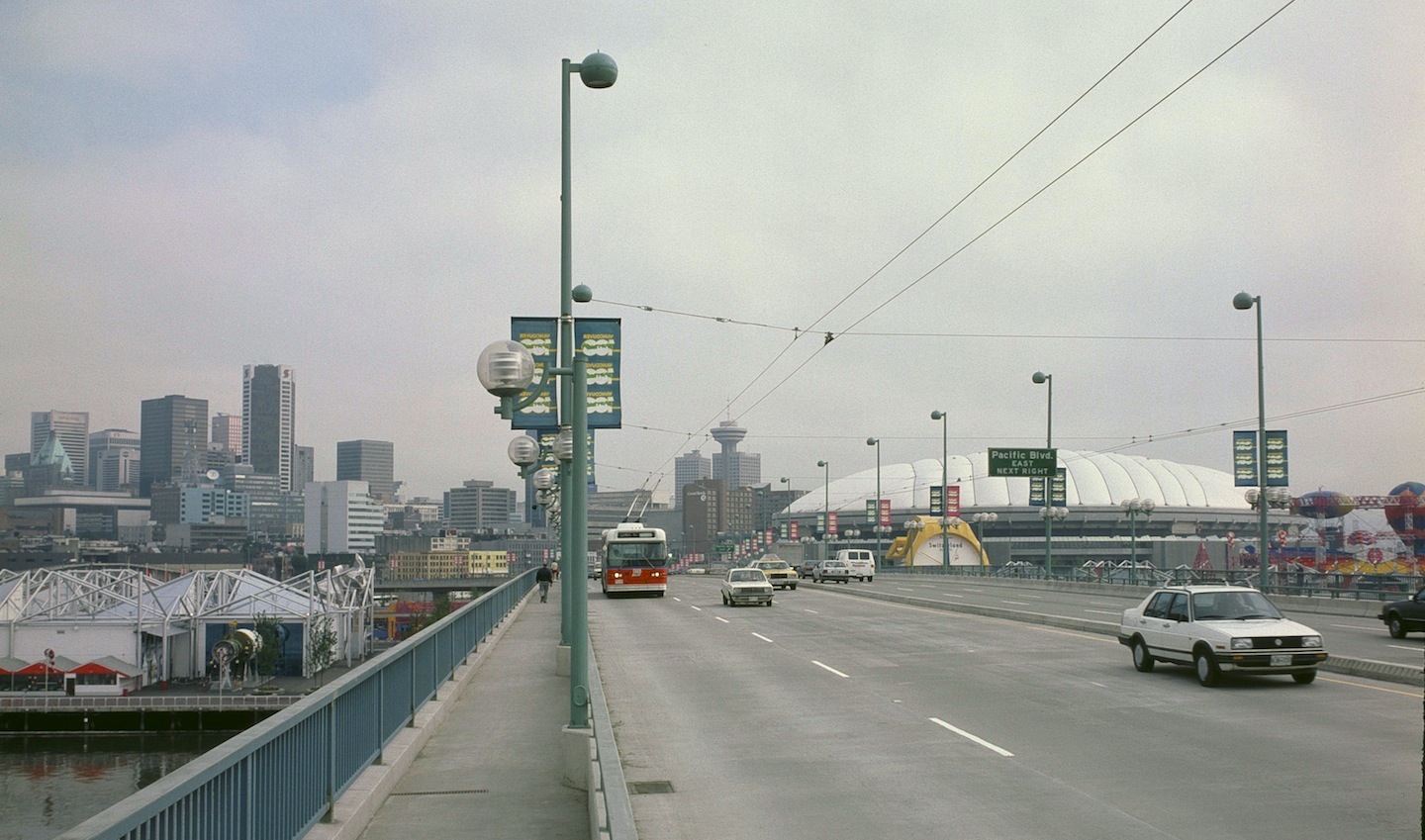
Unfortunately, the Vancouver Mind Virus (VMV) ruined the Burrard-Bridge. The Burrard_Street Bridge (BSB) opened with 6 lanes and a lower level provision for a double track streetcar crossing.

https://www.vancouverisawesome.com/local-news/5-things-you-probably-didnt-know-about-the-burrard-bridge-7129420 

Foolishly, because the city didn't want to build a parallel bike bridge, 2 lanes were removed from the BSB. This has made it very unlikely that the BSB will be able to have 2 bus lanes. No lower level streetcar crossing was ever built. Yet, a streetcar line on both side of False Creek could have been a nice thing to have up and running. Ironically, Vancouver was one of the first cities to get rid of its streetcars and will likely be one of the last to bring them back. The VMV is such a horrible thing, yet it officially doesn't exist. 


https://jfdatalinks.blogspot.com/search?q=Second+Narrows+Bridge

Saturday, March 7, 2026

Burrard Street Bridge closes for Sen̓áḵw crane removal

 https://www.ctvnews.ca/vancouver/article/burrard-street-bridge-closes-for-senakw-crane-removal 

Several cities have parallel bike bridges, then the city planners don't have to remove traffic lanes. 

https://vancouversun.com/news/vancouver-burrard-street-bridge-temporarily-closure 

Unfortunately, the Burrard_St. Bridge (BSB) was hit hard by the multigenerational Vancouver Mind Virus (VMV). The Burrard_Bridge was designed to have a lower level for streetcars or tram-trains, but the city never followed through. Fortunately, the VMV was unable to stop Portland and Seattle from reviving some of their streetcar lines.  

The Burrard_Street_Bridge used to have 6 lanes and 2 wide sidewalks. However, since the city has a problem of not building separate bike bridges, 2 potential bus lanes were removed from the Burrard_Bridge. Now, if the city ever wants to have 2 dedicated bus lanes, the BB will only have 1 general lane each way. That's the VMV at work.

https://en.wikipedia.org/wiki/Burrard_Bridge#History

Monday, December 29, 2025

No fireworks in downtown Vancouver for New Year's Eve or the rest of 2026

 https://dailyhive.com/vancouver/vancouver-fireworks-2026-new-years-eve-nye 

While Vancouver hasn't been able to get most other cities across Canada and around the world to stop, ban or cancel their NY Eve fireworks, bizarre Vancouver will retain this part of its NO FUN CITY (NFC) mentality and agenda. 

https://www.vancouverisawesome.com/local-news/fireworks-banned-halloween-vancouver-fire-department-9726922 Why just ban them in October and January, when you can ban them throughout the year? 

https://www.ehnewspaper.ca/articles/third-year-of-vancouvers-fireworks-ban

For some strange reason, backwards Vancouver hasn't been able to get other cities around the world to adopt the same bizarre idiosyncrasies.  

Officially, there isn't supposed to be a Vancouver+Mind+Virus, but the backwards city is so stunted and strange. Other cities in a scenic setting such as SydneyAucklandSan_Francisco and Seattle are able to have wider bridges in or close to their city centers. 

Despite warm and scenic Honolulu having some very short bridges, they are still wider than what extremely restrictive Vancouver allows. These two short bridges in Honolulu provide 4 lanes each way. Thus, they form an 8 lane crossing and they aren't even part of a freeway.  

There is also a very short 6 lane bridge in Honolulu. In addition to its 6 lanes, there is a turning lane and a one lane wide median, which makes it equivalent to being 8 lanes wide. Plus, there are 2 wide sidewalks, which are wider than the original sidewalks on the Granville Bridge in Vancouver. In other words, no bridge in Vancouver is allowed to be as wide as it. Despite regional population growth, the Granville Bridge was reduced from 8 lanes to 6 lanes. 

Considering how Vancouver has such a narrow road system, one would think that a regional network of bus and bike bridges would be essential. Of course the backwards city and greater urban region is too cheap to fund such infrastructure and rather opted for a congestive transportation approach.

In contrast, The+Helix+Bridge in Singapore is fine example of what backwards Vancouver refuses to build. No lanes had to be removed from the 6 lane Bayfront+Bridge or the 10 lane Benjamin+Sheares+Bridge. Stubborn Vancouver could really benefit from something like the Helix Bridge. 

While Vancouver went backwards after Expo 86, Brisbane really took of after Expo 88. The Kangaroo_Point_Green_BridgeGoodwill_BridgeKurilpa_BridgeJack_Pesch_Bridge and the Go_Between_Bridge are all great examples of what strange Vancouver refuses to build. What's really amazing from a backwater Vancouver perspective is that those bike and foot bridges in Brisbane never required any lanes to be removed from the cities road bridges. 

In comparison, Vancouver removed 2 lanes from the Burrard St. Bridge (BSB), 1 lane from the Cambie Bridge and 2 lanes from the Granville Bridge. If urban planning in Vancouver was wise and the city never got rid of its trams or streetcars, perhaps something like the Tilikum_Crossing could have been built across False_Creek.


https://jfdatalinks.blogspot.com/search?q=fireworks

Saturday, April 19, 2025

The narrow bridges of Vancouver, Canada

https://montecristomagazine.com/community/forgotten-bridges-vancouver

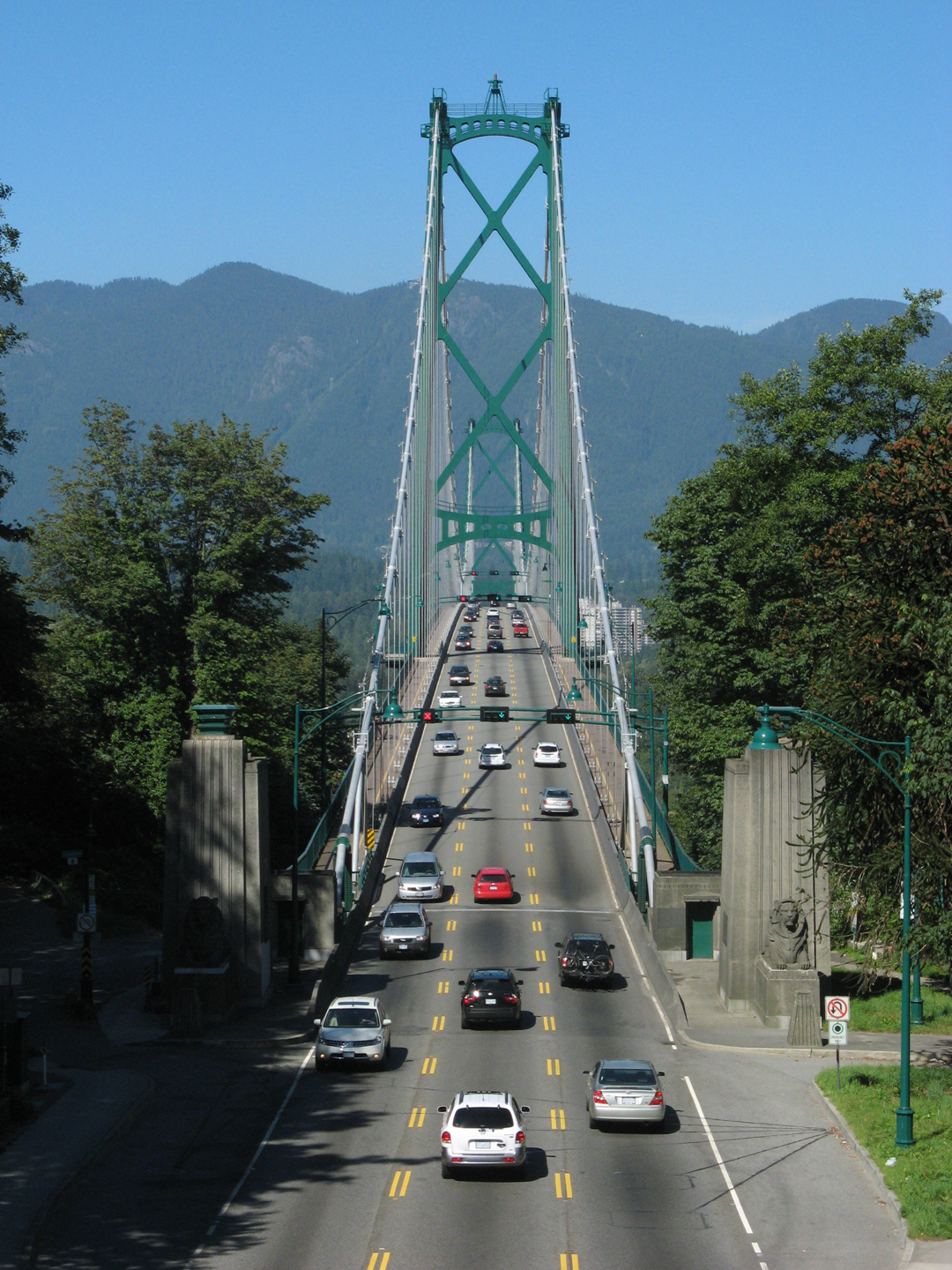
The LGB just wasn't designed with any future capacity in mind. 

History of the Lions Gate Bridge https://www.youtube.com/watch?v=JHqi7Kijedw 

https://en.wikipedia.org/wiki/Lions_Gate_Bridge#History

https://upload.wikimedia.org/wikipedia/commons/7/7e/Lions_Gate.jpg 

The inadequate 3 lane LGB is currently the most narrow road bridge in backwards & stubborn Vancouver. It's been in that category since the removal of the 2 lane Fraser Street Bridge in the 1970s. There was a refusal to twin the absurdly narrow LGB between the 1950s & 1970s. By the 1980s there should have been a subway tunnel and an 8 lane tunnel. Then two of the lanes could have been for buses. Georgia+Street is 7 lanes wide as it gets closer to Stanley Park. Thus, the main part of a tunnel through the park could have provided 3 general lanes each way & a bus lane each way. Instead, the 7 lanes of the westernmost part of Georgia Street are funneled into a 3 lane causeway & a 3 lane bridge. The LGB would be fantastic as just a bike & foot crossing, with train, bus & road tunnels well beneath & beside it.    

The Burrard_Bridge, BB or  BSB opened with 6 lanes, but now it only has 4 lanes. There are 2 bike lanes & 2 sidewalks. Had a parallel bike-bridge been built, the BB could have still had 6 lanes. While the BB has a lower level provision for streetcars or tram-trains, Vancouver did its damndest to phase out streetcars well before the 1960s. 

The Ironworkers_Memorial_Bridge has 6 lanes, but should also have had 2 wide shoulders & 2 very wide sidewalks. Unfortunatly, there was no provision for a lower deck, as is also the case with all of the other Vancouver  bridges. https://en.wikipedia.org/wiki/Ironworkers_Memorial_Second_Narrows_Crossing

Any replacement of the inadequate Ironworkers+Memorial+Bridge should be on the scale of what Perth, Seattle and Montreal have done.

https://en.wikipedia.org/wiki/Granville_Street_Bridge#Third_bridge_(1954)

https://www.youtube.com/watch?app=desktop&v=vPSdF0jRTC4 The Granville-Bridge or GSB is the widest bridge in the city limits. It opened with 8 lanes, but is being transformed into a 6 lane bridge with 2 bike lanes & 2 sidewalks. Had there been a paralel bike & foot bride, the GSB could have still been 8 lanes wide. Then there could have been 2 exclusive bus lanes.

https://vancouver.ca/streets-transportation/granville-bridge-connector.aspx

The Oak Street Bridge should have been 8 lanes wide, with 2 wide sidewalks.

The Knight+Street+Bridge should have been 8 lanes with 2 wide sidewalks. Instead, its a 4 lane chokepoint.

The Arthur+Laing+Bridge should have been at least 6 lanes with 2 proper bike lanes & 2 sidewalks.

If the Cambie_Street_Bridge had 2 very wide sidewalks, then its likely that it would still have 6 lanes instead of 5. https://en.wikipedia.org/wiki/Cambie_Bridge#The_present_bridge

Unfortunatly, bottleneck or chokepoint planning is part of the Vancouver & BC mentality.

Of course BC & the Metro+Vancouver Region just hasn't put enough funds and effort towards proper big-city planning & infrastructure development. 

If Perth+and+Seattle had to conform to the extremely restrictive Vancouver approach to things, those cities would be in a perpetual state of chaos. Fortunately, nothing like the BC Mind Virus has ever reached WA.


https://jfdatalinks.blogspot.com/search?q=Lions+Gate+Bridge

https://jfdatalinks.blogspot.com/search?q=Oak+Street+and+Granville+Street 

https://jfdatalinks.blogspot.com/search?q=Oak+Street+Bridge OSB
Friday, July 11, 2025

How Bike Lanes have affected Vancouver's urban infrastructure

https://www.youtube.com/watch?v=LvkifuIjq9I The BSB was a 6 lane crossing that even had a provision for a lower deck intended for streetcars. Eventually, 2 lanes were removed & the lower deck was never completed. However, Vancouver was unable to prevent Seattle & Portland from reviving some of their streetcar routes.

The problem isn't bike lanes, it's the lack of interest to build a proper regional network of bus & bike bridges. Thus, if a proper bike bridge was built next to the Burrard+Street+Bridge, then 2 of its 6 lanes could have been for buses or at least HOV lanes. The lower deck could have still been for streetcars or tram-trains going between Vancouver & Richmond. The irony of backwards Vancouver is that it was one of the first cities to get rid of its streetcars & will likely be one of the last to bring them back.

The Fraser River Tunnel Project https://www.youtube.com/watch?v=NWhHJWKa6CQ Unfortunatly, this will still be a chokepoint or congested crossing.

Of course the new Richmond-Delta+Tunnel wasn't designed to be part of a rail link between the airport and the ferry terminal. There should have been 2 HOV lanes, as well as 2 bus lanes, but that would be a big-city 10 lane crossing. Instead, just an 8 lane tunnel with no train component. Eventually, a train and HOV bridge or tunnel will have to be built next to it. 

At least the first SkyTrain line can now have 5 car trains. However, the 2 car joke of a train still exists between Vancouver & Coquitlam, as well as between Vancouver & Richmond. The Montreal Metro can have 9 car trains and BART in SF can have 10 car trains. Such things are possible because they don't have a congestive BC panning mentality.


https://jfdatalinks.blogspot.com/search?q=Bike+Lanes