Showing posts sorted by relevance for query Granville Connector. Sort by date Show all posts

Wednesday, August 13, 2025

The Granville Connector

 https://dailyhive.com/vancouver/granville-connector-celebration-free

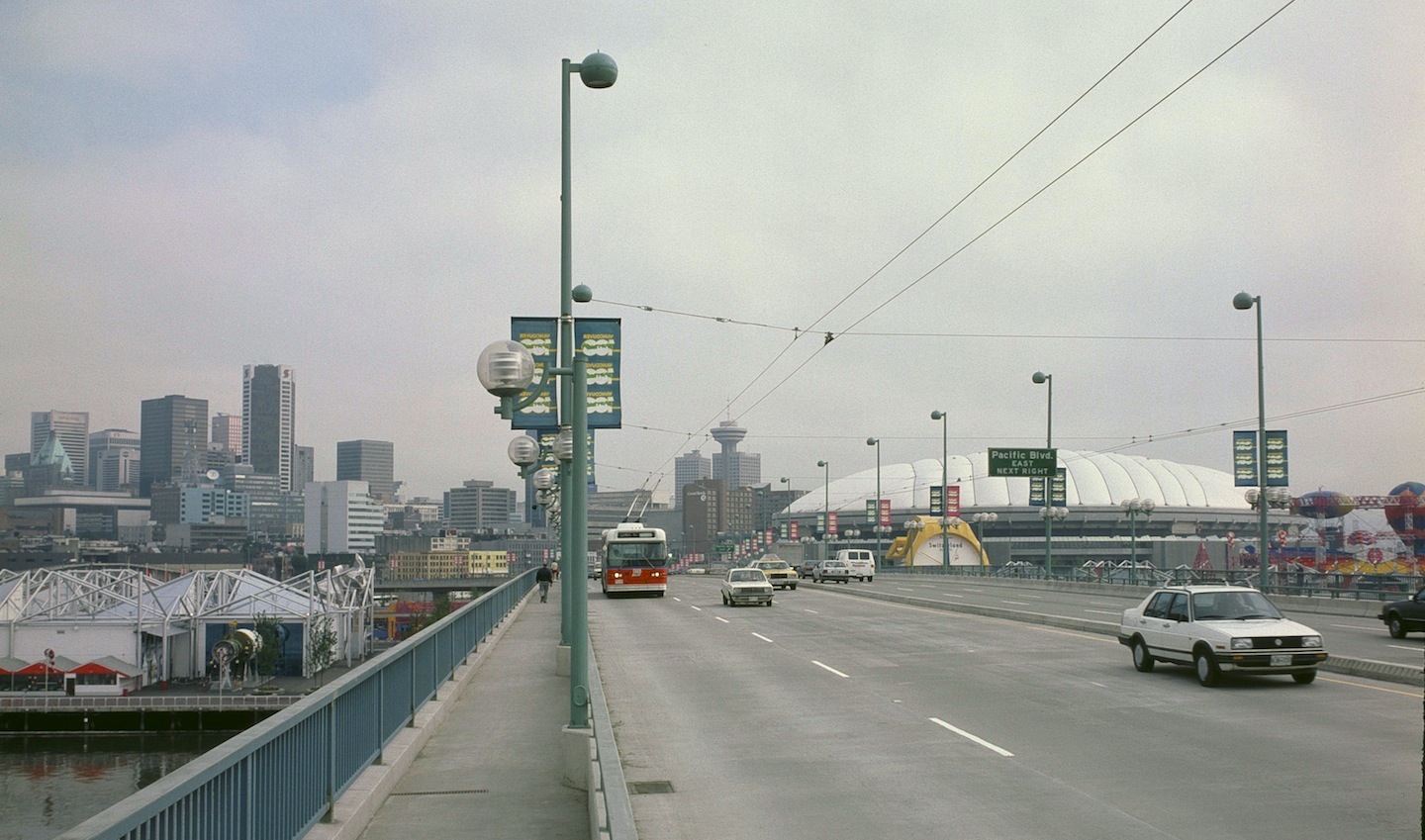
It's still the Granville+Street+Bridge, but it's also the Connector. Unfortunatly, it wasn't designed to have a lower deck for streetcars and busses. Such is the irony of backwards Vancouver to be one of the first cities to get rid of its streetcars and doing its damndest to be one of the last to bring them back.


https://jfdatalinks.blogspot.com/search?q=Granville+Connector

Tuesday, September 17, 2024

North end of Granville Street Bridge

 https://canada.constructconnect.com/joc/news/projects/2024/09/north-end-of-granville-bridge-roadway-reopens

The 1950s Granville+Street+Bridge (GSB) should have at least had a provision for a lower deck.

https://dailyhive.com/vancouver/granville-bridge-north-end-reopens-vancouver-connector

A lower deck would have been great for extra bus lanes and potential LRT, but this is backwards BC.

https://vancouversun.com/news/traffic-alert-north-end-granville-street-bridge-reopen-monday

Since no bus & bike bridge was even built right next to it, the bridge is being scaled down to 6 lanes, from 8. That might not have been necessary if there was an Oak Street Bridge (OSB) over F. Creek, not just over the Fraser River. An OSB over F. Creek could have been a bus & bike bridge with wide sidewalks as well.

https://vancouver.ca/news-calendar/north-end-granville-bridge-reopens-transit-into-downtown-sep-2024.aspx

The 8 lane GSB becomes a revamped 6 lane bridge with 2 bike lanes & 2 sidewalks.

https://vancouversun.com/news/local-news/vancouver-granville-street-bridge-construction-detours-closures-timeline

If the bridge eventually has 2 express bus lanes, there will only be 4 general traffic lanes.

https://granvilleisland.com/news/transportation-updates-on-granville-bridge-city-of-vancouver

Unfortunately, the 8 lane Granville_Street_Bridge_(1954) wasn't designed to have a lower level. That wasn't the case with the 12 lane Ship+Canal+Bridge in Seattle. Fortunately, the Vancouver bridge was never connected to a city freeway, where as the Seattle bridge was. Vancouver should have opted for a better major street & bridge arrangement. 

There was never any follow-up to have a new and improved Fraser+Street+Bridge (FSB). A modern FSB could be a nice bus and bike bridge with wide sidewalks & a potential for streetcars. Unfortunatly, backwards Vancouver, BC seems uninterested in building something like the Tilikum+Crossing in Portland.


https://jfdatalinks.blogspot.com/search?q=Oak+Street+and+Granville+Street

Wednesday, January 22, 2020

Burrard Street Bridge and Granville Street Bridge and Cambie Street Bridge

https://dailyhive.com/vancouver/granville-connector-bridge-pathway-design-configuration

The current Granville+Street+Bridge was built a generation after the Burrard+Street+Bridge. Both bridges should have had a lower deck for streetcars, tram-trains (LRT) and buses.  

The Cambie+Street+Bridge should have been built a couple of metres wider on its west side. Then a traffic lane didn't have to be reallocated for bikes. A slightly wider bridge would have allowed for 2 bike paths as well as 2 footpaths.

Somehow, Vancouver and BC keep doing a lot of things the wrong way.


Monday, January 13, 2025

Granville Street Bridge

 https://vancouver.ca/streets-transportation/granville-bridge-structural-work.aspx

One might think that the 1950s Granville_Street_Bridge (GSB) was built with a lot of future capacity in mind.

https://vancouver.ca/streets-transportation/granville-bridge-connector.aspx

At least the bridge started out with 8 lanes, but narrow sidewalks. In order to put in 2 good sidewalks & 2 bike lanes, 2 traffic lanes had to be removed. At least with 6 lanes, the GS Bridge can still eventually have 2 bus lanes. However, had the original sidewalks been tripled in width, the bridge could have still had 8 lanes. 6 general lanes & 2 bus lanes. 

https://granvilleisland.com/news/transportation-updates-on-granville-bridge-city-of-vancouver

Unfortunatly, the Granville+Street+Bridge wasn't designed to have a lower deck for future streetcars or tram-trains, because it didn't seem necessary back in the 1950s. Of course Vancouver & the region never built a series of wide freeways & expressways, so retaining the streetcars & interurban trains would have been a good idea.

Fortunately, the backward Vancouver mentality wasn't able to convince Melbourne to give up on its trams. Imagine if Toronto, Boston, Philadelphia, New OrlĂ©ans & especially SF gave up on having their streetcars. 

Now Vancouver stands to be one of the last major cities & urban areas to bring back the streetcars or tram-trains in the form of modern LRT vehicles.

Express bus lanes or rapid bus right of ways can be very good, but a LRV is also a very good transit mode that's in-between a subway or an urban metro train line.


https://jfdatalinks.blogspot.com/search?q=Granville+Street+Bridge

Friday, July 25, 2025

Granville Bridge's new wide, safe pathways for walking and cycling now open

 https://dailyhive.com/vancouver/granville-connector-bridge-walking-cycling-pathways-open-complete

Its OK, but it could have been better.

Had there been a nice bike & foot bridge built next to it, the Granville Bridge could have had 3 general lanes each way & the 4th as a bus lane. Just like the Burrard Bridge should have had a bike & foot bridge next to it. Then, the BB could have had 2 bus lanes as well as 4 general lanes. Taking lanes away is absurd for a city that already has such a narrow road system. Yet, a proper regional bus & bike bridge system wasn't implemented.

It seems that the public wasn't properly informed decades ago that Greater Vancouver wasn't going to have a 24hr train system. All the more important for the GV Region to have a network of bus & bike bridges. Several the regional bridges are so narrow that there isn't enough room to accomodate 2 bus lanes & 2 HOV lanes.


Saturday, July 26, 2025

New pedestrian and cycling upgrade to Granville Bridge opens to public

 https://globalnews.ca/news/11304598/54m-pedestrian-and-cycling-upgrade-to-granville-bridge-opens-to-public/

Once again Vancouver gets its wrong, at least the Burrard Bridge is a better example, despite the loss of 2 lanes..

https://dailyhive.com/vancouver/granville-connector-bridge-walking-cycling-pathways-open-complete

For a bridge that was 8 lanes wide with 2 narrow sidewalks, there should have been a bike lane & a wide sidewalk on both sides. The decision was to have 2 bike lanes on the west side of the bridge with a wider, uneven sidewalk & a slightly wider sidewalk on the east side of the bridge.


Monday, August 12, 2024

Several Vancouver narrow bridge issues

 https://dailyhive.com/vancouver/metro-vancouver-bridge-cyclist-wire-allegations

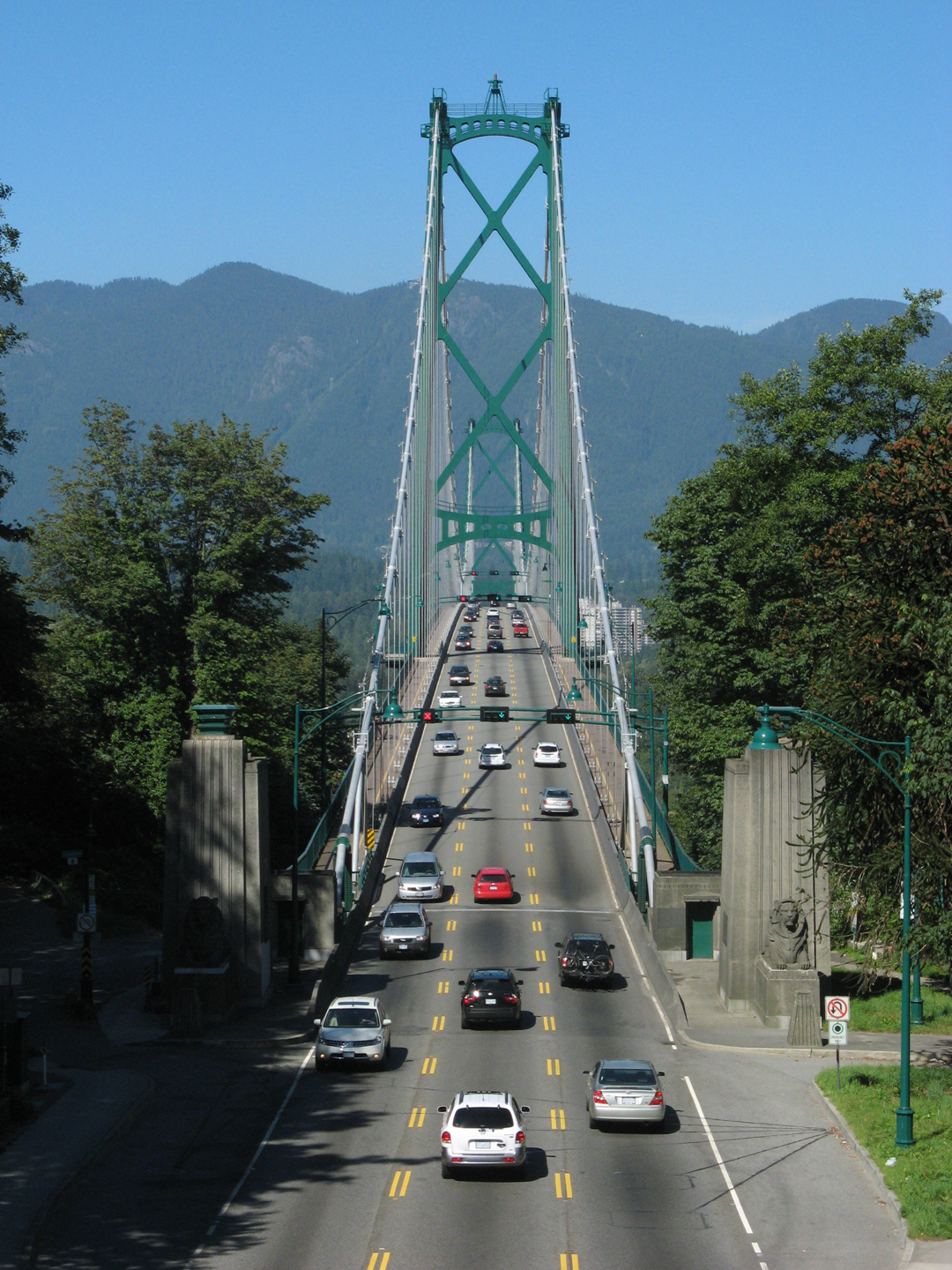
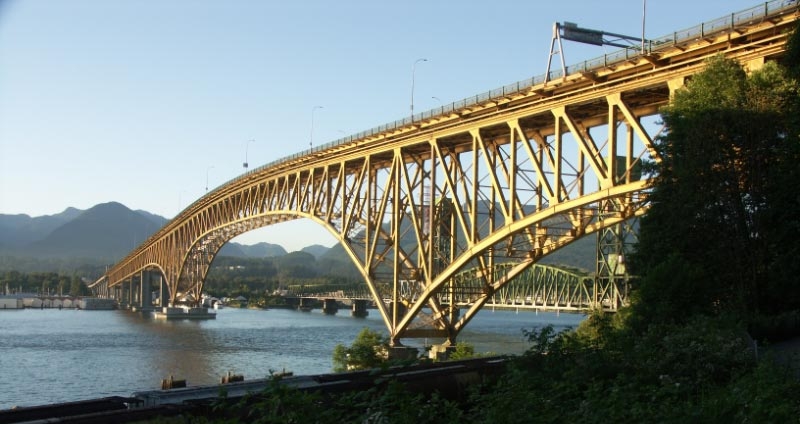
Someone might have been very angry with bike people and not with car, bus & truck people. The real problem is that so much of the older BC infrastructure just wasn't designed to be more of a multi-modal crossing. The+Lion+Bridge+and+The+Iron+Bridge have no rail rapid transit crossings to help them.

The Ironworkers-Bridge is so narrow for a highway bridge in that location & wasn't designed for substantial future capacity. When it was initially designed in the 1950s, there was no concept to have 2 bus lanes, 2 HOV lanes, 2 truck lanes & 2 emergency lanes for a port city. Plus, at least 2 general traffic lanes each way & a provision for 2 train tracks. Thus, the 6 lane bridge is so overwhelmed, because it just can't do the job of an 8-10 lane wide bridge. While the Iron Bridge has 2 improved bike+lanes, they are part of the sidewalks.  

The former 8 lane Granville+Street will have 6 lanes, while the  & Oak+Street only has 4 lanes. The inadequate Oak+Street+Bridge (OSB) should have opened with at least 8 lanes, instead of only 4. Plus, 2 wide emergency lanes & 2 wide sidewalks. There still should be a new southbound OS Bridge, but the city would be against it. A narrow 4 lane bridge just doesn't have the space & capacity for 2 express bus lanes, 2 HOV & 2 truck lanes. Apparently, it's better to just funnel everything into only 2 lanes each way.  

The OSB should be twinned or replace with something like the Samuel-De_Champlain_Bridge in Montreal. The largest city in Quebec is allowed to have a nice wide bridge & long metro trains, because Quebec isn't bound by anything like the backwards BC mentality. 

https://www.theglobeandmail.com/canada/article-montreals-new-44-billion-champlain-bridge-opens-to-traffic-for Fortunatly, the Vancouver mentality wasn't able to ever reach back to Montreal & prevent such a nice modern bridge from being built there. https://www.flatironcorp.com/project/champlain-bridge If you are from Montreal & have visited Vancouver, you will be surprise to see how much shorter an underground Vancouver train station is than what is allowed underground in Montreal, Toronto, Edmonton, Seattle, SF & LA...

https://vancouver.ca/streets-transportation/granville-bridge-connector.aspx A bike & foot bridge should have been built next to it decades ago. Then the Granville Bridge could have 3 general lanes each way, plus a bus & HOV lane each way. Instead, if 2 bus & HOV lanes are designated, there will only be 2 general lanes each way in the downtown core.

The Burrard Bridge should have had a bike & foot bride next to it. Instead, it was reduced from a 6 lane crossing to a 4 lane bridge.

The very narrow Oak+Street+Bridge & the Knight Street Bridge, should have had bus+and+bike+bridges built next to them decades ago. 

Most bridges in Vancouver & the metropolitan region just weren't designed with that much future capacity in mind, especially for buses & HOV lanes. Thus, it's a travesty that by now, almost every crossing should have had bus & bike bridges built next to them. 

https://vancouver.ca/streets-transportation/walk-bike-and-transit.aspx Unfortunatly, provisions for bus & bike lanes just weren't the thing to do several decades ago in BC.  

A truck lane is just as important as a bus & HOV lane. That's because freight should be efficiently & easily be transported in any major urban region.

https://vancouver.ca/streets-transportation/trucks-commercial-and-oversize-vehicles.aspx

https://jfdatalinks.blogspot.com/search?q=Oak+Street+and+Granville+Street

https://jfdatalinks.blogspot.com/search?q=Iron+Bridge 

https://jfdatalinks.blogspot.com/search?q=Lion+Bridge

Saturday, April 19, 2025

The narrow bridges of Vancouver, Canada

https://montecristomagazine.com/community/forgotten-bridges-vancouver

The LGB just wasn't designed with any future capacity in mind. 

History of the Lions Gate Bridge https://www.youtube.com/watch?v=JHqi7Kijedw 

https://en.wikipedia.org/wiki/Lions_Gate_Bridge#History

https://upload.wikimedia.org/wikipedia/commons/7/7e/Lions_Gate.jpg 

The inadequate 3 lane LGB is currently the most narrow road bridge in backwards & stubborn Vancouver. It's been in that category since the removal of the 2 lane Fraser Street Bridge in the 1970s. There was a refusal to twin the absurdly narrow LGB between the 1950s & 1970s. By the 1980s there should have been a subway tunnel and an 8 lane tunnel. Then two of the lanes could have been for buses. Georgia+Street is 7 lanes wide as it gets closer to Stanley Park. Thus, the main part of a tunnel through the park could have provided 3 general lanes each way & a bus lane each way. Instead, the 7 lanes of the westernmost part of Georgia Street are funneled into a 3 lane causeway & a 3 lane bridge. The LGB would be fantastic as just a bike & foot crossing, with train, bus & road tunnels well beneath & beside it.    

The Burrard_Bridge, BB or  BSB opened with 6 lanes, but now it only has 4 lanes. There are 2 bike lanes & 2 sidewalks. Had a parallel bike-bridge been built, the BB could have still had 6 lanes. While the BB has a lower level provision for streetcars or tram-trains, Vancouver did its damndest to phase out streetcars well before the 1960s. 

The Ironworkers_Memorial_Bridge has 6 lanes, but should also have had 2 wide shoulders & 2 very wide sidewalks. Unfortunatly, there was no provision for a lower deck, as is also the case with all of the other Vancouver  bridges. https://en.wikipedia.org/wiki/Ironworkers_Memorial_Second_Narrows_Crossing

Any replacement of the inadequate Ironworkers+Memorial+Bridge should be on the scale of what Perth, Seattle and Montreal have done.

https://en.wikipedia.org/wiki/Granville_Street_Bridge#Third_bridge_(1954)

https://www.youtube.com/watch?app=desktop&v=vPSdF0jRTC4 The Granville-Bridge or GSB is the widest bridge in the city limits. It opened with 8 lanes, but is being transformed into a 6 lane bridge with 2 bike lanes & 2 sidewalks. Had there been a paralel bike & foot bride, the GSB could have still been 8 lanes wide. Then there could have been 2 exclusive bus lanes.

https://vancouver.ca/streets-transportation/granville-bridge-connector.aspx

The Oak Street Bridge should have been 8 lanes wide, with 2 wide sidewalks.

The Knight+Street+Bridge should have been 8 lanes with 2 wide sidewalks. Instead, its a 4 lane chokepoint.

The Arthur+Laing+Bridge should have been at least 6 lanes with 2 proper bike lanes & 2 sidewalks.

If the Cambie_Street_Bridge had 2 very wide sidewalks, then its likely that it would still have 6 lanes instead of 5. https://en.wikipedia.org/wiki/Cambie_Bridge#The_present_bridge

Unfortunatly, bottleneck or chokepoint planning is part of the Vancouver & BC mentality.

Of course BC & the Metro+Vancouver Region just hasn't put enough funds and effort towards proper big-city planning & infrastructure development. 

If Perth+and+Seattle had to conform to the extremely restrictive Vancouver approach to things, those cities would be in a perpetual state of chaos. Fortunately, nothing like the BC Mind Virus has ever reached WA.


https://jfdatalinks.blogspot.com/search?q=Oak+Street+and+Granville+Street