Showing posts sorted by relevance for query bridges. Sort by date Show all posts

Monday, October 13, 2025

Majority polled in Calgary and Edmonton are unhappy with the pace of population growth

 https://www.cbc.ca/news/canada/calgary/too-much-too-fast-majority-polled-in-calgary-edmonton-unhappy-with-pace-of-population-growth-9.6935121 

If you are visiting Vancouver or Victoria from Calgary or Edmonton, you will be shocked as to how narrow most of the bridges are in Greater Vancouver and Victoria. Edmonton was wise in the 1970s to have 125 m long underground LRT stations. Foolish Vancouver opted to only have 80 m stations on its first 2 lines and an absurd 50 m for the 3rd line. 

https://en.wikipedia.org/wiki/Green_Line_(Calgary) , https://www.calgary.ca/green-line.html 

https://www.calgarytransit.com/plans---projects/lrt/green-line.html

https://engage.calgary.ca/greenline/UndergroundStations Fortunatly, any underground stations in Calgary will be closer in length to that of the Edmonton LRT and not backwards Vancouver.

https://www.railjournal.com/regions/north-america/tunnel-preferred-for-calgary-lrt-green-line/

https://www.tunnelsandtunnelling.com/news/calgary-city-council-approves-green-line-lrt-construction/?cf-view

https://www.calgary.ca/green-line/stations.html

https://www.tunnelsandtunnelling.com/news/calgary-city-council-approves-green-line-lrt-construction/?cf-view 

The main roads and bridges in urban parts of Alberta are allowed to be wider than their counterparts in backwards BC. So while people in the urban parts of Alberta are concerned or even angry about rapid growth, at least Alberta can easily build more urban infrastructure. That's because Albertal isn't affect by the (unofficial) BC Mind Virus (BCMV). 

A timely example is a new bridge between Surrey & NW. Despite Surrey being expected to become the largest city in BC, the new bridge will only open with 4 lanes. No 3rd or 4th lane each way for busses, HOVs and trucks. Thus, all the road traffic at either end is funneled into just 2 lanes each way. Plus, there are no breakdown or emergency lane, just like the old bridge.   

While this new bridge can eventually be widened to 6 lanes, there is no provision for a lower deck for LRT, busses and trucks. Despite SW BC being a seaport area, trucks are funneled onto mostly narrow bridges. There has been a lack of interest to build bus bridges next to almost all of the bridges in Greater Vancouver. Yet, there is a Half-A$$ED attempt to have a better regional express bus network. This regional Rapid Bus attempt will always be a joke, unless a series of bus bridges are built. The Half-A$$ED approach is to try to have bus lanes on 4 to 6 lane bridges. Designating 2 bus lanes would reduce the narrow bridges to only 1 or 2 lanes each way for general traffic in what is suppose to be a major seaport and urban area.   

Most of the worlds population is non-white and for a big part of the history of BC, there has been a refusal to build up bigtime infrastructure for everyone. While some Albertains might wish that there was a wall built around their province or a force-field like out of Star Trek, BC is almost pretending like there is. Thus, the keep things small and backwards mentality. 

Several decades ago, BC implemented a symbolic slow-growth approach. Despite BC not having any control over immigration, or trying to establish an internal passport & checkpoint system, to KEEP PEOPLE OUT, it opted for the next best thing. Stunt or scale back the urban infrastructure to project a strong symbolic reluctance to growth and thinking big. 

When you realize how much larger things are allowed to be in Alberta, Washington State and even Western Australia & compare them to watered down BC, you see quite a difference. Despite BC & Canada in general, being multicultural, BCs cities keep finding ways to water the scale of things down. Canada has yet to have even 1% of the world's population, despite its size.  

While there are good arguments to occasionally slowdown immigration, that can eventually become problematic, just like too much immigration. Even in the 2020s, some people in the former White colonial parts of the world still wish that Canada & Australia, etc., could be a White Man's paradise. However, that seems so impractical on a planet that mostly has a non white population. 

https://humanrights.ca/story/chinese-head-tax-and-chinese-exclusion-act

https://thecanadianencyclopedia.ca/en/article/chinese-head-tax-in-canada 

https://royalalbertamuseum.ca/blog/chinese-head-tax-george-yees-story 

https://www.musee-mccord-stewart.ca/en/blog/chinese-exclusion-act/

https://parks.canada.ca/culture/designation/evenement-event/exclusion-chinois-chinese

https://www.canada.ca/en/canadian-heritage/campaigns/asian-heritage-month/important-events.html

https://stanleyparkvan.com/stanley-park-van-monument-komagata-maru.html

https://vancouver.citynews.ca/2022/10/05/vancouver-komagata-maru-memorial

https://vancouver.citynews.ca/2023/01/30/vancouver-komagata-maru-memorial-vandalism/

Even if Alberta were to eventually become its own country, it would be extremely unlikely that it could ever impose a White Man's Paradise Agenda. The same could be stated for backwards BC. However, something very peculiar has been happening in BC for several generations. 

Several BC cities and municipalities play off each other with various slow-growth agendas. Vancouver being one of the most restrictive & backwards on the the planet. Somehow the legitimate anti freeway fears of the 1960s & 70s didn't get the city & region to still build a series of bus & HOV bridges. Plus, a long-term, high capacity urban rail system.

While Montreal planned for 152.4 m stations to accomodate 9 car trains, backwards Vancouver only built 80 m Skytrain stations for the first 2 lines. Then to top that, was a plan to build a line to Richmond with only enough level clearance for 50 m stations. The 1st line only started to run 5 car trains in 2025. Eventually, the 2nd line will also have 5 car trains. However, the line to the airport was deliberately designed not to have 5 car trains. Just a Half-A$$ED 2.5 car train, someday. WTH?

For Greater Vancouver to mostly have narrow bridges, one would think the all the stations could ultimately be at least as long as a Montreal Metro train station. Indeed, Greater Vancouver should have built for 10 car trains, but will only have 5 car trains on the 1st  two lines & a 2.5 car joke of a train on the 3rd line. As of 2025, the 2nd & 3rd lines are still only running 2 car trains. Such a great way to symbolically show the resistance to eventually link YVR to both of the main BC ferry terminals. 

The inadequate 3 lane Lion Bridge still has no bus & HOV tunnels near it. Urban parts of Australia never seemed to have a similar reluctance to build tunnels as does backwards Vancouver. Tunnels for Montreal & Seattle aren't a problem either. At least BC is slated to have a new and improved tunnel by 2030, that's only a couple of generations late.   

Oh, if only people would stop moving to BC, especially Vancouver & Victoria. Well, that's not the case, its just that various BC cities want to only build urban infrastructure that is inadequate. Despite the frustrations that some people have in Alberta, at lest wider bridges, longer trains & taller buildings are allowed there. This watering things down in BC approach is symbolically indicative to refuse to properly build for a growing population. 

Surrey should have already had at least 1 hospital the size of VGH. At least Surrey like Burnaby, can build up taller in what is still mostly a mountain wilderness province. 

BC is a long way from New England & Southern Quebec. The restrictive urban planning measures in Greater Vancouver keep preventing it from becoming a proper big metropolitan area like Greater Boston and Montreal. 

Calgary and Edmonton each should have hand an airport+line by now.

https://en.wikipedia.org/wiki/Green_Line_(MBTA) Calgary will have its own version of a Green Line, eventually. https://jfdatalinks.blogspot.com/search?q=Calgary+Green+Line

Wednesday, November 12, 2025

Bus, Bike and Footbridges

 https://www.tbtechno.com/en/portfolios/pergola-viaduct-of1-4b-bus-hov-lanes/ 

https://stvinc.com/project/verrazzano-narrows-bridge-bushov-lane-implementation-design/ 

https://seattletransitblog.com/2025/01/29/wsdot-hov-overview/ 

https://bikeportland.org/2017/05/11/is-it-time-for-more-bus-only-lanes-in-portland-228020

https://vancouver.ca/streets-transportation/bus-network-improvements.aspx


https://ipvdelft.com/bicycle-bridges/

https://www.arch2o.com/10-amazing-bridges-passageways-bikes/

https://hansonthebike.com/2017/07/11/dutch-bike-bridges/ 

https://mtc.ca.gov/operations/regional-trails-parks/san-francisco-bay-trail/explore-trail/bridges-bay-trail 

https://mtc.ca.gov/operations/programs-projects/bridges/san-francisco-oakland-bay-bridge/bay-bridge-east-span-path

https://www.curbed.com/2021/04/brooklyn-bridge-bike-lane-narrow.html 

https://www.timeout.com/newyork/news/the-brooklyn-bridge-is-finally-getting-a-bike-lane-before-the-end-of-the-year-040921

https://www.vancouverisawesome.com/tri-city-news-archive/news/new-bridge-bike-path-needs-better-access-hub-3014166


https://www.asiarealestatesummit.com/pedestrian-bridges-and-infrastructures-that-connect-public-spaces-and-other-stories/ 

https://www.benesch.com/project/43rd-street-pedestrian-bridge/

https://surfarchitecture.com/a-new-suspended-pedestrian-bridge-over-the-water-in-toronto

https://www.guinnessworldrecords.com/world-records/581364-longest-enclosed-pedestrian-bridge 

https://www.mediaoffice.ae/en/news/2025/september/14-09/rta-builds-six-new-pedestrian-and-cyclist-bridges-across-major-dubai-roads

https://www.conteches.com/bridges-structures/truss-and-girders/continental-pedestrian-bridge/

Wednesday, July 12, 2017

The Portland intersection

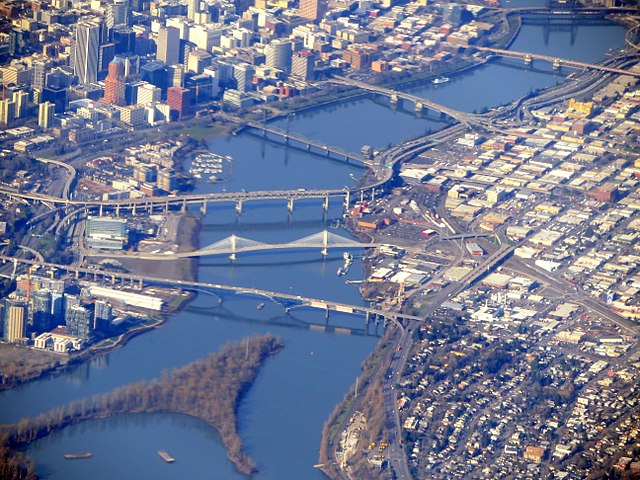
Portland_OR has a lot of bridges & is such a far cry from the Vancouver, BC bottleneck planning approach.

"The Bridges of Portland There are 11 bridges crossing the Willamette River in the Portland area with a total of 54 lanes. These bridges are: • St. Johns Bridge (4 lanes) • Fremont Bridge (8 lanes) • Broadway Bridge (4 lanes) • Steel Bridge (3 lanes with a fourth used by light rail) • Burnside Bridge (5 lanes) • Morrison Bridge (6 lanes) • Hawthorne Bridge (4 lanes) • Marquam Bridge (8 lanes) • Ross Island Bridge (4 lanes) • Sellwood Bridge (2 lanes) • George Abernethy Bridge (6 lanes) There are two other bridges that also serve the Portland area. These bridges span the Columbia River and connect Oregon State to Washington State; more specifically, they connect the Vancouver, Washington area with the Portland area. These two bridges are: • Glenn L. Jackson Memorial Bridge (8 lanes) • Interstate Bridge (6 lanes). An important item to note here is the fact that the Interstate Bridge is now considered obsolete. The Oregon Department of Transportation and the Washington State Department of Transportation are currently working to replace the Interstate Bridge with a new bridge that will have five or six lanes in each direction – doubling its current capacity. An obvious comparison can be made with the project to twin the Port Mann Bridge. The Oregon-Washington bridge replacement project is called the Columbia River Crossing Project and more information can be found on the project’s website at www.columbiarivercrossing.org. The new Columbia River Crossing is being planned to address the congestion, mobility and safety problems on the Interstate Bridge and along the I-5 corridor between Vancouver, Washington and downtown Portland. It will include a lane for bus or light rail rapid transit."
http://www.getmovingbc.com/press_release/Bridges%20in%20Metro%20Portland%20vs%20Lower%20Mainland%20Report%20-%20Get%20Moving%20BC%20-%20FINAL%20-%20.pdf


Wednesday, July 24, 2024

A Fraser River boat tour takes you under five existing and future Metro Vancouver bridges

 https://dailyhive.com/vancouver/paddlewheeler-riverboat-tours-mv-native-new-westminster-fraser-river-cruises Unfortunatly, most bridges in BC are built to conform to a narrow-minded standard.

Had there been a proper urban vision between NW & Surrey 50-100 years ago, there would have been a lot more bridges by now. It seems that NW just wanted to be a provincial backwater. Eventually, Surrey kept growing & now its planning to become the largest city in BC. Back in the day, just like little NW, Surrey never saw it self as ever becoming a major river city like Portland, Calgary, Edmonton or Winnipeg. 

https://commons.wikimedia.org/wiki/Category:New_Westminster 

By the late 1800s and especially by 1910, Portland really started to see itself as a major river city. Just look at how many more bridges there are than what's in between NW & Surrey. 

https://en.wikipedia.org/wiki/Downtown_Portland,_Oregon#Bridges

https://en.wikipedia.org/wiki/List_of_crossings_of_the_Willamette_River Most of these bridges aren't freeway or expressway crossings. They are just for general street access.

There should have been something like the Tilikum_Crossing between NW and Surrey by now. There also should have been something like a Tilikum_Crossing between Vancouver and Richmond. 

Friday, September 19, 2025

The Best fix for North Shore traffic is to upgrade or replace both bridges

 https://www.nsnews.com/opinion/letter-best-fix-for-north-shore-traffic-is-to-upgrade-or-replace-both-bridges-11233455 

When there is a refusal to build bigger and better bridges, there still should be a regional network of bus and train bridges. However, the gridloc planning agenda keeps winning out.

Unfortunatly, after decades of inept transportation planning and then so much money wasted down a $HIT-PIPE, the North Shore keeps getting hit hard from the $HIT-BOX planning mentality. 

The Tilikum+Crossing in Portland is a fantastic example of modern infrastructure planning and development. It allows for the MAX-LRT, the streetcar, the bus, bikes and pedestrians to conveniently get across. The nice thing about the TC is that no lanes had to be removed or repurposed on the other Portland bridges. Perhaps that's why something like the TC isn't allowed in BC, because it could actually help to improve transportation efficiency. 

The Washington+Avenue+Bridge is another example of what's not allowed in Greater Vancouver or anywhere else in the BC part of Canada. After all this time, Greater Vancouver is still so lacking in a regional network of transit+bridges


https://jfdatalinks.blogspot.com/search?q=transit+bridges  

Friday, November 29, 2024

Cambie Street Bridge repairs choke traffic out of downtown Vancouver

 https://dailyhive.com/vancouver/cambie-bridge-repairs-choke-traffic-downtown

Of course Vancouver won't build anything like the Boorloo_Bridge for bikes & pedestrians. Apparently, it's much better to take a lane away from the Cambie Bridge. 

Fortunately, the backward Vancouver mentality never made it over to Perth. Otherwise, the The_Third_Causeway bridge would have had 1 or 2 lanes removed.

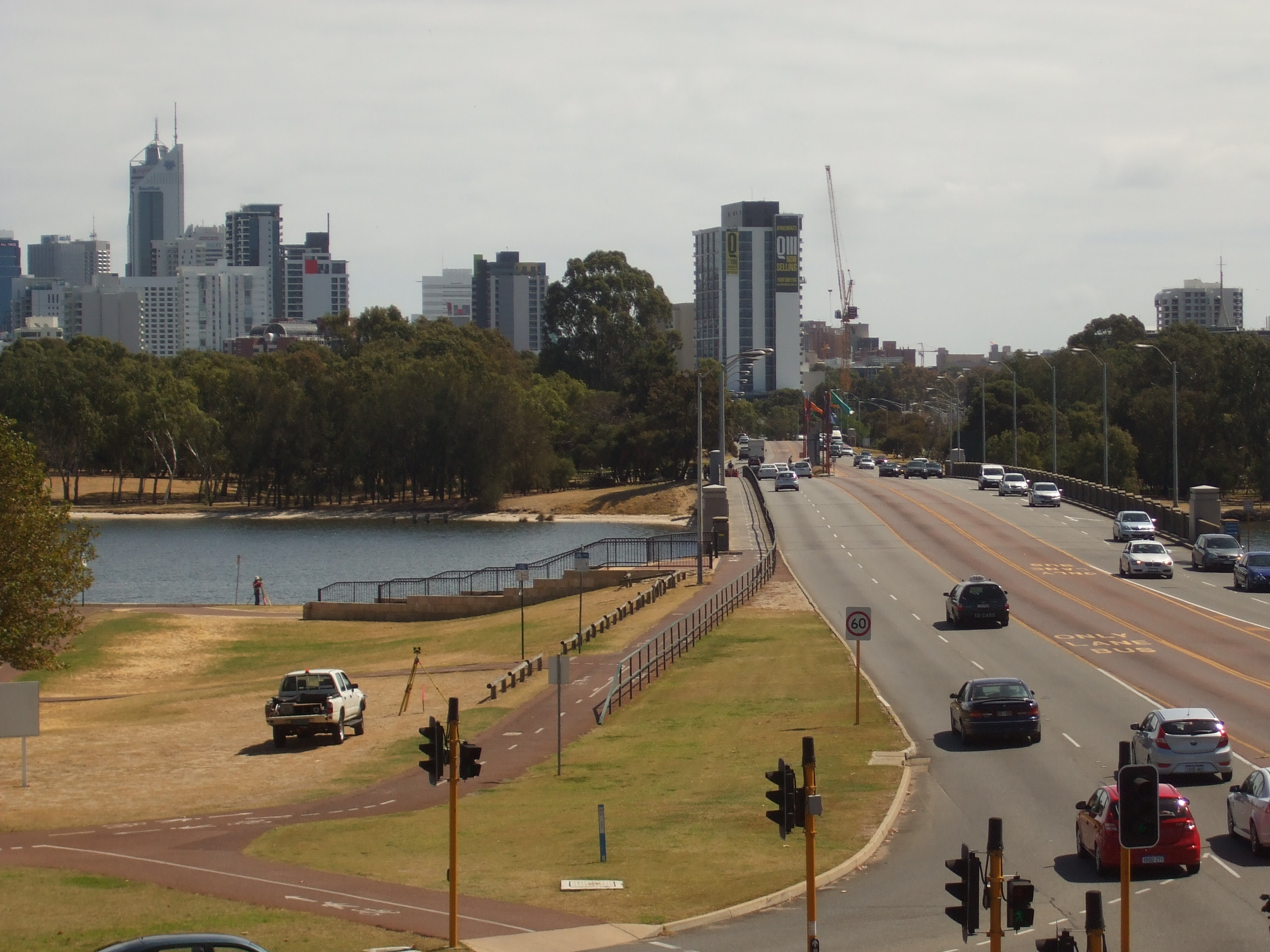
With 6 lanes, The_Causeway_in_Victoria_Park, Perth provides a nice 6 lane crossing. Unlike backward Vancouver the Causeway in Perth was allowed to have 3 lanes each way. The key component is that the 3rd lane each way is for busses. In contrast, absurd Vancouver won't allow for a proper bus & bike bridge network to be built, because it would rather keep its bridges as narrow & congested as possible. 

https://upload.wikimedia.org/wikipedia/commons/5/5a/Causeway_-_Victoria_Park.JPG

It's very strange that Vancouver refused to have something like the 6 lane Causeway+Bridge in the 21st century. A 3rd lane each way for buses on the Causeway+Bridge makes so much sense in Perth. However, for stubborn Vancouver, such measures might help to improve mobility.

Apparently, Vancouver has no plans to build something like the Boorloo_Bridge or the Esplanade+Riel+Footbridge next to the Cambie & Burrard Bridges. Thus, the Cambie has lost a lane & the Burrard has lost 2 lanes. Had both bridges been allowed to retain 6 lanes, they both could have provided 2 bus lanes.

The Cushing+Bridge is a 4 lane bridge in Calgary. Thus, like the Oak Bridge & Knight Bridge in Vancouver, there was no room for 2 bus lanes on them. Unlike, backward Vancouver, Calgary was able to build a 2 lane bus bridge right next to its Cushing+Bridge.

Fortunately, the horrible transportation planning mentality of Vancouver was never adopted in Perth & Calgary. Either you have a wide enough bridge for busses, or you build bus & bike bridges to help the existing bridges.

The Norwood+Bridge in Winnipeg provides at least 6 lanes, so a couple of bus lanes isn't a problem.

Singapore built its Helix_Bridge instead of removing lanes from the other bridges.


https://jfdatalinks.blogspot.com/search?q=Cambie+Street+Bridge

Monday, December 29, 2025

No fireworks in downtown Vancouver for New Year's Eve or the rest of 2026

 https://dailyhive.com/vancouver/vancouver-fireworks-2026-new-years-eve-nye 

While Vancouver hasn't been able to get most other cities across Canada and around the world to stop, ban or cancel their NY Eve fireworks, strange Vancouver will retain this part of its NO FUN CITY mentality and agenda. 

https://www.vancouverisawesome.com/local-news/fireworks-banned-halloween-vancouver-fire-department-9726922 Why just ban them in October and January, when you can ban them throughout the year? 

https://www.ehnewspaper.ca/articles/third-year-of-vancouvers-fireworks-ban

For some strange reason, backwards Vancouver hasn't been able to get other cities around the world to adopt the same bizarre idiosyncrasies.  

Officially, there isn't supposed to be a Vancouver+Mind+Virus, but the backwards city is so stunted and strange. Other cities in a scenic setting such as SydneyAucklandSan_Francisco and Seattle are able to have wider bridges in or close to their city centers. 

Despite warm and scenic Honolulu having some very short bridges, they are still wider than what extremely restrictive Vancouver allows. These two short bridges in Honolulu provide 4 lanes each way. Thus, they form an 8 lane crossing and they aren't even part of a freeway.  

There is also a very short 6 lane bridge in Honolulu. In addition to its 6 lanes, there is a turning lane and a one lane wide median, which makes it equivalent to being 8 lanes wide. Plus, there are 2 wide sidewalks, which are wider than the original sidewalks on the Granville Bridge in Vancouver. In other words, no bridge in Vancouver is allowed to be as wide as it. Despite regional population growth, the Granville Bridge was reduced from 8 lanes to 6 lanes. 

Considering how Vancouver has such a narrow road system, one would think that a regional network of bus and bike bridges would be essential. Of course the backwards city and greater urban region is too cheap to fund such infrastructure and rather opted for a congestive transportation approach.

In contrast, The+Helix+Bridge in Singapore is fine example of what backwards Vancouver refuses to build. No lanes had to be removed from the 6 lane Bayfront+Bridge or the 10 lane Benjamin+Sheares+Bridge. Stubborn Vancouver could really benefit from something like the Helix Bridge. 

While Vancouver went backwards after Expo 86, Brisbane really took of after Expo 88. The Kangaroo_Point_Green_BridgeGoodwill_BridgeKurilpa_BridgeJack_Pesch_Bridge and the Go_Between_Bridge are all great examples of what strange Vancouver refuses to build. What's really amazing from a backwater Vancouver perspective is that those bike and foot bridges in Brisbane never required any lanes to be removed from the cities road bridges. 

In comparison, Vancouver removed 2 lanes from the Burrard Bridge, 1 lane from the Cambie Bridge and 2 lanes from the Granville Bridge. If urban planning in Vancouver was wise and the city never got rid of its trams or streetcars, perhaps something like the Tilikum_Crossing could have been built across False_Creek.


https://jfdatalinks.blogspot.com/search?q=fireworks

Monday, February 17, 2025

Old and new narrow bridges in BC

The New_Westminster_Bridge opened in 1904 and in typical backwater BC style, it was too narrow to do the job, right from the start. Not only should the bridge have been double-tracked, there should have been at least a 2 lane upper deck. At least having a provision for 2 tracks and more than just a 1 lane wagon road. 

https://upload.wikimedia.org/wikipedia/commons/a/a6/Fraser_River_Bridge%2C_New_Westminster%2C_BC.jpg

https://historicbridges.org/bridges/browser/?bridgebrowser=britishcolumbia/newwestminsterrailwaybridge/

http://archives.newwestcity.ca/Results.aspx Thats all you got back then, just a 1 lane wagon road.

http://archives.newwestcity.ca/Results.aspx? Despite the bridge being required to handle passenger trains as well as freight trains, everything is funneled into a single track, even well over a century later.

http://archives.newwestcity.ca/Results.aspx?AC Had there been some real forward planning, there should have been at least 4 wagon lanes on the upper deck & at leas 3 tracks on the lower deck.

Unfortunatly, NW only saw itself as a provincial capital backwater & that also became the case when the BC capital was relocated to Victoria. 

http://www.trainweb.org/oldtimetrains/photos/bridges/Vancouver_area.htm

https://www.newwestrecord.ca/local-news/looking-back-and-looking-forward-pattullo-bridge-opened-85-years-ago-today-6106270 It must have been amazing to finally have a bridge with 4 wagon roads. Unfortunatly, there was no provision for a lower deck to accommodate interurban tram-trains & trucks. https://historicbridges.org/bridges/browser/?bridgebrowser=britishcolumbia/pattullo

https://www.reddit.com/r/SurreyBC/comments/yhf6wg/pattullo_bridge_in_silver_grey_1957 Had there been a provision for a lower deck, then perhaps by 1960, both decks could have provided a wider 3 lanes each way.

Unlike the SHB in NSW, the Old-Pattullo-Bridge wasn't built with the same level of quality and wasn't designed to last that long.

https://dailyhive.com/vancouver/pattullo-bridge-new-replacement-construction-update-2024 Of course the new bridge is a year behind schedule and once again, doesn't seem to be designed with much that much future capacity in mind.

https://dailyhive.com/vancouver/pattullo-bridge-new-crossing-widening-six-lanes-surrey-board-of-trade Aparently, opening the new bridge with 6 lanes & a provision for a lower deck with 2 bus & HOV lanes & 2 truck lanes is too advanced thinking for BC infrastructure development. Just like the short Skytrain stations, having double deck bridges goes against the congestive planning agenda. So, the new bridge will open with only 2 lanes each way & no emergency lanes & especially no bus-HOV lanes or truck lanes for a seaport region. Thus, everything will be crammed into a 4 lane crossing. Why would such a bridge not open with enough width for 2 bus & HOV lanes? Most people in the Greater Vancouver Region know that the Skytrain isn't open 24 hours, so a good bus & HOV bridge between NW & Surrey would make sense, but this is the BC part of Canada where a lot of things don't make sense.

https://www.pattullobridgereplacement.ca/

https://www.pattullobridgereplacement.ca/about/projectoverview/


https://jfdatalinks.blogspot.com/search?q=Pattullo+Bridge

https://jfdatalinks.blogspot.com/search?q=old+and+new+narrow+bridges

Tuesday, March 26, 2024

How safe are bridges at Ports of Los Angeles and Long Beach?

https://www.nbclosangeles.com/news/local/how-safe-bridges-at-ports-of-los-angeles-and-long-beach/3373516/

Of course there are bridges in and around Greater LA Area. However, it most an urbanized land mass.

Cities like Seattle, Portland, SF, NYC, Montreal, Boston & Vancouver require an extensive bridge & or tunnel system to keep each region effectively connected.

 https://dailyhive.com/vancouver/vancouver-lions-gate-ironworkers-bridge-ship-collision-collapse-risk

Vancouver & the metropolitan area already has a deficit of adequate bridges. There should have been about a dozen bus & bike bridges over the past few decades. Improved existing bridges to allow for HOV lanes, but Vancouver & the greater region are too afraid to go beyond the chokepoint mentality. Apparently, congestive planning is always the best way to go in BC. There isn't enough bridge redundancy, so if anything goes wrong, the region will only get more blocked up.

https://dailyhive.com/vancouver/ironworkers-memorial-bridge-replacement

Saturday, December 21, 2024

$3.3M Edmonton home that's SO noticeable from the James McDonald Bridge

 https://dailyhive.com/edmonton/edmonton-home-for-sale-james-mcdonald-bridge


Fortunately, the 6 lane James_MacDonald_Bridge hasn't been Vancoverized. 

https://en.wikipedia.org/wiki/James_MacDonald_Bridge What would have happened if this 2 way bridge was Vancouverized? 1 or 2 lanes would have been removed to apparently, reduce congestion.

https://www.google.com/maps/place/James+Macdonald+Bridge,+Edmonton,+AB

Unlike backwards Vancouver, Edmonton & Calgary have been able to build more bike bridges. Thus, by building more bike bridges, there is no need to Vancouverize the main trafic bridges. 

If you are from Edmonton or Calgary, or Seattle, WA or Perth, WA & visit Vancouver, you will be in for quite a shock. 

https://en.wikipedia.org/wiki/Cambie_Bridge Was 6 lanes, now 5.

https://en.wikipedia.org/wiki/Burrard_Bridge  Was 6 lanes, now 4.

https://en.wikipedia.org/wiki/Granville_Street_Bridge Was 8 lanes, now 6.

Unfortunatly, to counteract the mostly narrow bridges in Greater Vancouver, there should have been a series of Bus, bike & truck bridges.

https://en.wikipedia.org/wiki/Oak_Street_Bridge Only 4 lanes.

https://en.wikipedia.org/wiki/Knight_Street Only 4 lanes in the middle of the bridge. One of the best examples of BC bottleneck planning.

https://en.wikipedia.org/wiki/Arthur_Laing_Bridge Only 4 lanes.

Thursday, April 3, 2025

Bridges over the Bow River in Calgary

https://everydaytourist.ca/calgary-visitor-information/2015/3/2/bridges-over-the-bow

https://en.wikipedia.org/wiki/List_of_bridges_in_Calgary#Crossings

The 4 lane Louise_Bridge has a 2 track counterpart. 

https://calgary.skyrisecities.com/news/2017/04/two-louise-bridges.26322

The Louise+Bridge & its LRT bridge is a good example of how a road & passenger rail corridor can work well.

The 4 lane Cushing+Bridge wasn't widened for buses, so the next best thing was done. A 2 lane bus bridge was built next to the Cushing+Bridge. What is easy & straightforward for Calgary to do seems to be very difficult for Vancouver & BC to achieve. Several bridges in Greater Vancouver should have bus & bike bridges built next to them.


https://jfdatalinks.blogspot.com/search?q=Cushing+Bridge

https://jfdatalinks.blogspot.com/search?q=BRT

Thursday, December 19, 2024

Capstan Station on YVR-Canada Line in Richmond

https://www.vancouverisawesome.com/highlights/capstan-canada-line-station-in-richmond-to-open-friday-9984359 Why design the old & new stations to eventually accomodate 8-10 car trains? The Catheter Line wasn't even designed to officially accommodate enough space for 5 car trains. Thus, in accordance with the BC antigrowth mentality or slow growth agenda, the stations were only designed to eventually just have 2.5 car trains. However, even in 2025, the Catheter Line will still only be using 2 car trains. All the SkyTrain stations should have been designed to eventually be 150.5 meters long, just like the Montreal Metro stations, with even more long-term provisions. Unfortunatly, the first 2 lines only have 80m stations & the C+Line only has a clearance for 50m stations.

https://dailyhive.com/vancouver/skytrain-capstan-station-canada-line-opening-date

The Vancouver_City_Centre_station is diagonally across the street from The+Bay+Building+in+Vancouver. However, despite being what is supposed to be a major underground station, its noticeably smaller than the underground train stations in Edmonton & Seattle.

It's been very difficult to get urban planners in BC to properly plan for future transportation demands. The main excuse is governmental budgetary constraints. Even if that's usually the case, at least build half the length of a proper size urban station, with a provision to eventually double or triple its length, for future demand. However, that would go against the Greater Vancouver congestion planning mentality. Thus, even if you have the skills, once you get to BC, you realize that several things are watered down & you must think small or backwards.

 https://bc.ctvnews.ca/video/c3050886-metro-vancouver-facing-population-boom With the Metro-Vancouver-population-expected-to-reach-4-million-by-2045, BC is so unprepared & inept, as usual. https://www.kelownacapnews.com/news/metro-vancouver-expected-to-push-past-4-million-by-2045-as-growth-accelerates-7717888

There seems to be an outright refusal in the Metro Vancouver Region to avoid building up to the same level of infrastructure as when Greater Toronto, Greater Montreal, Greater Seattle, Greater Sydney, Greater Melbourn & the SF Bay Area, all exceeded 4 million people.

Going into 2025, the SkyTran will still only have 2-4 car trains, not counting the old Mark 1 rolling stock. By 2025, every SkyTrain should have consisted of 6-8 car trains, not the two-car & four car congested joke that it is. 

There is no valid reason as to why the Greater_Vancouver Region can't eventually have an urban train system on par with the Montreal Metro & a regional train system that's as good & frequent as the GO Trains or the Caltrain.

The refusal to build proper bus & truck bridges to help the mostly narrow bridges, still seems to be a half-assed pipedream. Yet, the GV Region pretends that it will eventually have a good Rapid Bus Network without bus-bridges.

While the GV Region is supposed to be a major seaport, there is still a false_front approach to things. How can this false-front & half-ass approach still be the norm in backwater BC? Not only should all the freight-train bridges be at least double tracked, there should also be truck port bridges. 

The Oak_Street_BridgeKnight_Street_Bridge & the Queensborough_Bridge are all so narrow, there is no room for truck & bus lanes. Therefore, a truck & bus bridge should be built next to all of them. Otherwise, everything can just continue to be funneled into only 2 lanes each way.

Of course the Arthur_Laing_Bridge wasn't designed to have 2 bus lanes & 2 truck lanes. Yet, a lot of trucks have to be able to get in & out of YVR. Why have any bus lanes when busses & trucks can all be funneled into only 2 lanes each way? Even though the C-Line doesn't run 24hr a day, the North_Arm_Bridge should have had two 24hr bus lanes & 2 bike lanes & a provision for a middle track. Instead, the narrow North-Arm-Bridge only has 2 tracks & just 1 bike lane.

Fortunately, watered down Greater Vancouver & backwards BC hasn't been able to get most place around the world to adopt such a ridiculously reduced infrastructure approach to things. 

The 3rd line should really be called the YVR-Canada+Line.

Officially, there is no A Line, B Line or C+Line, but that seems OK for backwards BC.  

Tuesday, September 17, 2024

Metro Vancouver transit facing 'drastic cuts'

 https://www.vancouverisawesome.com/highlights/metro-vancouver-mayors-council-demands-action-on-transit-funding-brad-west-9533754

After decades of imposing narrow streets, roads, highways & bridges, it's still difficult for the region to have a proper express bus network. Most of the bridges in the region need to have a bus & bike bridge built right next to them. 

https://bc.ctvnews.ca/this-is-not-a-bluff-translink-mayors-council-calls-on-b-c-political-parties-to-share-plans-to-avoid-transit-cuts-1.7041435

The first 2 SkyTrain lines still only have 80m stations & the 3rd line, the C-Line, only has 50m stations. In contrast, the Montreal Metro was designed to have almost 153m long stations. Thus, a 500 foot long station can accommodate a 9 car train. Unfortunately, the first 2 SkyTrain lines can only accommodate the newer 4 car trains with a potential for a 5 car train, someday. The 3rd line or the C-Line, can only accomodate a 2 car joke of a train, but it has the potential to become a 2.5 car joke of a train.

This absurdity of congestive planning must be challenged & stopped in backward BC. Unfortunately, there are some influential people that continually like to maintain the symbolism of short trains and narrow bridges. They don't want the Greater Vancouver Region to become a proper urban area. That mentality apparently justifies the inadequate or underbuilt infrastructure in the region. 

So now with looming transit cuts, the narrow roads & bridges will become even more congested.

https://www.rtands.com/tag/translink

The $2BN Megaproject Under Vancouver https://www.youtube.com/watch?v=D4YFFtTEUQc

What Greater Vancouver Needs https://www.youtube.com/watch?v=qZavPFZ9H1E

Whether its a bridge or a tunnel, Perth and Seattle have excellent wide crossings which allow for rail rapid transit. Fortunately, the congestive Vancouver mentality never reached into those cities.

https://www.highway99tunnel.ca/tunnel-construction Unfortunatly, BC missed another opportunity to have rapid rail transit through the tunnel.

https://vancouver.citynews.ca/2024/09/17/highway-91-spun-out-richmond Even back in the 1980s, BC_Highway_91 should have been designed to be at least 4 lanes each way. 3 general lanes each way with the 4th as a bus & HOV lane. There also should have been 2 wide shoulders or emergency lanes. The Alex_Fraser_Bridge should have been designed to be at least 10 lanes wide. 3 general lanes each way & a bus-HOV lane & a truck lane each way. Plus, 2 emergency lanes & a provision for a lower rail transit deck. Unfortunatly, bottleneck or chokepoint planning won out. Plus, the symbolism for BC is to not properly plan for large, efficient infrastructure. 

How can the Greater Vancouver Region have an efficient express bus & rapid bus network, when the highways & bridges are kept narrow? Why wasn't the SkyTrain designed to eventually have 153m or 500 foot long stations like the Montreal Metro? That would be symbolic of a proper big thinking city wanting to have high capacity transportation corridors. BC is about taking the congestive planning approach instead.

Perth+and+Seattle have been able to do so much more, because they aren't under anything like the imposed Vancouver restrictions and the overall backward BC mentality.

Monday, January 6, 2025

Greater Vancouver behind the scenes

Vancouver has always been a small city with a backwater mentality, when compared to many other cities. Vancouver is smaller in area & population than 7 other cities in Canada. 

https://en.wikipedia.org/wiki/List_of_the_largest_municipalities_in_Canada_by_population

However, the Greater Vancouver Region is still the 3 largest metropolitan_area_in_Canada. Yet, it remains a mystery as to where all the big city scale infrastructure went, because what's mostly built in Greater Vancouver is half-sized or half-assed stuff. Indeed, a watered-down approach to things has been the name of the game for generations. Thus, after several decades of not properly building for the future, SW BC is still very congested and backwards.

There is nothing wrong with being small or thinking small. However, Vancouver and Victoria have perpetuated a small-scale mentality for several decades. Of course Vancouver would opt to have shorter underground train stations than Montreal, Toronto, Edmonton & Seattle. A short BC train just can't transport as many people as an 8-10 car train can. Just because the Skytrain is an automated system, the 50m to 80m trains just can't match a 152.5m Montreal Metro trains capacity. 

The bridges are narrow, but not just to prevent induced demand. It's almost impossible for backwards Greater Vancouver to have an efficient rapid-bus or proper truck-lanes, when many of the bridges are only 2 lanes each way. Whether its a multigenerational, backwards power-structure, or its just part of the backwater BC mentality, there should be a point of realization.

Why pretend to have an efficient rapid-bus network, when there is a refusal to build a series of proper regional bus & truck bridges? In order for busses to be fast & efficient, there has to be dedicated bus-lanes on new bridges. An efficient regional port using a lot of trucks to the airport & seaports, also requires dedicated truck-lanes in order to efficiently move things around.


https://dailyhive.com/vancouver/global-bc-anchor-behind-the-scenes

https://x.com/YvonneSchalle/status/1875616820088176984

Wednesday, February 3, 2021

The Cushing Bridge in Calgary, Alberta

The Cushing+Bridge is a little like a typical narrow 4 lane bridge in backwards Vancouver. However, unlike Vancouver, Calgary built a 2 lane bus-bridge next to the 4 lane Cushing+Bridge. This is how properly dedicated bus lanes can be built next to an existing narrow BC type bridge. 

Calgary is the biggest city in Western Canada. Vancouver is a small city in area and has less than a million people. However, Greater Vancouver and the BC Lower_Mainland, almost has more people than Calgary, Edmonton and Winnipeg combined.

https://en.wikipedia.org/wiki/Calgary#Infrastructure

 http://albertaroads.homestead.com/Calgary/plans/BowTrail/BowTrailDToverview.jpg


http://albertaroads.homestead.com/Calgary/plans/BowTrail/memspur.jpg

http://albertaroads.homestead.com/Calgary/plans/index.html 

A 4 track freight train set of bridges in Calgary is no problem, but in Vancouver and the metropolitan region, most of the freight train bridges still only have a single track. By now the Greater Vancouver region should have double track freight bridges and double track commuter train bridges.


https://jfdatalinks.blogspot.com/search?q=Cushing+Bridge+in+Calgary

Sunday, May 5, 2024

Traffic impacts in downtown Vancouver due to marathons and other events

 https://globalnews.ca/news/10475853/traffic-impacted-in-downtown-vancouver-due-to-bmo-marathons/

While such events are for a good cause, the traffic gets even more congested.

https://vancouver.citynews.ca/2024/05/04/vancouver-marathon-road-closures/

https://www.vancouverisawesome.com/local-news/road-closures-weekend-bmo-vancouver-marathon-may-2024-8678328

https://vancouver.citynews.ca/2024/05/04/vancouver-marathon-road-closures/

Unfortunately, Vancouver city planning never allowed for any bus tunnels or bridges, especially under/over Burrard Inlet, False Creek & the Fraser River. All the underground train stations weren't built to easily become as long as the Montreal Metro stations, which are 152.45 m or 500 feet.  

Vancouver & the Metropolitan Region have done so many things wrong. The train stations are too short & most of the bridges are so narrow, there is no room for bus & HOV lanes. By now, there should have been a regional network of rapid bus & HOV bridges, because most of the existing bridges have just 2 lanes each way. 


How To Build A City | SEATTLE https://www.youtube.com/watch?v=5MN6AXC4Z7k

Seattle, Perth, Calgary & Edmonton have been able to do so much more, because they don't have to contend with anything like the backwards mentality of Vancouver & BC.

https://jfdatalinks.blogspot.com/search?q=Seattle

https://jfdatalinks.blogspot.com/search?q=Perth

Wednesday, January 15, 2025

Skybridge and The North Arm (Train) Bridge

Officially, there isn't suppose to be a backwards BC agenda. However, the Skybridge between NW & Surrey and the North_Arm_Bridge between Vancouver & Richmond, were designed too narrow. Unfortunatly, both of these SkyTrain+bridges weren't designed to have 2 bus lanes, or even HOV lanes. Key people knew that the SkyTrain wasn't going to be running 24hrs a day. Thus, there would have to be late-night busses when the trains shut down for the night. The 4 lane Pattullo+Bridge and the 4 lane Oak+Street+Bridge don't have enough space for 2 bus lanes, not even 1, let alone any HOV lanes. Therefore, if there is any traffic disruption on such narrow bridges, a bus will be blocked.

Both the Skybridge and The North Arm (Train) Bridge should have at least had a provision for 2 bike lanes & 2 sidewalks. But BC continually lacks having a proper transportation infrastructure vision. 

It's amazing that there wasn't enough interested people to make sure that the Skybridge between NW & Surrey would have at least 1 bike lane & 1 sidewalk. It has neither, because the public was expected to just take their bikes on a single sidewalk that is narrower than some people's bathtubs on the old, inept Pattullo Bridge.

https://www.alltrails.com/trail/canada/british-columbia/north-arm-bridge-bikeway There should have been a sidewalk & a bikepath on both sides of this bridge. Plus, 2 bus lanes & 2 HOV lanes, since the SkyTrain doesn't run 24 hours a day.

https://www.canadianconsultingengineer.com/features/north-arm-bridge There just doesn't seem to be a proper level of input from the public to make sure that both rapid transit bridges & others, are designed for future capacity.


https://jfdatalinks.blogspot.com/search?q=Skybridge

https://jfdatalinks.blogspot.com/search?q=The+North+Arm+Bridge

https://jfdatalinks.blogspot.com/search?q=SkyTrain+bridges

https://jfdatalinks.blogspot.com/search?q=Bike+Lanes