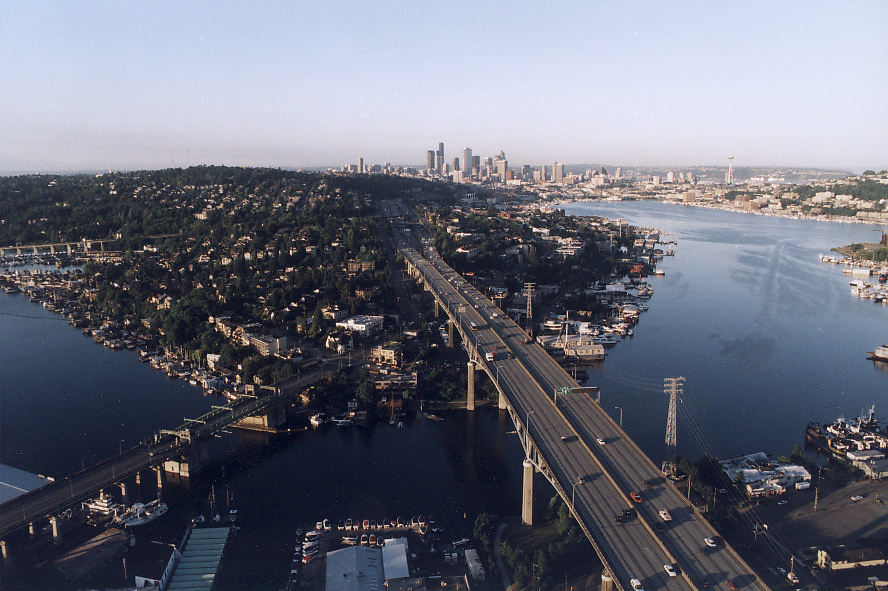
Showing posts sorted by relevance for query Burrard Bridge. Sort by date Show all posts

Wednesday, June 24, 2015

Burrard Street Bridge (BSB)

https://en.wikipedia.org/wiki/Burrard_Bridge

It's unlikely that the BSB will ever be restored or completed, because of the backwards Vancouverization mentality. 

https://cityhallwatch.wordpress.com/2015/06/07/burrard-bridge-details-revealed-at-open-house-second-event-planned-for-june-16th

The city was too cheap to build a nice, wide bike-bridge next to the BSB.

https://voony.wordpress.com/2015/06/02/burrard-bridge-the-war-on-transit-continues

Thus, instead of removing 2 lanes, the BSB could have still had 6 lanes, which 2 lanes could have been for buses. Then a lower deck for 2 streetcar tracks.  

https://www.google.ca/search?q=Burrard+Bridge+Proposed+widening+plans&es_sm=93&tbm=isch&tbo=u&source=univ&sa=X&ei=VZiLVbSUAozzoAS9jLC4Bg&ved=0CB0QsAQ&biw=1600&bih=799


Monday, August 12, 2024

Several Vancouver narrow bridge issues

 https://dailyhive.com/vancouver/metro-vancouver-bridge-cyclist-wire-allegations

Someone might have been very angry with bike people and not with car, bus & truck people. The real problem is that so much of the older BC infrastructure just wasn't designed to be more of a multi-modal crossing. The+Lion+Bridge+and+The+Iron+Bridge have no rail rapid transit crossings to help them.

The Ironworkers-Bridge is so narrow for a highway bridge in that location & wasn't designed for substantial future capacity. When it was initially designed in the 1950s, there was no concept to have 2 bus lanes, 2 HOV lanes, 2 truck lanes & 2 emergency lanes for a port city. Plus, at least 2 general traffic lanes each way & a provision for 2 train tracks. Thus, the 6 lane bridge is so overwhelmed, because it just can't do the job of an 8-10 lane wide bridge. While the Iron Bridge has 2 improved bike+lanes, they are part of the sidewalks.  

The former 8 lane Granville+Street will have 6 lanes, while the  & Oak+Street only has 4 lanes. The inadequate Oak+Street+Bridge (OSB) should have opened with at least 8 lanes, instead of only 4. Plus, 2 wide emergency lanes & 2 wide sidewalks. There still should be a new southbound OS Bridge, but the city would be against it. A narrow 4 lane bridge just doesn't have the space & capacity for 2 express bus lanes, 2 HOV & 2 truck lanes. Apparently, it's better to just funnel everything into only 2 lanes each way.  

The OSB should be twinned or replace with something like the Samuel-De_Champlain_Bridge in Montreal. The largest city in Quebec is allowed to have a nice wide bridge & long metro trains, because Quebec isn't bound by anything like the backwards BC mentality. 

https://www.theglobeandmail.com/canada/article-montreals-new-44-billion-champlain-bridge-opens-to-traffic-for Fortunatly, the Vancouver mentality wasn't able to ever reach back to Montreal & prevent such a nice modern bridge from being built there. https://www.flatironcorp.com/project/champlain-bridge If you are from Montreal & have visited Vancouver, you will be surprise to see how much shorter an underground Vancouver train station is than what is allowed underground in Montreal, Toronto, Edmonton, Seattle, SF & LA...

https://vancouver.ca/streets-transportation/granville-bridge-connector.aspx A bike & foot bridge should have been built next to it decades ago. Then the Granville Bridge could have 3 general lanes each way, plus a bus & HOV lane each way. Instead, if 2 bus & HOV lanes are designated, there will only be 2 general lanes each way in the downtown core.

The Burrard Bridge should have had a bike & foot bride next to it. Instead, it was reduced from a 6 lane crossing to a 4 lane bridge.

The very narrow Oak+Street+Bridge & the Knight Street Bridge, should have had bus+and+bike+bridges built next to them decades ago. 

Most bridges in Vancouver & the metropolitan region just weren't designed with that much future capacity in mind, especially for buses & HOV lanes. Thus, it's a travesty that by now, almost every crossing should have had bus & bike bridges built next to them. 

https://vancouver.ca/streets-transportation/walk-bike-and-transit.aspx Unfortunatly, provisions for bus & bike lanes just weren't the thing to do several decades ago in BC.  

A truck lane is just as important as a bus & HOV lane. That's because freight should be efficiently & easily be transported in any major urban region.

https://vancouver.ca/streets-transportation/trucks-commercial-and-oversize-vehicles.aspx

https://jfdatalinks.blogspot.com/search?q=Oak+Street+and+Granville+Street

https://jfdatalinks.blogspot.com/search?q=Iron+Bridge 

https://jfdatalinks.blogspot.com/search?q=Lion+Bridge

Tuesday, October 14, 2025

Granville Bridge, Vancouver, etc.

 https://vancouver.ca/streets-transportation/granville-bridge.aspx 

Even after 3 tries, Vancouver still couldn't quite get the Granville_Street_Bridge correct. Of course the 3rd bridge wasn't designed to have a lower deck for streetcars or tram-trains. Even though it was generally designed to be a car, truck and bus bridge, the sidewalks should have been double width and have an inner railing. If the city couldn't wait until late March, it should have had the official dedication in early March, not in crappy February 1954.

https://en.wikipedia.org/wiki/Granville_Street_Bridge#Third_bridge_(1954) "On February 4, 1954, the current Granville Street Bridge opened to traffic after five years of planning and construction; its dedication ceremony was attended by 5,000 spectators after it had been delayed a week due to heavy snow." 

https://en.wikipedia.org/wiki/Granville_Street_Bridge#21st_century Unfortunatly, new bike lanes and extra sidewalks couldn't be installed below the 8 lane deck. Thus, Vancouver went for strike 3 and removed 2 lanes from the bridge. The Burrard+Street+Bridge lost 2 lanes and the Cambie+Bridge lost 1 lane. A bike and foot bridge could have been built on the west side of the Burrard Bridge, then no lanes would have been removed. The Cambie Bridge already had a wide sidewalk on its east side. The west sidewalk should have been widened, then no lane would have been removed. 

The Granville+Bridge could have had 6 lanes and 2 bus lanes. Now, if there are ever 2 bus lanes, there will only be 2 general lanes each way.

Several cities around the world have bike & foot bridges and don't have to remove lanes from the existing bridges.

For such a congested city to have removed 5 lanes from 3 bridges, could there even be more of a reduction of lanes Well, there are some who would like to have the LGB just for bike and foot traffic.

https://globalnews.ca/news/1946543/government-says-lions-gate-bridge-will-not-close-to-cars-come-2030 

That would be OK if an 8 lane tunnel could be built near it. Such a First Narrows Tunnel could have 3 lanes each way, plus a bus lane each way. A parallel triple track commuter train tunnel should be built close to it as well.

The new & improved tunnel between Richmond and Delta won't be ready until 2030. Since things move so slow in constipated, backwards BC, perhaps a First_Narrows_Tunnel might not be completed until 2040, or even 2050.

Friday, November 29, 2024

Cambie Street Bridge repairs choke traffic out of downtown Vancouver

 https://dailyhive.com/vancouver/cambie-bridge-repairs-choke-traffic-downtown

Of course Vancouver won't build anything like the Boorloo_Bridge for bikes & pedestrians. Apparently, it's much better to take a lane away from the Cambie Bridge. 

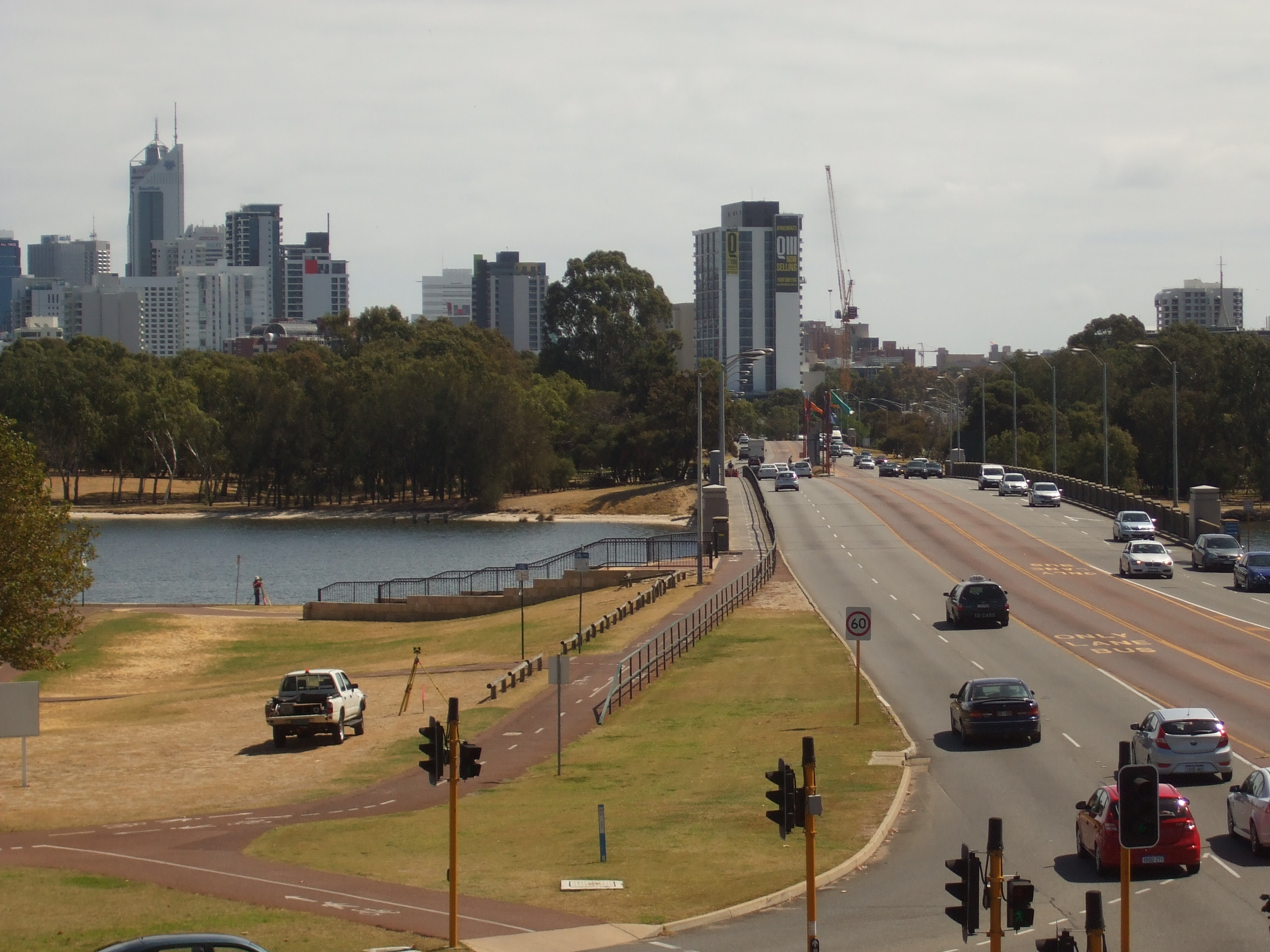
Fortunately, the backward Vancouver mentality never made it over to Perth. Otherwise, the The_Third_Causeway bridge would have had 1 or 2 lanes removed.

With 6 lanes, The_Causeway_in_Victoria_Park, Perth provides a nice 6 lane crossing. Unlike backward Vancouver the Causeway in Perth was allowed to have 3 lanes each way. The key component is that the 3rd lane each way is for busses. In contrast, absurd Vancouver won't allow for a proper bus & bike bridge network to be built, because it would rather keep its bridges as narrow & congested as possible. 

https://upload.wikimedia.org/wikipedia/commons/5/5a/Causeway_-_Victoria_Park.JPG

It's very strange that Vancouver refused to have something like the 6 lane Causeway+Bridge in the 21st century. A 3rd lane each way for buses on the Causeway+Bridge makes so much sense in Perth. However, for stubborn Vancouver, such measures might help to improve mobility.

Apparently, Vancouver has no plans to build something like the Boorloo_Bridge or the Esplanade+Riel+Footbridge next to the Cambie & Burrard Bridges. Thus, the Cambie has lost a lane & the Burrard has lost 2 lanes. Had both bridges been allowed to retain 6 lanes, they both could have provided 2 bus lanes.

The Cushing+Bridge is a 4 lane bridge in Calgary. Thus, like the Oak Bridge & Knight Bridge in Vancouver, there was no room for 2 bus lanes on them. Unlike, backward Vancouver, Calgary was able to build a 2 lane bus bridge right next to its Cushing+Bridge.

Fortunately, the horrible transportation planning mentality of Vancouver was never adopted in Perth & Calgary. Either you have a wide enough bridge for busses, or you build bus & bike bridges to help the existing bridges.

The Norwood+Bridge in Winnipeg provides at least 6 lanes, so a couple of bus lanes isn't a problem.

Singapore built its Helix_Bridge instead of removing lanes from the other bridges.


https://jfdatalinks.blogspot.com/search?q=Cambie+Street+Bridge

Sunday, May 3, 2026

The Cambie Bridge used to have 6 lanes when is opened in the 1980s.

 https://www.youtube.com/watch?v=n2m4n1tUYVM This is heading northbound and shows the proper wide sidewalk that's on the east side of the bridge.

For some reason the sidewalk on the west side of the bridge was made too narrow. Had the sidewalk been as wide as the one on the east side of the bridge, the Vancouver planning department wouldn't have likely reduced a lane. Of course if the city would ever build a proper bike bridge beside the Cambie Bridge, then perhaps the 6th lane might be reactivated. 

A 6 lane Cambie bridge is better than a 5 lane version, or a former 6 lane Burrard Bridge reduced to 4. If both bridges had bike bridges next to them, then 2 lanes of each original 6 lane bridge could have been for busses. However, that goes against the congestive planning agenda that is backwards Vancouver. 

The late 1950s, 6 lane Iron Bridge should have had 2 wide emergency lanes and 2 wide shoulders. Then, the Iron Bridge could have been gradually modified to have 4 lanes each way, plus a bus lane each way. However, having a 10 lane bridge is what a big city would do. Unfortunately, Vancouver city planning has become so engrossed with perpetuating a small city agenda over the decades. 

When most of the regional bridges were built, there was no concept or interest in having them wide enough for bus lanes and wide emergency lanes and wide shoulders. Congestive transportation planning or stunted infrastructure, is one of the best ways in demonstrating a local reluctance to properly build big for the future. Who knows where all the money went over the decades, because it doesn't look like enough of it went towards building wider bridges and having longer trains and stations. 

Monday, December 29, 2025

No fireworks in downtown Vancouver for New Year's Eve or the rest of 2026

 https://dailyhive.com/vancouver/vancouver-fireworks-2026-new-years-eve-nye 

While Vancouver hasn't been able to get most other cities across Canada and around the world to stop, ban or cancel their NY Eve fireworks, strange Vancouver will retain this part of its NO FUN CITY mentality and agenda. 

https://www.vancouverisawesome.com/local-news/fireworks-banned-halloween-vancouver-fire-department-9726922 Why just ban them in October and January, when you can ban them throughout the year? 

https://www.ehnewspaper.ca/articles/third-year-of-vancouvers-fireworks-ban

For some strange reason, backwards Vancouver hasn't been able to get other cities around the world to adopt the same bizarre idiosyncrasies.  

Officially, there isn't supposed to be a Vancouver+Mind+Virus, but the backwards city is so stunted and strange. Other cities in a scenic setting such as SydneyAucklandSan_Francisco and Seattle are able to have wider bridges in or close to their city centers. 

Despite warm and scenic Honolulu having some very short bridges, they are still wider than what extremely restrictive Vancouver allows. These two short bridges in Honolulu provide 4 lanes each way. Thus, they form an 8 lane crossing and they aren't even part of a freeway.  

There is also a very short 6 lane bridge in Honolulu. In addition to its 6 lanes, there is a turning lane and a one lane wide median, which makes it equivalent to being 8 lanes wide. Plus, there are 2 wide sidewalks, which are wider than the original sidewalks on the Granville Bridge in Vancouver. In other words, no bridge in Vancouver is allowed to be as wide as it. Despite regional population growth, the Granville Bridge was reduced from 8 lanes to 6 lanes. 

Considering how Vancouver has such a narrow road system, one would think that a regional network of bus and bike bridges would be essential. Of course the backwards city and greater urban region is too cheap to fund such infrastructure and rather opted for a congestive transportation approach.

In contrast, The+Helix+Bridge in Singapore is fine example of what backwards Vancouver refuses to build. No lanes had to be removed from the 6 lane Bayfront+Bridge or the 10 lane Benjamin+Sheares+Bridge. Stubborn Vancouver could really benefit from something like the Helix Bridge. 

While Vancouver went backwards after Expo 86, Brisbane really took of after Expo 88. The Kangaroo_Point_Green_BridgeGoodwill_BridgeKurilpa_BridgeJack_Pesch_Bridge and the Go_Between_Bridge are all great examples of what strange Vancouver refuses to build. What's really amazing from a backwater Vancouver perspective is that those bike and foot bridges in Brisbane never required any lanes to be removed from the cities road bridges. 

In comparison, Vancouver removed 2 lanes from the Burrard Bridge, 1 lane from the Cambie Bridge and 2 lanes from the Granville Bridge. If urban planning in Vancouver was wise and the city never got rid of its trams or streetcars, perhaps something like the Tilikum_Crossing could have been built across False_Creek.


https://jfdatalinks.blogspot.com/search?q=fireworks

Thursday, November 7, 2024

The Old Georgia Viaduct and Burrard Street Bridge

The first Georgia_Viaduct was supposed to have 2 active streetcar tracks in the middle. Unfortunately, no one in authority was around to make sure that the viaduct would be strong enough to support fully loaded streetcars, as well as trucks and cars. So, it was just for cars and trucks.

https://www2.laiwanette.net/fountain/project/georgia-viaduct-archive 

https://vancouversun.com/news/local-news/this-week-in-history-the-great-georgia-harris-viaduct-opens-in-1915 

https://www.reddit.com/r/vancouver/comments/10a4f31/tbt_downtown_georgia_viaduct_october_5_1957


The Burrard_Bridge was also suppose to have 2 streetcar tracks, but in typical Vancouver style, it never happened.

 https://viewpointvancouver.ca/2017/10/02/burrard-bridge-1934when-motordom-reigned-supreme/

The original configuration of the BB had a 6 lane top deck and a provision for 2 streetcar or tram-train tracks on a lower level.

https://viewpointvancouver.ca/2017/10/04/burrard-bridge-always-controversial/

Given the backward Vancouver planning mentality, a 2 level bridge was like something out of a Sci-Fi movie. Thus, a lower level crossing was never completed. 


https://vancouversun.com/news/metro/vancouvers-viaducts-were-built-in-anticipation-of-a-freeway-that-never-happened The freeways plans between the 1950s and 1970s would have meant clearing various swaths of land through the city.

https://www.vancouverisawesome.com/history/georgia-viaduct-1915-1933837 

https://placesthatmatter.ca/location/georgia-st-viaduct/ 

https://viewpointvancouver.ca/2009/02/08/tear-down-that-viaduct

https://viewpointvancouver.ca/2015/01/13/john-mackie-the-georgia-viaduct-and-the-freeway-fight-1972

https://scoutmagazine.ca/vancouver-lexicon-grandview-cut After the official cancelation of the freeway, the viaducts should have continued in the form of 2 express bus lanes into the Grandview Cut.

https://www.facebook.com/elevationrailway/videos/climbing-the-grandview-cut/10153022444271781/

https://www.tiktok.com/@uncouver/video/7234753547152133381 By the mid 1970s, the Grandview Cut should have been upgraded to being double tracked. That would have made it easier for the flow of freight trains, Amtrack and a future commuter train to and from Abbotsford and the Lower Fraser Valley. 

https://globalnews.ca/news/3701535/bc-hydro-proposed-new-cycling-and-pedestrian-bridge-for-grandview-cut Not only should the Grandview Cut have been double tracked, but have 2 rapid bus lanes and 2 bike lanes and footpaths. 

https://www.facebook.com/groups/128486813979056/posts/1106138719547189/

https://vancouver.ca/home-property-development/streetscape-design.aspx 

Vancouver just had to be one of the first cities to get rid of its streetcars and interurban tram-trains. It will likely be one of the last cities to reinstate some of its streetcar lines. 

Sunday, January 12, 2025

Frigid nights in the BC Lower Mainland, but still not usually as cold as the rest of Canada

 https://www.vancouverisawesome.com/local-news/vancouver-forecast-frigid-nights-coming-as-cold-air-mass-headed-to-lower-mainland-10065523

A few freezing nights during each winter month is still pretty mild when compared to the rest of Canada. SW BC is usually the only part of Canada that can avoid weeks of horrible 24hr freezing days that most of the country has to endure. Thus, over the years, more & more people want to move to this part of Canada.

However, it seems that some people over the course of several decades really wanted to establish antigrowth symbolism in backwards BC. Indeed, there seems to have been a multigenerational agenda to keep people out of BC, or at least slow down the influx of people. Canada it self is no where from containing even just 1% of the world's population. 

The Lions+Gate+Bridge is so narrow that there should be bus & train tunnels to relieve it. 

With so many narrow bridges in BC, its as if some multigenerational power-structure didn't want to allow space for a proper regional network of express bus lanes on wider bridges. A fine example is the new Pattullo+Bridge between NW & Surrey. A bridge so narrow that there isn't enough room for 2 express bus lanes & 2 emergency lanes, let alone 2 truck lanes. 

Instead of Vancouver building an abundance of bike-bridges, lanes were removed from the existing bridges. It was almost like NW wanted to have its own symbolic version. But instead of taking 2 lanes away like on the Burrard Bridge or the Granville Bridge, the lanes on the new Pattullo+Bridge just weren't built in the first place. Thus, cars, trucks & buses will still be funneled into only 2 lanes each way.

The very narrow NW-Surrey Skybridge wasn't designed to have 2 bus lanes & 2 bike lanes & sidewalks. The same mistakes or omissions were made with the North_Arm_Bridge, but at least there is one shared bike and foot path on the narrow North-Arm-Bridge. Perhaps some day another path could be added on the east side of the bridge.

Worst of all, most of the Skytrain lines were built with only half-length stations of 80m. The Canadian embarsement Line was designed to only have 50m stations when the Montreal Metro has 152.5m long stations. Despite a provision for the new Pattullo+Bridge to eventually provide 3 lanes each way, it wasn't designed for a future lower deck. That means no provision for another Skytrain crossing or even a future LRT component.

This is all part of a congestive planning mentality.

Sunday, January 19, 2025

Vancouver city council to hear recommendations for funding Cambie Street Bridge upgrade

 https://vancouver.citynews.ca/2025/01/18/vancouver-city-council-cambie-street-bridge-funding/

The Cambie-Street-Bridge should have been designed with very wide sidewalks so that a bike path & a walkway were on each side. Then, no lanes would have been removed, as was the case with the Burrard Street Bridge. Unfortunatly, there wasn't any concept to have wide sidewalks on the 1950s Granville Street Bridge, so now 2 lanes are removed, just like on the Burrard Bridge.


https://jfdatalinks.blogspot.com/search?q=Cambie+Street+Bridge

Friday, July 25, 2025

Granville Bridge's new wide, safe pathways for walking and cycling now open

 https://dailyhive.com/vancouver/granville-connector-bridge-walking-cycling-pathways-open-complete

Its OK, but it could have been better.

Had there been a nice bike & foot bridge built next to it, the Granville Bridge could have had 3 general lanes each way & the 4th as a bus lane. Just like the Burrard Bridge should have had a bike & foot bridge next to it. Then, the BB could have had 2 bus lanes as well as 4 general lanes. Taking lanes away is absurd for a city that already has such a narrow road system. Yet, a proper regional bus & bike bridge system wasn't implemented.

It seems that the public wasn't properly informed decades ago that Greater Vancouver wasn't going to have a 24hr train system. All the more important for the GV Region to have a network of bus & bike bridges. Several the regional bridges are so narrow that there isn't enough room to accomodate 2 bus lanes & 2 HOV lanes.


Saturday, July 26, 2025

New pedestrian and cycling upgrade to Granville Bridge opens to public

 https://globalnews.ca/news/11304598/54m-pedestrian-and-cycling-upgrade-to-granville-bridge-opens-to-public/

Once again Vancouver gets its wrong, at least the Burrard Bridge is a better example, despite the loss of 2 lanes..

https://dailyhive.com/vancouver/granville-connector-bridge-walking-cycling-pathways-open-complete

For a bridge that was 8 lanes wide with 2 narrow sidewalks, there should have been a bike lane & a wide sidewalk on both sides. The decision was to have 2 bike lanes on the west side of the bridge with a wider, uneven sidewalk & a slightly wider sidewalk on the east side of the bridge.


Saturday, January 10, 2026

From 6 to 4 lanes

 https://www.facebook.com/photo/?fbid=10163196613962377&set=a.10152101514842377 

Several cities are able to build bike and foot bridges in their downtowns. Unfortunately, backwards Vancouver has taken a congestion approach to transportation planning for several decades. The Burrard-Bridge could have remained 6 lanes wide if a proper bike+bridge had been built next to it. 

https://www.cyclingthread.com/bicycle-bridges-18-stunning-routes-18-unique-crossings-2025 

https://momentummag.com/here-are-10-incredible-bicycle-bridges-around-the-world/

https://www.arch2o.com/10-amazing-bridges-passageways-bikes  

https://medium.com/@raydelahanty/what-is-north-americas-busiest-bike-bridge-3ac84cf8b8c3


https://jfdatalinks.blogspot.com/search?q=Burrard+Street+Bridge 

https://jfdatalinks.blogspot.com/search?q=Tilikum+Crossing+in+Portland Unfortunately, it looks like the biggest city in BC won't be getting anything like the Tilikum Bridge in the foreseeable future. 

Wednesday, January 22, 2020

Burrard Street Bridge and Granville Street Bridge and Cambie Street Bridge

https://dailyhive.com/vancouver/granville-connector-bridge-pathway-design-configuration

The current Granville+Street+Bridge was built a generation after the Burrard+Street+Bridge. Both bridges should have had a lower deck for streetcars, tram-trains (LRT) and buses.  

The Cambie+Street+Bridge should have been built a couple of metres wider on its west side. Then a traffic lane didn't have to be reallocated for bikes. A slightly wider bridge would have allowed for 2 bike paths as well as 2 footpaths.

Somehow, Vancouver and BC keep doing a lot of things the wrong way.


Sunday, April 20, 2025

The Oak Street-Granville Street Corridor

 https://en.wikipedia.org/wiki/Oak_Street_(Vancouver) , https://www.youtube.com/watch?v=kXbUb7TMj6k

The Oak+Street-Granville+Street+Corridor are both 6 lanes wide for most of their lengths. Thus, this is mostly a 12 lane street corridor and is much less disruptive than if a 10-12 lane freeway had been pushed through in the 1950s or 60s.

https://en.wikipedia.org/wiki/Granville_Street , https://storeys.com/vancouver-granville-street-entertainment-district-history-renewal-planning-program

The yellow line is set for 3 lanes each way. However, if it was moved over 1 or 2 lanes, then there could be 4 or 5 main lanes one way & 1 or 2 lanes the other way. 

The Oak+Street+Bridge+and+Granville+Street+Bridge are still part of an incomplete corridor.

An improved 8 lane Granville+Street+Bridge with double-width sidewalks could have still worked, if there had also been a wide bike & foot bridge built next to it. Then, a roughly new paralel bridge next to the 4 lane Oak+Street+Bridge could have allowed for an 8 lane crossing there. Four lanes of Granville_Street southbound over the Fraser River and 4 lanes of Oak_Street northbound.

Unfortunatly 2 lanes were removed from the Burrard+Street+Bridge (BSB), 2 lanes removed from the Granville+Street+Bridge (GSB) and 1 lane from the Cambie+Street+Bridge (CSB). That didn't have to happen if a bike bridge was built next to the BSB and the GSB. While the east side of the Cambie-Street-Bridge has a nice, wide sidewalk, there wasn't enough foresight to also have a wide sidewalk on its west side. However, that narrow sidewalk could still be built out to be nice & wide so that the CSB can be restored to 6 lanes. 

When a city & metropolitan region mostly has narrow bridges, removing lanes or not having enough is utterly foolish! Case in point... https://www.pattullobridgereplacement.ca Instead of 2 bus & 2 HOV lanes, everything will be initially funneled into just 2 lanes each way. https://www.pattullobridgereplacement.ca/about/projectoverview Two nice sidewalks & 2 nice bike lanes, but no emergency lanes or bus lanes, right from the start. Its another classic BC bottleneck in the making. Since the SkyTrain doesn't run on a 24hr basis, 24hr bus lanes are essential, but that would go against the congestive planning methodology that is backwards BC.


https://jfdatalinks.blogspot.com/search?q=Oak+Street+and+Granville+Street

Friday, May 15, 2026

Granville Bridge death was preventable, advocates say

 https://vancouver.citynews.ca/2026/05/14/granville-bridge-death-was-preventable-say-advocates/ 

While the Granville+Bridge needs to have a higher fence like the Burrard+Bridge, there is another remaining pending danger. 

https://vancouversun.com/news/iio-investigates-womans-death-after-9-hour-incident-on-granville-street-bridge 

There is no central safety barrier to prevent head-on collisions. Whether a person becomes disoriented, or actually wants to crash into traffic from the opposite direction, there is no traffic divider.

https://www.ctvnews.ca/vancouver/article/barrier-needed-on-vancouver-bridge-after-another-suicide-death-advocates-say/

The sidewalks could have been made a little wider in a way that there still could have been enough space for a traffic divider. 

https://www.reddit.com/r/vancouver/comments/1td85mt/iio_investigates_womans_death_after_ninehour/

Sunday, July 21, 2024

Metro Vancouver expected to grow by 50,000 people a year

 https://vancouversun.com/news/local-news/metro-vancouver-expected-grow-50,000-people-year

Of course all the real big cities around the world are able to properly plan & build up an appropriate level of infrastructure, were as Greater Vancouver keeps taking a scaled back approach. Especially within the small city limits of  Vancouver.

Little backwater NW should have been properly planned as a gateway between Surrey, Burnaby & Coquitlam, decades ago. However, there has been a multi-generational resistance mentality & its quite apparent in the stunted infrastructure.

https://globalnews.ca/news/9489375/pattullo-replacement-six-lanes-debate Open the new P Bridge with only 4 lanes & no emergency lanes, because 2 extra bus & HOV lanes would be what a proper big city would do. Make sure that there is no provision for a LRT deck, because NW & Surrey only needs one rail transit line. A provision for a 2nd deck would ensure future truck capacity, but that would mean to properly plan for growth. This multi-generational congestive planning approach in BC is so absurd. 

https://dailyhive.com/vancouver/pattullo-bridge-replacement-crossing-capacity-small

https://en.wikipedia.org/wiki/Skybridge_(TransLink) When the SkyBridge between NW & Surrey opened in 1990, there was no provision to have 2 bus & HOV lanes. Of course there were no bike lanes & footpaths on the bridge. Apparently, it was better to just squeeze all bike & foot traffic onto the very narrow Pattullo_Bridge, which only has 1 sidewalk no wider than a bathtub.

https://evelazarus.com/aborted-plans-a-third-crossing-for-the-north-shore While V-BC celebrated the cancelation of a series of freeway plans through the small city between the 1950s & into the early 70s, there was never a proper follow-up to a North Shore rapid-transit crossing.

https://www.nsnews.com/opinion/letters-lets-get-going-on-a-third-crossing-for-north-shore-6436538 It is pathetic & embarasing that a bike, bus & train bridge wasn't built across the North+Shore inlet at least by the mid 1980s.

https://www.nsnews.com/opinion/almost-two-thirds-of-north-shore-readers-say-a-new-bridge-is-needed-6423723 It is absurd that there wont be a train, bus & bike bridge crossing the inlet by 2025 or even 2030. https://council.vancouver.ca/010313/tt2.htm

The only hope seems to be an eventual replacement or some kind of upgrade to the Iron Bridge. Transportation_in_Vancouver has always been on a smaller scale than what it should be. 

https://vancouversun.com/news/local-news/a-look-at-six-possible-routes-for-rapid-transit-across-burrard-inlet

https://globalnews.ca/news/3765300/little-hope-of-third-crossing-to-north-shore-as-traffic-woes-worsen/

https://viewpointvancouver.ca/2016/08/26/first-rule-for-a-third-crossing

https://vancouversun.com/news/local-news/this-week-in-history-1967-wacky-bennett-and-tom-terrific-team-up-to-push-for-a-third-crossing Of course a new bus and train bridge should have still been built. Having a freeway system within the city limits of Vancouver would have been too damaging. People got so freaked out about it and didn't properly realize that there still should have been 2 bus lanes and 2 HOV lanes crossing the inlet. The plan should have also included 2 truck lanes and at least 2 train tracks in a bridge or tunnel, no freeway required, just a link to the surface streets of Vancouver & North Vancouver.

BC doesn't even have the population of one Switzerland. Yet, many local people already say that BC is too populated. WTH? Most of the worlds population is non-white. Keeping the infrastructure short, small & narrow is a strange way to symbolically refuse to build for more people on a mostly non-white world. 


https://jfdatalinks.blogspot.com/search?q=North+Shore+of+Greater+Vancouver

https://jfdatalinks.blogspot.com/search?q=V-BC

https://jfdatalinks.blogspot.com/search?q=Pattullo+Bridge

Wednesday, February 25, 2026

Vancouver council boosts budget for roads, sidewalks by $70M

More than 60 per cent of Vancouver’s arterial roads, local streets considered in fair to very poor condition https://www.biv.com/news/economy-law-politics/not-sexy-but-fundamental-vancouver-council-boosts-budget-for-roads-sidewalks-by-70m-11921125 

The cities roads and streets are so inadequate, but Vancouver isn't allowed to become a proper big city.

The decision to not carve up small Vancouver with freeways between the 1950s and 1970s was a wise and novel idea at the time. However, there wasn't any proper foresight over the past several generations to make sure that the cities mostly narrow bridges didn't become bottleneck-chokepoints. 

By now, every bridge should have had a bus and HOV bridge built next to it. Instead, 2 lanes were removed from the Burrard Bridge, 1 lane from the Cambie Bridge and 2 from the Granville Bridge. 

Conveniently, no bike bridges were ever built next to those bridges. Apparently, what was disguised as a cost saving measure by not building proper bike-bridges, the decision was made to remove traffic lanes from some bridges. This all seems to be part of the bottleneck planning mentality. 

It's amazing how several cities around the world are able to build bike-bridges, simply because they aren't under anything like the backwards Vancouver planning agenda.