https://dailyhive.com/vancouver/plaza-of-nations-expo-86-flag-poles-fifa-world-cup-vancouver
Four decades later, The+Lion+Bridge+and+The+Iron+Bridge still have no bus and train crossings next to them.
UTL is about exploring past, present and future urban technologies in science and fiction, etc...
https://dailyhive.com/vancouver/plaza-of-nations-expo-86-flag-poles-fifa-world-cup-vancouver
Four decades later, The+Lion+Bridge+and+The+Iron+Bridge still have no bus and train crossings next to them.
https://www.youtube.com/watch?v=n2m4n1tUYVM This is heading northbound and shows the proper wide sidewalk that's on the east side of the bridge.
For some reason the sidewalk on the west side of the bridge was made too narrow. Had the sidewalk been as wide as the one on the east side of the bridge, the Vancouver planning department wouldn't have likely reduced a lane. Of course if the city would ever build a proper bike bridge beside the Cambie Bridge, then perhaps the 6th lane might be reactivated.
A 6 lane Cambie bridge is better than a 5 lane version, or a former 6 lane Burrard Bridge reduced to 4. If both bridges had bike bridges next to them, then 2 lanes of each original 6 lane bridge could have been for busses. However, that goes against the congestive planning agenda that is backwards Vancouver.
The late 1950s, 6 lane Iron Bridge should have had 2 wide emergency lanes and 2 wide shoulders. Then, the Iron Bridge could have been gradually modified to have 4 lanes each way, plus a bus lane each way. However, having a 10 lane bridge is what a big city would do. Unfortunately, Vancouver city planning has become so engrossed with perpetuating a small city agenda over the decades.
When most of the regional bridges were built, there was no concept or interest in having them wide enough for bus lanes and wide emergency lanes and wide shoulders. Congestive transportation planning or stunted infrastructure, is one of the best ways in demonstrating a local reluctance to properly build big for the future. Who knows where all the money went over the decades, because it doesn't look like enough of it went towards building wider bridges and having longer trains and stations.
https://dailyhive.com/vancouver/ironworkers-memorial-metro-vancouver-bridge-traffic-volumes
Had the-bridge been designed with 2 wide emergency lanes and 2 wide shoulders, things could have been gradually modified and improved. The Iron Bridge could have become an 8 lane crossing for general traffic, plus having 2 express bus or rapid bus lanes.
Unlike the Queensboro_Bridge in NYC, or the Benjamin_Franklin_Bridge and the Sydney_Harbour_Bridge, this bridge wasn't designed with future rail rapid transit in mind.
https://jfdatalinks.blogspot.com/search?q=Ironworkers+Memorial+Bridge
https://dailyhive.com/vancouver/r2-marine-willingdon-rapidbus-metrotown-bus-route-translink
http://www.transitdb.ca/route/R2
A Boundary+Road Bridge over the inlet could have had a couple of Rapid Bus lanes and relieved some of the traffic on the inadequate Iron+Bridge. Had The+Iron+Bridge been originally designed to have 2 wide shoulders and 2 wide emergency lanes, then it could have been gradually adapted to accommodate 4 general lanes each way and 1 Rapid Bus lane each way. Instead, busses, trucks, cars and motorcycles are all squeezed into 3 lanes each way.
https://jfdatalinks.blogspot.com/search?q=R2+RapidBus
https://jfdatalinks.blogspot.com/search?q=Boundary+Road+Corridor
https://dailyhive.com/vancouver/ironworkers-memorial-bridge-lane-closures-vancouver
Unfortunatly, when this bridge was designed, there was no serious consideration to have 2 wide emergency lanes and 2 wide shoulders. Then, the Iron Bridge could have gradually been adapted to accommodate 2 bus lanes and 2 HOV lanes. At the very least, a bus, HOV and commuter train bridge should have been built next to the inadequate Iron Bridge back in the 20th century.
https://en.wikipedia.org/wiki/Ironworkers_Memorial_Second_Narrows_Crossing Opened August 25, 1960
https://en.wikipedia.org/wiki/Granville_Street_Bridge Opened February 4, 1954 https://upload.wikimedia.org/wikipedia/commons/thumb/0/0c/View_of_downtown_Vancouver_from_the_Granville_Street_Bridge.JPG/960px-View_of_downtown_Vancouver_from_the_Granville_Street_Bridge.JPG
https://en.wikipedia.org/wiki/Oak_Street_Bridge Opened June 29, 1957 https://upload.wikimedia.org/wikipedia/commons/thumb/5/5f/Oak_Street_Bridge.jpg/960px-Oak_Street_Bridge.jpg
https://en.wikipedia.org/wiki/Knight_Street_Bridge Opened January 15, 1974 https://upload.wikimedia.org/wikipedia/commons/f/f0/Knight_Street_Bridge.jpg
https://en.wikipedia.org/wiki/Arthur_Laing_Bridge Opened 27 August 1975
https://evelazarus.com/third-crossing-here-we-go-again Somehow, Vancouver just never got around to building a bus and train tunnel or bridge in between the Lion Bridge and the Iron Bridge. Since Skytrain doesn't run 24 hours, there needs to be 24 hour bus lanes.
https://www.pc.gc.ca/apps/dfhd/page_nhs_eng.aspx?id=11273 Some day, the Lion Bridge could become a nice bus and bike bridge, if a highway tunnel could ever be built under the park and beside the LGB.
Unfortunately, the Vancouver Mind Virus (VMV) keeps getting in the way of progress. Just look at how short the Canada Line trains are.
https://www.youtube.com/watch?v=vMwKgT4ZUvQ It is utterly foolish to not have enough space for a commuter train to run above, or in the middle or underneath the widest highways.
https://kinder.rice.edu/urbanedge/houstons-15-year-growth-three-charts Simply building wide roads like in Houston, L.A. and Toronto is just as bad as having mostly narrow bridges in Greater Vancouver.
Whether its 10 lanes or 20 lanes wide, there should always be 2 dedicated bus lanes and 2 HOV lanes. While the highway will get clogged up during the day, at least the buses and trains can still get through quickly.
The Pattullo+Bridge+replacement is only 2 lanes each way with narrow shoulders. It should have opened with enough space for 2 bus lanes and 2 HOV lanes, but that would go against the congestive urban planning mentality of BC.
The Samuel-De+Champlain+Bridge in Montreal is just as good as similar wide highway and train bridges in Seattle+and+Perth. All were possible, simply because they aren't limited by anything like the Vancouver and BC Mind Virus.
The narrow-minded Vancouver and BC approach is to try to funnel everything into just 2 or 3 lanes each way. Then there just isn't enough space to have 2 bus lanes and 2 HOV lanes. Greater Vancouver has certainly gone in the extreme opposite direction of Houston, L.A. and Toronto...
A wide Greater Houston highway has lots of space, but without 2 bus lanes and 2 HOV lanes, everything gets plugged up. In contrast, Greater Vancouver has most of its bridges and highways so damn narrow, there isn't enough space to accomodate a proper express bus and HOV network.
This deliberate backwards BC bottleneck-chokepoint planning approach is totally absurd.
There is no commuter train tunnel near the Lions+Gate+Bridge or even for the Massey+Tunnel+replacement. Thus, they are the best examples of BC choke-point urban planning. Despite having twice the lanes as the inept 3 lane LGB, the newer Iron+Bridge never had any emergency lanes. A bus and HOV bridge was never built next to it. Plus, no commuter train bridge. It's another fine example of BC choke-point, bottleneck planning.
A north and south Boundary+Road bridge system would provide direct access between the North+Shore, Richmond+and+Delta, but that's what a proper big city would do. Backwards BC has quite a problem with thinking and building big. The 2 car Canada+Line is another example. Don't build it to at least have a 5 car train, just design it to only have 2.5 car trains, someday.
https://en.wikipedia.org/wiki/Greater_Houston#Transportation
https://en.wikipedia.org/wiki/Interstate_610_(Texas)#Lane_configurations There is a point when simply adding more lanes won't provide long-term improvement. However, when combined with dedicated bus and HOV lanes, other options become available. Especially, if there is rail rapid transit and commuter rail as well.
https://en.wikipedia.org/wiki/METRORail While not as extentise as DART_rail, it still works like a tram-train.
Of course longer streetcars or tram-trains are still slow on the actual surface street segments.
https://en.wikipedia.org/wiki/Trams_in_Melbourne#System_upgrades
The Second Narrows Crossing Area
https://www.vmcdn.ca/f/files/glaciermedia/images/climate-enviro-solutions/oceans/proposed-burrard-inlet-dredging.jpg;w=960 A commuter rail, rapid bus and HOV bridge was never built next to the Iron Bridge, which doesn't even have any emergency lanes. The freight train bridge and tunnel east of it, wasn't designed to eventually accomodate 2 tracks. Taking a narrower bridge and tunnel approach symbolically fits right in with the narrow-minded mentality that is BC.
https://www.bchydro.com/energy-in-bc/projects/second-narrows-crossing-project.html
https://en.wikipedia.org/wiki/North_Shore_(Greater_Vancouver)
Is North Vancouver the most livable city in Canada? https://www.youtube.com/watch?v=gX89qkSRBvg
https://www.vancouversnorthshore.com
Unfortunatly, there still isn't a commuter train from the airport to the H Bay ferry terminal.
https://en.wikipedia.org/wiki/North_Shore_(Greater_Vancouver)#Access
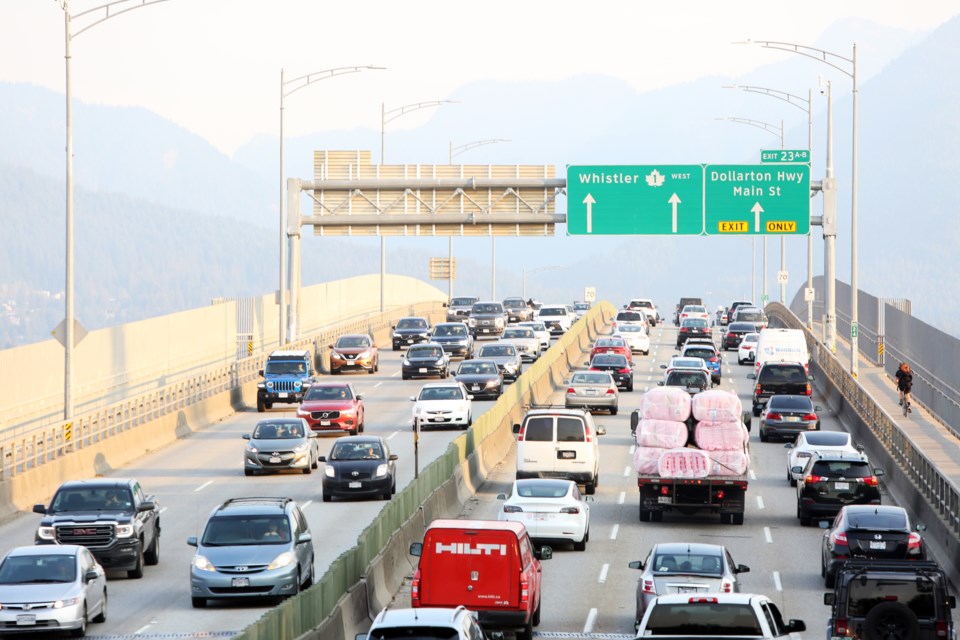
There isn't even a train tunnel or a bus bridge between Downtown_Vancouver and the North Shore. Inept regional planning has been very slow to build rapid rail transit, or even a proper rapid bus bridge over the Inlet. An inadequate 3 lane Lion Bridge is so narrow that some people have living rooms or swimming pools wider than it. The 6 lane Iron Bridge that's so narrow, there isn't enough room for emergency lanes and no space for HOV lanes. Any attempt of a rapid bus will still have to be funneled into the inadequate single deck crossing.
https://en.wikipedia.org/wiki/North_Shore_(Greater_Vancouver)
As of 2026, no bus, car, truck and commuter train tunnel was ever built near the extremely inadequate 3 lane Lions+Gate+Bridge. For if there had then, the LGB could have become a nice bike and foot crossing.
Of course no bus, truck and commuter train bridge was built next to the Iron+Bridge. The inadequate Iron Bridge is so narrow that there isn't any room for emergency lanes and especially no proper express or rapid bus lanes.
By now, there should be a SeaBus crossing of at least every 5 minutes in both directions.
Its extremely difficult to bring the Greater Vancouver Region up to a proper urban transportation standard. Partly because this is part of backwards BC and partly because there is just such a lack of a normal big city vision.
For some reason, congestive transportation planning just isn't that popular outside of backwards Vancouver, BC.
https://en.wikipedia.org/wiki/CN_Tower
https://upload.wikimedia.org/wikipedia/commons/thumb/9/9c/CN_Tower_1976.jpg/330px-CN_Tower_1976.jpg , https://www.britannica.com/topic/CN-Tower Standing at a height of 1,815 feet (553 meters)https://en.wikipedia.org/wiki/First_Canadian_Place The BMO. Unlike Chicago, Toronto has no 100 story office towers.
https://en.wikipedia.org/wiki/Bentall_Centre_(Vancouver)#Three_Bentall_Centre A 32 story BC office stump.
Being from small Vancouver, its amazing that Canada even has one megacity. Toronto is certainly a big city on a lakeshore like Chicago is. Montreal isn't allowed to have buildings as tall as Melbourne, let alone NYC. Montreal has allowed only one office tower to be over 50 floors and a few residential towers in the 60s.
Calgary has more 50+ story office towers than Denver and Perth. No 40 story office tower exists in BC. The office section of the Harbour_Centre doesn't even have a 30th floor and the revolving restaurant is closer to being like 35 floors up. However, with the overall building being 481 feet, it would be equivalent to 40 floors, if the windows went right up to the top. The flagpole has no windows, but the flag would be like the equivalent of being 48 floors up.
Not just Toronto & Montreal, but Edmonton and Seattle have longer underground train stations than backwards, congested Vancouver.
The Iron+Bridge, Oak+Street+Bridge, Knight+Street+Bridge & the Arthur+Laing+Bridge should all have a bus+and+bike bridge built next to them. The extremely inadequate Lion+Bridge should have already had a bus and train tunnel close to it.
https://dailyhive.com/vancouver/pattullo-bridge-construction-milestone-cables-deck Unlike the old, inadequate bridge, which only has 4 narrow lanes and just 1 sidewalk, this will have 2 sidewalks and 2 bike lanes. Unfortunatly, there won't be any bus or HOV lanes. Thus, all the traffic will be funneled into just 2 lanes each way. Of course there won't be any emergency lanes or breakdown lanes, so this is another quintessential BC bottleneck by design. At least a provision for a lower deck would have provided some hope. While this bridge can eventually be widened to 6 lanes, there seems to be no serious consideration for there to be bus and HOV lanes. So it will end up like the overloaded 6 lane Iron Bridge.
https://en.wikipedia.org/wiki/SkyBridge_(TransLink) No bike lanes and sidewalks and it wasn't built wide enough to eventually accomodate 3-4 tracks and 2 bus lanes. There is just something about backwards BC that makes it so obtuse and inept.
https://en.wikipedia.org/wiki/New_Westminster_Bridge Still, only a single track bridge for freight and passenger trains.
https://upload.wikimedia.org/wikipedia/commons/thumb/1/1f/New_Westminster_Swing_Bridge.jpg/960px-New_Westminster_Swing_Bridge.jpg This old single track bridge should have been double tracked on a lower deck and have at least 4 lanes on an upper deck. Then when the first 4 lane Pattullo Bridge opened, it might not have been quite as overloaded in its later decades.In order for this joke of a river railway crossing to be properly upgraded and efficient is for there to be at least a new double track bridge.
NW should have really had something like its own version of the Steel_Bridge in Portland.
https://upload.wikimedia.org/wikipedia/commons/thumb/5/51/Amtrak_talgo_train_crossing_steel_bridge.jpg/960px-Amtrak_talgo_train_crossing_steel_bridge.jpg Fortunatly, Portland didn't have a provincial backwater mentality like NW. Thus, they could build a lot more bridges. https://upload.wikimedia.org/wikipedia/commons/thumb/8/80/SteelBridgePano1.jpg/960px-SteelBridgePano1.jpg MAX light rail on the upper deck and Amtrack and freight trains on the lower deck. Fortunately, Oregon is far enough away from ever catching the BC Mind Virus. https://upload.wikimedia.org/wikipedia/commons/thumb/e/e3/Aerial_view_of_Willamette_River_crossings_in_Portland%2C_February_2018.JPG So many nice bridges in Portland.So much money has gone down the $HIT-PIPE! This has become a total $HIT-BOX nightmare. So much of this wasted money could have gone into a bus and train tunnel under the inlet near the LGB, as well as a bus and train bridge on an improved Iron Bridge crossing.
Vancouver council calls for reopening of container truck entrance to port https://www.nsnews.com/economy-law-politics/vancouver-council-calls-for-reopening-of-container-truck-entrance-to-port-clark-drive-11231559
Despite Vancouver not allowing much of a 1950s-1970s freeway within its small city limits, a lower level of Knight_Street should have been constructed. This could have been a 4 lane, divided truck route between the inlet and the Fraser River and Richmond. Then, the general surface level of Knight_Street could remain as a 4-6 lane regional corridor, but still not as a freeway.
One of the classic regional Vancouver bottleneck-chokepoints was to have only 2 lanes each way in the middle of the Knight_St_Bridge (KSB). There should have been 2 wide emergency lanes and 2 wide shoulders. That way, the KSB could have been designed to eventually have 4 lanes each way. 1 lane from and 1 lane onto Marine_Drive and the KSB.
https://en.wikipedia.org/wiki/Knight_Street_Bridge
Marine Drive from South Granville to Boundary Road and through Burnaby, should have been a constant 6 lane eastern_section.
https://en.wikipedia.org/wiki/Marine_Drive_(Greater_Vancouver)
Unfortunatly, there doesn't seem to be any BRB plan in place.
A North Boundary Road Bridge could provide an excellent BRT crossing between Burnaby and North+Vancouver. This would help to relieve pressure on the Iron Bridge.
https://movementyvr.ca/bby-heights-brt
The same with a South Boundary Roade Bridge with a BRT route between Vancouver and Richmond.
Then another BRT bridge between Richmond and Delta to the ferry terminal. This could help to relieve some of the pressure on the new tunnel, because it wasn't designed to have 2 HOV lanes & no train section.
https://www.translink.ca/plans-and-projects/projects/bus-projects/rapidbus-projects
https://jfdatalinks.blogspot.com/search?q=Boundary+Road
https://jfdatalinks.blogspot.com/search?q=BRT
https://jfdatalinks.blogspot.com/search?q=Richmond+and+Delta
https://www.vancouverisawesome.com/travel/vancouver-cruises-top-harbour-sailings-2025-11093357
The SeaBus and the Aqua-Bus just aren't enough, there needs to be more capacity.
https://en.wikipedia.org/wiki/SeaBus , https://theaquabus.com/
https://www.translink.ca/schedules-and-maps/seabus
https://en.wikipedia.org/wiki/SeaBus#Service Ideally, there should be a daytime departure every 5 minutes & 10 minutes during the evening.
https://www.translink.ca/schedules-and-maps/line/seabus/direction/0/schedule
https://en.wikipedia.org/wiki/SeaBus#History
As of 2025, there still isn't a Downtown to Deep+Cove ferry and not in 2026 either. Thus, the 6 lane Iron+Bridge will still be overloaded. Had the bridge been constructed to have very wide shoulders, there could have been an efficient bus lane each way. Instead, any bus is stuck in the almost perpetual traffic jam. A Boundary+Road Bridge could make for an excellent bus and HOV lane crossing consisting of at least 4 lanes, with a provision for a middle rail section.
Of course there is no ferry from Downtown+Vancouver to the Horseshoe+Bay+ferry+terminal. Just like there is no train from Horseshoe+Bay to Deep+Cove and to the Tri-Cities.
It's strange that the North-Shore didn't keep up with improving its passenger rail system.
https://en.wikipedia.org/wiki/North_Shore_(Greater_Vancouver) , https://monova.ca/the-story-of-streetcar-153/
https://jfdatalinks.blogspot.com/search?q=Lion+Bridge As of 2025, still no official plan for a train tunnel and a bus & HOV tunnel. A 3-4 track train tunnel and a 6-8 lane road tunnel would actually improve that absurd 3 lane crossing area.
https://jfdatalinks.blogspot.com/search?q=Iron+Bridge As of 2025, still no official construction plan to add a 4 lane bus & HOV bridge, plus a 3-4 track rapid transit train bridge.
Why a 3-4 track train tunnel or bridge? Someday, enough sensible people might realize the benefit and importance of having a train linking the Horseshoe+Bay+ferry+terminal to YVR and to the Tsawwassen+ferry+terminal.
Unfortunately, when so much money was wasted on a $HIT-PIPE and a $HIT-BOX, more money was lost that could have gone towards improving transit to & from the North Shore.
https://jfdatalinks.blogspot.com/search?q=The+Lion+Bridge+and+The+Iron+Bridge
https://en.wikipedia.org/wiki/Dubai Unlike Vancouver, when there are extra lanes, it's so much easier to have proper bus lanes & even HOV lanes. It's just a matter of efficiently using that wider road-space. The backwards Vancouver & backwater BC approach is to try to funnel everything into 2 lanes each way whenever possible.
https://en.wikipedia.org/wiki/Emirate_of_Dubai Whether its a hot climate or a cold climate, people aren't going to be walking or biking around in 40 to 45C or in -30 to -40C weather.
https://www.dubai.ae/web/dubai.ae/city-of-future
Unless backwards Vancouver & backwater BC build a proper system of bus & HOV bridges & have longer SkyTrain station, it all remains a sad joke. The Iron Bridge replacement, if it ever happens, must not only have 3 general lanes each way, but an extra 2 lanes each way for Rapid Bus Transit & HOV. A 10 lane bridge with a provision for a lower deck, is what a proper big city would do, but Vancouver only wants to be a toy city or a movie set full of fake props.
https://www.youtube.com/watch?v=ybMhTlj-l5s
Unlike Seattle and Calgary, Vancouver has no office towers over 50 stories. There aren't even any 40 story office towers in BC. Vancouver is firmly against permitting any office tower from having a 40th floor. However, Vancouver cant stop Burnaby and especially Surrey from having an office tower over 40 stories. While a 50 story office tower anywhere in backwater BC still seems unlikely, Burnaby and Surrey will likely be the first 2 cities in BC to have at least a 45 story office tower.
https://dailyhive.com/vancouver/50-storey-tower-community-hub-edmonds-burnaby
So far, stubborn and strict Vancouver has only permitted 2 buildings to be taller than the tallest in Bellevue,_Washington.
Vancouver has only permitted one building to be taller than the tallest in Vaughan, Ontario.
https://www.skyscrapercenter.com/building/cg-tower/32139
Since Burnaby and Surrey aren't under the backwards and thwarting restrictions that Vancouver has, Burnaby and eventually Surrey, will have taller buildings than stumpy Vancouver. Indeed, Burnaby already has some buildings taller than Downtown_Bellevue. Surrey will eventually have some buildings taller than the Vaughan_Metropolitan_Centre.
Vancouver will continue to limit the height of its buildings for as long as possible. Vancouver won't allow a bus and train tunnel near the lion Bridge, let alone a 6 lane highway tunnel. Despite the Iron Bridge needing a parallel bus bridge and a Skytrain bridge, progress remains at a snail's pace. There still seems to be no interest in building a bus bridge next to the Oak and Knight Bridges. A city on the moon and Mars might happen before stubborn Vancouver ever builds a new Fraser Street bus & bike bridge. Not only should there be a Boundary Road Bridge to Richmond, but at least a Boundary bus & bike bridge to the North Vancouver.
Its like backwards BC keeps hoping that by symbolically refusing to build up proper big city size transportation infrastructure, people will stay away. However, its only because no one has been able to effectively challenge the bottleneck-chokepoint mentality, that not much has been done.
Somewhere in between 1950 & 1960, the old Fraser_Street_Bridge (FSB) should have been replaced with a new 4 lane bridge, with 2 very wide sidewalks for bikes & a future provision for 2 bus lanes. Vancouver needs a street and transit connection with No. 5 Rd. in Richmond. Unfortunatly, backwards Vancouver has always been a city without a proper big city transportation vision.
https://evelazarus.com/the-fraser-street-swing-span-bridge
https://en.wikipedia.org/wiki/Fraser_Street_Bridge_(1894)#Provincial_government_headache
https://search.nbca.unbc.ca/index.php/fraser-st-road-bridge-in-vancouver-bc-1 In the late 1800s, just being able to have a bridge roadway width of 2 wagon-roads in backwater BC was amazing. Then, decades & even several generations later, any BC bridge that could provide 2 wagon-roads each way was even more amazing.
https://structurae.net/en/structures/fraser-avenue-street-bridge
As usual, Vancouver & BC lost & messed up an opportunity to have 2 great new bridges.
https://structurae.net/en/structures/knight-street-bridge (KSB)
https://evelazarus.com/the-knight-street-bridge-part-2
Once again, the lack of a proper big city vision resulted in the inadequate design for the 4 lane Knight+Street+Bridge (KSB). However, it makes sense from a bottleneck congestive planing mentality. Despite Vancouver being part of what is suppose to be a major port region and in need of proper transportation corridors, the Knight_Street_Bridge is a classic chokepoint.
Just because the Knight_Street_Bridge started out as a 4 lane joke, there immediately should have been 2 wide shoulders, which could have eventually become 2 extra bus lanes. Plus, there should have been a future provision to add 2 HOV lanes. Two wide sidewalks & 2 wide bike lanes. However, that would go against the congestive planning mentality of Vancouver & BC.
Indeed, by deliberately planning the KSB to be a 4 lane chokepoint and not building a new Fraser+Street+Bridge, there clearly was no interest to have proper dedicated bus lanes in that part of the Greater Vancouver Region. With so many inadequate, narrow bridges, there should be bus & HOV lane bridges to help improve regional transportation.
A regional express bus system or a rapid bus network requires dedicated lanes. The LGB should have 2 bus lanes & 2 HOV lanes in a tunnel near it. The Iron Bridge, OSB & KSB, all should have a 4 lane bus & HOV bridge next to them. That would allow for a rapid bus lane each way & a HOV lane each way.
https://jfdatalinks.blogspot.com/search?q=old+and+new+narrow+bridges
The University+of+Tasmania seems to have been Vancoverized, in terms of its 1 lane each way streets.
Hobart is much smaller than Vancouver, BC. Yet, it has more lanes on a total of 3 crossing over the River_Derwent_(Tasmania). Burrard Inlet in Greater Vancouver only has 2 bridges.
Fortunately, Hobart has the 5 lane Tasman+Bridge, the 4 lane Bowen+Bridge and the 2 lane Midland+Hwy+Bridge. That's a total of 11 lanes.
In contrast, Burrard_Inlet-Port_of_Vancouver only has the 6 lane Iron+Workers+Memorial+Bridge and the inadequate 3 lane Lions+Gate+Bridge. Only 9 lanes for the old port area of the region. While a multigenerational moratorium on any new harbor bridges made sense from an anti-freeway perspective, something essential was neglected. As of the end of 2024, no bus-bridge or bus-tunnel was ever built across the harbor. There is only a single freight train track, so of course there was never a truck-bridge or a truck-tunnel built. Even at the dawn of 2025, a SkyTrain or LRT crossing still only seems like a pipedream.
Greater Hobart isn't just the state capital, its the main city on the island of Tasmania, which has less than 65% of a million people. Greater_Vancouver is getting close to 3 million people, yet the infrastructure is so inadequate.
Anyone visiting Vancouver from the big 4 cities of Melbourne, Sydney, Brisbane & Perth might be surprised to see shorter trains & smaller buildings & narrower bridges & highways. Those 4 cities, just like Toronto, Montreal, Calgary & Edmonton, are allowed to exist on a larger scale than extremely restrictive Vancouver. Indeed, its as if rainy Vancouver must continually water things down.
There is North_Vancouver_(city) and then there is North_Vancouver_(district_municipality).
https://dailyhive.com/canada/canada-most-liveable-cities-ranking-2024
As long as you have everything you need on the North Shore, you are fine. Otherwise, you will be punished for using the inadequate The+Lion+Bridge+and+The+Iron+Bridge.
https://www.upperlonsdale.ca/blog/87130/north-vancouver-ranked-1-in-canada
https://www.theglobeandmail.com/investing/article-canada-most-livable-city-north-vancouver/
Unfortunatly, transportation planners haven't seen a need to link Horseshoe Bay and Park Royal with downtown Vancouver. Indeed, a direct LRT connection from the North_Shore_of Greater_Vancouver to YVR might as well be part of a Sci-Fi story. However, multigenerational congestive planning in Vancouver is a harsh reality.
A 3 lane Lion Bridge never had any bus tunnels & especially an LRT line built far under it. The bridge is too narrow to accommodate one, let alone 2 proper bus lanes. This is the finest in BC bottleneck stagnation planning.
The Iron_Bridge was built too narrow for an urban TCH crossing. Unfortunatly, no one planned or designed it to eventually have a lower deck for buses, trains & trucks.
https://www.cnv.org/streets-transportation/travel-options/transit A bus and truck bridge should have been built next to the Iron Bridge, decades ago. Why do that, when you can cram everything into just 3 lanes each way?
https://www.translink.ca/plans-and-projects/projects/rapid-transit-projects/bus-rapid-transit
https://dailyhive.com/vancouver/north-shore-skytrain-burrard-inlet-rapid-transit-brt-lrt-study
https://www.burnabynow.com/local-news/opinion-lrt-remains-the-best-option-for-north-shore-rapid-transit-9643033 Of course a train would be able to move many more people efficiently.