UTL is about exploring past, present and future urban technologies in science and fiction, etc...
Monday, June 8, 2026
Sunday, June 7, 2026
TSN's FIFA World Cup broadcast studio is at Jack Poole Plaza
Jack_Poole_Plaza provides plenty of inlet views.
https://www.vancouverconventioncentre.com/facility/spaces/outdoor-plazas
https://do604.com/venues/jack-poole-plaza
The unofficial Stubborn Vancouver Mind Virus was clearly against sunbornvancouver.ca .
https://www.sunbornvancouver.ca/project The pictures clearly show that the small ship hotel would hardly block out all of the views of the inlet. Its not even close in scale to the largest_cruise_ships.
https://www.sunbornvancouver.ca/public-dock Actually, a new public viewing platform would be provided with this project.
Monday, May 18, 2026
Long lost traffic lanes of Greater Vancouver
https://www.reddit.com/r/vancouver/comments/1tfsdxg/long_lost_days One of the few major streets within Vancouver to be at least 6 lanes wide. However, with curb lane parking it just becomes another 4 lane corridor in BC.
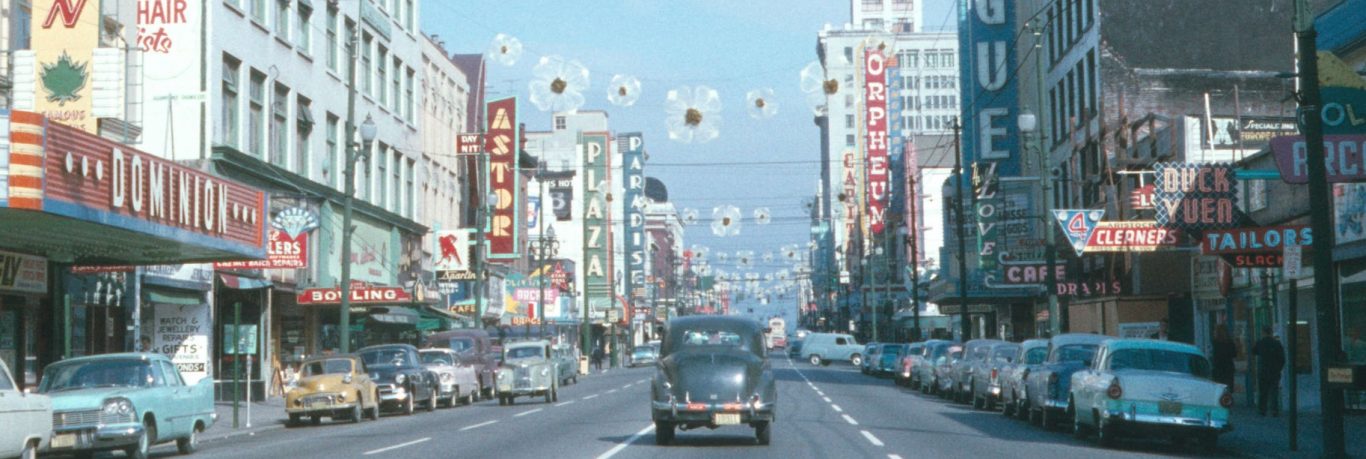
https://www.vancouverarchives.ca/wp-content/uploads/cropped-a9b22bf7-d985-4372-9650-7a51afbe5f94-2010-006.161-2-3.jpg This part of Granville used to have 6 lanes. The 1970s mall reduced it to just 2 lanes, causing an instant bus bottleneck-chokepoint. A 4 lane compromise still would have allowed for wider sidewalks. A 4 lane transit mall could have allowed for a constant passing lane when another bus has stopped. It was as if someone didn't want to have an efficient bus corridor for express buses, as well as local busses. When a local bus stops on a 2 lane street, its impossible for an express bus to pass, especially when there is a stopped bus on the other lane, also preventing any express bus to pass.
Several cities around the world still have wide streets, boulevards and avenues with 8-10 lanes. If Vancouver had allowed some 8 lane wide streets, 2 curb parking lanes would still provide 6 traffic lanes. Then, if 2 lanes were for buses, there would still be 2 lanes each way for general traffic.
The public and then the planning department (after being pressured) were firmly against having freeways within the city limits during the 1960s and 70s. However, there still should have been enough logic to allow for wider streets so that it would be easier and more efficient to have a bus lane each way.
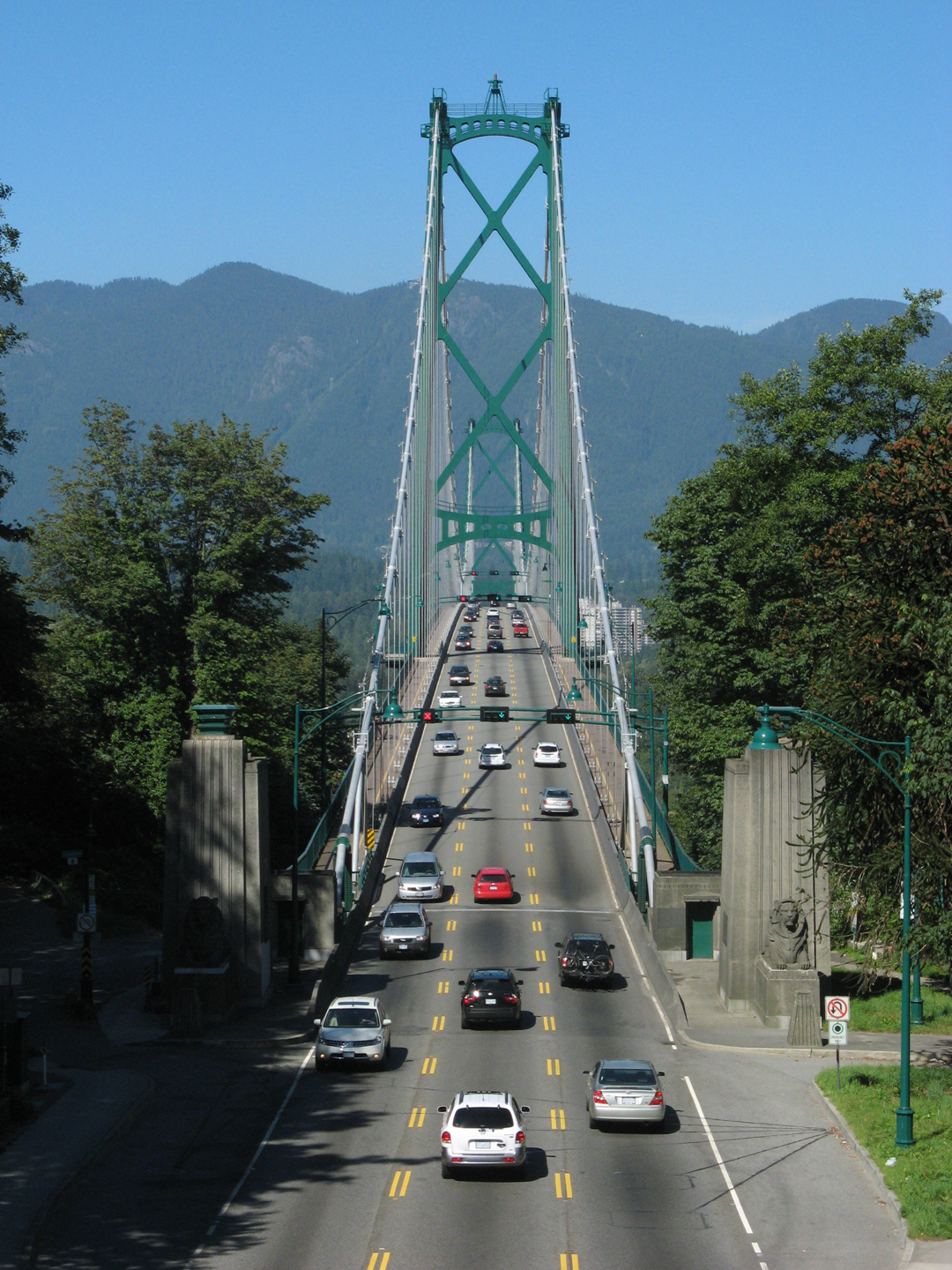
As of 2026, no bridge within the Vancouver city limits has 8 lanes and only two bridges have 6 lanes. One has 5 lanes and then there are four 4 lane bridges and the 3 lane Lion Bridge joke.
All of the Vancouver bridges are so narrow that there was no provision for any future bus lanes. Plus, 2 bridges each had 2 lanes removed that could have been used for buses. Congestive transportation planning is the name of the game for backwards Vancouver. If there ever was a city that needs a series of bus bridges, it would be stubborn Vancouver.
Even the Greater Vancouver region is lacking in having a series of bus bridges, especially since the Skytrain isn't a 24 hour system.
https://www.vancouverarchives.ca/2011/04/18/how-did-harland-bartholomews-ideas-shape-vancouver
https://archive.org/details/vancplanincgen00vanc The Bartholomew Plan published in 1928.
https://www.flickr.com/photos/vancouver-archives/albums/72157626484421302/
https://globalcivic.org/harland-bartholomew/
https://www.urbanstudio.sala.ubc.ca/2010/lectures/Sept21_presentations/2_TheBasics.pdf
https://samsullivan.ca/taking-a-closer-look-at-the-legacy-of-harland-bartholomew-and-his-plan-for-vancouver-2 , https://www.youtube.com/watch?v=YIuAk1TIKHo
Monday, May 4, 2026
Metrotown in Burnaby, BC
https://www.youtube.com/watch?v=Zmz9hH3rI6U
Burnaby or Surrey will likely be the first places in BC where office towers will be over 45 stories. That's because stubborn Vancouver won't even permit any office tower to have a 40th floor.
Friday, May 1, 2026
Should the Vancouver Whitecaps revive the Gastown waterfront stadium concept instead of pursuing Hastings Racecourse?
https://dailyhive.com/vancouver/vancouver-whitecaps-gastown-railyard-waterfront-stadium
https://www.facebook.com/groups/831329483640398/posts/25294271920252814/
https://en.wikipedia.org/wiki/Wellington_Regional_Stadium "It was built on reclaimed railway land..."
These were both possible, because they are far away from any influence from the Vancouver Mind Virus (VMV).
https://en.wikipedia.org/wiki/Cape_Town_Stadium
https://upload.wikimedia.org/wikipedia/en/thumb/9/9c/Capetown_stadium.JPG/960px-Capetown_stadium.JPG
Despite Lumen_Field in Seattle being relatively close to BC, no VMV has seemed to have reached there.
Unlike with BC_Place Stadium, Lumen_Field works well for soccer and American Football arrangements.
https://en.wikipedia.org/wiki/Lumen_Field#Soccer
Accomplishing things in stubborn Vancouver, BC is just more difficult than in many other cities around the world.
=======================================
Could Honolulu Develop Like Tokyo or HK? https://www.youtube.com/watch?v=pxkjJ2TNkY4
No way. First, H. County would have to allow Singapore size buildings and infrastructure. Then, HK size stuff, before even getting close to something like a little Tokyo. Right now, H. isn't even allowed to have buildings as tall as what San Diego has.
Saturday, January 31, 2026
Why Greater Toronto Has Several Skylines
https://www.youtube.com/watch?v=eI9WJa9Q8dA
Of course many large urban areas around the world have more than 1 or 2 skylines or tower clusters.
For the longest time, no building in Vancouver or BC, was allowed to be as tall as the 1930s CIBC tower, which is now a stump.
https://www.blogto.com/city/2017/05/toronto-lost-observation-deck-commerce-court-north/
https://www.torontojourney416.com/canadian-bank-of-commerce-building/
https://www.25king.ca/the-history
It wasn't until the early 1970s when stumpy, Vancouver allowed a building to be taller than the L.A. City Hall, or the Smith Tower in Seattle.
The 1930s CIBC tower, the L.A. City Hall and the Smith Tower, would still be prominent towers in Vancouver, but stumps in their own cities.
Despite Vancouver being divided by an inlet and a river, the city wasn't able to build a huge wall along Boundary Road. Thus, the KEEP THEM OUT agenda was a little thwarted. The various White city councils tried to do the next best thing. That was to symbolically impose various restrictions as a reluctance to think, plan and build on a BIG city scale. The time especially from 1960 to 2000 had predominantly White City Hall and its councils continually impose several overlapping restrictions.
Since Vancouver can't control immigration or the movements of non-white people, keeping things small and backwards, means that less people will move there than to Toronto, Montreal, Calgary and Edmonton. However, with a mild winter climate, more and more people want to move to backwards BC, especially small-minded Vancouver and provincial Victoria.
In spite of immigration and Multiculturalism, Vancouver was to perpetually promote its small scale agenda.
While the first Skytrain line can finally run 5 car trains, the stations weren't designed to become long enough to eventually accomodate 9 car trains like the big city Montreal Metro has.
The 2nd and 3rd Skytrain lines are still only running 2 car joke trains. Running 8-10 car trains is what a proper big city would do, but not backwards Vancouver.
Narrow bridges provides strong symbolism of the cities narrow-mindedness. When bridges are too narrow, its difficult to have a proper express or rapid bus system. The reluctance to build parallel bus and HOV bridges helps to maintain the congestive planning approach that is vancouver and the Greater Region.
Vancouver's refusal to build parallel bike bridges has meant that 2 lanes were removed from the Burrard Bridge, 1 lane from the Cambie Bridge and 2 lanes from the Granville Bridge.
Keeping buildings symbolically short when compared to what scenic Sydney, Auckland, SF and Seattle allow, also helps to maintain Vancouver's reluctance to enter the big and tall urban scale. In fact, the scenic setting that Vancouver is in has been used as the main excuse to continually scale the city down. Yet, several scenic cities around the world are either able to have wider bridges, wider roads, longer trains or taller buildings.
The world is mostly composed of non-white people. Canada has less than 1% of the world's population and stubborn Vancouver symbolically remains as a small provincial backwater on the Pacific Rim.
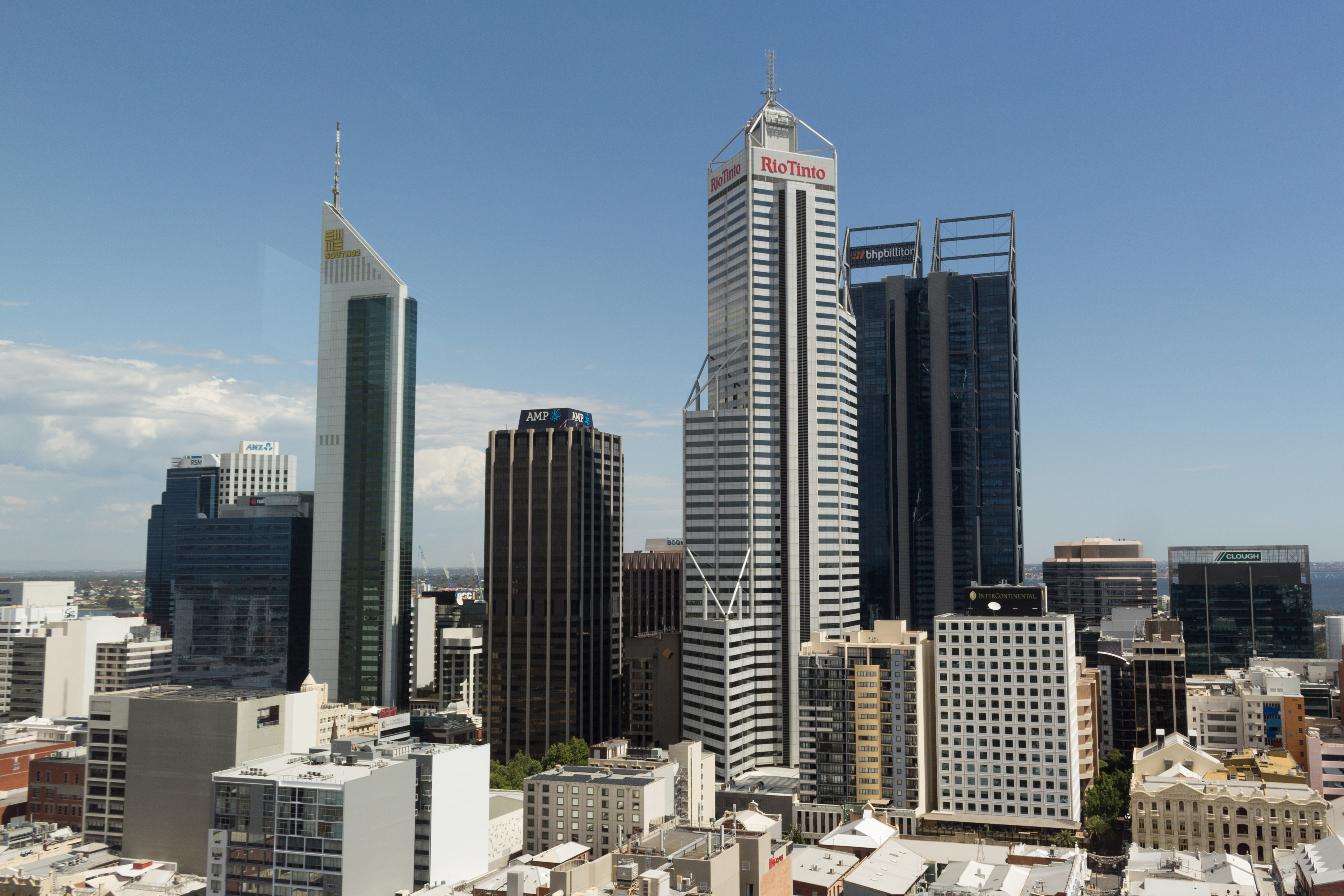
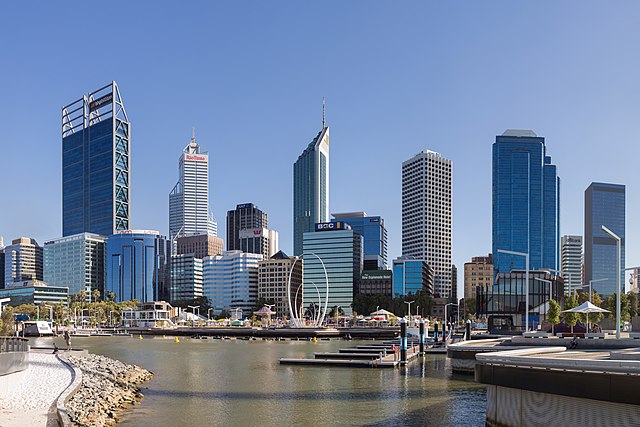
https://centralparktower.com.au Unlike Perth, Vancouver forbids 50 story office towers and Brisbane, Sydney and Melbourne size residential towers.
https://en.wikipedia.org/wiki/108_St_Georges_Terrace In fact, no office building in Vancouver has been permitted to have a 40th floor. However, since Burnaby and Surrey aren't under the restrictive controls of Vancouver, they will eventually allow office towers over 40 stories.
Despite Australia having less people than Canada, Perth is allowed to have taller buildings, wider bridges and longer trains than Vancouver. Taller buildings, wider bridges and longer trains are even less likely in Halifax than whats in Brisbane or Queensland.
https://en.wikipedia.org/wiki/Q1_(building) To see buildings on a similar scale of what Brisbane allows, one has to get to Greater Toronto. Brisbane is allowed to have some buildings that would even be impressive in Melbourne and Sydney.
While Montreal is allowed to have taller buildings than Vancouver, Montreal isn't allowed to have Sydney size towers. Especially not on the scale of what Melbourne and Toronto permit.
Monday, December 29, 2025
No fireworks in downtown Vancouver for New Year's Eve or the rest of 2026
https://dailyhive.com/vancouver/vancouver-fireworks-2026-new-years-eve-nye
While Vancouver hasn't been able to get most other cities across Canada and around the world to stop, ban or cancel their NY Eve fireworks, strange Vancouver will retain this part of its NO FUN CITY mentality and agenda.
https://www.vancouverisawesome.com/local-news/fireworks-banned-halloween-vancouver-fire-department-9726922 Why just ban them in October and January, when you can ban them throughout the year?
https://www.ehnewspaper.ca/articles/third-year-of-vancouvers-fireworks-ban
For some strange reason, backwards Vancouver hasn't been able to get other cities around the world to adopt the same bizarre idiosyncrasies.
Officially, there isn't supposed to be a Vancouver+Mind+Virus, but the backwards city is so stunted and strange. Other cities in a scenic setting such as Sydney, Auckland, San_Francisco and Seattle are able to have wider bridges in or close to their city centers.
Despite warm and scenic Honolulu having some very short bridges, they are still wider than what extremely restrictive Vancouver allows. These two short bridges in Honolulu provide 4 lanes each way. Thus, they form an 8 lane crossing and they aren't even part of a freeway.
There is also a very short 6 lane bridge in Honolulu. In addition to its 6 lanes, there is a turning lane and a one lane wide median, which makes it equivalent to being 8 lanes wide. Plus, there are 2 wide sidewalks, which are wider than the original sidewalks on the Granville Bridge in Vancouver. In other words, no bridge in Vancouver is allowed to be as wide as it. Despite regional population growth, the Granville Bridge was reduced from 8 lanes to 6 lanes.
Considering how Vancouver has such a narrow road system, one would think that a regional network of bus and bike bridges would be essential. Of course the backwards city and greater urban region is too cheap to fund such infrastructure and rather opted for a congestive transportation approach.
In contrast, The+Helix+Bridge in Singapore is fine example of what backwards Vancouver refuses to build. No lanes had to be removed from the 6 lane Bayfront+Bridge or the 10 lane Benjamin+Sheares+Bridge. Stubborn Vancouver could really benefit from something like the Helix Bridge.
While Vancouver went backwards after Expo 86, Brisbane really took of after Expo 88. The Kangaroo_Point_Green_Bridge, Goodwill_Bridge, Kurilpa_Bridge, Jack_Pesch_Bridge and the Go_Between_Bridge are all great examples of what strange Vancouver refuses to build. What's really amazing from a backwater Vancouver perspective is that those bike and foot bridges in Brisbane never required any lanes to be removed from the cities road bridges.
In comparison, Vancouver removed 2 lanes from the Burrard Bridge, 1 lane from the Cambie Bridge and 2 lanes from the Granville Bridge. If urban planning in Vancouver was wise and the city never got rid of its trams or streetcars, perhaps something like the Tilikum_Crossing could have been built across False_Creek.
Thursday, December 4, 2025
The Bus and Bike Bridge Concept
The Bus and Bike Bridge Concept isn't officially banned in Vancouver or BC in general. It just hasn't been as important as it is in other cities.
Of course it would be Calgary, not stubborn Vancouver that would have an improved Cushing+Bridge crossing. While the main 4 lane bridge could easily be just like a narrow BC bridge, it's the parallel crossing that takes it above and beyond backwards Vancouver. There is a 2 lane bus bridge with a wide bike & footpath.
Since so many bridges in backwards BC are mostly narrow, a parallel Bus and Bike Bridge would be a huge improvement.
https://www.google.com/maps/place/Inglewood+Bicycle+Pump+Track
Not just Greater Vancouver, but several cities in BC could really benefit from having parallel bus+and+bike+bridges.
https://jfdatalinks.blogspot.com/search?q=bus+and+bike+bridge
Friday, November 7, 2025
Soccer Lease negotiations between Whitecaps and BC Place at an impasse
https://www.cbc.ca/news/canada/british-columbia/vancouver-whitecaps-new-stadium-1.7503283
https://dailyhive.com/vancouver/vancouver-whitecaps-stadium-pne-hastings-park
https://dailyhive.com/vancouver/vancouver-whitecaps-pne-stadium-city-mayor
https://en.wikipedia.org/wiki/Whitecaps_Waterfront_Stadium
https://www.whitecapsfc.com/news/waterfront-stadium-could-be-dramatic-beautiful-spectacular-province
https://jfdatalinks.blogspot.com/search?q=Stubborn+Vancouver
Friday, October 3, 2025
Fahrenheit 451 (1953 Novel) and height limits
https://en.wikipedia.org/wiki/Fahrenheit_451 Two decades before Ray_Bradbury would start writing what would eventually lead to his F 451 novel, LA was sort of close to imposing a 451 foot height limit. However, the LA City Hall would end up being slightly taller than 451 feet. https://en.wikipedia.org/wiki/Los_Angeles_City_Hall "Dedication ceremonies were held on April 26, 1928. It has 32 floors and, at 454 feet (138 m) high..."
"A City Council ordinance passed in 1905 did not permit any new construction to be taller than 13 stories or 150 ft (46 m) in order to keep the city's architecture harmonious. City Hall's 454 ft (138 m) height was deemed exempt as a public building and assured that no building would surpass one third its height for over three decades until the ordinance was repealed by voter referendum in 1957." https://en.wikipedia.org/wiki/Los_Angeles_City_Hall#History
https://laist.com/news/entertainment/city-hall-tall 454' not 451 feet, but close nonetheless. LA didn't have to wait until 1953, because it was pondering a 450'-455 foot height restriction in the mid to late 1920s. Of course NYC and Chicago already had tall buildings in the 1920s, so perhaps LA wanted to symbolize an F-U to them by keeping buildings under 500 feet until the mid to late 1960s.
"The writing and theme within Fahrenheit 451 was explored by Bradbury in some of his previous short stories. Between 1947 and 1948, Bradbury wrote "Bright Phoenix", a short story about a librarian who confronts a "Chief Censor", who burns books. An encounter Bradbury had in 1949 with the police inspired him to write the short story "The Pedestrian" in 1951. In "The Pedestrian", a man going for a nighttime walk in his neighborhood is harassed and detained by the police. In the society of "The Pedestrian", citizens are expected to watch television as a leisurely activity, a detail that would be included in Fahrenheit 451. Elements of both "Bright Phoenix" and "The Pedestrian" would be combined into The Fireman, a novella published in Galaxy Science Fiction in 1951. Bradbury was urged by Stanley Kauffmann, an editor at Ballantine Books, to make The Fireman into a full novel. Bradbury finished the manuscript for Fahrenheit 451 in 1953, and the novel was published later that year." https://en.wikipedia.org/wiki/Fahrenheit_451#Writing_and_development
F 451 was published in 1953, on 10-19.
https://www.goodreads.com/book/show/13079982-fahrenheit-451
https://en.wikipedia.org/wiki/Fahrenheit_451#Historical_and_biographical_context
https://www.sparknotes.com/lit/451/summary
https://en.wikipedia.org/wiki/Fahrenheit_451#Writing_and_development
Did Metropolis_(1927_film) help to restrict the height of tall buildings in LA for several decades?
https://en.wikipedia.org/wiki/Metropolis_(1927_film)#Influences
Whether the LA City Hall is 454', 453' or 452 feet, it's not exactly 451 feet, but still close enough.
https://www.latimes.com/visuals/photography/la-me-fw-archives-20190403-htmlstory.html "The 32-story, 454-foot-tall Los Angeles City Hall opened with a three-day public celebration April 26-28, 1928. Construction started in 1926."
https://www.skyscrapercenter.com/building/city-hall/4376 138.4 m / 454 ft
https://buildingsdb.com/CA/los-angeles/los-angeles-city-hall "The Los Angeles City Hall reaches an architectural height of 453ft (138m). It has a total of 32 floors, 28 above ground and 4 basements..."
https://www.travelinusa.us/visit-los-angeles-city-hall "At the time of construction, a regulation was in effect in the city that prohibited buildings taller than 150 feet. Los Angeles City Hall was therefore an exception and, at an impressive 32 stories and a height of 452 feet, it remained the tallest building in Los Angeles until 1964 when Union Bank Plaza opened."
https://waterandpower.org/Museum2/Los_Angeles_City_Hall_1928.html
https://www.c40.org/cities/los-angeles
By the 1970s, LA, SF, Sydney, Melbourne, Tokyo, Toronto, Montreal and Paris, all had some buildings over 600 feet or even over 200 m.
https://www.c40.org/cities/vancouver
Unfortunately by the 1970s, stubborn and backwards Vancouver wanted to go in the opposite direction of most cities. Thus, a kind of censoring agenda was implemented. SF and Sydney and even Seattle, proved that a scenic city by the water can have taller buildings, wider bridges and longer trains than what little Vancouver would allow.
While there isn't any direct correlation with the F 451 story and Vancouver, BC imposing a height limit, there is something peculiar. Some people might consider that if a building is around 500 feet in height, or at least 150 m, that's in the category of starting to be a tall building.
Well, Vancouver, always looking for ways to symbolically project a watered down or scaled back city, height restrictions were at the top of the list.
Somewhere in-between the 1950s & 60s, Vancouver started to refine its height restriction mandate. Thus, as several cities in the 1970s started to allow for taller buildings, Vancouver has never allowed any office tower to have 40 floors. Perhaps an imposed 451 foot height limit would have been too obvious, so Vancouver generally had an imposed height restriction of 450 feet, with some occasional variations.
Right through the 1960s only one building in Vancouver, or anywhere in BC had a 30th floor.
The first residential building to have at least 40 floors. https://skyscraperpage.com/cities/?buildingID=921 1973 https://skyscraperpage.com/diagrams/?searchID=110144876&page=3
The first residential building to have more than 45 floors. https://skyscraperpage.com/cities/?buildingID=3 2001 https://skyscraperpage.com/diagrams/?searchID=110144876&page=6
It wouldn't be until the early 21st century before Vancouver would permit 2 buildings to rise above 600 feet. https://skyscraperpage.com/diagrams/?searchID=110144876&page=8 , https://skyscraperpage.com/diagrams/?searchID=110144876&page=9
https://skyscraperpage.com/diagrams/?countryID=1 Vancouver has no building that makes it onto the first page. Burnaby just barely makes it.
https://skyscraperpage.com/diagrams/?searchID=110144876&page=10 However, Vancouver has another chance to actually have some taller buildings. https://skyscraperpage.com/diagrams/?countryID=1&status=15 Over the decades, various plans have been stopped, due to all the red tape B$ and extreme restrictions.
Vancouver has had quite a history of limiting, restricting, thwarting & censoring proper big city stuff.
Sunday, September 28, 2025
Brooklyn, NY
https://www.reddit.com/r/skyscrapers/comments/1nsyaux/brooklyn/
https://en.wikipedia.org/wiki/List_of_tallest_buildings_in_Brooklyn#Tallest_buildings
While stubborn Vancouver only allows 2 buildings to be taller than the tallest in Bellevue,_Washington and nothing to rival the tallest in Vaughan, Ontario, Burnaby will.
Unlike Vancouver, Burnaby wants to even rival the tallest in Brooklyn.
Brooklyn used to be an independent city, but it eventually became part of NYC.
Saturday, July 12, 2025
Vancouver's forgotten streetcars and interurban trams
Fortunately, Toronto, NO, SF and Melbourne never got rid of all their streetcar and tram lines.
https://dailyhive.com/vancouver/downtown-vancouver-false-creek-streetcar-route-map
While backwards Vancouver wanted to be among the first cities to get rid of them, Vancouver will likely be one of the last cities to bring them back.
https://viewpointvancouver.ca/2021/04/06/a-bump-in-the-road-kits-points-hidden-streetcar-line/
Atlanta, SD, LA, Edmonton, Calgary, Seattle & Portland brought back some of their trollies in the form of modern LRT or tram-trains.
https://montecristomagazine.com/community/vancouvers-forgotten-streetcars
The sad irony is that Vancouver, Burnaby & NW really could have benefitted from following the Toronto, SF and Melbourne examples.
https://www.vancouverisawesome.com/history/last-ride-oak-streetcar-vancouver-1937040
https://www.facebook.com/groups/128486813979056/posts/1968090176685368
https://maps.nicholsonroad.com/bcer/
https://humantransit.org/2010/02/vancouver-the-almost-perfect-grid.html
There used too be a streetcar route along Robson St., Denman St. & Davie St. A revived version of this could provide a nice downtown transit loop. However, that would go against the backwards mentality of Vancouver. Fortunately, the Stubborn+Vancouver mentality never made it to Atlanta & Dallas.
https://en.wikipedia.org/wiki/Atlanta_Streetcar#Downtown_Loop_route_funded
https://en.wikipedia.org/wiki/Dallas_Streetcar
Unfortunatly, Vancouver & BC are all about congestive planning.
https://www.cbc.ca/news/canada/british-columbia/2026-fifa-world-cup-vancouver-1.7559067
With less than a year to go, its impossible to revive any streetcar lines, because that can take 5-10 years. There isn't even a network of regional bus bridges. Such inept transportation planning means that busses have to squeeze onto bridges that are mostly just 2 lanes each way.
https://www.cbc.ca/news/canada/british-columbia/bc-rising-costs-fifa-2026-world-cup-1.7573669
Despite the first SkyTrain line opening in 1985, it took until 2025 to start having5 car trains. The 2nd & 3rd lines are still only running 2 car trains.
Of course the city is decades behind in keeping up with having enough hotel rooms.
https://www.cbc.ca/news/canada/british-columbia/vancouver-hotel-shortage-2026-world-cup-1.7117696
https://jfdatalinks.blogspot.com/search?q=Trams-Trains+and+Streetcars
Monday, May 12, 2025
Selective Door Operation (SDO)
https://en.wikipedia.org/wiki/Selective_door_operation#UK_variations
SDO is a great way to add an extra car at both ends of a train. Thus, a 3 car train can become 5 & a 6 car train could become 8.
https://en.wikipedia.org/wiki/London_Underground_S7_and_S8_Stock#Features
https://www.witpress.com/elibrary/wit-transactions-on-the-built-environment/74/12046
https://www.rssb.co.uk/research-catalogue/CatalogueItem/T686
The Chicago L can run up to an 8 car train, because that's the maximum station platform length. If the L can ever have walkthrough trains, then an 8 car train could become a 10 car train with SDO.
Stubborn Vancouver & BC just can't seem to allow for proper comprehensive transportation planning.
Unfortunately, the multibillion dollar Canada+Line wasn't designed for significant future capacity. No five car trains, just a 2.5 car joke. There was a lack of vision to connect the Horseshoe+Bay ferry+terminal with downtown Vancouver and the airport.
https://jfdatalinks.blogspot.com/search?q=Selective+Door+Operation
Tuesday, April 29, 2025
Why is Metro Vancouver Creating a New Downtown?
https://www.youtube.com/watch?v=ybMhTlj-l5s
Unlike Seattle and Calgary, Vancouver has no office towers over 50 stories. There aren't even any 40 story office towers in BC. Vancouver is firmly against permitting any office tower from having a 40th floor. However, Vancouver cant stop Burnaby and especially Surrey from having an office tower over 40 stories. While a 50 story office tower anywhere in backwater BC still seems unlikely, Burnaby and Surrey will likely be the first 2 cities in BC to have at least a 45 story office tower.
https://dailyhive.com/vancouver/50-storey-tower-community-hub-edmonds-burnaby
So far, stubborn and strict Vancouver has only permitted 2 buildings to be taller than the tallest in Bellevue,_Washington.
Vancouver has only permitted one building to be taller than the tallest in Vaughan, Ontario.
https://www.skyscrapercenter.com/building/cg-tower/32139
Since Burnaby and Surrey aren't under the backwards and thwarting restrictions that Vancouver has, Burnaby and eventually Surrey, will have taller buildings than stumpy Vancouver. Indeed, Burnaby already has some buildings taller than Downtown_Bellevue. Surrey will eventually have some buildings taller than the Vaughan_Metropolitan_Centre.
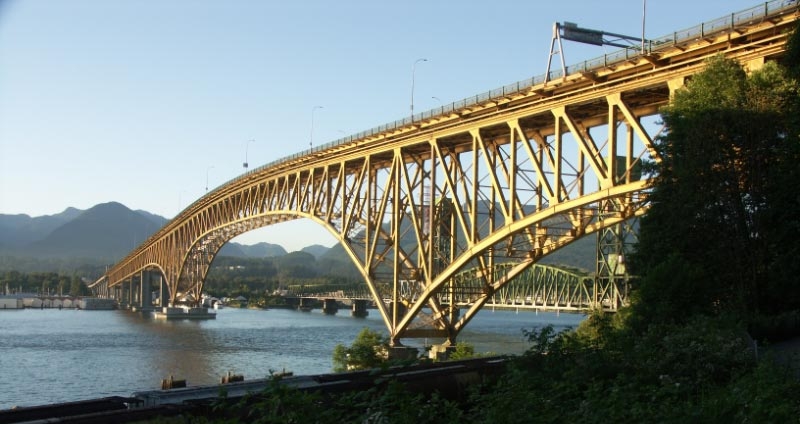
Vancouver will continue to limit the height of its buildings for as long as possible. Vancouver won't allow a bus and train tunnel near the lion Bridge, let alone a 6 lane highway tunnel. Despite the Iron Bridge needing a parallel bus bridge and a Skytrain bridge, progress remains at a snail's pace. There still seems to be no interest in building a bus bridge next to the Oak and Knight Bridges. A city on the moon and Mars might happen before stubborn Vancouver ever builds a new Fraser Street bus & bike bridge. Not only should there be a Boundary Road Bridge to Richmond, but at least a Boundary bus & bike bridge to the North Vancouver.
Its like backwards BC keeps hoping that by symbolically refusing to build up proper big city size transportation infrastructure, people will stay away. However, its only because no one has been able to effectively challenge the bottleneck-chokepoint mentality, that not much has been done.
Saturday, April 19, 2025
The narrow bridges of Vancouver, Canada
https://montecristomagazine.com/community/forgotten-bridges-vancouver
The LGB just wasn't designed with any future capacity in mind.
History of the Lions Gate Bridge https://www.youtube.com/watch?v=JHqi7Kijedw
https://en.wikipedia.org/wiki/Lions_Gate_Bridge#History
The inadequate 3 lane LGB is currently the most narrow road bridge in backwards & stubborn Vancouver. It's been in that category since the removal of the 2 lane Fraser Street Bridge in the 1970s. There was a refusal to twin the absurdly narrow LGB between the 1950s & 1970s. By the 1980s there should have been a subway tunnel and an 8 lane tunnel. Then two of the lanes could have been for buses. Georgia+Street is 7 lanes wide as it gets closer to Stanley Park. Thus, the main part of a tunnel through the park could have provided 3 general lanes each way & a bus lane each way. Instead, the 7 lanes of the westernmost part of Georgia Street are funneled into a 3 lane causeway & a 3 lane bridge. The LGB would be fantastic as just a bike & foot crossing, with train, bus & road tunnels well beneath & beside it.
The Burrard_Bridge, BB or BSB opened with 6 lanes, but now it only has 4 lanes. There are 2 bike lanes & 2 sidewalks. Had a parallel bike-bridge been built, the BB could have still had 6 lanes. While the BB has a lower level provision for streetcars or tram-trains, Vancouver did its damndest to phase out streetcars well before the 1960s.
The Ironworkers_Memorial_Bridge has 6 lanes, but should also have had 2 wide shoulders & 2 very wide sidewalks. Unfortunatly, there was no provision for a lower deck, as is also the case with all of the other Vancouver bridges. https://en.wikipedia.org/wiki/Ironworkers_Memorial_Second_Narrows_Crossing
Any replacement of the inadequate Ironworkers+Memorial+Bridge should be on the scale of what Perth, Seattle and Montreal have done.
https://en.wikipedia.org/wiki/Granville_Street_Bridge#Third_bridge_(1954)
https://www.youtube.com/watch?app=desktop&v=vPSdF0jRTC4 The Granville-Bridge or GSB is the widest bridge in the city limits. It opened with 8 lanes, but is being transformed into a 6 lane bridge with 2 bike lanes & 2 sidewalks. Had there been a paralel bike & foot bride, the GSB could have still been 8 lanes wide. Then there could have been 2 exclusive bus lanes.
https://vancouver.ca/streets-transportation/granville-bridge-connector.aspx
The Oak Street Bridge should have been 8 lanes wide, with 2 wide sidewalks.
The Knight+Street+Bridge should have been 8 lanes with 2 wide sidewalks. Instead, its a 4 lane chokepoint.
The Arthur+Laing+Bridge should have been at least 6 lanes with 2 proper bike lanes & 2 sidewalks.
If the Cambie_Street_Bridge had 2 very wide sidewalks, then its likely that it would still have 6 lanes instead of 5. https://en.wikipedia.org/wiki/Cambie_Bridge#The_present_bridge
Unfortunatly, bottleneck or chokepoint planning is part of the Vancouver & BC mentality.
Of course BC & the Metro+Vancouver Region just hasn't put enough funds and effort towards proper big-city planning & infrastructure development.
If Perth+and+Seattle had to conform to the extremely restrictive Vancouver approach to things, those cities would be in a perpetual state of chaos. Fortunately, nothing like the BC Mind Virus has ever reached WA.
https://jfdatalinks.blogspot.com/search?q=Oak+Street+and+Granville+Street
https://jfdatalinks.blogspot.com/search?q=Oak+Street+Bridge OSB
Thursday, March 20, 2025
The Typical Vancouver Size Stump Building
Given that most proper big cities around the world are permitted to build much taller & wider buildings than what is allowed in strict & stubborn Vancouver, BC, a curious thing has happened over the decades. When a tall tower is built in another city, next to it will be a Vancouver size stump of a building. However, the Vancouver stump isn't always part of the complex, The Vancouver Size Stump might be across the street or a block or so away. Yet, such a stumpy building can provide an excellent example of the larger scale that most big cities are allowed to exist upon.
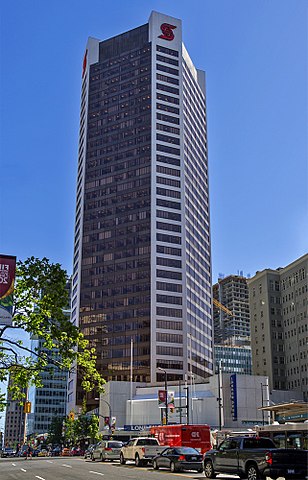
The Royal_Banck_Centre_in_Vancouver, B.C. The windows only go up to the 36th floor, but there are 3 more levels above that. It's only 475 feet in height and equivalent to 39 floors..https://en.wikipedia.org/wiki/First_Canadian_Place The windows go up to 72 stories, plus a few levels above that. The BMO tower in Toronto is about twice the height of the RBC in Vancouver. The 32 story BMO tower in Vancouver is a stump when compared to the 72 story BMO tower in TO.
A Vancouver Size stump in tall Toronto.
https://en.wikipedia.org/wiki/Exchange_Tower It's a 36 storey 146 m (479 ft) tower in the First Canadian Place complex of Toronto, Ontario, Canada. Due to the strict zoning restrictions in Vancouver, its difficult to even have an office building with 36 floors.Tuesday, March 4, 2025
Royal Bank Tower Montreal
https://en.wikipedia.org/wiki/Royal_Bank_Tower_(Montreal)
It would take until the early 1970s for stubborn Vancouver to permit a building to rival this.
Monday, February 24, 2025
Watered-down Vancouver and BC
Auckland & Seattle and especially Sydney and SF are very scenic cities. Yet, none of them has taken a watered-down approach to the extent that Vancouver has. Indeed, a mandate to thwart, restrict & limit things, has been part of the water-down Vancouver agenda for generations. This watered-down approach or agenda, has become a clever way to hold back all kinds of infrastructure in the Metro_Vancouver_Regional_District. The mentality to keep things small & backwards is all part of the horrible symbolic desire to not build for a big future.
https://en.wikipedia.org/wiki/Metro_Vancouver_Regional_District#Geography
https://en.wikipedia.org/wiki/Metro_Vancouver_Regional_District#Regional_planning Not planning to have trains as long as the Montreal Metro or the Toronto Subway, was an utterly foolish and inept decision. However, it makes sense from a congestive planning perspective.
In the meantime, a short train system can still work efficiently. Thus, there is no good reason as to why the SkyTrain can't be upgrades to the same level as the 24hr Copenhagen_Metro. However, BC is so stubborn & isolated with its approach to things, it would be quite a challenge to get to the standard of the Copenhagen_Metro, but it should be possible. https://en.wikipedia.org/wiki/Copenhagen_Metro#Route Eventually, backwards Vancouver will require proper long trains like on the Stockholm_Metro and the Montreal_Metro.
https://en.wikipedia.org/wiki/Stockholm_Metro#Rolling_stock
https://en.wikipedia.org/wiki/Montreal_Metro#Models
Not planning & building a regional network of express bus and HOV bridges, was also foolish and inept decision. However, that also makes sense from a congestive planning perspective. Indeed, bottleneck or chokepoint planning is something that commuters don't like, but BC urban planners seem to perpetuate it every year. Of course the lack of infrastructure funding is also a big problem.
Unfortunatly, with Greater Vancouver having such an anti-bridge mentality, it makes it difficult to have a proper regional Bus_Rapid_Transit network. Yet officially, the region isn't against having a proper BRT network. Funneling busses onto the same narrow bridges with cars & trucks is idiotic.
https://en.wikipedia.org/wiki/Sustainable_transport#Environmental_impact
Monday, February 10, 2025
Stubborn cold and crappy Vancouver weather
https://dailyhive.com/vancouver/vancouver-freezing-flurries-forecast-weather
Rain might be a pain, but its better than ice and snow slowing things down.
Thursday, January 23, 2025
Why doesn’t Australia simply build more cities?
A lot of the secondary cities in each state could become big in their own right.
Texas has a lot more people than Australia, yet it's a much smaller area & still has plenty of room.
https://www.sciencedirect.com/science/article/pii/S1353829222001605
https://www.infrastructureaustralia.gov.au/sites/default/files/2019-06/future-cities-paper-web.pdf
https://scenariojournal.com/article/made-in-australia
Of course one expects Melbourne and Sydney to have all the big stuff. However, from a Canadian perspective, it's amazing to see that Australia has a 12 lane crossing in Brisbane & a 10 lane crossing in Perth. Such wide bridges just don't exist in Halifax, NS & Victoria, BC.
https://en.wikipedia.org/wiki/Sir_Leo_Hielscher_Bridges 12 lanes.
https://en.wikipedia.org/wiki/Narrows_Bridge_(Perth) 10 lanes.
https://en.wikipedia.org/wiki/Narrows_Bridge_(Perth)#Railway_bridge:_2005 Seattle & Montreal would end up having their own version of a wide bridge with a train component as well. Of course, stubborn & backwards Greater Vancouver would be one of the last urban areas to ever allow such similar bridges.
It doesn't look like anyone from Canada was ever able to convince Australians to give up on bridge duplication & opt to just cram everything into 4 lanes or an inept 3+lane+bridge for two-way traffic.