Showing posts sorted by relevance for query Calgary C Train. Sort by date Show all posts

Thursday, August 20, 2015

Why is the Canada (embarrassment) Line built the way it is?

Despite its high cost, the C+Line or YVR-Line was designed to have shorter stations than the underground stations in Edmonton & Seattle. Even shorter than the ground level stations in Calgary & Portland. Considering that a Montreal Metro station is 152.5m or 500 feet in length, the absurd C Line stations are only 50m. 

A one third size train still could have been designed for proper future capacity expansion. Unfortunatly, this joke of a train was only designed to have 2 coaches & eventually 2.5 car trains, not 5 & certainly not 10. Because that's what a proper big city would do.

The light rail train bridge to Richmond wasn't designed to have any bus lanes, just 1 bike lane. No proper bus & HOV lane bridge has been built next to the narrow Knight+Street+Bridge , Oak+Street+Bridge , or Arthur+Laing+Bridge. By now, all 3 road bridges should have had 4 lane bus & HOV bridges next to them. Indeed, each bridge should have had 2 bus & 2 HOV lanes beside them by now. But why do that when everything can be crammed into just 2 lanes each way. Combine that with no breakdown lanes or wide shoulders & you have classic BC bottleneck planning. Since the C Line isn't running 24 hours, there should have been a 24 hour express bus to the airport on 2 dedicated lanes on the C Line bridge. That would have made it possible to always have an airport express bus, especially when the C Line is only running 2 car trains.

It's all such a sad joke that should be laughed at all over the world. It's also symbolic of the refusal to properly think & build big in backwards BC. Its like a whole lot of money was never efficiently or properly put into the regional infrastructure over the course of several generations. Any serious big city airport+line should be designed for significant future capacity. 


Sunday, February 12, 2023

C Train Blue Line

 https://www.youtube.com/watch?v=x2AJJ7KYs-c

https://en.wikipedia.org/wiki/Blue_Line_(Calgary)

https://en.wikipedia.org/wiki/Westbrook_station_(Calgary)

"Up until the completion of the Red Line's Fish Creek–Lacombe station, all platforms for the CTrain were originally designed to service three-car trains, although there had been enough space allotted to allow four-car trains. Beginning in 2007 construction on station platforms began to expand the entire network to allow four-car trains, with the project being completed in 2017..." https://en.wikipedia.org/wiki/Blue_Line_(Calgary)#Capacity_upgrade

https://en.wikipedia.org/wiki/Blue_Line_(Calgary)#Stations_and_route

https://en.wikipedia.org/wiki/CTrain#Rolling_stock  


https://jfdatalinks.blogspot.com/search?q=Calgary+C+Train

Thursday, October 16, 2025

Edmonton LRT and Calgary C Train

 https://jfdatalinks.blogspot.com/search?q=Edmonton+LRT While Edmonton had a good head start over Calgary, they understood even back in the 1970s to build their underground stations to be at least 125 m.

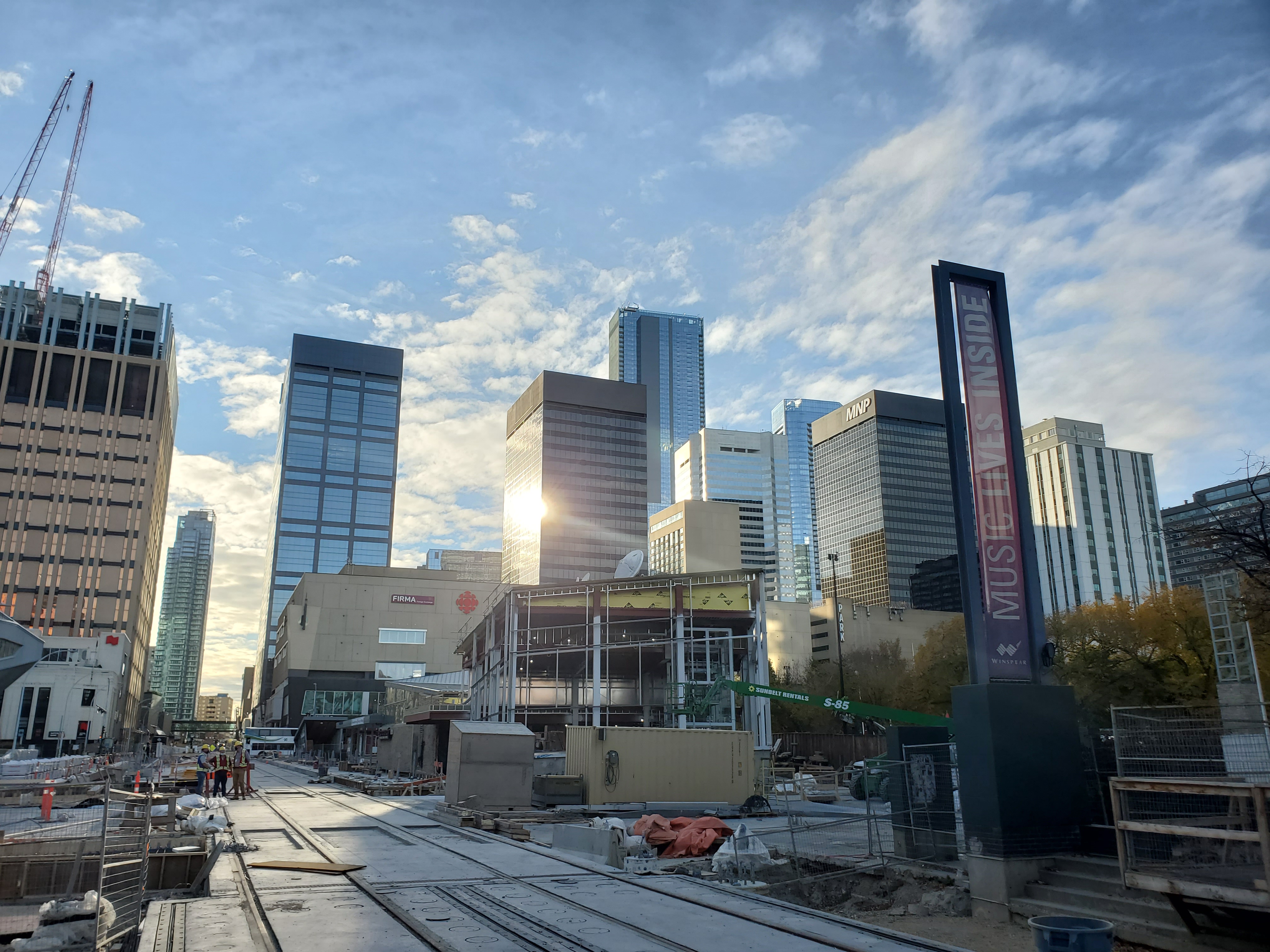
https://jfdatalinks.blogspot.com/search?q=Calgary+C+Train Fortunately, Calgary will follow the Edmonton example to have underground stations that are longer than what foolish Vancouver has. 


https://jfdatalinks.blogspot.com/search?q=LRT


Friday, January 10, 2025

Calgary’s drives, roads, streets and trails

 https://canada.constructconnect.com/joc/news/infrastructure/2025/01/strategy-funding-desperately-needed-to-tackle-calgarys-deteriorating-roads

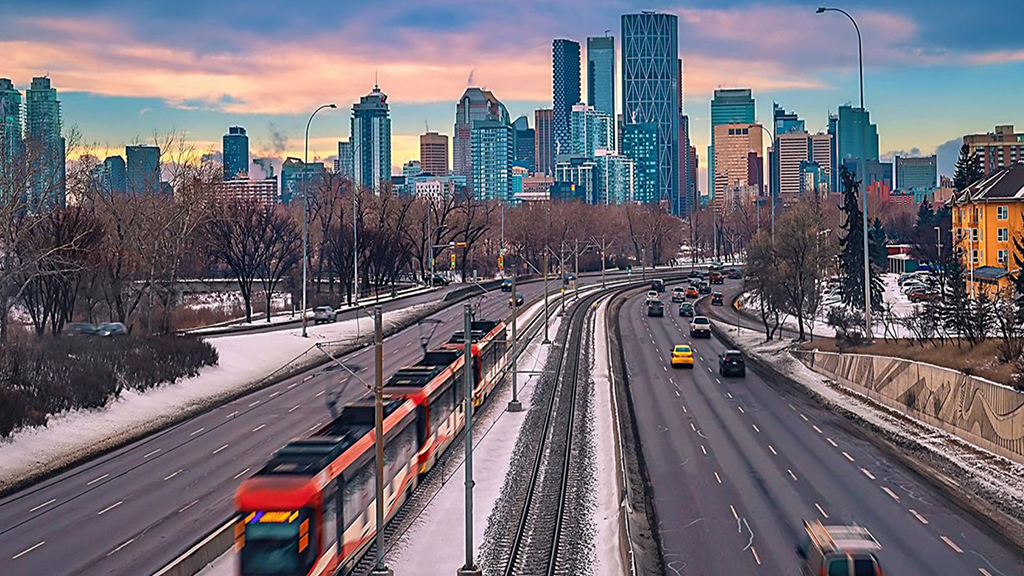
https://upload.wikimedia.org/wikipedia/commons/0/0f/Memorial-Drive1-Szmurlo.jpg , https://en.wikipedia.org/wiki/Memorial_Drive_(Calgary) , https://www.alamy.com/stock-photo-city-of-calgary-skyline-from-memorial-drive-st-georges-bridge-lrt-30350186.html , https://www.flickr.com/photos/davebloggs007/12160068335
The C-Train is essentially a modern LRT, tram-train or an interurban connection to various parts of the city.

https://www.reddit.com/r/Calgary/comments/bkevpf/memorial_drive_year_1900 Wow, one waggon road each way back then. If it were possible in the 2020s, Vancouver would like to go back to one waggon road each way.

https://cc-production-uploads-bucket.s3.amazonaws.com/uploads/2025/01/Calgary-courtesy-of-City-of-CalgaryMainWEB.png This is what Cambie Street in Vancouver could have become. Especially, since the Canada embarrassment Line was only designed to have 2.5 car trains. At least there should be an express bus line along Cambie. Eventually, there still might have to be an LRT line just south of the Cambie+Street+Bridge to Richmond. It would have been better to just build the Canada embarrassment Line to eventually handle a 5, 7 & 9 car train, not a 2.5 car joke of a train. 

Sarcastically...

At least no one from Vancouver has been able to convince Winnipeg to reduce Portage_and_Main to 4 lanes or even just 2 waggon roads in width.

https://upload.wikimedia.org/wikipedia/commons/f/f1/Portage_and_Main_as_seen_from_Portage_Ave_Eastbound.JPG Wow, 5 lanes in 1 direction is very tough to find in Vancouver. Being from Vancouver, its difficult to comprehend how so many cities around the world have such wide streets & boulavards.

https://winnipeg.citynews.ca/2023/04/25/public-insight-sought-on-future-of-winnipegs-portage-and-main This would have been such a great concept.


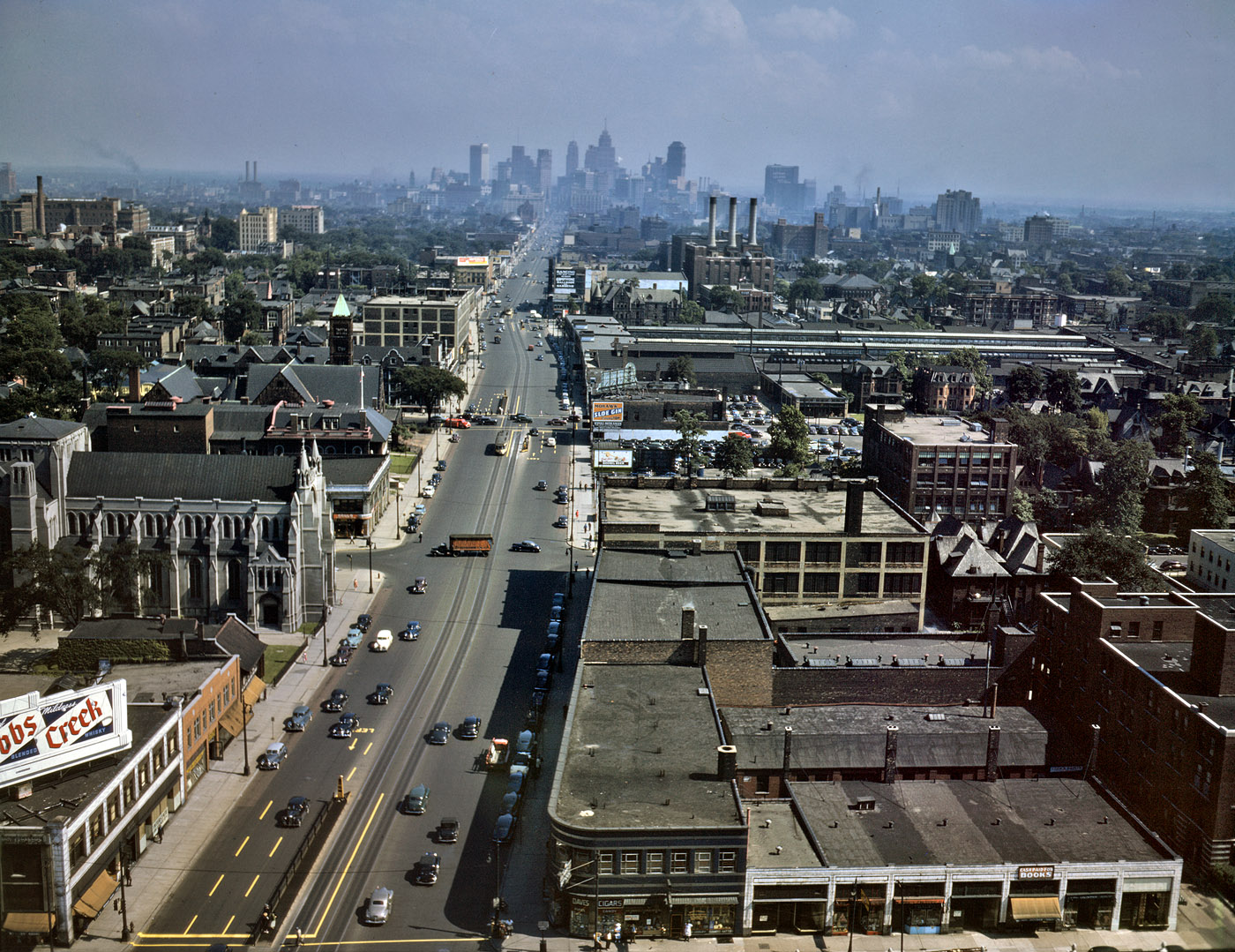
Woodward_Ave._Detroit was intended to be wide since the 1800's. It went from being a waggon road to becoming M-1_(Michigan_highway).

Market_Street_in_San_Francisco was easily 8 lanes wide, back in the day. Market_Street has wide sidewalks. https://en.wikipedia.org/wiki/Market_Street_(San_Francisco)#Traffic_changes Of course wide streets allow for the potential to be a multi-modal transportation corridor. 


https://en.wikipedia.org/wiki/Arc_de_Triomphe

https://upload.wikimedia.org/wikipedia/commons/thumb/9/99/Paris_-_Orthophotographie_-_2018_-_Place_Charles-de-Gaulle_02.jpg/480px-Paris_-_Orthophotographie_-_2018_-_Place_Charles-de-Gaulle_02.jpg 

So far, Vancouver hasn't sent a delegation to Paris advising that The Avenue des Champs-Élysées should be turned into a width of only 2 or 4 waggon roads. 

https://upload.wikimedia.org/wikipedia/commons/6/6d/Avenue_des_Champs-%C3%89lys%C3%A9es_July_24%2C_2009_N1.jpg Several wide streets around the world were done in the horse & waggon era. Thus, wide streets weren't for cars & trucks, they were part of a symbolic bustling city.

https://www.google.com/maps/place/Arc+de+Triomphe/@48.8734815,2.2946175,544m/data=!3m1!1e3!4m6!3m5!1s0x47e66fec70fb1d8f:0xd9b5676e112e643d!8m2!3d48.8737917!4d2.2950275!16zL20vMHp2Xw!5m1!1e2?entry=ttu&g_ep=EgoyMDI1MDExMC4wIKXMDSoASAFQAw%3D%3D

Tuesday, February 18, 2025

Wednesday, November 26, 2025

Calgary's Green Line LRT

 https://www.youtube.com/watch?v=hfQTjvFFMUY  

The Biggest Pain Point of Calgary's CTrain (and how to fix it for less than the cost of a subway) https://www.youtube.com/watch?v=ObWf2SwO-OY

The Evolution and Review of the Calgary C-Train https://www.youtube.com/watch?v=th44KLfAwJA

Sunday, June 21, 2026

How the Seattle to Vancouver area could become a megaregion

 https://www.youtube.com/watch?v=POcg0oFvVf8 

The larger Portland, Seattle and the Vancouver, BC (V-BC) region has a lot of growth potential. However, Seattle size buildings haven't been allowed in Portland and in Vancouver, BC. Nothing like a 12 lane Ship Canal Bridge has been allowed in Portland and Vancouver. While Oregon and backwater BC haven't been able to thwart the largest city in Washington State, Seattle might eventually become more of a magnet in pulling more people into the area between Portland and V-BC. 

Right now, Vancouver, WA (V-WA) still has a wider bridge than V-BC. Most of the V-BC bridges are so damn narrow that its not possible to have an efficient regional express bus network. As long as there is a refusal to build proper BRT bridges as part of a regional system, it remains a sad joke. 

The Skytrain (LRT) was built with shorter stations than what the underground stations in Seattle and Edmonton are at. Whenever possible, the Skytrain stations are shorter than the C Train stations in Calgary, DART stations in Dallas and even the Max in Portland. 

The biggest mistake of the Skytrain was to not build all of the stations with a future level clearance to eventually have Montreal Metro size stations of 500 feet or 152.5 m. Instead, the first 2 lines only have 80 m stations and the line to YVR (The Canada embarrassment Line) is only 50 m. Backwater BC logic is that a 5 car Skytrain could run twice as frequent as a 9 car Montreal Metro train. Someday, a 2.5 car YVR-Canada Line train could also run much more frequently than a 9 car Montreal Metro train. 

There is just one key problem with that type of BC logic. While initially constructing short stations and having short trains can save money, its not proper BIG city size infrastructure. In the long run, it costs more to try to lengthen stations for longer BIG city type trains. 

Wednesday, January 14, 2026

SkyTrain's Canada Line service disruption

(service disruption ends after 14 hours) https://dailyhive.com/vancouver/skytrain-canada-line-service-disruptions-january-14-2026 

For a rapid transit line that opened in 2009, on the surface, it sure wasn't designed to be an efficient high capacity line for the future. It's still just a 2 car joke of a train. Fortunately, most real cities around the world planned for not only 6 car trains, but even 8-10 car trains. 

Unfortunatly, Vancouver has been hit very hard with a multigenerational agenda of continually imposed small scale infrastructure. Vancouver has water on 3 sides, as its on a peninsula. Since the powers that be couldn't build a Boundary+Road moat or trench, the next best thing was to symbolically show the reluctance to build proper big city size infrastructure. This stunted approach to things is about symbolically holding the scale of the city back for as long as possible. 

Despite backwards Vancouver not being able to apply a castle-moat-and-drawbridge control system, the next best thing was to symbolically keep things smaller than what normal or proper big cities allow. 

Here are some of the best examples of holding the size of things back. The 3 lane joke that is the Lions+Gate+Bridge has never had a rapid transit rail tunnel and no express bus tunnel next to it. Especially, no 6 lane highway tunnel. It's a classic BC bottleneck-chokepoint, by design.

From a 3 lane joke of a bridge to a two car Canada+Line joke of a train. It met the symbolic requirement to be shorter than the LRT in Edmonton, the C Train in Calgary and the trains in Seattle and Portland. 

The+Post+building+complex could have been Vancouver's first 50 story office tower, it's not even 25 floors. It would be impressive if it were in Victoria, Kelowna, Kamloops or Prince George. That's the unfortunate thing about Vancouver, so much is done to only be impressive to small cities or towns.  

https://jfdatalinks.blogspot.com/search?q=The+small+Westin+Bayshore+Hotel+in+Vancouver

Things have been kept so small in Vancouver throughout its history, that any big city stuff might seem overwhelming. There has been an unofficial KEEP THEM OUT mentality, but since the city cant have checkpoints, building things small symbolically demonstrates the perpetual reluctance to not allow a big city in backwater BC. 

Since Vancouver can't control Burnaby and can't stop Surrey from eventually becoming the biggest city in BC, they are able to build things on a larger scale than Vancouver.


https://jfdatalinks.blogspot.com/search?q=YVR-Canada+Line

Saturday, December 14, 2024

Saturday, April 6, 2024

The SkyTrain - Canada Line in Richmond to close early for seven weeks due to construction

 https://dailyhive.com/vancouver/skytrain-canada-line-capstan-station-spring-2024-service

An entire section of the line has to close early, due to a new station being added. If or whenever all the stations are lengthened, the entire system might have to close early. 

Fortunately, all the underground stations in Toronto & Montreal & even Edmonton, were built to be much longer, in the first place. Fortunately, any new underground C-Train stations in Calgary won't be Vancouverized. They will be as long as any underground LRT station in Edmonton.

The biggest mistake for the Skytrain was not building 152 m or 500 ft long stations. Then as longer trains are required, the longer stations would already exist.

The 3rd line or the Canada+Line, is such a fine example of BC congestive planning. Why bother to have long big city trains? https://dailyhive.com/vancouver/canada-line-skytrain

https://dailyhive.com/vancouver/short-platforms-and-trains-is-the-skytrain-canada-line-under-built-and-nearing-capacity

Aparenty, short trains help to match the many narrow bridges in BC. Of course narrow bridges make it tougher to have bus & HOV lanes. 

"The five busiest stations have platforms 50 metres (160 ft) long, while the rest of the stations have 40-metre (130 ft) platforms that can be easily extended to 50 metres." https://en.wikipedia.org/wiki/Canada_Line#Stations

https://dailyhive.com/vancouver/skytrain-canada-line-rebuilding

https://dailyhive.com/vancouver/north-shore-burrard-innlet-rapid-transit-brt-translink

Greater_Vancouver has been stunted or thwarted for several decades, in so many ways. 


https://jfdatalinks.blogspot.com/search?q=SkyTrain-Canada+Line

https://jfdatalinks.blogspot.com/search?q=C+Line

Sunday, May 3, 2026

Just mostly more stumps or some real Towers in Vancouver?

 https://cityhallwatch.wordpress.com/2026/05/02/opinion-the-yiyby-critique-bilsker 

https://www.skyscrapercenter.com/building/the-stack/35667 Only 38 floors.

https://en.wikipedia.org/wiki/Royal_Centre_(Vancouver) Just 37 stories. 

https://en.wikipedia.org/wiki/Columbia_Center Seattle's tallest has 76 stories. 

https://en.wikipedia.org/wiki/Ship_Canal_Bridge 12 lanes consisting of three 4 lane sections.

Mostly short buildings, short trains and narrow bridges are all part of the imposed symbolism to keep Vancouver small and backwards. 

While Seattle had its first 50 story office tower in 1969 and Calgary in 1984, stubborn Vancouver still won't permit any office tower to have a 40th floor. 

A 30-35 story office tower would be impressive if it was in Victoria, Kelowna, Kamloops and Prince George. However, what's impressive in backwards Vancouver & backwater BC isn't impressive in Alberta, Ontario, Quebec, Washington State, Victoria State, NSW, Queensland & WA... 

Stumpy buildings, short trains and narrow bridges makes for the Vancouver trifecta of B$ city planning.

https://www.google.com/maps/place/Fort+McMurray,+AB 10 lanes. Only the TCH bridge between Surrey and Coquitlam in BC has been allowed to have as many lanes as this. Some people still wish that everything could have remained funneled into just 2 or 3 lanes each way.

https://www.google.com/maps/place/Quesnell+Bridge 8 lanes in Edmonton. 

https://www.google.com/maps/place/Hwy.+2A+Red+Deer+City+Centre+Bridge 6 lanes.

https://www.google.com/maps/place/Calgary,+AB 10 lanes.

https://www.google.com/maps/place/Calgary,+AB 8 lanes.

https://www.google.com/maps/place/Lethbridge,+AB It has 6 lanes. Being from backwards Vancouver, its amazing that this 6 lane bridge wasn't funneled into just 2 lanes each way. That's what happened with the Knight_Street_Bridge.

https://www.google.com/maps/place/Hwy.+2A+Red+Deer+City+Centre+Bridge As a 5 lane TCH crossing, it only has 1 less lane than the 6 lane Iron Bridge in congested, backwards Vancouver. Since Alberta isn't under anything like the imposed BC restrictions, this crossing will likely be eventually upgraded to have 6 lanes, plus 2 wide emergency lanes & 2 wide shoulders that could provide 4 lanes each way, some day. 

https://www.google.com/maps/place/Winnipeg,+MB A TCH bridge with 9 lanes, because no one from narrow-minded Vancouver was able to get them to narrow this crossing. The TCH Iron Bridge in Vancouver just has 6 lanes. No bus and LRT bridge has ever been built next to it, so far.

https://www.google.com/maps/place/Winnipeg,+MB A 6 lane crossing. 

As of 2026, congested Vancouver only allows 2 bridges to have 6 lanes. A total of 5 lanes were removed from 3 Vancouver bridges. Had Vancouver built a series of proper bus and bike bridges, no lanes would have been removed. 

Despite NW trying to be one of the smallest cities in BC, Surrey is set to become the biggest city in BC. Fortunately, small NW & backwards Vancouver can't stop that from happening. However, narrowminded NW was able to force a narrower new bridge to Surrey. 

This bridge-replacement is one of the best examples of BC bottleneck-chokepoint planning today.

McBride_Blvd. and Royal_Ave_in_New_Westminster are mostly 4 lane corridors.

King_George_Boulevard and Scott_Road both are at least 4 lanes wide. One might think that the new bridge should have had 10 lanes, or at least 8 lanes, because two 4 lane boulevards, a 4 lane avenue and a 4 lane road, are all funneled into a bridge that opened with only 2 lanes each way. The old bridge that it replaced was also a 4 lane crossing. A congestive approach to transportation planning is the name of the game in backwards B.C.

https://upload.wikimedia.org/wikipedia/commons/thumb/d/d7/Stalewasem_Bridge_%282026-03%29.jpg/960px-Stalewasem_Bridge_%282026-03%29.jpg 
At the very least, this new 4 lane bridge should have had enough room for 2 wide emergency lanes, 2 wide shoulders and especially, 2 bus lanes. There should have been a provision for a lower deck for LRT, bus and truck lanes, given that this is supposed to be a seaport region.

The narrowmindedness planning by Greater Vancouver to still have mostly narrow crossings, has made it very difficult to implement a proper regional express bus network, let alone BRT. 

The first 2 Skytrain lines only have station lengths that can barely accommodate the new 5 car trains. The YVR Line or the C Line, has stations than can only accommodate a 2.5 car train, some day. Given that the Skytrain network is a multibillion dollar transit system, all of the stations should have been designed to gradually accommodate 8-10 car trains, but that's what a proper big city would do. 

https://vancouver.citynews.ca/2026/05/02/expo-86-40-years-later-the-memories-live-on 

Four decades later and Greater Vancouver remains so far behind with the scale of its infrastructure.

Tuesday, January 28, 2025

SF, Melbourne and Toronto...

 https://googlemapsmania.blogspot.com/2018/08/the-streetcars-of-san-francisco.html

Streetcars and trams were gotten rid of in Vancouver & Victoria by the mid 1950s. Vancouver will likely be one of the last major cities to bring them back. It's such a backwards mentality to totally block out a key mode of transit.

Its cool how the CTrain runs down the middle of Memorial-Drive. Just like the C_Line and_Interstate_105 in LA go well together. Unfortunatly, backwards Vancouver isn't allowed to function like a proper big city like SF, Melbourne and Toronto...

https://upload.wikimedia.org/wikipedia/commons/c/c9/Inbound_N_Judah_train_boarding_at_48th_Avenue%2C_September_2019.JPG Almost like a tram-train in Melbourn, but it's in SF.

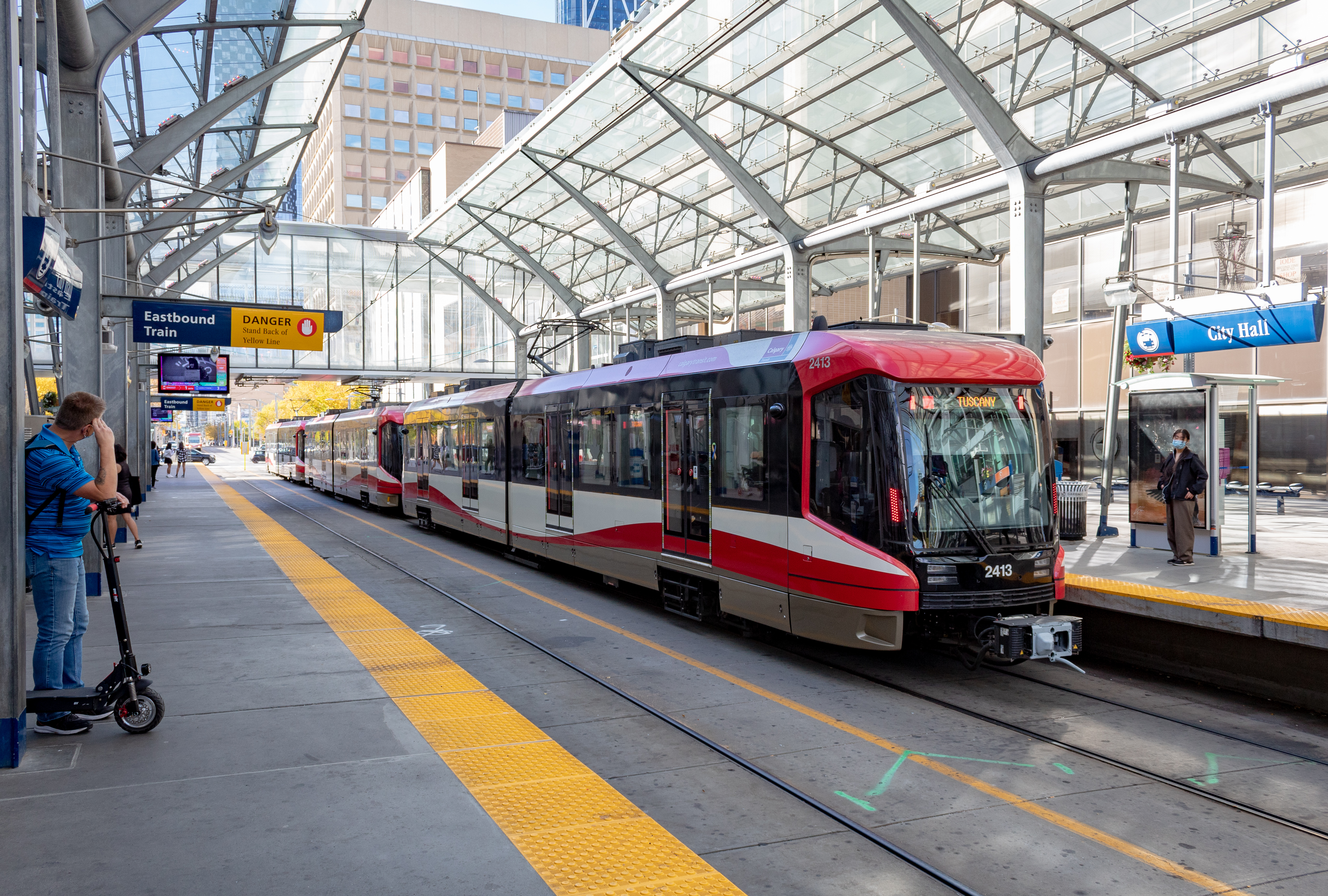
https://upload.wikimedia.org/wikipedia/commons/c/c9/S200_CTrain_leaving_City_Hall_Station.jpg

https://en.wikipedia.org/wiki/CTrain Calgary

https://en.wikipedia.org/wiki/C_Line_(Los_Angeles_Metro)

https://en.wikipedia.org/wiki/A_Line_(Los_Angeles_Metro)

https://en.wikipedia.org/wiki/E_Line_(Los_Angeles_Metro)

https://en.wikipedia.org/wiki/K_Line_(Los_Angeles_Metro)

https://en.wikipedia.org/wiki/G:link GC

https://en.wikipedia.org/wiki/Inner_West_Light_Rail Sydney

https://en.wikipedia.org/wiki/Premetro_(Buenos_Aires)

https://en.wikipedia.org/wiki/Streetcars_in_New_Orleans

Its always amazing to see what other cities are allowed to do, simply because they aren't in BC.