Showing posts sorted by relevance for query Fraser Street. Sort by date Show all posts

Thursday, April 3, 2025

From the old and inadequate Fraser Street Bridge to the inadequate KSB

Somewhere in between 1950 & 1960, the old Fraser_Street_Bridge (FSB) should have been replaced with a new 4 lane bridge, with 2 very wide sidewalks for bikes & a future provision for 2 bus lanes. Vancouver needs a street and transit connection with No. 5 Rd. in Richmond. Unfortunatly, backwards Vancouver has always been a city without a proper big city transportation vision.

https://evelazarus.com/the-fraser-street-swing-span-bridge

https://en.wikipedia.org/wiki/Fraser_Street_Bridge_(1894)#Provincial_government_headache

https://www.richmond-news.com/local-news/photos-and-video-was-this-the-unluckiest-bridge-between-richmond-and-vancouver-4475444

https://search.nbca.unbc.ca/index.php/fraser-st-road-bridge-in-vancouver-bc-1 In the late 1800s, just being able to have a bridge roadway width of 2 wagon-roads in backwater BC was amazing. Then, decades & even several generations later, any BC bridge that could provide 2 wagon-roads each way was even more amazing. 

https://structurae.net/en/structures/fraser-avenue-street-bridge

As usual, Vancouver & BC lost & messed up an opportunity to have 2 great new bridges.

https://structurae.net/en/structures/knight-street-bridge (KSB)

https://evelazarus.com/the-knight-street-bridge-part-2

Once again, the lack of a proper big city vision resulted in the inadequate design for the 4 lane Knight+Street+Bridge (KSB). However, it makes sense from a bottleneck congestive planing mentality. Despite Vancouver being part of what is suppose to be a major port region and in need of proper transportation corridors, the Knight_Street_Bridge is a classic chokepoint.

https://www.richmond-news.com/local-news/work-on-knight-street-bridge-in-richmond-below-deck-as-well-7319230

Just because the Knight_Street_Bridge started out as a 4 lane joke, there immediately should have been 2 wide shoulders, which could have eventually become 2 extra bus lanes. Plus, there should have been a future provision to add 2 HOV lanes. Two wide sidewalks & 2 wide bike lanes. However, that would go against the congestive planning mentality of Vancouver & BC.

Indeed, by deliberately planning the KSB to be a 4 lane chokepoint and not building a new Fraser+Street+Bridge, there clearly was no interest to have proper dedicated bus lanes in that part of the Greater Vancouver Region. With so many inadequate, narrow bridges, there should be bus & HOV lane bridges to help improve regional transportation.

A regional express bus system or a rapid bus network requires dedicated lanes. The LGB should have 2 bus lanes & 2 HOV lanes in a tunnel near it. The Iron Bridge, OSB & KSB, all should have a 4 lane bus & HOV bridge next to them. That would allow for a rapid bus lane each way & a HOV lane each way.


https://jfdatalinks.blogspot.com/search?q=old+and+new+narrow+bridges

Tuesday, September 17, 2024

North end of Granville Street Bridge

 https://canada.constructconnect.com/joc/news/projects/2024/09/north-end-of-granville-bridge-roadway-reopens

The 1950s Granville+Street+Bridge (GSB) should have at least had a provision for a lower deck.

https://dailyhive.com/vancouver/granville-bridge-north-end-reopens-vancouver-connector

A lower deck would have been great for extra bus lanes and potential LRT, but this is backwards BC.

https://vancouversun.com/news/traffic-alert-north-end-granville-street-bridge-reopen-monday

Since no bus & bike bridge was even built right next to it, the bridge is being scaled down to 6 lanes, from 8. That might not have been necessary if there was an Oak Street Bridge (OSB) over F. Creek, not just over the Fraser River. An OSB over F. Creek could have been a bus & bike bridge with wide sidewalks as well.

https://vancouver.ca/news-calendar/north-end-granville-bridge-reopens-transit-into-downtown-sep-2024.aspx

The 8 lane GSB becomes a revamped 6 lane bridge with 2 bike lanes & 2 sidewalks.

https://vancouversun.com/news/local-news/vancouver-granville-street-bridge-construction-detours-closures-timeline

If the bridge eventually has 2 express bus lanes, there will only be 4 general traffic lanes.

https://granvilleisland.com/news/transportation-updates-on-granville-bridge-city-of-vancouver

Unfortunately, the 8 lane Granville_Street_Bridge_(1954) wasn't designed to have a lower level. That wasn't the case with the 12 lane Ship+Canal+Bridge in Seattle. Fortunately, the Vancouver bridge was never connected to a city freeway, where as the Seattle bridge was. Vancouver should have opted for a better major street & bridge arrangement. 

There was never any follow-up to have a new and improved Fraser+Street+Bridge (FSB). A modern FSB could be a nice bus and bike bridge with wide sidewalks & a potential for streetcars. Unfortunatly, backwards Vancouver, BC seems uninterested in building something like the Tilikum+Crossing in Portland.


https://jfdatalinks.blogspot.com/search?q=Oak+Street+and+Granville+Street

Sunday, April 20, 2025

The Oak Street-Granville Street Corridor

 https://en.wikipedia.org/wiki/Oak_Street_(Vancouver) , https://www.youtube.com/watch?v=kXbUb7TMj6k

The Oak+Street-Granville+Street+Corridor are both 6 lanes wide for most of their lengths. Thus, this is mostly a 12 lane street corridor and is much less disruptive than if a 10-12 lane freeway had been pushed through in the 1950s or 60s.

https://en.wikipedia.org/wiki/Granville_Street , https://storeys.com/vancouver-granville-street-entertainment-district-history-renewal-planning-program

The yellow line is set for 3 lanes each way. However, if it was moved over 1 or 2 lanes, then there could be 4 or 5 main lanes one way & 1 or 2 lanes the other way. 

The Oak+Street+Bridge+and+Granville+Street+Bridge are still part of an incomplete corridor.

An improved 8 lane Granville+Street+Bridge with double-width sidewalks could have still worked, if there had also been a wide bike & foot bridge built next to it. Then, a roughly new paralel bridge next to the 4 lane Oak+Street+Bridge could have allowed for an 8 lane crossing there. Four lanes of Granville_Street southbound over the Fraser River and 4 lanes of Oak_Street northbound.

Unfortunatly 2 lanes were removed from the Burrard+Street+Bridge (BSB), 2 lanes removed from the Granville+Street+Bridge (GSB) and 1 lane from the Cambie+Street+Bridge (CSB). That didn't have to happen if a bike bridge was built next to the BSB and the GSB. While the east side of the Cambie-Street-Bridge has a nice, wide sidewalk, there wasn't enough foresight to also have a wide sidewalk on its west side. However, that narrow sidewalk could still be built out to be nice & wide so that the CSB can be restored to 6 lanes. 

When a city & metropolitan region mostly has narrow bridges, removing lanes or not having enough is utterly foolish! Case in point... https://www.pattullobridgereplacement.ca Instead of 2 bus & 2 HOV lanes, everything will be initially funneled into just 2 lanes each way. https://www.pattullobridgereplacement.ca/about/projectoverview Two nice sidewalks & 2 nice bike lanes, but no emergency lanes or bus lanes, right from the start. Its another classic BC bottleneck in the making. Since the SkyTrain doesn't run on a 24hr basis, 24hr bus lanes are essential, but that would go against the congestive planning methodology that is backwards BC.


https://jfdatalinks.blogspot.com/search?q=Oak+Street+and+Granville+Street

Friday, February 7, 2025

Oak Street Bridge and Granville Street Bridge

While Oak+Street continues over the Fraser River as a bridge, there is no Oak+Street+Bridge (OSB) over F. Creek. The city foolishly never even allowed for future clearance for a bus & bike bridge over F. Creek. From the Fraser River to F. Creek, Oak Street should have been mostly for northbout travel.  

Right now, the Oak+Street-Granville+Street+Corridor has 12 lanes. That's because they are both 6 lane streets. Simply by moving the centerline over one lane, they each can provide 4 lanes one way & 2 lanes the other way. A reconfiguration of 4+2 lanes or even 5+1 lanes.


https://jfdatalinks.blogspot.com/search?q=Granville+Street+Bridge

https://jfdatalinks.blogspot.com/search?q=Oak+Street+Bridge

https://jfdatalinks.blogspot.com/search?q=Oak+Street+Bridge+and+Granville+Street+Bridge

Saturday, April 19, 2025

The narrow bridges of Vancouver, Canada

https://montecristomagazine.com/community/forgotten-bridges-vancouver

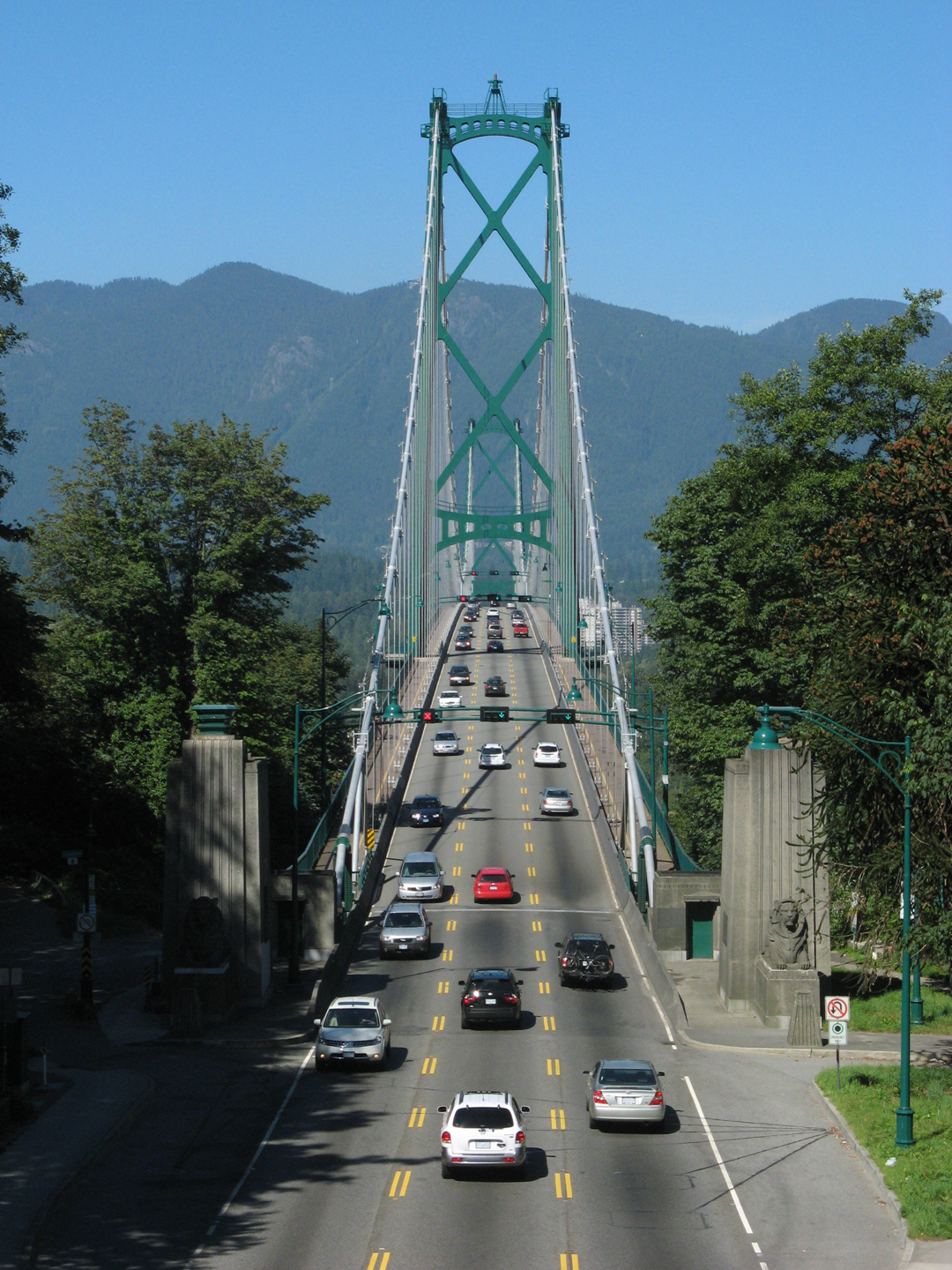
The LGB just wasn't designed with any future capacity in mind. 

History of the Lions Gate Bridge https://www.youtube.com/watch?v=JHqi7Kijedw 

https://en.wikipedia.org/wiki/Lions_Gate_Bridge#History

https://upload.wikimedia.org/wikipedia/commons/7/7e/Lions_Gate.jpg 

The inadequate 3 lane LGB is currently the most narrow road bridge in backwards & stubborn Vancouver. It's been in that category since the removal of the 2 lane Fraser Street Bridge in the 1970s. There was a refusal to twin the absurdly narrow LGB between the 1950s & 1970s. By the 1980s there should have been a subway tunnel and an 8 lane tunnel. Then two of the lanes could have been for buses. Georgia+Street is 7 lanes wide as it gets closer to Stanley Park. Thus, the main part of a tunnel through the park could have provided 3 general lanes each way & a bus lane each way. Instead, the 7 lanes of the westernmost part of Georgia Street are funneled into a 3 lane causeway & a 3 lane bridge. The LGB would be fantastic as just a bike & foot crossing, with train, bus & road tunnels well beneath & beside it.    

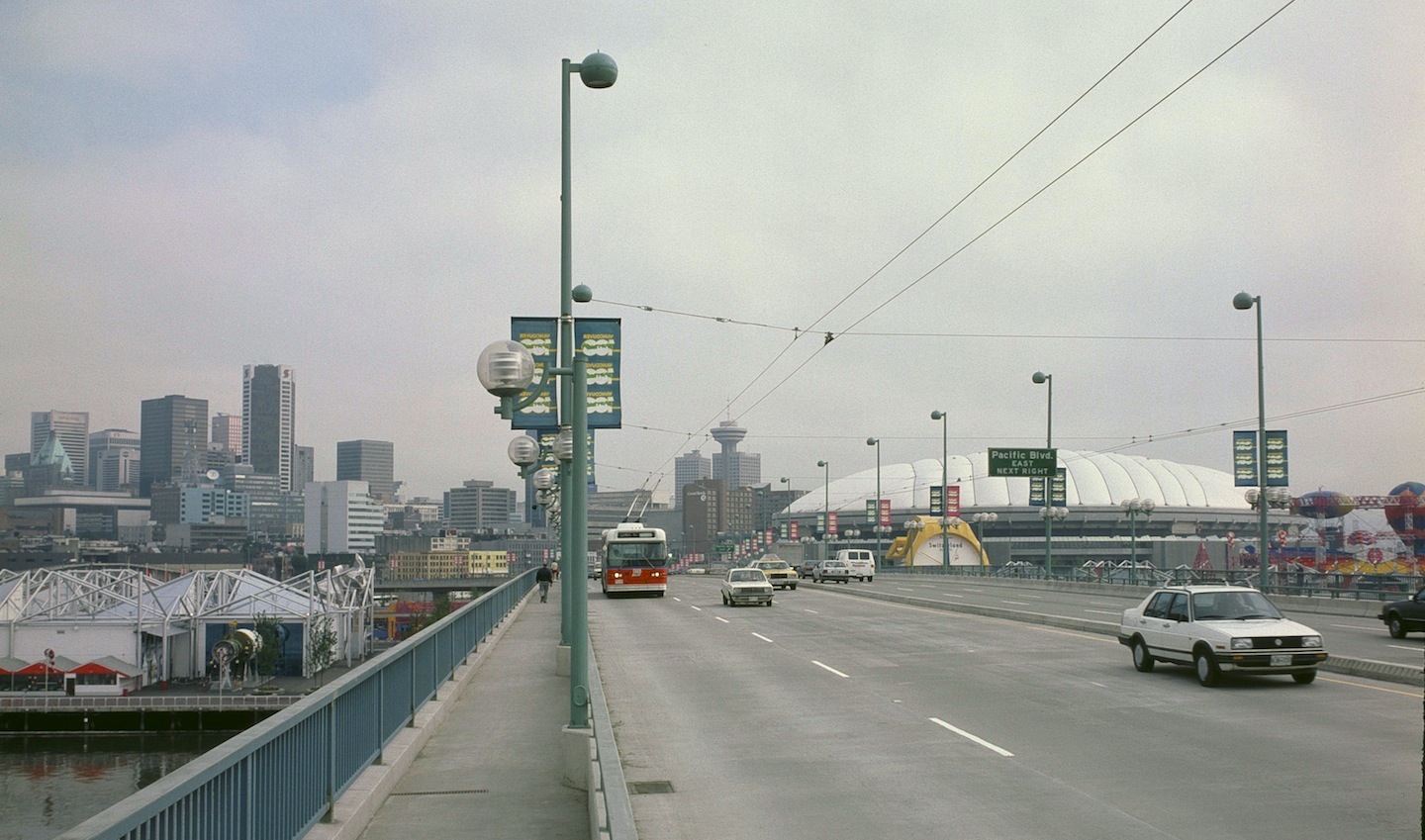
The Burrard_Bridge, BB or  BSB opened with 6 lanes, but now it only has 4 lanes. There are 2 bike lanes & 2 sidewalks. Had a parallel bike-bridge been built, the BB could have still had 6 lanes. While the BB has a lower level provision for streetcars or tram-trains, Vancouver did its damndest to phase out streetcars well before the 1960s. 

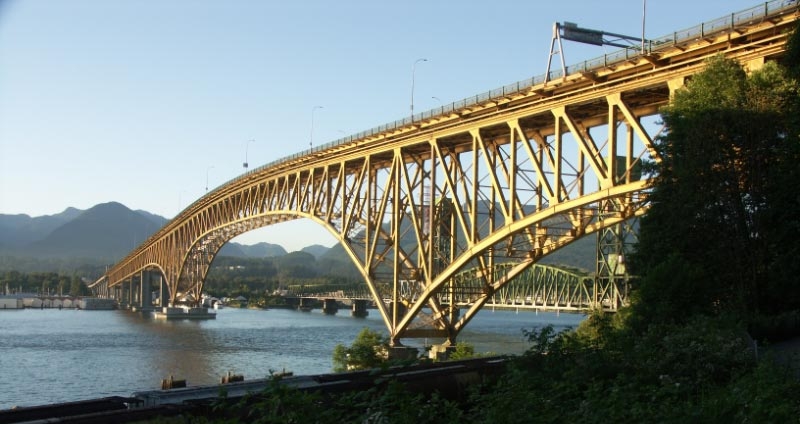
The Ironworkers_Memorial_Bridge has 6 lanes, but should also have had 2 wide shoulders & 2 very wide sidewalks. Unfortunatly, there was no provision for a lower deck, as is also the case with all of the other Vancouver  bridges. https://en.wikipedia.org/wiki/Ironworkers_Memorial_Second_Narrows_Crossing

Any replacement of the inadequate Ironworkers+Memorial+Bridge should be on the scale of what Perth, Seattle and Montreal have done.

https://en.wikipedia.org/wiki/Granville_Street_Bridge#Third_bridge_(1954)

https://www.youtube.com/watch?app=desktop&v=vPSdF0jRTC4 The Granville-Bridge or GSB is the widest bridge in the city limits. It opened with 8 lanes, but is being transformed into a 6 lane bridge with 2 bike lanes & 2 sidewalks. Had there been a paralel bike & foot bride, the GSB could have still been 8 lanes wide. Then there could have been 2 exclusive bus lanes.

https://vancouver.ca/streets-transportation/granville-bridge-connector.aspx

The Oak Street Bridge should have been 8 lanes wide, with 2 wide sidewalks.

The Knight+Street+Bridge should have been 8 lanes with 2 wide sidewalks. Instead, its a 4 lane chokepoint.

The Arthur+Laing+Bridge should have been at least 6 lanes with 2 proper bike lanes & 2 sidewalks.

If the Cambie_Street_Bridge had 2 very wide sidewalks, then its likely that it would still have 6 lanes instead of 5. https://en.wikipedia.org/wiki/Cambie_Bridge#The_present_bridge

Unfortunatly, bottleneck or chokepoint planning is part of the Vancouver & BC mentality.

Of course BC & the Metro+Vancouver Region just hasn't put enough funds and effort towards proper big-city planning & infrastructure development. 

If Perth+and+Seattle had to conform to the extremely restrictive Vancouver approach to things, those cities would be in a perpetual state of chaos. Fortunately, nothing like the BC Mind Virus has ever reached WA.


https://jfdatalinks.blogspot.com/search?q=Oak+Street+and+Granville+Street

Wednesday, November 19, 2025

A Richmond encampment under the Oak Street bridge

 https://vancouver.citynews.ca/2025/11/19/growing-calls-to-clear-richmond-encampment 

Of course any neighborhood will be concerned when a bunch of people are living under a bridge and wandering around.

Living under a bridge is hardly affordable housing. There needs to be proper secure housing with plenty of security and staff to help people who are stuck living outside. 

That bridge is so narrow and inadequate. 

SW-Vancouver needs a proper transportation upgrade. Granville Street should be extended across the Fraser River on a parallel bridge to the Oak Street Bridge (OSB). Then, the 2 bridges could provide 4 general lanes each way. Plus, another 4-lane parallel bridge to accommodate 2 BRT lanes and 2 HOV lanes. 

Or, a totally built a new version of the Oak+St+Bridge that could provide 6 lanes northbound. Then, a Granville Street extension could provide 6 southbound lanes onto a new OSB. Four general lanes each way, plus a rapid bus lane each way & 1 HOV lane each way. 

For the most part, the Oak+Street-Granville+Street+Corridor has 12 lanes. A yellow paint strip designates 3 lanes each way. Instead, Oak could have 6 northbound lanes and Granville could have 6 southbound lanes. The 5th & 6th lanes could be for the Oak & Granville BRT lane & HOV lane on complete one way streets.

Unfortunately, the OSB remains as a 4 lane traffic bottleneck or chokepoint. 

The 2009 Canada (embarrassment) Line is still only using 2 car trains in 2025. A proper big city YVR-Canada Line should have been started with 5 car trains. Unfortunately, this joke of a train is only designed to ultimately run a 2.5 car train, someday. 

This stunted infrastructure approach is so absurd. Transportation planning in the most populated parts of BC is so inadequate, but its all part of backwards BC symbolism. The symbolism is all about showing a thwarted or watered down a city can be. Narrow bridges and short trains are some of the best ways to increase congestion and inefficiency in backwater BC.

Friday, November 1, 2024

Vancouver's narrow bridges over the Fraser River

 https://dailyhive.com/vancouver/vancouver-knight-street-video-concern

The Knight_Street_Bridge (KSB) was deliberately designed to not have a couple of emergency lanes. No truck lanes and especially no bus and HOV lanes. No proper bike lanes, just 2 narrow sidewalks. 

https://en.wikipedia.org/wiki/Knight_Street_Bridge#Infrastructure

Thus, the Knight_Street_Bridge is one of the best examples of BC bottleneck planning.

https://images.drivebc.ca/bchighwaycam/pub/html/www/695.html

The Knight_Street_Bridge is so narrow and inept, that a new HOV, bus and bike bridge should be built right next to it. The Knight+Street+Bridge is only 4 lanes wide in the middle, so a parallel 4 lane bridge would greatly improve things. One lane on and one lane off between the twin bridge crossing and Marine-Drive. Then the main 3 lanes each way onto the 6 lanes of Knight+Street up to Kingsway. 


The incredibly narrow Fraser_Street_Bridge (FSB) was torn down and should have been rebuilt or replaced by the 1970s, especially by the 1990s. The city and the Provincial_government didn't seem to understand that a new bridge there would be great as a HOV, bus and bike bridge. A couple of wide emergency lanes would have made it a lot easier for emergency vehicles to go between Vancouver & Richmond.


Despite Oak Street being 6 lanes wide, the BC bottleneck mentality wanted to force everything into a 4 lane Oak_Street_Bridge (OSB). Even if there was no concept to have bus lanes in the late 1950s, the OSB should have had 6 lanes, plus 2 wide emergency lanes and 2 wide sidewalks.

https://en.wikipedia.org/wiki/Oak_Street_Bridge#Infrastructure

By now, there should have been a HOV, bus & bike bridge built next to the narrow & inept Oak_Street_Bridge


The Arthur-Laing-Bridge (ALB) is only 2 lanes each way. https://en.wikipedia.org/wiki/Arthur_Laing_Bridge


The multigenerational inept Vancouver & BC planning agenda is all about creating more congestion. 

Fortunately, the 8 lane Champlain+Bridge also has 2 passenger train tracks. This was possible, because Montreal and Quebec don't have anything like the Vancouver & BC mentality to hinder them.

Why have a provision for 10 car SkyTrains, when a 2-4 car joke of a train can enable more congestion? That's the backward BC way.

It's amazing that the Montreal+Metro was designed to have 9 car trains, even back in the 1960s. Montreal and Quebec in general, just don't have anything like a backwater BC mentally to contend with. Quebec isn't just able to do more because it has more people than BC, Quebec has been able to accomplish more because it isn't BC.

https://vancouver.ca/streets-transportation/bridges-and-structures.aspx

Despite being a newer crossing, the Arthur+Laing+Bridge was only designed to have 4 lanes, just like the older Oak+Street+Bridge. Both bridges should have been built with very wide shoulders, so that they eventually could have provided 6 lanes. Plus, both bridges should have had very wide sidewalks. However, that goes against the chokepoint planning mentality.

Tuesday, April 29, 2025

Why is Metro Vancouver Creating a New Downtown?

https://www.youtube.com/watch?v=ybMhTlj-l5s 

Unlike Seattle and Calgary, Vancouver has no office towers over 50 stories. There aren't even any 40 story office towers in BC. Vancouver is firmly against permitting any office tower from having a 40th floor. However, Vancouver cant stop Burnaby and especially Surrey from having an office tower over 40 stories. While a 50 story office tower anywhere in backwater BC still seems unlikely, Burnaby and Surrey will likely be the first 2 cities in BC to have at least a 45 story office tower. 

 https://dailyhive.com/vancouver/50-storey-tower-community-hub-edmonds-burnaby 

So far, stubborn and strict Vancouver has only permitted 2 buildings to be taller than the tallest in Bellevue,_Washington

Vancouver has only permitted one building to be taller than the tallest in Vaughan, Ontario.

https://www.skyscrapercenter.com/building/cg-tower/32139 

Since Burnaby and Surrey aren't under the backwards and thwarting restrictions that Vancouver has, Burnaby and eventually Surrey, will have taller buildings than stumpy Vancouver. Indeed, Burnaby already has some buildings taller than Downtown_Bellevue. Surrey will eventually have some buildings taller than the Vaughan_Metropolitan_Centre.          

Vancouver will continue to limit the height of its buildings for as long as possible. Vancouver won't allow a bus and train tunnel near the lion Bridge, let alone a 6 lane highway tunnel. Despite the Iron Bridge needing a parallel bus bridge and a Skytrain bridge, progress remains at a snail's pace. There still seems to be no interest in building a bus bridge next to the Oak and Knight Bridges. A city on the moon and Mars might happen before stubborn Vancouver ever builds a new Fraser Street bus & bike bridge. Not only should there be a Boundary Road Bridge to Richmond, but at least a Boundary bus & bike bridge to the North Vancouver.  

Its like backwards BC keeps hoping that by symbolically refusing to build up proper big city size transportation infrastructure, people will stay away. However, its only because no one has been able to effectively challenge the bottleneck-chokepoint mentality, that not much has been done.

Wednesday, December 3, 2025

Westham Island Bridge, B.C....

https://en.wikipedia.org/wiki/Westham_Island_Bridge So, it would take until the mid 2020s for this wagon road era bridge to be seriously considered for upgrading.

 https://dailyhive.com/vancouver/westham-island-bridge-new-replacement-crossing-planning-transink-delta 

https://deltasheritage.com/buildings/wib.html Whenever a new bridge is built, it should have 2 wide lanes, 2 bike lanes & 2 sidewalks. 

https://lifesincrediblejourney.com/explore-historic-westham-island/

https://seabc.ca/rehabilitation-of-westham-island-bridge-and-alexandra-bridge/ 


The Marpole_Bridge_(1889) was another wagon road era crossing that took a very long time to be upgraded. 

https://en.wikipedia.org/wiki/Marpole_Bridge_(1889)#Congestion_and_replacement 


The 1970s Arthur_Laing_Bridge (ALB) should have had at least 6 lanes, plus 2 wide shoulders. 

https://en.wikipedia.org/wiki/Arthur_Laing_Bridge#Since_opening There also should have been 2 sidewalks & 2 bike lanes. By now, there should have been a bus+and+bike+bridge built next to it.


Several decades after the removal of the (wagon road) Fraser_Street_Bridge_(1894), no replacement has ever been built. 

https://en.wikipedia.org/wiki/Fraser_Street_Bridge_(1894)#Provincial_government_headache  

At the very least, it should have been replaced with a bus+and+bike+bridge in the 1970s.

https://www.richmond-news.com/local-news/photos-and-video-was-this-the-unluckiest-bridge-between-richmond-and-vancouver-4475444 However by now, there should have been a new 4 lane bridge with 2 emergency lanes, 2 bike lanes & 2 sidewalks. 

https://evelazarus.com/the-fraser-street-swing-span-bridge


The joke that is the Knight_Street_Bridge (KSB) was deliberately designed to be another quintessential BC bottleneck-chokepoint. The bridge should have opened with 6 lanes & 2 wide shoulders or emergency lanes. Pulse, 2 wide sidewalks & 2 bike lanes. 

https://en.wikipedia.org/wiki/Knight_Street_Bridge#Maintenance,_upgrades_and_incidents Instead, the middle of the bridge is just 2 lanes each way, with 2 narrow sidewalks & no bike separate bike lanes. The KSB should have had a parallel bus+and+bike+bridge built next to it decades ago.  


https://jfdatalinks.blogspot.com/search?q=Westham+Island

Wednesday, July 24, 2024

A Fraser River boat tour takes you under five existing and future Metro Vancouver bridges

 https://dailyhive.com/vancouver/paddlewheeler-riverboat-tours-mv-native-new-westminster-fraser-river-cruises Unfortunatly, most bridges in BC are built to conform to a narrow-minded standard.

Had there been a proper urban vision between NW & Surrey 50-100 years ago, there would have been a lot more bridges by now. It seems that NW just wanted to be a provincial backwater. Eventually, Surrey kept growing & now its planning to become the largest city in BC. Back in the day, just like little NW, Surrey never saw it self as ever becoming a major river city like Portland, Calgary, Edmonton or Winnipeg. 

https://commons.wikimedia.org/wiki/Category:New_Westminster 

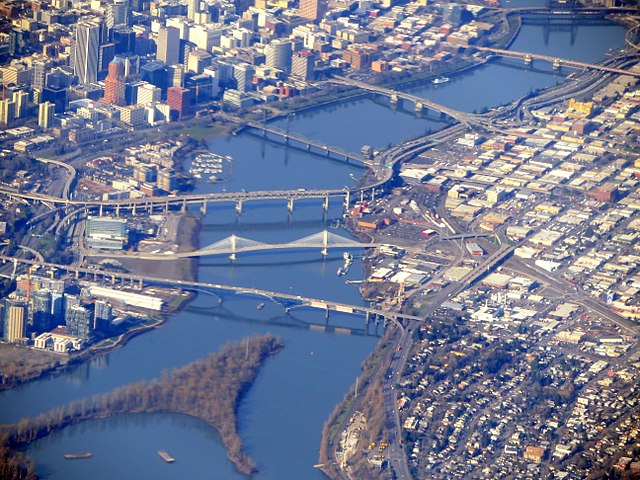
By the late 1800s and especially by 1910, Portland really started to see itself as a major river city. Just look at how many more bridges there are than what's in between NW & Surrey. 

https://en.wikipedia.org/wiki/Downtown_Portland,_Oregon#Bridges

https://en.wikipedia.org/wiki/List_of_crossings_of_the_Willamette_River Most of these bridges aren't freeway or expressway crossings. They are just for general street access.

There should have been something like the Tilikum_Crossing between NW and Surrey by now. There also should have been something like a Tilikum_Crossing between Vancouver and Richmond. 

Friday, July 11, 2025

How Bike Lanes have affected Vancouver's urban infrastructure

https://www.youtube.com/watch?v=LvkifuIjq9I The BSB was a 6 lane crossing that even had a provision for a lower deck intended for streetcars. Eventually, 2 lanes were removed & the lower deck was never completed. However, Vancouver was unable to prevent Seattle & Portland from reviving some of their streetcar routes.

The problem isn't bike lanes, it's the lack of interest to build a proper regional network of bus & bike bridges. Thus, if a proper bike bridge was built next to the Burrard+Street+Bridge, then 2 of its 6 lanes could have been for buses or at least HOV lanes. The lower deck could have still been for streetcars or tram-trains going between Vancouver & Richmond. The irony of backwards Vancouver is that it was one of the first cities to get rid of its streetcars & will likely be one of the last to bring them back.

The Fraser River Tunnel Project https://www.youtube.com/watch?v=NWhHJWKa6CQ Unfortunatly, this will still be a chokepoint or congested crossing.

Of course the new Richmond-Delta+Tunnel wasn't designed to be part of a rail link between the airport and the ferry terminal. There should have been 2 HOV lanes, as well as 2 bus lanes, but that would be a big-city 10 lane crossing. Instead, just an 8 lane tunnel with no train component. Eventually, a train and HOV bridge or tunnel will have to be built next to it. 

At least the first SkyTrain line can now have 5 car trains. However, the 2 car joke of a train still exists between Vancouver & Coquitlam, as well as between Vancouver & Richmond. The Montreal Metro can have 9 car trains and BART in SF can have 10 car trains. Such things are possible because they don't have a congestive BC panning mentality.


https://jfdatalinks.blogspot.com/search?q=Bike+Lanes