https://www.urbanyvr.com/hotel-and-condo-catholic-charities-yaletown/
https://www.shapeyourcity.ca/118-150-robson-st
https://www.heritagesitefinder.ca/location/150-robson-st-vancouver-bc
https://www.getaway.co.za/destinations/world/is-rio-de-janeiro-more-beautiful-than-cape-town
https://en.wikipedia.org/wiki/Rio_de_Janeiro
https://www.reddit.com/r/OldPhotosInRealLife/comments/11we8ql/rio_de_janeiro_brazil_1930_and_now
https://www.mywanderlust.pl/not-so-great-rio
https://www.rome2rio.com/s/Cape-Town/Rio-de-Janeiro
https://www.clipperroundtheworld.com/partnerships/insight/4-similarities-between-rio-and-cape-town

https://www.timeout.com/news/its-official-time-out-has-crowned-the-worlds-best-city-in-2025-011525
https://en.wikipedia.org/wiki/Cape_Town
"Portside is a 139-metre-tall (456 ft) building in Cape Town, South Africa. Completed in 2014, it is the city's tallest building[3] and, at the time of completion, was Cape Town's first significant skyscraper developed in the central business district (CBD) in 15 years." https://en.wikipedia.org/wiki/Portside_Tower 32 floors.
https://www.timeout.com/cape-town
https://versus.com/en/cape-town-vs-rio-de-janeiro
https://www.rome2rio.com/s/Cape-Town/Rio-de-Janeiro
Rio+de+Janeiro is a much larger city than CT and just as scenic.
https://www.clipperroundtheworld.com/partnerships/insight/4-similarities-between-rio-and-cape-town
https://dailyhive.com/vancouver/cambie-street-bridge-vancouver-seismic-upgrade-plan
https://www.flickr.com/photos/vancouver-archives/5613443337/in/photostream There could have been 5 bridges crossing F Creek, but the backwater BC mentality kicked in.
https://www.flickr.com/photos/vancouver-archives/5613432237/in/photostream/
So while Vancouver gave up on building that many bridges, Portland really built a fine series of bridges.
https://jfdatalinks.blogspot.com/search?q=Cambie+Street+Bridge
Officially, there isn't suppose to be a backwards BC agenda. However, the Skybridge between NW & Surrey and the North_Arm_Bridge between Vancouver & Richmond, were designed too narrow. Unfortunatly, both of these SkyTrain+bridges weren't designed to have 2 bus lanes, or even HOV lanes. Key people knew that the SkyTrain wasn't going to be running 24hrs a day. Thus, there would have to be late-night busses when the trains shut down for the night. The 4 lane Pattullo+Bridge and the 4 lane Oak+Street+Bridge don't have enough space for 2 bus lanes, not even 1, let alone any HOV lanes. Therefore, if there is any traffic disruption on such narrow bridges, a bus will be blocked.
Both the Skybridge and The North Arm (Train) Bridge should have at least had a provision for 2 bike lanes & 2 sidewalks. But BC continually lacks having a proper transportation infrastructure vision.
It's amazing that there wasn't enough interested people to make sure that the Skybridge between NW & Surrey would have at least 1 bike lane & 1 sidewalk. It has neither, because the public was expected to just take their bikes on a single sidewalk that is narrower than some people's bathtubs on the old, inept Pattullo Bridge.
https://www.alltrails.com/trail/canada/british-columbia/north-arm-bridge-bikeway There should have been a sidewalk & a bikepath on both sides of this bridge. Plus, 2 bus lanes & 2 HOV lanes, since the SkyTrain doesn't run 24 hours a day.
https://www.canadianconsultingengineer.com/features/north-arm-bridge There just doesn't seem to be a proper level of input from the public to make sure that both rapid transit bridges & others, are designed for future capacity.
https://jfdatalinks.blogspot.com/search?q=Skybridge
https://jfdatalinks.blogspot.com/search?q=The+North+Arm+Bridge
The British_Columbia_carbon_tax doesn't seem to have greatly improved the transportation infrastructure for Vancouver, as it's the largest city and urban area in BC. It's very strange that the Greater Vancouver Metropolitan Region is still so far behind with its infrastructure, when compared to several other urban areas around the world.
https://www.taxpayer.com/newsroom/b.c.-carbon-tax-not-reducing-emissions-as-promised
The first 2 Skytrain lines only have stations that are barely half the length of a Montreal Metro train. Indeed, the Montreal Metro & the Toronto Subway built most of their stations to be 152.5m or 500 ft long, not the 80m & 50m joke that is Skytrain. All of the Skytrain lines should have been designed to eventually accomodate 8-10 car trains. Despite Vancouver & backward BC not taking a big city planning approach, there is a potential remedy, in the form of Selective_door_operation technology. This would allow for the potential of 7 car trains with only the middle 5 cars accessing the short station platforms.
https://en.wikipedia.org/wiki/British_Columbia_carbon_tax#Effects
The Canada embarrassment Line was only designed to ultimately just have 2.5 car trains, not 5 & certainly not 8-10 car trains. The first significant challenge would be to adapt the extremely short stations to accommodate 3 car trains. Then again with Selective_door_operation, the middle 3 cars of a 5 car train could access the station.
Most bridges in BC are so narrow that it's almost impossible to have a proper regional express bus network.
https://www2.gov.bc.ca/gov/content/environment/climate-change/clean-economy/carbon-tax
It's as if somehow not enough funds went towards The+Pattullo+Bridge+replacement. Despite having some good bike lanes & sidewalks on both sides of the bridge, when it opens it will be too narrow to accomodate 2 bus & HOV lanes. Thus, cars, trucks & busses will all have to squeeze into just 2 lanes each way. There didn't even seem to be any proper communication & planning to ensure that there would be 2 emergency lanes. So good luck in trying to get ambulances across what is supposed to be a major regional crossing. There is no provision for a lower deck, which could allow for rapid rail transit & extra truck & bus lanes. Thus, this new PB bridge is one of the best examples of the symbolic resistance in BC to build proper infrastructure that can accommodate future demand.
https://www2.gov.bc.ca/gov/content/taxes/sales-taxes/motor-fuel-carbon-tax
The 3 lane Lions+Gate+Bridge just might be the best example of congestive planning in modern human civilization. At least the Benjamin_Franklin_Bridge in Philadelphia has 7 lanes & 2 train tracks. The Sydney_Harbour_Bridge has 8 lanes & 2 train tracks. Homer_M._Hadley_Memorial_Bridge in Seattle is part of an 8 lane crossing with 2 LRT tracks. The 10 lane Narrows_Bridge_(Perth) also has 2 train tracks. The San_Francisco-Oakland_Bay_Bridge has 10 lanes with 10 car BART trains running under the SF Bay.
https://thenarwhal.ca/bc-carbon-tax-drama/
https://www.pembina.org/pub/bc-carbon-tax
https://cleanenergycanada.org/wp-content/uploads/2014/12/Carbon-Tax-Fact-Sheet.pdf
https://dailyhive.com/vancouver/new-steveston-interchange-highway-99-richmond-partial-opening
https://www.highway99tunnel.ca/project-overview/
https://www.highway99tunnel.ca/current-work/
https://www.highway99tunnel.ca/project-overview-frt/
https://www.rocktoroad.com/monumental-project/
https://richmondsentinel.ca/article-detail/28157/history-of-the-massey-tunnel It's sad & pathetic that when the old tunnel was designed & then opened, there was no provision to have 3 lanes each way. Thus, despite being a seaport region, cars & trucks had to be funneled into just 2 lanes each way. It would have been too forward thinking to have the tunnel augmented by a couple of parallel bridges in the area.
Now once again, there still won't be another bridge or 2 in the area. A North and a South Boundary+Road Bridge could provide a vital link over the inlet and over the river. Then a Nelson Road Bridge to Delta and the Deltaport.
https://en.wikipedia.org/wiki/Honolulu
https://en.wikipedia.org/wiki/First_Hawaiian_Center At a height of 429 feet (131 m) with 30 floors, is the tallest office tower in the state. However, several other Hawaiian buildings have more floors, but aren't taller in height, except for The_Central_Ala_Moana tower.
https://en.wikipedia.org/wiki/List_of_tallest_buildings_in_Honolulu
Honolulu vs Barcelona vs Rio de Janeiro... https://www.youtube.com/watch?v=36Y_bun9STk
https://www.city-data.com/forum/world/1833866-rio-de-janeiro-vs-miami-vs-2.html
Cape+Town is much bigger than Honolulu and Rio+de+Janeiro is more vast than either of them.
https://en.wikipedia.org/wiki/Queensland
https://en.wikipedia.org/wiki/Queensland#Transport
Though it might be hard to believe, World_Expo_88 in Brisbane was much more of a catalyst than Expo_86 was for Vancouver. That's because unlike Brisbane, Vancouver imposed & doubled down on various infrastructure restrictions.
https://en.wikipedia.org/wiki/World_Expo_88#History
https://en.wikipedia.org/wiki/Expo_86#Legacy
https://en.wikipedia.org/wiki/British_Columbia#Transportation
https://en.wikipedia.org/wiki/Queensland#Cities
https://en.wikipedia.org/wiki/British_Columbia#Cities
After the Expo 88, Brisbane would go onto allowing significantly taller buildings, wider roads and especially longer trains than what backwards Vancouver is still stuck with. Of course Queensland would have larger port infrastructure than backwater BC as well.
Perhaps Australia is able to get things done on a bigger & better scale than Canada, because of the warmer year-round weather. Unfortunately, backwards Vancouver & backwater BC seem to be hindered by something like a Mind Virus.
https://countryeconomy.com/countries/compare/australia/canada
https://www.fraserinstitute.org/commentary/heres-why-australians-make-more-money-canadians Fortunatly, Canada hasn't been able to convince Australia, NZ, UK, USA & France to remove blue from their national flag. Japan is surrounded by water & Switzerland has lakes & rivers, but even a speck of blue isn't allowed on the national flag.
https://www.rba.gov.au/publications/bulletin/2009/jun/pdf/bu-0609-4.pdf
https://www150.statcan.gc.ca/n1/pub/11f0027m/11f0027m2003018-eng.pdf
https://jfdatalinks.blogspot.com/search?q=Brisbane
https://jfdatalinks.blogspot.com/search?q=Queensland
https://jfdatalinks.blogspot.com/search?q=Brisbane+Airport+Railway+Line
https://dailyhive.com/vancouver/concord-metrotown-phase-two-mall-redevelopment-construction-progress
Wow, a 47 story office tower in the BC part of Canada. Toronto's first office building over 55 stories was the TD tower in 1967. The 52 story B of A opened in SF in 1969. Seattle's first 50 story office tower was in 1969. Calgary's first office building over 50 stories was in 1984.
https://www.biv.com/news/real-estate/fourteen-storey-non-market-rental-tower-47-storey-8251174
https://dailyhive.com/vancouver/costco-history-metro-vancouver-first-warehouse
It's amazing that Vancouver eventually allowed a Costco within its city limits. Probably it was because of its proximity to a Skytrain station.
https://dailyhive.com/vancouver/burnaby-metrotown-72-storey-tower
Buildings over 70 floors in Melbourne, Sydney, Brisbane, Seattle & Toronto aren't earth-shattering like it is in backwater BC.
https://dailyhive.com/vancouver/los-angeles-wildfire-size-compared-vancouver
https://vancouver.ca/news-calendar/weather.aspx
https://dailyhive.com/vancouver/vancouver-seattle-quality-of-life
https://dailyhive.com/vancouver/seattle-vancouver-cyclists-biking-party
LA & SD are so much further south that the cold & crappy rainy weather just isn't an issue. Some places are too hot or dry while other placeless are too cold & damp.
Roberts Bank Terminal 2 project in Delta was opposed by groups who said expansion would harm orca, salmon https://www.cbc.ca/news/canada/british-columbia/federal-court-roberts-bank-terminal-2-1.7430431
https://thenarwhal.ca/roberts-bank-terminal-2-explainer/
https://www.delta-optimist.com/highlights/court-upholds-approval-of-bc-port-expansion-despite-risks-to-whales-10069295 It remains to be seen if slow moving B.C. & Canada will eventually allow the Port_of_Vancouver to be on the same grand scale of what Brisbane and Singapore have allowed.
https://en.wikipedia.org/wiki/Roberts_Bank_Superport
Whether, its Delta, Surrey, Richmond, NW, Burnaby, it's all part of the Greater Vancouver_Port_facilities.
If the expansion went sideways, but not further west into Georgia Straight, the area is still limited. However, if the expansion were to go a little further west into Georgia Straight, then their might be more of an argument against it.
The Port_of_Brisbane wouldn't be as big & mighty if it was bound by anything similar to the way how Canada builds its seaports.
https://en.wikipedia.org/wiki/Port_of_Brisbane#History
https://www.portbris.com.au , https://www.portbris.com.au/major-projects/fpe , https://www.portbris.com.au/major-projects/dedicated-rail-connectivity , https://www.portbris.com.au/portbris-2060
https://www.portsaustralia.com.au/members/port-of-brisbane
https://www.qic.com/Investment-Capabilities/Infrastructure/Global-Portfolio/Port-of-Brisbane
The Port_of_Singapore is so far away from the way of how Canada builds its ports.
https://en.wikipedia.org/wiki/Port_of_Singapore#Since_2022
https://www.mpa.gov.sg/port-marine-ops/operations/port-infrastructure/terminals
Brisbane and Singapore are on the same ocean as the BC part of Canada. Unfortunatly, Canada doesn't seem to want to have the same port scale & presence as those 2 Pacific ports. Being from backwards Vancouver, it's hard to fathom what Brisbane and Singapore have been able to do. Then again, they don't have to contend with the backwater BC mentality and its imposed restrictions.
Since Asia is the most populated part of the planet and BC is on the edge of the Pacific Rim, there should be plans to eventually have a BC port on the scale of the Port_of_Rotterdam. Or, the Port_of_Los_Angeles and the Port_of_Long_Beach, but with better coordinated efficiency.
https://www.burnabynow.com/economy-law-politics/david-eby-bc-prepared-for-economic-defence-against-american-threats-10060694 Canada needs to expand its trading with more countries.
Despite its overall area, Canada is far from housing even 1% of the world's population. Australia even has less people, but somehow they don't seem to have their own version of KEEP CANADA SMALL.
Being from the provincial backwater that is BC, its always amazing to see how Queensland can flourish, because it doesn't have the mutigenerational hindrances that backwards BC imposes.
https://jfdatalinks.blogspot.com/search?q=B.C.
https://jfdatalinks.blogspot.com/search?q=Brisbane & Queensland
https://jfdatalinks.blogspot.com/search?q=Brisbane+Airport+Railway+Line
https://dailyhive.com/vancouver/kingsgate-mall-beedie-vancouver-school-board-appeal-decision
Kingsgate_Mall is situated in what should be the location of a very large development, but nothing seems to be on the horizon in backwater Vancouver.
https://www.cbc.ca/news/canada/british-columbia/vancouver-school-board-kingsgate-mall-1.7429088
Despite the Knight_Street_Bridge opening in the 1970s for a seaport city, it wasn't designed to have 2 bus lanes, 2 HOV lanes & 2 truck lanes or even 2 emergency lanes. It was hardly designed with any future corridor-capacity in mind. Such narrow sidewalks that there should have been a bus & bike bridge built next to it decades ago.
https://trafficcams.vancouver.ca/knightMarineBridge.htm
https://images.drivebc.ca/bchighwaycam/pub/html/www/695.html
https://trafficcams.vancouver.ca/knight.htm
https://jfdatalinks.blogspot.com/search?q=Knight+Street+Bridge
https://images.drivebc.ca/bchighwaycam/pub/html/www/70.html
No emergency or breakdown lanes & especially no bus lanes. Indeed, the 4 lane bottleneck should have opened with 6 lanes & 2 wide shoulders & 2 wide sidewalks.
https://vancouver.ca/streets-transportation/oak-street-sewer-separation-upgrades.aspx
Granville Street & Oak Street are both 6 lanes wide, but the Oak_Street_Bridge is only 4 lanes wide. Unfortunatly, back in the 1950s, the planners never allowed for 2 bus lanes, 2 truck lanes or even 2 wide emergency lanes. Thus, everything is crammed into only 2 lanes each way. Fortunately, most cities don't take such a congestive planning approach.
The Arthur_Laing_Bridge should have been 6 lanes wide to easily accomodate 2 bus lanes. There should have also been 2 very wide sidewalks. Of course that never happened. By now, there should have been at least a bus & bike bridge built next to it.
The Canada Line wasn't designed to have 10 car trains, not even 5 car trains. Its maximum design only allows for a 2.5 car train, someday. All the 50m underground stations should have had a level clearance of 50m at each end, so that eventually the stations could be about as long as the 152.5m Montreal Metro stations. Its another fine example of backwards Vancouver planning & backwater BC planning.
https://jfdatalinks.blogspot.com/search?q=Arthur+Laing+Bridge
https://vancouver.ca/streets-transportation/granville-bridge-structural-work.aspx
One might think that the 1950s Granville_Street_Bridge (GSB) was built with a lot of future capacity in mind.
https://vancouver.ca/streets-transportation/granville-bridge-connector.aspx
At least the bridge started out with 8 lanes, but narrow sidewalks. In order to put in 2 good sidewalks & 2 bike lanes, 2 traffic lanes had to be removed. At least with 6 lanes, the GS Bridge can still eventually have 2 bus lanes. However, had the original sidewalks been tripled in width, the bridge could have still had 8 lanes. 6 general lanes & 2 bus lanes.
https://granvilleisland.com/news/transportation-updates-on-granville-bridge-city-of-vancouver
Unfortunatly, the Granville+Street+Bridge wasn't designed to have a lower deck for future streetcars or tram-trains, because it didn't seem necessary back in the 1950s. Of course Vancouver & the region never built a series of wide freeways & expressways, so retaining the streetcars & interurban trains would have been a good idea.
Fortunately, the backward Vancouver mentality wasn't able to convince Melbourne to give up on its trams. Imagine if Toronto, Boston, Philadelphia, New Orléans & especially SF gave up on having their streetcars.
Now Vancouver stands to be one of the last major cities & urban areas to bring back the streetcars or tram-trains in the form of modern LRT vehicles.
Express bus lanes or rapid bus right of ways can be very good, but a LRV is also a very good transit mode that's in-between a subway or an urban metro train line.
https://jfdatalinks.blogspot.com/search?q=Granville+Street+Bridge
https://vancouver.ca/streets-transportation/cambie-street-bridge-upgrades.aspx
https://en.wikipedia.org/wiki/Cambie_Bridge#The_present_bridge
Such utter foolishness to not have wide sidewalks on both sides to accommodate bike lanes. Then the bridge wouldn't have been reduced from 6 to 5 lanes.
https://jfdatalinks.blogspot.com/search?q=Cambie+Street+Bridge
https://vancouver.ca/streets-transportation/grandview-viaduct-structural-rehabilitation.aspx
https://cityhallwatch.wordpress.com/tag/grandview-viaduct If a bridge can't or won't be widened for bike lanes, then a new bike-bridge could or should be built.
https://grandviewheritagegroup.ca/2022/07/01/the-viaduct-that-saved-grandview-1938/
https://www.cbc.ca/news/canada/british-columbia/grandview-viaduct-closes-for-repairs-1.5707945 Unfortunatly, back in the day, there didn't seem to be a good enough reason to have very wide sidewalks. By the 2020s, the city should have built a bike-bridge parallel to it. Or, have doubled the width of the sidewalks by building out at least another meter on each side.
https://cityhallwatch.wordpress.com/2020/07/31/grandview-viaduct-active-transportation/
If done properly, adding bike lanes & especially bike-bridges doesn't mean that traffic lanes have to be removed from the mostly already narrow bridges in Greater Vancouver.
https://en.wikipedia.org/wiki/Erasmusbrug
It carries 2 tramway tracks, 4 traffic lanes, 2 cycle tracks & 2 sidewalks. It's such a nice wide bridge.
https://en.wikipedia.org/wiki/Erasmusbrug#Design
https://en.wikipedia.org/wiki/Erasmusbrug#Gallery
https://structurae.net/en/structures/erasmus-bridge
The Tilikum+Crossing is an equally well designed bridge. Unfortunatly, such good multimodal bridges don't seem to be allowed in BC.
If only the Cambie+Bridge and The+North+Arm+Bridge could have been built to a similar standard...
Unfortunatly, Vancouver & BC seems to be afraid to build bridges of a similar quality to the Erasmus Bridge.
https://jfdatalinks.blogspot.com/search?q=Cambie+Street+Bridge
The Lions+Gate+Bridge has been the quintessential, multigenerational symbol of backwards Vancouver planning. While it has a couple of nice bike lanes & sidewalks, the one deck bridge is too narrow for an efficient express bus & train crossing. This is a crossing area that should be on a grand scale like The Sydney_Harbour_Bridge and Harbour_Tunnel. However, the Vancouver version would just focus on the tunnel portion.
https://viewpointvancouver.ca/2017/09/28/twinning-the-lions-gate-bridge/
https://viewpointvancouver.ca/2013/10/04/1939-traffic-on-and-above-the-lions-gate-bridge/
By now, there should have been a 6 lane highway tunnel, plus 2 dedicated express bus lanes and at least a double track train tunnel. Then the LG Bridge could remain as a very nice bike & foot crossing.
Unlike Vancouver, Sydney, SF, Seattle and Montreal don't use water as an excuse to hold back their cities scale of transportation infrastructure.
A few freezing nights during each winter month is still pretty mild when compared to the rest of Canada. SW BC is usually the only part of Canada that can avoid weeks of horrible 24hr freezing days that most of the country has to endure. Thus, over the years, more & more people want to move to this part of Canada.
However, it seems that some people over the course of several decades really wanted to establish antigrowth symbolism in backwards BC. Indeed, there seems to have been a multigenerational agenda to keep people out of BC, or at least slow down the influx of people. Canada it self is no where from containing even just 1% of the world's population.
The Lions+Gate+Bridge is so narrow that there should be bus & train tunnels to relieve it.
With so many narrow bridges in BC, its as if some multigenerational power-structure didn't want to allow space for a proper regional network of express bus lanes on wider bridges. A fine example is the new Pattullo+Bridge between NW & Surrey. A bridge so narrow that there isn't enough room for 2 express bus lanes & 2 emergency lanes, let alone 2 truck lanes.
Instead of Vancouver building an abundance of bike-bridges, lanes were removed from the existing bridges. It was almost like NW wanted to have its own symbolic version. But instead of taking 2 lanes away like on the Burrard Bridge or the Granville Bridge, the lanes on the new Pattullo+Bridge just weren't built in the first place. Thus, cars, trucks & buses will still be funneled into only 2 lanes each way.
The very narrow NW-Surrey Skybridge wasn't designed to have 2 bus lanes & 2 bike lanes & sidewalks. The same mistakes or omissions were made with the North_Arm_Bridge, but at least there is one shared bike and foot path on the narrow North-Arm-Bridge. Perhaps some day another path could be added on the east side of the bridge.
Worst of all, most of the Skytrain lines were built with only half-length stations of 80m. The Canadian embarsement Line was designed to only have 50m stations when the Montreal Metro has 152.5m long stations. Despite a provision for the new Pattullo+Bridge to eventually provide 3 lanes each way, it wasn't designed for a future lower deck. That means no provision for another Skytrain crossing or even a future LRT component.
This is all part of a congestive planning mentality.
Some highschool kids from a woodwork class could have built some stairs to reach up to the walkway years ago. Especially, some BCIT steel fabrication & welding students. It's not that the principles of physics are different in this part of Canada, it's just difficult to get some basic things done in backwards BC at times.
https://www.got99problems.org/blog/aurora-bridge
Most of SR99 through Seattle isn't a freeway, but by Vancouver, BC standards, it might as well be.
https://en.wikipedia.org/wiki/Aurora_Bridge
https://cdn.geekwire.com/wp-content/uploads/2024/09/seattletraffic-768x572.jpg
https://www.weberthompson.com/project/aurora-bridge-swales-project/
https://www.built.fnf.com/built-podcast/seattle-aurora-bridge
https://en.wikipedia.org/wiki/Washington_State_Route_99
https://www.cbc.ca/news/canada/british-columbia/vancouver-school-board-kingsgate-mall-1.7429088#
Not 60, no 40, not even a 20 story stump has been built there.
https://vancouversun.com/news/local-news/developer-beedie-wins-lease-dispute-kingsgate-mall
A mixed use commercial tower with reasonable rental units could be built there.
If the upper half was condos and the lower half rental units, plus a few lower commercial levels, the place would be a success, even for the owners. Unfortunatly, things move very slowly in Vancouver & BC in general.
https://dailyhive.com/vancouver/false-creek-ferries-aquabus-vancouver
The concept of having False_Creek_Ferries was a good idea right from the start.
https://granvilleisland.com/directory/false-creek-ferries
https://granvilleislandferries.bc.ca/
https://en.wikipedia.org/wiki/False_Creek_Ferries#History
https://en.wikipedia.org/wiki/The_Aquabus
https://en.wikipedia.org/wiki/English_Bay_Launch
https://en.wikipedia.org/wiki/Granville_Island#Transportation
Greater Vancouver needs a lot of redundancy or overlapping transportation options.
The SeaBus should be at least every 10 minutes. https://en.wikipedia.org/wiki/SeaBus#Terminals
There should also be a ferry from Deep+Cove to Downtown_Vancouver and even from the Park+Royal area to downtown. The bridges easily get so jammed up & just 1 SeaBus route isn't enough.

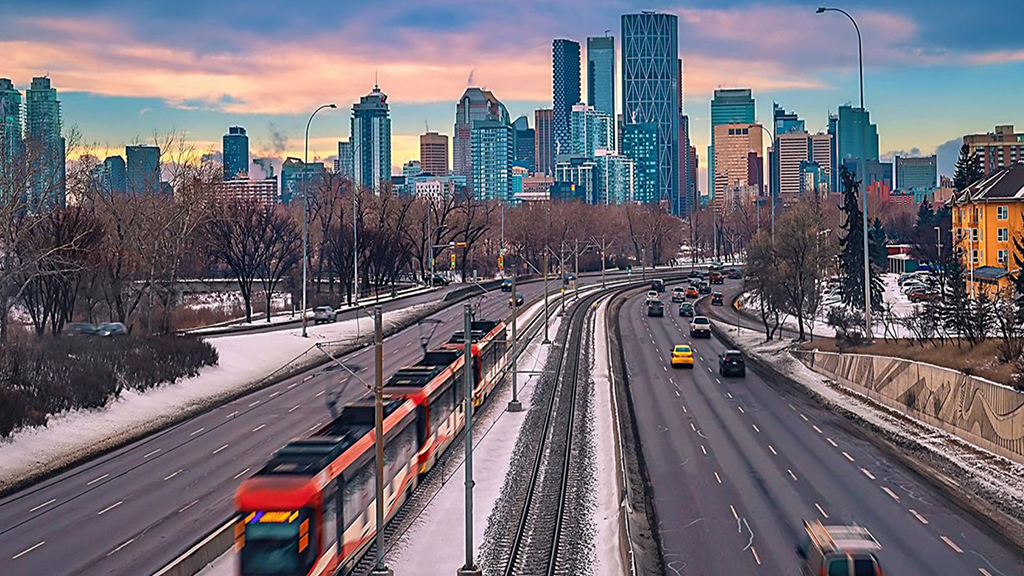
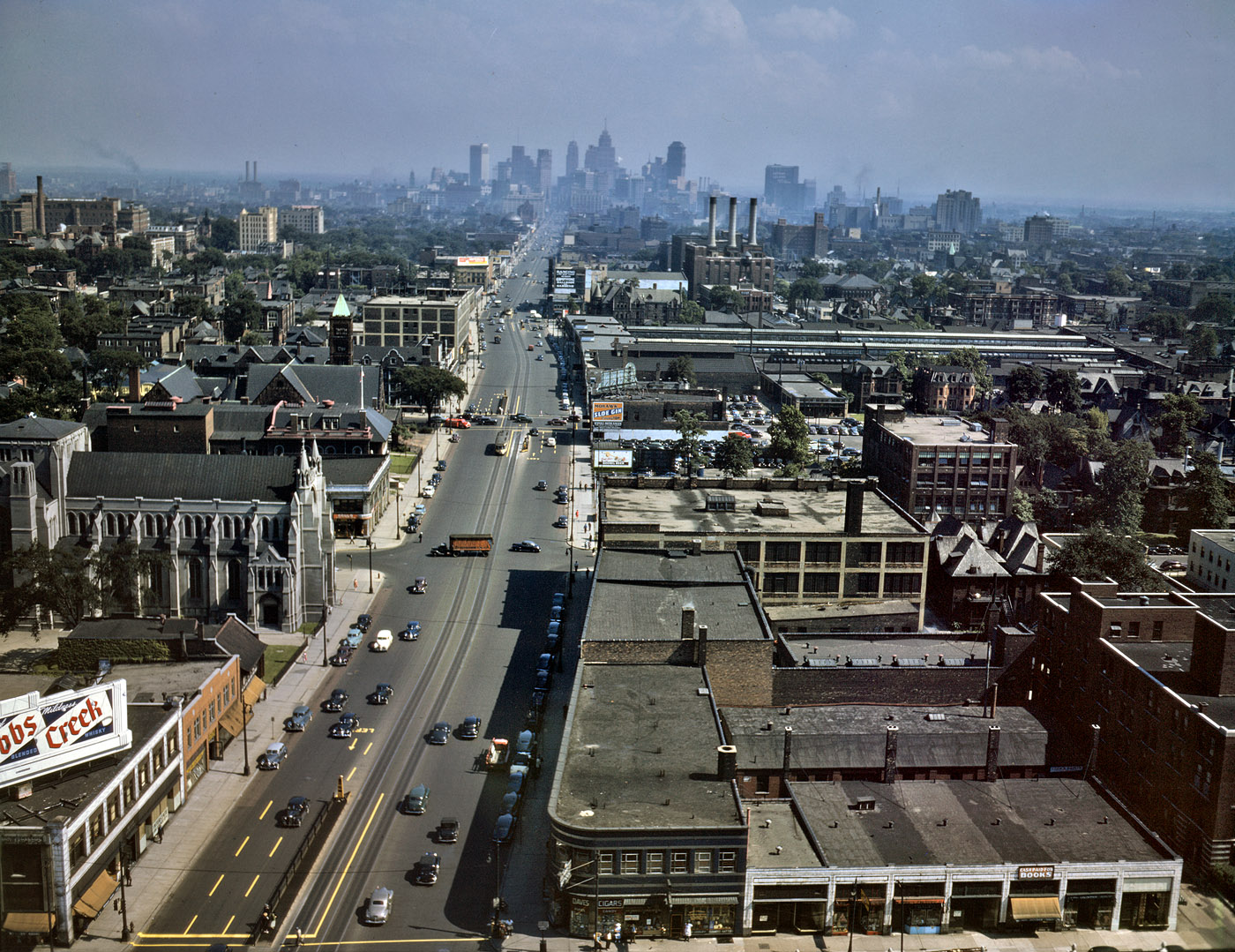
https://www.reddit.com/r/Calgary/comments/bkevpf/memorial_drive_year_1900 Wow, one waggon road each way back then. If it were possible in the 2020s, Vancouver would like to go back to one waggon road each way.
https://cc-production-uploads-bucket.s3.amazonaws.com/uploads/2025/01/Calgary-courtesy-of-City-of-CalgaryMainWEB.png This is what Cambie Street in Vancouver could have become. Especially, since the Canada embarrassment Line was only designed to have 2.5 car trains. At least there should be an express bus line along Cambie. Eventually, there still might have to be an LRT line just south of the Cambie+Street+Bridge to Richmond. It would have been better to just build the Canada embarrassment Line to eventually handle a 5, 7 & 9 car train, not a 2.5 car joke of a train.
Sarcastically...
At least no one from Vancouver has been able to convince Winnipeg to reduce Portage_and_Main to 4 lanes or even just 2 waggon roads in width.

https://en.wikipedia.org/wiki/Arc_de_Triomphe

So far, Vancouver hasn't sent a delegation to Paris advising that The Avenue des Champs-Élysées should be turned into a width of only 2 or 4 waggon roads.

Hardly would be the tallest in Melbourne, Toronto or Seattle, but for backwater BC. This is big time stuff for BC.
https://skyscraperpage.com/cities/?buildingID=132164 225m / 738 ft. https://skyscraperpage.com/diagrams/?cityID=2&status=15
https://storeys.com/surrey-centre-block-office-tower/
https://hariripontarini.com/projects/surrey-city-centre-block/
https://www.urbanstrategies.com/project/surrey-centre-block-master-plan/
https://www.colorado.com/articles/getting-colorado-getting-around
3 Major Pieces of Infrastructure that will Transform Denver & Colorado https://www.youtube.com/watch?v=DlyO-RdWChQ
https://bc.ctvnews.ca/fewer-paramedics-on-shift-as-bc-ambulance-millions-over-budget-1.7169504
Somehow Montreal and especially Toronto have been able to grow into proper big cities. That means the appropriate amount of infrastructure including, emergency services & hospitals, etc...
It's not just this situation, BC hasn't been properly keeping up with a necessary amount of infrastructure over the past several decades.
BC usually seems to have a tougher time getting things done or coordinated well.
https://dailyhive.com/vancouver/marriott-hotels-pinnacle-capstan-station-richmond
Unlike Honolulu, Greater Vancouver has been slow to get many more hotels built. Unfortunatly, Vancouver is only warm for half of the year, bust still usually not as cold as the rest of Canada during the other half of the year.
https://dailyhive.com/vancouver/2268-2294-west-3rd-avenue-1902-1912-vine-street-vancouver-tower
22 not 44 or 66 floors. They are allowed to build so much taller in Melbourne, Sydney & Brisbane, because they don't have such restrictive Vancouver zoning restrictions to deal with. Melbourne, Sydney, Brisbane & Perth are not only warmer than Vancouver, but just as scenic in their own ways.
Unlike Singapore, Honolulu still prevents 50-60 story buildings. Today there are still no buildings with a 50th floor on Oahu.
https://www.de-simone.com/projects/project/ko_olani-tower 47 stories.
https://www.richmond-news.com/local-news/car-on-fire-on-arthur-laing-bridge-early-wednesday-10046790
Nothing like a narrow bridge with narrow emegency lanes. https://x.com/LucasGates92/status/1877021160992321586
So many Greater Vancouver bridges need to be twinned or duplicated in order to provide bus & emergency lanes or even truck lanes. This cramming everything into only 2 lanes each way is nuts!
https://www.theage.com.au/national/no-freeways-puts-vancouver-on-top-20060911-ge33wv.html
While not running a freeway through a dense urban area such as Vancouver has its benefits, the bridge crossings still need to be widened. Otherwise, why even bother to pretend to have a proper express or rapid bus network?
https://jfdatalinks.blogspot.com/search?q=Arthur+Laing+Bridge
https://dailyhive.com/vancouver/skytrain-future-station-locations
Ideally, every intended station on a rail rapid transit line should be built at the same time. However, by allowing some spots for future stations, is also a good idea. Such future stations could already be roughed-out, so when getting completed there is much less disruption.
Whether it's the first 2 Skytrain lines with only 80m stations, or the absurd Canada Line with only a provision for 50m stations, there needs to be better long-range planning to allow for future capacity needs.
By now, there should have been a train connecting the Tsawwassen_ferry_terminal and the Horseshoe_Bay_ferry_terminal to YVR, but that would go against the congestive planning mentality.
All the Skytrain stations should have been designed to eventually be 160m or about 525 feet long. Just because the road system is only half-size, the trains & stations should be full size. However, short trains and narrow bridges are all part of the congestive planning agenda.
https://dailyhive.com/vancouver/sony-pictures-imageworks-global-headquarters-vancouver-the-post
https://storeys.com/quadreal-graeme-scott-the-post-vancouver-heritage-revitalization-amazon/
What could have been a nice, impressive double 55 story office complex is just another Vancouver stumpy building+complex. In that part of the very restrictive city, the building complex wasn't even allowed to have a 25th floor.
It's all part of the Vancouver stump agenda.
Had Bankers_Hall 1 & 2 in Calgary only been 26 stories, they would just be another stump complex. However, at 52 stories, they remain impressive.


https://thelocationportal.com/city-national-plaza Fortunately, these towers in L.A. and Calgary weren't Vancouverized stumps.
https://www.skyscrapercenter.com/building/city-national-tower/1395
https://buildingsdb.com/CA/los-angeles/city-national-plaza/
The stump mentality was firmly in place for LA until the late 1960s, when a building was finally allowed to be taller than the 454' LA+City+Hall.
https://jfdatalinks.blogspot.com/search?q=The+Post+in+Vancouver
Vancouver has always been a small city with a backwater mentality, when compared to many other cities. Vancouver is smaller in area & population than 7 other cities in Canada.
https://en.wikipedia.org/wiki/List_of_the_largest_municipalities_in_Canada_by_population
However, the Greater Vancouver Region is still the 3 largest metropolitan_area_in_Canada. Yet, it remains a mystery as to where all the big city scale infrastructure went, because what's mostly built in Greater Vancouver is half-sized or half-assed stuff. Indeed, a watered-down approach to things has been the name of the game for generations. Thus, after several decades of not properly building for the future, SW BC is still very congested and backwards.
There is nothing wrong with being small or thinking small. However, Vancouver and Victoria have perpetuated a small-scale mentality for several decades. Of course Vancouver would opt to have shorter underground train stations than Montreal, Toronto, Edmonton & Seattle. A short BC train just can't transport as many people as an 8-10 car train can. Just because the Skytrain is an automated system, the 50m to 80m trains just can't match a 152.5m Montreal Metro trains capacity.
The bridges are narrow, but not just to prevent induced demand. It's almost impossible for backwards Greater Vancouver to have an efficient rapid-bus or proper truck-lanes, when many of the bridges are only 2 lanes each way. Whether its a multigenerational, backwards power-structure, or its just part of the backwater BC mentality, there should be a point of realization.
Why pretend to have an efficient rapid-bus network, when there is a refusal to build a series of proper regional bus & truck bridges? In order for busses to be fast & efficient, there has to be dedicated bus-lanes on new bridges. An efficient regional port using a lot of trucks to the airport & seaports, also requires dedicated truck-lanes in order to efficiently move things around.
https://dailyhive.com/vancouver/global-bc-anchor-behind-the-scenes
https://en.wikipedia.org/wiki/Gerald_Desmond_Bridge
https://en.wikipedia.org/wiki/Gerald_Desmond_Bridge#Cable-stayed_replacement
https://www.fhwa.dot.gov/ipd/project_profiles/ca_port_long_beach_gerald_desmond_bridge_project.aspx
The Gerald Desmond Bridge Replacement https://www.youtube.com/watch?v=kLMUUVa5eMg
"The lines will begin a five-day service on Jan. 6 (Monday through Friday) and will continue for a minimum of two weeks. Buses through routes B2 (formerly called Line 2 buses), 99 and 97 will run parallel seven days a week in case of any issues." https://ottawa.citynews.ca/2025/01/03/heres-what-to-know-before-o-train-line-2-and-4-launch
This makes a lot of sense & not just because Ottawa is far away from Vancouver & the backwards BC mentality. Trains & people can break down causing a disruption on the tracks. Plus, there is no urban rail or commuter rail line in Canada that's running 24hrs a day. This means that its a good idea to have an express bus route that closely follows each train line 24hrs a day.
Greater Vancouver seems to always be a sleep at the wheel, or just inept with proper urban planning. Once the public was informed that the Skytrain won't be a 24hr system. Therefore, it would be a good idea to have express busses running parallel to each line 24hrs a day.
Unfortunatly, the backward BC planning mentality never allowed for the SkyBridge_linking_NW_and_Surrey_with_SkyTrain to have enough space for 2 bus-lanes, 2 bike-lanes & 2 footpaths. https://en.wikipedia.org/wiki/Skybridge_(TransLink) The bridge has none of that, as if to conform to a BC bottleneck agenda.
The 4 lane Pattullo_Bridge and the 4 lane Queensborough_Bridge were never designed with wide sidewalks & 2 wide emergency lanes. For if they were, then a few decades ago both bridges could have provided 3 lanes each way & have adequate space for bike lanes. A 3rd lane each way would have been great for buses, but that might improve the congestion.
While the new Pattullo_Bridge will actually have wide sidewalks on each side, no serious consideration was given to having 2 bus-lanes, despite the Skytrain not being a 24hr system. So buses, trucks, ambulances & cars will all have to be funneled into only 2 lanes each way. Having 2 bus lanes & 2 wide emergency lanes would actually go against the BC bottleneck mentality.
Even considering budget limitations, the new Pattullo-Bridge should have been designed with a provision for a future lower deck & open with 3 lanes each way & have 2 wide emergency lanes. Apparently, having the Pattullo-Bridge-Replacement with only 2 lanes each way & no emergency lanes somehow will make it easier for emergency vehicles to cross. Of course its the opposite effect, but this is backwards BC.
Surrey, Delta & all of Langley, already have as many people, if not even more people than Ottawa, but the infrastructure is so lacking in BC. Thus, a new 4 lane bridge will be an instant chokepoint between NW & Surrey, Delta & Langley. A 10 lane bridge & a 10 car Skytrain is what a proper urban area of over 3 million people would plan for.
While Vancouver has less people than Ottawa, the BC Lower_Mainland has more people than Calgary, Edmonton & Winnipeg, combined. Thus, its very strange that Vancouver & BC insist on a congestive planning approach.
The 4 lane Queensborough_Bridge in NW has enough space to accommodate a parallel 4 lane bridge. While some backwater BC types might freakout with an 8 lane crossing there, they don't realise that a 4 lane bridge is very limited. Thus, by having two 4 lane bridges, there could be a bus & a truck lane each way as well as 2 general lanes each way. Not having dedicated bus & truck lanes for what is supposed to be a major port is absurd, but its OK for backward BC.
In backwards BC its desired to not have a rail transit component on any of the current road bridges. Indeed, most of the bridges are so narrow that there isn't enough room for either bus lanes or HOV lanes.