Showing posts sorted by relevance for query bus-bridges. Sort by date Show all posts

Wednesday, November 12, 2025

Bus-bridges, Bike-bridges and Footbridges

 https://www.tbtechno.com/en/portfolios/pergola-viaduct-of1-4b-bus-hov-lanes/ 

https://stvinc.com/project/verrazzano-narrows-bridge-bushov-lane-implementation-design/ 

https://seattletransitblog.com/2025/01/29/wsdot-hov-overview/ 

https://bikeportland.org/2017/05/11/is-it-time-for-more-bus-only-lanes-in-portland-228020

https://vancouver.ca/streets-transportation/bus-network-improvements.aspx


https://ipvdelft.com/bicycle-bridges/

https://www.arch2o.com/10-amazing-bridges-passageways-bikes/

https://hansonthebike.com/2017/07/11/dutch-bike-bridges/ 

https://mtc.ca.gov/operations/regional-trails-parks/san-francisco-bay-trail/explore-trail/bridges-bay-trail 

https://mtc.ca.gov/operations/programs-projects/bridges/san-francisco-oakland-bay-bridge/bay-bridge-east-span-path

https://www.curbed.com/2021/04/brooklyn-bridge-bike-lane-narrow.html 

https://www.timeout.com/newyork/news/the-brooklyn-bridge-is-finally-getting-a-bike-lane-before-the-end-of-the-year-040921

https://www.vancouverisawesome.com/tri-city-news-archive/news/new-bridge-bike-path-needs-better-access-hub-3014166


https://www.asiarealestatesummit.com/pedestrian-bridges-and-infrastructures-that-connect-public-spaces-and-other-stories/ 

https://www.benesch.com/project/43rd-street-pedestrian-bridge/

https://surfarchitecture.com/a-new-suspended-pedestrian-bridge-over-the-water-in-toronto

https://www.guinnessworldrecords.com/world-records/581364-longest-enclosed-pedestrian-bridge 

https://www.mediaoffice.ae/en/news/2025/september/14-09/rta-builds-six-new-pedestrian-and-cyclist-bridges-across-major-dubai-roads

https://www.conteches.com/bridges-structures/truss-and-girders/continental-pedestrian-bridge/   


https://jfdatalinks.blogspot.com/search?q=bus-bridges

Monday, May 18, 2026

Long lost traffic lanes of Greater Vancouver

 https://www.reddit.com/r/vancouver/comments/1tfsdxg/long_lost_days One of the few major streets within Vancouver to be at least 6 lanes wide. However, with curb lane parking it just becomes another 4 lane corridor in BC.

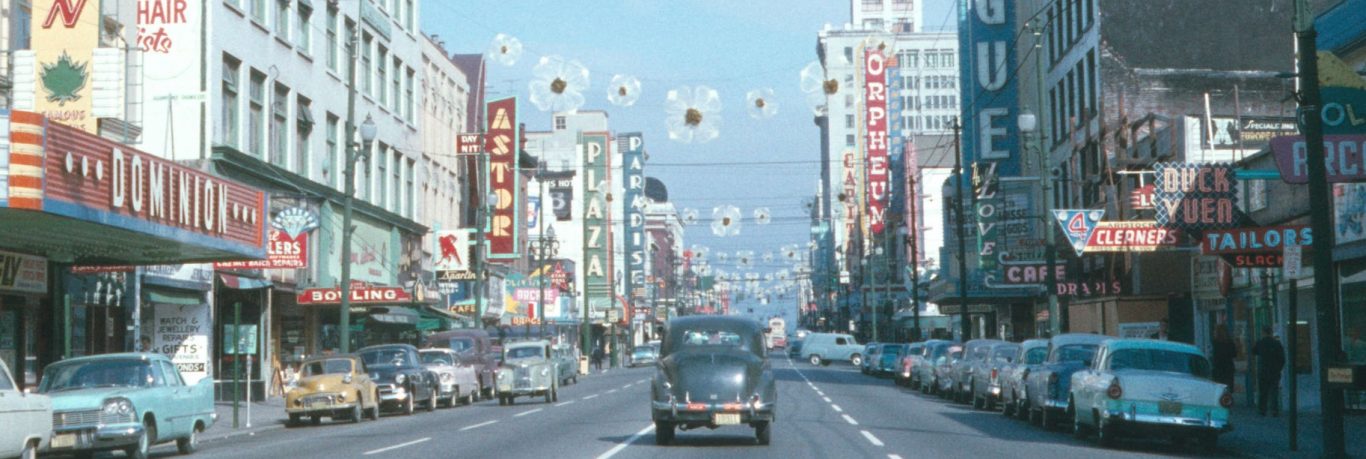
https://www.vancouverarchives.ca/wp-content/uploads/cropped-a9b22bf7-d985-4372-9650-7a51afbe5f94-2010-006.161-2-3.jpg This part of Granville used to have 6 lanes. The 1970s mall reduced it to just 2 lanes, causing an instant bus bottleneck-chokepoint. A 4 lane compromise still would have allowed for wider sidewalks. A 4 lane transit mall could have allowed for a constant passing lane when another bus has stopped. It was as if someone didn't want to have an efficient bus corridor for express buses, as well as local busses. When a local bus stops on a 2 lane street, its impossible for an express bus to pass, especially when there is a stopped bus on the other lane, also preventing any express bus to pass.

Several cities around the world still have wide streets, boulevards and avenues with 8-10 lanes. If Vancouver had allowed some 8 lane wide streets, 2 curb parking lanes would still provide 6 traffic lanes. Then, if 2 lanes were for buses, there would still be 2 lanes each way for general traffic.

The public and then the planning department (after being pressured) were firmly against having freeways within the city limits during the 1960s and 70s. However, there still should have been enough logic to allow for wider streets so that it would be easier and more efficient to have a bus lane each way. 

As of 2026, no bridge within the Vancouver city limits has 8 lanes and only two bridges have 6 lanes. One has 5 lanes and then there are four 4 lane bridges and the 3 lane Lion Bridge joke. 

All of the Vancouver bridges are so narrow that there was no provision for any future bus lanes. Plus, 2 bridges each had 2 lanes removed that could have been used for buses. Congestive transportation planning is the name of the game for backwards Vancouver. If there ever was a city that needs a series of bus bridges, it would be stubborn Vancouver. 

Even the Greater Vancouver region is lacking in having a series of bus bridges, especially since the Skytrain isn't a 24 hour system.


https://www.vancouverarchives.ca/2011/04/18/how-did-harland-bartholomews-ideas-shape-vancouver

https://archive.org/details/vancplanincgen00vanc The Bartholomew Plan published in 1928.

https://www.flickr.com/photos/vancouver-archives/albums/72157626484421302/ 

https://globalcivic.org/harland-bartholomew/

https://www.urbanstudio.sala.ubc.ca/2010/lectures/Sept21_presentations/2_TheBasics.pdf 

https://samsullivan.ca/taking-a-closer-look-at-the-legacy-of-harland-bartholomew-and-his-plan-for-vancouver-2 , https://www.youtube.com/watch?v=YIuAk1TIKHo

https://archive.org/details/planforcityofvan00vanc 1930

Monday, March 30, 2026

Its Not Just About Bus and Bike Bridges

Bike bridges might not be able to totally solve the transportation mess that is Vancouver. However, its quite odd how Vancouver Cycling_Infrastructure is missing a crucial bit of transportation infrastructure. Indeed, many cities will build least 1 proper bike bridge. The Vancouver approach is to take traffic lanes away from existing bridges, or not even bother to build a bike bridge next to a congested bridge. 

https://en.wikipedia.org/wiki/List_of_crossings_of_the_Fraser_River#North_Arm There should have been several bus and bike bridges in just this section alone. 

 https://bicyclenetwork.com.au/newsroom/2024/08/08/striking-perth-bridge-crosses-key-construction-milestone Unfortunatly, such a nice bike bridge in Perth isn't allowed in backwards Vancouver. 

https://www.mainroads.wa.gov.au/projects-initiatives/all-projects/metropolitan/causeway-path/

https://www.wsp.com/en-ca/projects/perths-boorloo-bridge If you are visiting Perth from Vancouver, you might cry when you realize what WA can do, simply because its not influenced or limited by the backwards BC mentality or mind virus.

https://www.destinationperth.com.au/listing/boorloo-bridge/3706 Unlike in backwards Vancouver, many cities build bike bridges so that they don't have to remove traffic lanes.

https://dissingweitling.com/en/project/swan-river-causeway-bridge 

https://www.buildingfortomorrow.wa.gov.au/projects/boorloo-bridge Unfortunatly, properly building-for-tomorrow is much more difficult in backwards BC than it is in WA. 

bike+bridge in the right spot can make a huge difference. A bus+and+bike+bridge can be a huge improvement, especially in the case of Vancouver and the Greater Vancouver Region. 

The Arthur_Laing_BridgeOak_Street_BridgeKnight_Street_Bridge and the Queensborough_Bridge all could be improved simply by building a bus+and+bike+bridge next to them. These bridges are simply too narrow to accommodate 2 bus lanes, 2 wide bike lanes and 2 wide footpaths.

The narrow North_Arm_Bridge for the very short Canada Line trains, is another lost opportunity. There should have been 2 express bus lanes, since the little train doesn't run 24 hours. There should have been 2 wide bike lanes as well as 2 sidewalks. 

Perhaps it was designed to be in the tradition of the narrow SkyBridge between NW and Surrey. Unfortunately, the SkyBridge wasn't designed to help the old Pattullo Bridge by accommodating 2 bus lanes, 2 bike lanes and 2 sidewalks.

While the Pattullo_Bridge_replacement opened with 2 nice bike lanes and 2 footpaths, there was a deliberate decision not to open it with 2 bus lanes and 2 HOV lanes. Especially, no wide emergency lanes or wide shoulders. Its another instant classic BC bottleneck-chokepoint. 

Somehow the Metro_Vancouver_Regional_District still hasn't realized that a regional network of bus and bike bridges can really help the region's mostly narrow bridges. Plus, proper big city long trains. 

https://en.wikipedia.org/wiki/Expo_Line_(SkyTrain) Only started to run some 5 car trains in 2025.

https://en.wikipedia.org/wiki/Millennium_Line Still usually only 2 car train with the option to run 4 and the potential to eventually run 5 car trains.

https://en.wikipedia.org/wiki/SkyTrain_(Vancouver)#Canada_Line Despite a building cost cutting measure, this joke of a train and its short stations still could have been designed with enough level clearance to allow for 5 car trains eventually. Unfortunately, this line was designed to ultimately just have 2.5 car, 50m trains. Since 2009, this line is still only running 2 car trains. 

Multigenerational congestion planning is all by design in backwards BC.


https://jfdatalinks.blogspot.com/search?q=the+missing+element

https://jfdatalinks.blogspot.com/search?q=bus-bridge

https://jfdatalinks.blogspot.com/search?q=bike+bridges

Monday, October 13, 2025

Majority polled in Calgary and Edmonton are unhappy with the pace of population growth

 https://www.cbc.ca/news/canada/calgary/too-much-too-fast-majority-polled-in-calgary-edmonton-unhappy-with-pace-of-population-growth-9.6935121 

If you are visiting Vancouver or Victoria from Calgary or Edmonton, you will be shocked as to how narrow most of the bridges are in Greater Vancouver and Victoria. Edmonton was wise in the 1970s to have 125 m long underground LRT stations. Foolish Vancouver opted to only have 80 m stations on its first 2 lines and an absurd 50 m for the 3rd line. 

https://en.wikipedia.org/wiki/Green_Line_(Calgary) , https://www.calgary.ca/green-line.html 

https://www.calgarytransit.com/plans---projects/lrt/green-line.html

https://engage.calgary.ca/greenline/UndergroundStations Fortunatly, any underground stations in Calgary will be closer in length to that of the Edmonton LRT and not backwards Vancouver.

https://www.railjournal.com/regions/north-america/tunnel-preferred-for-calgary-lrt-green-line/

https://www.tunnelsandtunnelling.com/news/calgary-city-council-approves-green-line-lrt-construction/?cf-view

https://www.calgary.ca/green-line/stations.html

https://www.tunnelsandtunnelling.com/news/calgary-city-council-approves-green-line-lrt-construction/?cf-view 

The main roads and bridges in urban parts of Alberta are allowed to be wider than their counterparts in backwards BC. So while people in the urban parts of Alberta are concerned or even angry about rapid growth, at least Alberta can easily build more urban infrastructure. That's because Albertal isn't affect by the (unofficial) BC Mind Virus (BCMV). 

A timely example is a new bridge between Surrey & NW. Despite Surrey being expected to become the largest city in BC, the new bridge will only open with 4 lanes. No 3rd or 4th lane each way for busses, HOVs and trucks. Thus, all the road traffic at either end is funneled into just 2 lanes each way. Plus, there are no breakdown or emergency lane, just like the old bridge.   

While this new bridge can eventually be widened to 6 lanes, there is no provision for a lower deck for LRT, busses and trucks. Despite SW BC being a seaport area, trucks are funneled onto mostly narrow bridges. There has been a lack of interest to build bus bridges next to almost all of the bridges in Greater Vancouver. Yet, there is a Half-A$$ED attempt to have a better regional express bus network. This regional Rapid Bus attempt will always be a joke, unless a series of bus bridges are built. The Half-A$$ED approach is to try to have bus lanes on 4 to 6 lane bridges. Designating 2 bus lanes would reduce the narrow bridges to only 1 or 2 lanes each way for general traffic in what is suppose to be a major seaport and urban area.   

Most of the worlds population is non-white and for a big part of the history of BC, there has been a refusal to build up bigtime infrastructure for everyone. While some Albertains might wish that there was a wall built around their province or a force-field like out of Star Trek, BC is almost pretending like there is. Thus, the keep things small and backwards mentality. 

Several decades ago, BC implemented a symbolic slow-growth approach. Despite BC not having any control over immigration, or trying to establish an internal passport & checkpoint system, to KEEP PEOPLE OUT, it opted for the next best thing. Stunt or scale back the urban infrastructure to project a strong symbolic reluctance to growth and thinking big. 

When you realize how much larger things are allowed to be in Alberta, Washington State and even Western Australia & compare them to watered down BC, you see quite a difference. Despite BC & Canada in general, being multicultural, BCs cities keep finding ways to water the scale of things down. Canada has yet to have even 1% of the world's population, despite its size.  

While there are good arguments to occasionally slowdown immigration, that can eventually become problematic, just like too much immigration. Even in the 2020s, some people in the former White colonial parts of the world still wish that Canada & Australia, etc., could be a White Man's paradise. However, that seems so impractical on a planet that mostly has a non white population. 

https://humanrights.ca/story/chinese-head-tax-and-chinese-exclusion-act

https://thecanadianencyclopedia.ca/en/article/chinese-head-tax-in-canada 

https://royalalbertamuseum.ca/blog/chinese-head-tax-george-yees-story 

https://www.musee-mccord-stewart.ca/en/blog/chinese-exclusion-act/

https://parks.canada.ca/culture/designation/evenement-event/exclusion-chinois-chinese

https://www.canada.ca/en/canadian-heritage/campaigns/asian-heritage-month/important-events.html

https://stanleyparkvan.com/stanley-park-van-monument-komagata-maru.html

https://vancouver.citynews.ca/2022/10/05/vancouver-komagata-maru-memorial

https://vancouver.citynews.ca/2023/01/30/vancouver-komagata-maru-memorial-vandalism/

Even if Alberta were to eventually become its own country, it would be extremely unlikely that it could ever impose a White Man's Paradise Agenda. The same could be stated for backwards BC. However, something very peculiar has been happening in BC for several generations. 

Several BC cities and municipalities play off each other with various slow-growth agendas. Vancouver being one of the most restrictive & backwards on the the planet. Somehow the legitimate anti freeway fears of the 1960s & 70s didn't get the city & region to still build a series of bus & HOV bridges. Plus, a long-term, high capacity urban rail system.

While Montreal planned for 152.4 m stations to accomodate 9 car trains, backwards Vancouver only built 80 m Skytrain stations for the first 2 lines. Then to top that, was a plan to build a line to Richmond with only enough level clearance for 50 m stations. The 1st line only started to run 5 car trains in 2025. Eventually, the 2nd line will also have 5 car trains. However, the line to the airport was deliberately designed not to have 5 car trains. Just a Half-A$$ED 2.5 car train, someday. WTH?

For Greater Vancouver to mostly have narrow bridges, one would think the all the stations could ultimately be at least as long as a Montreal Metro train station. Indeed, Greater Vancouver should have built for 10 car trains, but will only have 5 car trains on the 1st  two lines & a 2.5 car joke of a train on the 3rd line. As of 2025, the 2nd & 3rd lines are still only running 2 car trains. Such a great way to symbolically show the resistance to eventually link YVR to both of the main BC ferry terminals. 

The inadequate 3 lane Lion Bridge still has no bus & HOV tunnels near it. Urban parts of Australia never seemed to have a similar reluctance to build tunnels as does backwards Vancouver. Tunnels for Montreal & Seattle aren't a problem either. At least BC is slated to have a new and improved tunnel by 2030, that's only a couple of generations late.   

Oh, if only people would stop moving to BC, especially Vancouver & Victoria. Well, that's not the case, its just that various BC cities want to only build urban infrastructure that is inadequate. Despite the frustrations that some people have in Alberta, at lest wider bridges, longer trains & taller buildings are allowed there. This watering things down in BC approach is symbolically indicative to refuse to properly build for a growing population. 

Surrey should have already had at least 1 hospital the size of VGH. At least Surrey like Burnaby, can build up taller in what is still mostly a mountain wilderness province. 

BC is a long way from New England & Southern Quebec. The restrictive urban planning measures in Greater Vancouver keep preventing it from becoming a proper big metropolitan area like Greater Boston and Montreal. 

Calgary and Edmonton each should have hand an airport+line by now.

https://en.wikipedia.org/wiki/Green_Line_(MBTA) Calgary will have its own version of a Green Line, eventually. https://jfdatalinks.blogspot.com/search?q=Calgary+Green+Line

Thursday, November 21, 2024

How the City of Vancouver will pay for its 2026 FIFA World Cup costs

 https://dailyhive.com/vancouver/fifa-world-cup-vancouver-hotel-tax-costs

https://vancouver.ca/streets-transportation/bus-network-improvements.aspx With so many narrow streets, its difficult to have a proper network of bus-lanes, especially on the bridges.

https://visionzerovancouver.ca/2024/07/10/take-action-add-bus-lanes-to-translinks-priority-routes Unfortunatly, most of the bridges in the Greater Vancouver Region are just too narrow. There was no logic to have enough extra width for future bus-lanes and HOV lanes.

https://www.biv.com/news/transportation/vancouver-new-dedicated-bus-lanes-translink-2024-9267523

Unless there is a regional network of new bus-bridges, Greater Vancouver will remain in a bottleneck or chokepoint nightmare. Stuck with only a half-assed express or BRT attempt. I suppose that would be impressive to Kelowna-Victoria-Prince+George-Kamloops (K-V-PG-K) standards. Unfortunatly, those aren't big league cities.

Of course the 3rd line, or the YVR-Canada-Line or the Canada (embarrassment) Line, still hasn't been expanded up to a 2.5 car train, let alone having 5 car trains. Right from the start, the trains should have consisted of at least three, 20m coaches, with a provision for 6 car trains. Apparently, because of budget cuts, the station platforms weren't built to be 60-100m long in the first phase, they are only a 50m joke. 

The stations could have been roughed out to initially accomodate 3-4 car trains and eventually, 8 car trains. 8 x 20m= 160m. The Montreal Metro stations were built to accommodate a 152.5m train. Fortunately, Quebec doesn't have anything like a backward BC planning mentality to hinder it.

The YVR-Canada (embarrassment) Line doesn't have to be stuck as a symbolic example to not properly plan & build for longer trains in BC. This 3rd Metro-Vancouver rapid transit line doesn't have to be stuck with a 2.5 car train buildout. The incredibly short stations should be extended to 60m, which could accomodate a proper 3 car, walkthrough train. Then, with Selective_Door_Operation Technology, a 3 car train can become a 5 car train of 100m. Then, only the middle 3 cars would directly have access to the YVR-Canada-Line station platforms. 

Unfortunatly, due to the shortsighted planning mentality that is Vancouver & BC, the underground stations don't have enough level clearance to be lengthened to 152.5m or 500 feet, like the Montreal Metro stations, which can accomodate nine, 55 foot cars. At least a 5 car, 100m or 328 foot train is still possible in short-minded Vancouver.

For some strange reason, the YVR Canada+Line wasn't designed to eventually provide a link beyond the Vancouver_International_Airport to Waterfront_station. Indeed, a 2nd phase of the inadequate line should have connected Waterfront_station with the Park_Royal_Shopping_Centre and the Horseshoe_Bay_ferry_terminal. Then the 3rd phase to connect the YVR-Airport_station with the Tsawwassen_ferry_terminal

Like the Catheter Line, the George_Messey_Tunnel was designed to be inadequate, right from the start.

The George_Massey_Tunnel should have had at least 2 wide emergency lanes for future truck or HOV lanes. Plus, there should have been another tunnel section to accommodate a future express or rapid bus corridor & 2 tracks for a light rail train. Instead, cars, busses & trucks were all funneled into a 4 lane chokepoint. Ironically, over the past few decades, a bus & train tunnel or bridge should have been built, at least.

Express Bus lanes or Rapid Bus lanes vs. HOV & Truck lanes. Any bus lane has the potential to move many more people than any HOV lane. Any major port city & metropolitan area should have a truck lane as well as a bus lane. Thus any HOV lane would be more efficient in bussing people & trucking payloads.

Of course the new George_Massey_Tunnel still won't have a provision for a train section. No emergency lanes, but 2 bus lanes in addition to only 3 general lanes each way. Once again, backward BC gets its wrong. Greater Vancouver is suppose to be a major seaport. Unfortunatly, the new tunnel will only have 4 lanes each way & no HOV or emergency lanes, of course.  

Even if there are only 3 general lanes each way, there should have been a provision for a truck lane in addition to a bus lane each way. That would be at least 5 lanes each way, but no emergency lanes & still no provision for 2 train tracks either. 

Thus, the new tunnel will eventually have to have a bus & train bridge or tunnel next to it. That would allow the tunnel to have 3 general lanes each way & 1 HOV lane each way. A rapid bus & rail corridor would ensure 24 hour high capacity transit, even when the YVR-Canada-Line is shutdown overnight. 

Unfortunatly, none of the 80m & 50m SkyTrain stations were designed to have 4 tracks. That would have allowed for a proper express & local train system. The BC mentality seems to be about keeping the trains as well as the roads inadequate to meet future high transportation demands.

The LG Bridge in Vancouver should have had bus, HOV & train tunnels near it decades ago. Surrey_and_Richmond also should have had proper bus, HOV & train tunnels, decades ago.

Why have 3 sets of tracks like the O'Hare_station in Chicago? Or, have at least have 2 tracks like at the SeaTac/Airport_station. The small-scale YVR-Airport_station just has a single track to make congestion more likely. The Vancouver_International_Airport should have had at least 4 long runways by now.

The multigenerational backwater BC mentality is a combination of overlapping restrictions and a, keep it small or backwards agenda. Why plan and build like a big city, when Vancouver can mostly do things that are only impressive to smaller places like, Kelowna-Victoria-Prince+George-and-Kamloops?

Short trains, mostly stumpy buildings and mostly narrow bridges, provides powerful symbolism for the  antigrowth agenda. Building up proper size infrastructure is the opposite. 


https://jfdatalinks.blogspot.com/search?q=Canada+Line

https://jfdatalinks.blogspot.com/search?q=C+Line

Thursday, April 3, 2025

From the old and inadequate Fraser Street Bridge to the inadequate KSB

Somewhere in between 1950 & 1960, the old Fraser_Street_Bridge (FSB) should have been replaced with a new 4 lane bridge, with 2 very wide sidewalks for bikes & a future provision for 2 bus lanes. Vancouver needs a street and transit connection with No. 5 Rd. in Richmond. Unfortunatly, backwards Vancouver has always been a city without a proper big city transportation vision.

https://evelazarus.com/the-fraser-street-swing-span-bridge

https://en.wikipedia.org/wiki/Fraser_Street_Bridge_(1894)#Provincial_government_headache

https://www.richmond-news.com/local-news/photos-and-video-was-this-the-unluckiest-bridge-between-richmond-and-vancouver-4475444

https://search.nbca.unbc.ca/index.php/fraser-st-road-bridge-in-vancouver-bc-1 In the late 1800s, just being able to have a bridge roadway width of 2 wagon-roads in backwater BC was amazing. Then, decades & even several generations later, any BC bridge that could provide 2 wagon-roads each way was even more amazing. 

https://structurae.net/en/structures/fraser-avenue-street-bridge

As usual, Vancouver & BC lost & messed up an opportunity to have 2 great new bridges.

https://structurae.net/en/structures/knight-street-bridge (KSB)

https://evelazarus.com/the-knight-street-bridge-part-2

Once again, the lack of a proper big city vision resulted in the inadequate design for the 4 lane Knight+Street+Bridge (KSB). However, it makes sense from a bottleneck congestive planing mentality. Despite Vancouver being part of what is suppose to be a major port region and in need of proper transportation corridors, the Knight_Street_Bridge is a classic chokepoint.

https://www.richmond-news.com/local-news/work-on-knight-street-bridge-in-richmond-below-deck-as-well-7319230

Just because the Knight_Street_Bridge started out as a 4 lane joke, there immediately should have been 2 wide shoulders, which could have eventually become 2 extra bus lanes. Plus, there should have been a future provision to add 2 HOV lanes. Two wide sidewalks & 2 wide bike lanes. However, that would go against the congestive planning mentality of Vancouver & BC.

Indeed, by deliberately planning the KSB to be a 4 lane chokepoint and not building a new Fraser+Street+Bridge, there clearly was no interest to have proper dedicated bus lanes in that part of the Greater Vancouver Region. With so many inadequate, narrow bridges, there should be bus & HOV lane bridges to help improve regional transportation.

A regional express bus system or a rapid bus network requires dedicated lanes. The LGB should have 2 bus lanes & 2 HOV lanes in a tunnel near it. The Iron Bridge, OSB & KSB, all should have a 4 lane bus & HOV bridge next to them. That would allow for a rapid bus lane each way & a HOV lane each way.


https://jfdatalinks.blogspot.com/search?q=old+and+new+narrow+bridges 

https://jfdatalinks.blogspot.com/search?q=bus-bridges

Saturday, March 16, 2024

Bus Rapid Transit, Cushing Bridge, Calgary

Vancouver needs bus-bridges as much as Calgary, but of course Vancouver is slow to the party, once again. The 4 lane bottleneck, AKA the Cushing+Bridge in Calgary could have gotten the Vancouver Chokepoint Award. There aren't any HOV lanes or even emergency lanes, just 2 lanes each way. However, what transformed this BC type bottleneck in Calgary into a semi-decent crossing, was the simple addition of a bus & bike bridge. The Greater Vancouver Area should have had bus & bike bridges built next to all of the regional crossings decades ago. However, that would go against the congestive planning approach, which is so intertwined within backwards BC, but not in Alberta & Washington State.

https://calgaryherald.com/news/local-news/city-says-theyll-try-to-minimize-deerfoot-disruption-during-brt-bridge-work

The Pattullo Bridge replacement shouldn't require a bus & train bridge to be built next to it, but it might eventually. If only it could have been properly designed in the first place to not just have 2 lanes each way, but 2 bus & 2 HOV lanes as well. Plus, built high & strong enough with a provision to allow for LRT and trucks on a lower deck. 

Unfortunately, no one seriously planned to have an express bus and an LRT line between NW & Surrey, because the Skytrain isn't a 24hr system. Overnight buses can't go on the Skybridge, because no one allowed for a provision to have a couple of bus lanes on it. Thus, the Pattullo Bridge replacement wont have any bus or emergency lanes. Even if someday the Pattullo Bridge replacement is widened from 4 to 6 lanes, there still won't be any emergency lanes and probably no bus and HOV lanes.

Light_rail_in_Sydney, NSW. Once again, BC falls so far behind. BC was so quick to get rid of its streetcars before the 1960s. Where as NSW has been gradually reinstating a modern version of their old tram lines.

New Tramways_in_Paris have been gradually added, but not in backwater BC. 


Unlike NW & Surrey, Portland_has_Streetcars & the MAX train which cross the river. https://www.youtube.com/watch?v=8JvGTx4ufFo

https://www.travelportland.com/plan/portland-streetcar

MAX https://www.youtube.com/watch?v=HpfRKqy96_E

https://jfdatalinks.blogspot.com/search?q=BRT

There is just something backwards in the way that BC does things.  


https://jfdatalinks.blogspot.com/search?q=bus-bridges

Thursday, December 19, 2024

Capstan Station on YVR-Canada Line in Richmond

https://www.vancouverisawesome.com/highlights/capstan-canada-line-station-in-richmond-to-open-friday-9984359 Why design the old & new stations to eventually accomodate 8-10 car trains? The Catheter Line wasn't even designed to officially accommodate enough space for 5 car trains. Thus, in accordance with the BC antigrowth mentality or slow growth agenda, the stations were only designed to eventually just have 2.5 car trains. However, even in 2025, the Catheter Line will still only be using 2 car trains. All the SkyTrain stations should have been designed to eventually be 150.5 meters long, just like the Montreal Metro stations, with even more long-term provisions. Unfortunatly, the first 2 lines only have 80m stations & the C+Line only has a clearance for 50m stations.

https://dailyhive.com/vancouver/skytrain-capstan-station-canada-line-opening-date

The Vancouver_City_Centre_station is diagonally across the street from The+Bay+Building+in+Vancouver. However, despite being what is supposed to be a major underground station, its noticeably smaller than the underground train stations in Edmonton & Seattle.

It's been very difficult to get urban planners in BC to properly plan for future transportation demands. The main excuse is governmental budgetary constraints. Even if that's usually the case, at least build half the length of a proper size urban station, with a provision to eventually double or triple its length, for future demand. However, that would go against the Greater Vancouver congestion planning mentality. Thus, even if you have the skills, once you get to BC, you realize that several things are watered down & you must think small or backwards.

 https://bc.ctvnews.ca/video/c3050886-metro-vancouver-facing-population-boom With the Metro-Vancouver-population-expected-to-reach-4-million-by-2045, BC is so unprepared & inept, as usual. https://www.kelownacapnews.com/news/metro-vancouver-expected-to-push-past-4-million-by-2045-as-growth-accelerates-7717888

There seems to be an outright refusal in the Metro Vancouver Region to avoid building up to the same level of infrastructure as when Greater Toronto, Greater Montreal, Greater Seattle, Greater Sydney, Greater Melbourn & the SF Bay Area, all exceeded 4 million people.

Going into 2025, the SkyTran will still only have 2-4 car trains, not counting the old Mark 1 rolling stock. By 2025, every SkyTrain should have consisted of 6-8 car trains, not the two-car & four car congested joke that it is. 

There is no valid reason as to why the Greater_Vancouver Region can't eventually have an urban train system on par with the Montreal Metro & a regional train system that's as good & frequent as the GO Trains or the Caltrain.

The refusal to build proper bus & truck bridges to help the mostly narrow bridges, still seems to be a half-assed pipedream. Yet, the GV Region pretends that it will eventually have a good Rapid Bus Network without bus-bridges.

While the GV Region is supposed to be a major seaport, there is still a false_front approach to things. How can this false-front & half-ass approach still be the norm in backwater BC? Not only should all the freight-train bridges be at least double tracked, there should also be truck port bridges. 

The Oak_Street_BridgeKnight_Street_Bridge & the Queensborough_Bridge are all so narrow, there is no room for truck & bus lanes. Therefore, a truck & bus bridge should be built next to all of them. Otherwise, everything can just continue to be funneled into only 2 lanes each way.

Of course the Arthur_Laing_Bridge wasn't designed to have 2 bus lanes & 2 truck lanes. Yet, a lot of trucks have to be able to get in & out of YVR. Why have any bus lanes when busses & trucks can all be funneled into only 2 lanes each way? Even though the C-Line doesn't run 24hr a day, the North_Arm_Bridge should have had two 24hr bus lanes & 2 bike lanes & a provision for a middle track. Instead, the narrow North-Arm-Bridge only has 2 tracks & just 1 bike lane.

Fortunately, watered down Greater Vancouver & backwards BC hasn't been able to get most place around the world to adopt such a ridiculously reduced infrastructure approach to things. 

The 3rd line should really be called the YVR-Canada+Line.

Officially, there is no A Line, B Line or C+Line, but that seems OK for backwards BC.  

Friday, November 29, 2024

Cambie Street Bridge repairs choke traffic out of downtown Vancouver

 https://dailyhive.com/vancouver/cambie-bridge-repairs-choke-traffic-downtown

Of course Vancouver won't build anything like the Boorloo_Bridge for bikes & pedestrians. Apparently, it's much better to take a lane away from the Cambie Bridge. 

Fortunately, the backward Vancouver mentality never made it over to Perth. Otherwise, the The_Third_Causeway bridge would have had 1 or 2 lanes removed.

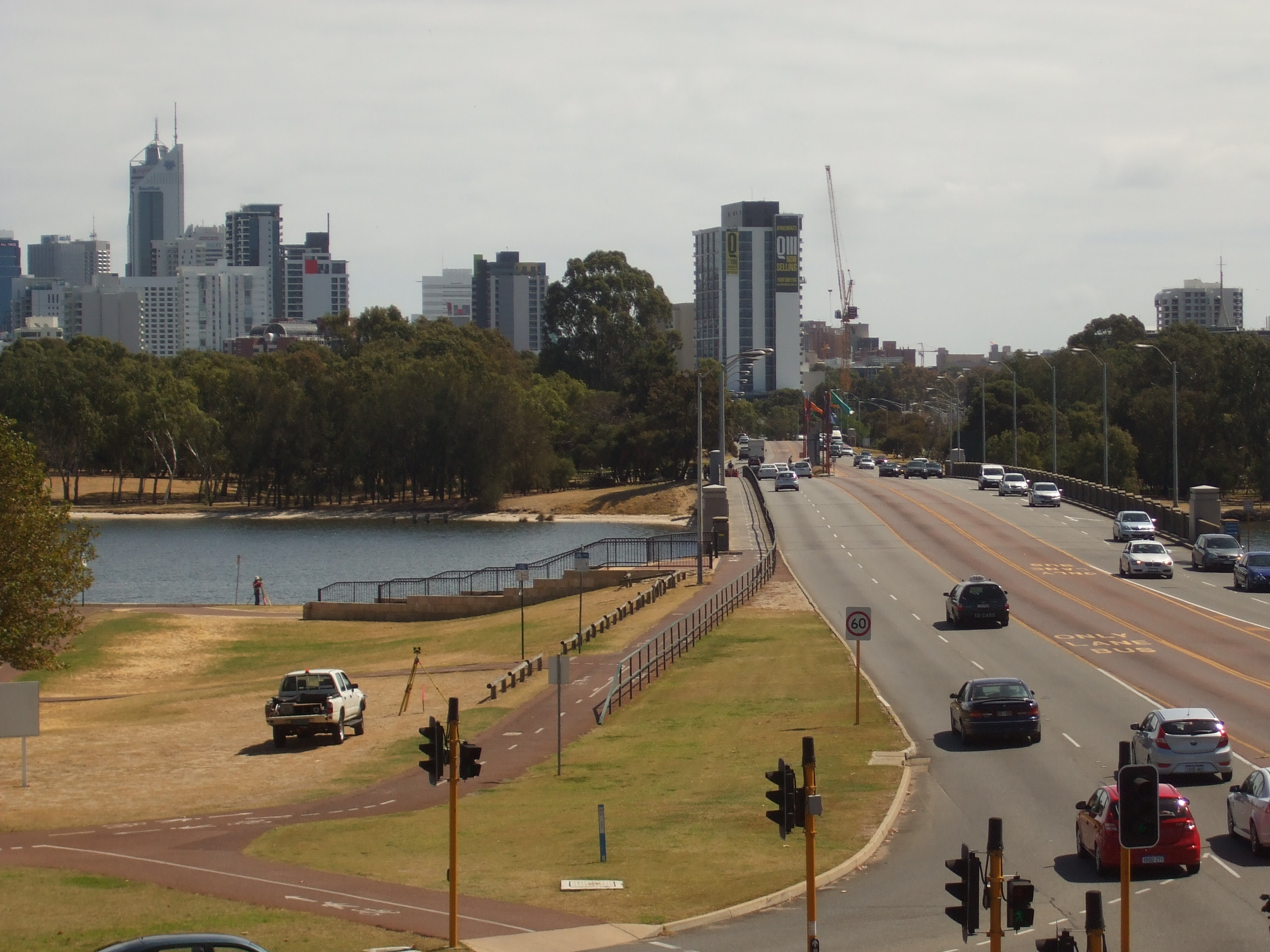
With 6 lanes, The_Causeway_in_Victoria_Park, Perth provides a nice 6 lane crossing. Unlike backward Vancouver the Causeway in Perth was allowed to have 3 lanes each way. The key component is that the 3rd lane each way is for busses. In contrast, absurd Vancouver won't allow for a proper bus & bike bridge network to be built, because it would rather keep its bridges as narrow & congested as possible. 

https://upload.wikimedia.org/wikipedia/commons/5/5a/Causeway_-_Victoria_Park.JPG 
No need for a bus-bridge there, because no one from backwards Vancouver convinced Perth to get rid of those 2 bus lanes.

It's very strange that Vancouver refused to have something like the 6 lane Causeway+Bridge in the 21st century. A 3rd lane each way for buses on the Causeway+Bridge makes so much sense in Perth. However, for stubborn Vancouver, such measures might help to improve mobility.

Apparently, Vancouver has no plans to build something like the Boorloo_Bridge or the Esplanade+Riel+Footbridge next to the Cambie & Burrard Bridges. Thus, the Cambie has lost a lane & the Burrard has lost 2 lanes. Had both bridges been allowed to retain 6 lanes, they both could have provided 2 bus lanes.

The Cushing+Bridge is a 4 lane bridge in Calgary. Thus, like the Oak Bridge & Knight Bridge in Vancouver, there was no room for 2 bus lanes on them. Unlike, backward Vancouver, Calgary was able to build a 2 lane bus bridge right next to its Cushing+Bridge.

Fortunately, the horrible transportation planning mentality of Vancouver was never adopted in Perth & Calgary. Either you have a wide enough bridge for busses, or you build bus & bike bridges to help the existing bridges.

The Norwood+Bridge in Winnipeg provides at least 6 lanes, so a couple of bus lanes isn't a problem.

Singapore built its Helix_Bridge instead of removing lanes from the other bridges.


https://jfdatalinks.blogspot.com/search?q=Cambie+Street+Bridge

Thursday, March 9, 2023

Growing traffic congestion increases bus delays in Metro Vancouver region

https://www.nsnews.com/local-news/growing-traffic-congestion-increases-bus-delays-in-metro-vancouver-region-6662394 

The multigenerational backwards transportation planning mentality remains absurd and inefficient. Bus lanes are difficult to establish on the mostly narrow streets. However, one of the biggest transportation blunders was to not allow for bus lanes on the regions mostly narrow bridges. 

Unless there is a proper regional network of bike and bus-bridges, an express bus and rapid bus service will always be Half-A$$ED. 

Of course Vancouver would have shorter train stations than what the Montreal Metro, TTC Subway and Edmonton LRT have. Short stations = short and more crowded Skytrains.


 https://dailyhive.com/vancouver/pattullo-bridge-new-replacement-construction-december-2022 No wide emergency lanes and no wide shoulders. Someone really wants this bridge to open without enough space for 2 bus lanes. Just like the SkyBridge was built without any bike and bus lanes, despite the Skytrain not running 24 hours. Its as if there was no concept of redundancy to have a rapid bus crossing on the narrow SkyBridge

Fortunately, the Tilikum_Crossing in Portland was possible, because even Oregon isn't quite as backwards as the BC part of Canada. There are several types of bus and bike bridges that just don't get built in backwards BC.

Tuesday, September 17, 2024

Metro Vancouver transit facing 'drastic cuts'

 https://www.vancouverisawesome.com/highlights/metro-vancouver-mayors-council-demands-action-on-transit-funding-brad-west-9533754

After decades of imposing narrow streets, roads, highways & bridges, it's still difficult for the region to have a proper express bus network. Most of the bridges in the region need to have a bus & bike bridge built right next to them. 

https://bc.ctvnews.ca/this-is-not-a-bluff-translink-mayors-council-calls-on-b-c-political-parties-to-share-plans-to-avoid-transit-cuts-1.7041435

The first 2 SkyTrain lines still only have 80m stations & the 3rd line, the C-Line, only has 50m stations. In contrast, the Montreal Metro was designed to have almost 153m long stations. Thus, a 500 foot long station can accommodate a 9 car train. Unfortunately, the first 2 SkyTrain lines can only accommodate the newer 4 car trains with a potential for a 5 car train, someday. The 3rd line or the C-Line, can only accomodate a 2 car joke of a train, but it has the potential to become a 2.5 car joke of a train.

This absurdity of congestive planning must be challenged & stopped in backward BC. Unfortunately, there are some influential people that continually like to maintain the symbolism of short trains and narrow bridges. They don't want the Greater Vancouver Region to become a proper urban area. That mentality apparently justifies the inadequate or underbuilt infrastructure in the region. 

So now with looming transit cuts, the narrow roads & bridges will become even more congested.

https://www.rtands.com/tag/translink

The $2BN Megaproject Under Vancouver https://www.youtube.com/watch?v=D4YFFtTEUQc

What Greater Vancouver Needs https://www.youtube.com/watch?v=qZavPFZ9H1E

Whether its a bridge or a tunnel, Perth and Seattle have excellent wide crossings which allow for rail rapid transit. Fortunately, the congestive Vancouver mentality never reached into those cities.

https://www.highway99tunnel.ca/tunnel-construction Unfortunatly, BC missed another opportunity to have rapid rail transit through the tunnel.

https://vancouver.citynews.ca/2024/09/17/highway-91-spun-out-richmond Even back in the 1980s, BC_Highway_91 should have been designed to be at least 4 lanes each way. 3 general lanes each way with the 4th as a bus & HOV lane. There also should have been 2 wide shoulders or emergency lanes. The Alex_Fraser_Bridge should have been designed to be at least 10 lanes wide. 3 general lanes each way & a bus-HOV lane & a truck lane each way. Plus, 2 emergency lanes & a provision for a lower rail transit deck. Unfortunatly, bottleneck or chokepoint planning won out. Plus, the symbolism for BC is to not properly plan for large, efficient infrastructure. 

How can the Greater Vancouver Region have an efficient express bus & rapid bus network, when the highways & bridges are kept narrow? Why wasn't the SkyTrain designed to eventually have 153m or 500 foot long stations like the Montreal Metro? That would be symbolic of a proper big thinking city wanting to have high capacity transportation corridors. BC is about taking the congestive planning approach instead.

Perth+and+Seattle have been able to do so much more, because they aren't under anything like the imposed Vancouver restrictions and the overall backward BC mentality.

Monday, August 12, 2024

Several narrow Vancouver bridge issues

 https://dailyhive.com/vancouver/metro-vancouver-bridge-cyclist-wire-allegations

Someone might have been very angry with bike people and not with car, bus & truck people. The real problem is that so much of the older BC infrastructure just wasn't designed to be more of a multi-modal crossing. The+Lion+Bridge+and+The+Iron+Bridge have no rail rapid transit crossings next them.

The Ironworkers-Bridge is so narrow for a highway bridge in that location & wasn't designed for substantial future capacity. When it was initially designed in the 1950s, there was no concept to have 2 bus lanes, 2 HOV lanes, 2 truck lanes & 2 emergency lanes for a port city. Plus, at least 2 general traffic lanes each way & a provision for 2 train tracks. Thus, the 6 lane bridge is so overwhelmed, because it just can't do the job of an 8-10 lane wide bridge. While the Iron Bridge has 2 improved bike+lanes, they are part of the sidewalks.  

The former 8 lane Granville+Street will have 6 lanes, while the  & Oak+Street only has 4 lanes. The inadequate Oak+Street+Bridge (OSB) should have opened with at least 8 lanes, instead of only 4. Plus, 2 wide emergency lanes & 2 wide sidewalks. There still should be a new southbound OS Bridge, but the city would be against it. A narrow 4 lane bridge just doesn't have the space & capacity for 2 express bus lanes, 2 HOV & 2 truck lanes. Apparently, it's better to just funnel everything into only 2 lanes each way.  

The OSB should be twinned or replace with something like the Samuel-De_Champlain_Bridge in Montreal. The largest city in Quebec is allowed to have a nice wide bridge & long metro trains, because Quebec isn't bound by anything like the backwards BC mentality. 

https://www.theglobeandmail.com/canada/article-montreals-new-44-billion-champlain-bridge-opens-to-traffic-for Fortunatly, the Vancouver mentality wasn't able to ever reach back to Montreal & prevent such a nice modern bridge from being built there. https://www.flatironcorp.com/project/champlain-bridge If you are from Montreal & have visited Vancouver, you will be surprise to see how much shorter an underground Vancouver train station is than what is allowed underground in Montreal, Toronto, Edmonton, Seattle, SF & LA...

https://vancouver.ca/streets-transportation/granville-bridge-connector.aspx A bike & foot bridge should have been built next to it decades ago. Then the Granville+Bridge could have 3 general lanes each way, plus a bus & HOV lane each way. Instead, if 2 bus & HOV lanes are designated, there will only be 2 general lanes each way in the downtown core.

The Burrard Bridge should have had a bike & foot bride next to it. Instead, it was reduced from a 6 lane crossing to a 4 lane bridge.

The very narrow Oak+Street+Bridge & the Knight Street Bridge, should have had bus+and+bike+bridges built next to them decades ago. 

Most bridges in Vancouver & the metropolitan region just weren't designed with that much future capacity in mind, especially for buses & HOV lanes. Thus, it's a travesty that by now, almost every crossing should have had bus & bike bridges built next to them. 

https://vancouver.ca/streets-transportation/walk-bike-and-transit.aspx Unfortunatly, provisions for bus & bike lanes just weren't the thing to do several decades ago in BC.  

A truck lane is just as important as a bus & HOV lane. That's because freight should be efficiently & easily be transported in any major urban region.

https://vancouver.ca/streets-transportation/trucks-commercial-and-oversize-vehicles.aspx 


https://jfdatalinks.blogspot.com/search?q=Oak+Street+and+Granville+Street

https://jfdatalinks.blogspot.com/search?q=Iron+Bridge 

https://jfdatalinks.blogspot.com/search?q=Lion+Bridge 

https://jfdatalinks.blogspot.com/search?q=Burrard+Bridge 

https://jfdatalinks.blogspot.com/search?q=Granville+Bridge 

https://jfdatalinks.blogspot.com/search?q=Oak+Street+Bridge 

https://jfdatalinks.blogspot.com/search?q=the+missing+element

Tuesday, May 28, 2024

Five of Ontario's top 10 worst roads are located in the Greater Toronto Area

 https://toronto.ctvnews.ca/five-of-ontario-s-top-10-worst-roads-are-located-in-the-toronto-area-1.6903196 Of course its a good idea to make sure that the roads & streets are as smooth as possible.

The Greater_Toronto_Area is gradually becoming a vast urban region like the Chicago_metropolitan_area. So many more modes of transit must be provided for the GTA. IE, trains, HOV, bus & bike lanes. 

https://www.insauga.com/one-of-ontarios-worst-roads-is-among-the-busiest-streets-in-mississauga

Being from the BC Lower_Mainland, it's hard to believe that Canada's GTA is on its way to becoming like another Chicagoland. But then I always remember that Ontario, like Quebec & Alberta aren't under anything like the BC mentality & all of its restrictions.

https://www.cbc.ca/news/canada/hamilton/worst-roads-ontario-2024-1.7215979 

In effect, the Burlington_Bay_James_N._Allan_Skyway went from a BC like 4 lane bridge to an 8 lane Ontario crossing in the mid 1980s. https://en.wikipedia.org/wiki/Burlington_Bay_James_N._Allan_Skyway#1985_twin_bridge

https://511on.ca/map/Cctv/loc06--3
https://511on.ca/map/Cctv/loc06--3 Both bridges are safer than cramming everything into one crossing structure. 

https://burlingtontraffic.ca/qew-burlington-bay-james-n-allan-skyway The 4th lane each way could eventually become a bus & HOV_lane.

The 4 lane Burlington_Canal_Lift_Bridge is more like a narrow Vancouver bridge. Just 2 lanes each way with no space for an emergency lane or bus & HOV lane. That's why the Burlington_Bay_James_N._Allan_Skyway crossing is still better than any bridge within the Vancouver city limits. The skyway crossing combined with the lift bridge, provides 12 lanes, because the emergency lanes usually aren't counted. Just imagine if all that was funneled into a 4 lane Vancouver bridge. Fortunately, the backward BC bottleneck mentality has never taken over Ontario. 

While Oak Street in Vancouver has 6 lanes, the Oak_Street_Bridge was only designed to have 4 lanes. Thus, it's a fine example of the BC mentality and the multigenerational Vancouverization agenda. Vancouverization is all about watering things down & creating bottlenecks or chokepoints.

https://upload.wikimedia.org/wikipedia/commons/5/5f/Oak_Street_Bridge.jpg
https://wikimedia.org/Oak_Street_Bridge.jpg

The narrow 4 lane bridge should have been designed with a provision to eventually be at least 8 lanes wide. 3 lanes each way, plus a bus & HOV lane each way, but that would conflict with the narrow mindedness of Vancouver. It's sad that at least a bus & bike bridge wasn't built next to it, but that would conflict with the BC bottleneck planning approach to things.

https://upload.wikimedia.org/wikipedia/commons/5/53/Oak_Street_Bridge_and_Fraser_River%2C_Vancouver_-_panoramio.jpg
https://wikimedia.org/Oak_Street_Bridge_and_Fraser_River.jpg

https://images.drivebc.ca/bchighwaycam/pub/html/www/70.html A 6 lane street funneled into a 4 lane bridge. WTH?

The Oak_Street_Bridge really should have been opened as a 10 lane bridge. Yet, Oak_Street has only 6 lanes. A 10 lane OSB could have not only allowed for 3 lanes each way, but a bus & HOV_lane each way. Then the 5th lane each way could have been an emergency lane

https://www2.gov.bc.ca/gov/content/transportation/driving-and-cycling/traveller-information/routes-and-driving-conditions/hov-lanes

At the very least, a HOV, bus & bike bridge should be built next to the OSB. However, the multi generational backward BC mentality just doesn't care.

The 4 lane joke that is the George_Massey_Tunnel, should have had a HOV, bus & bike bridge built next to it several decades ago. But that would have actually created better mobility & less congestion.

https://en.wikipedia.org/wiki/George_Massey_Tunnel#Replacement Of course just like with the old tunnel, the new tunnel won't have a provision for LRT & emergency lanes. Thus, a LRT bridge would eventually have to be built next to it. Apparently, having a train from the Tsawwassen_ferry_terminal to the airport still doesn't make sense. That's just the backward BC way.

If you are from Ontario, Quebec, Alberta, the Pacific NW, Australia or just about anywhere, the watered down BC infrastructure will surprise you.


https://jfdatalinks.blogspot.com/search?q=old+and+new+narrow+bridges 

https://jfdatalinks.blogspot.com/search?q=bus+and+bike+bridges

Saturday, January 4, 2025

The O-Train Line 2 and 4 launch

"The lines will begin a five-day service on Jan. 6 (Monday through Friday) and will continue for a minimum of two weeks. Buses through routes B2 (formerly called Line 2 buses), 99 and 97 will run parallel seven days a week in case of any issues." https://ottawa.citynews.ca/2025/01/03/heres-what-to-know-before-o-train-line-2-and-4-launch

This makes a lot of sense & not just because Ottawa is far away from Vancouver & the backwards BC mentality. Trains & people can break down causing a disruption on the tracks. Plus, there is no urban rail or commuter rail line in Canada that's running 24hrs a day. This means that its a good idea to have an express bus route that closely follows each train line 24hrs a day.

Greater Vancouver seems to always be a sleep at the wheel, or just inept with proper urban planning. Once the public was informed that the Skytrain won't be a 24hr system. Therefore, it would be a good idea to have express busses running parallel to each line 24hrs a day. 

Unfortunatly, the backward BC planning mentality never allowed for the SkyBridge_linking_NW_and_Surrey_with_SkyTrain to have enough space for 2 bus-lanes, 2 bike-lanes & 2 footpaths. https://en.wikipedia.org/wiki/Skybridge_(TransLink) The bridge has none of that, as if to conform to a BC bottleneck agenda. 

The 4 lane Pattullo_Bridge and the 4 lane Queensborough_Bridge were never designed with wide sidewalks & 2 wide emergency lanes. For if they were, then a few decades ago both bridges could have provided 3 lanes each way & have adequate space for bike lanes. A 3rd lane each way would have been great for buses, but that might improve the congestion.

While the new Pattullo_Bridge will actually have wide sidewalks on each side, no serious consideration was given to having 2 bus-lanes, despite the Skytrain not being a 24hr system. So buses, trucks, ambulances & cars will all have to be funneled into only 2 lanes each way. Having 2 bus lanes & 2 wide emergency lanes would actually go against the BC bottleneck mentality.

Even considering budget limitations, the new Pattullo-Bridge should have been designed with a provision for a future lower deck & open with 3 lanes each way & have 2 wide emergency lanes. Apparently, having the Pattullo-Bridge-Replacement with only 2 lanes each way & no emergency lanes somehow will make it easier for emergency vehicles to cross. Of course its the opposite effect, but this is backwards BC.

SurreyDelta & all of Langley, already have as many people, if not even more people than Ottawa, but the infrastructure is so lacking in BC. Thus, a new 4 lane bridge will be an instant chokepoint between NW & SurreyDelta & Langley. A 10 lane bridge & a 10 car Skytrain is what a proper urban area of over 3 million people would plan for.  

While Vancouver has less people than Ottawa, the BC Lower_Mainland has more people than Calgary, Edmonton & Winnipeg, combined. Thus, its very strange that Vancouver & BC insist on a congestive planning approach.

The 4 lane Queensborough_Bridge in NW has enough space to accommodate a parallel 4 lane bridge. While some backwater BC types might freakout with an 8 lane crossing there, they don't realise that a 4 lane bridge is very limited. Thus, by having two 4 lane bridges, there could be a bus & a truck lane each way as well as 2 general lanes each way. Not having dedicated bus & truck lanes for what is supposed to be a major port is absurd, but its OK for backward BC. 

In backwards BC its desired to not have a rail transit component on any of the current road bridges. Indeed, most of the bridges are so narrow that there isn't enough room for either bus lanes or HOV lanes.

https://en.wikipedia.org/wiki/Queensborough_Bridge

https://jfdatalinks.blogspot.com/search?q=Pattullo+Bridge

Saturday, November 22, 2025

Some Canada Mega-projects Under Construction

 https://www.youtube.com/watch?v=kwsOVZ-j7hg 

Oakridge_Park is on a much smaller scale than MetrotownBrentwood and Lougheed. It will especially be on a much smaller scale than Parramatta in NSW. 

Unfortunatly, the Oakridge-41st_Avenue_station was only designed to have 50m platforms, when it should have been at least 100m. Thus, the utter foolishness has meant that instead of allowing for a future level station clearance to accomodate 5 car trains, the Canada (embassament) Line was only designed to just have 2.5 car trains. While its extremely short stations might have been disguised as a cost saving measurer, there didn't seem to be any key people onboard to make sure that it could eventually become a proper big city train line. Its sad that a line which opened in 2009 is still only running 2 car trains. While the 2.5 car configuration is still a joke of a train, at least half of an extra coach-length is better than nothing. Plus, there should have been extra cars ordered by now so at least during the very busy times the trains could be operating at 1 minute headways. Unfortunatly, this goes against the Vancouver & BC congestion planning mentality.

Despite being built several years after the Sydney_Harbour_Bridge, the joke that is the Pattullo_Bridge was designed to only have 4 narrow lanes & only 1 sidewalk. Of course the replacement_bridge will only open with 2 lanes each way. It was as if someone really wanted to make sure that there won't be 2 bus lanes and no HOV lanes when the bridge opens. While the new bridge is designed to be expanded from a 4 lane joke to eventually having 6 lanes, it still won't be wide enough to accomodate 2 HOV lanes as well as 2 bus lanes. Of course the new bridge won't have any emergency lanes, just like the old bridge. However, it will have 2 bike lanes and 2 sidewalks. https://www.globalhighways.com/news/pattullo-bridge-completion-end-year Its only fitting that in backwards BC this new bridge wouldn't be designed to eventually have a lower deck to accomodate 2 bus lanes and 2 LRT tracks. 

If the planners were afraid to symbolically have a wide bridge between NW and Surrey, the old Pattullo_Bridge should have been designed to eventually have a lower deck for trams, trucks and busses. Even when the SkyBridge between NW and Surrey opened in 1990, it wasn't designed to have any bus lanes or emergency vehicle lanes and especially, no bike and footpaths. 

Is Vancouver the best city in North America? (2019) https://www.youtube.com/watch?v=P8dmVUrNt38

 One of the biggest mistakes in Vancouver & SW BC is to have short trains combined with mostly narrow bridges. Thus, the region doesn't get to have long, high capacity trains and there isn't a proper regional network of bus-bridges. The refusal to twin most of the bridges means that it's almost impossible to have a proper and efficient regional network of rapid-bus and HOV lanes.  

While Montreal built the REM to augment their long-train Metro system, Vancouver should have allowed for enough clearance to eventually have 500 foot long trains. 80m-50m Skytrain stations are going to become inadequate, when there should have been a 152.4m provision so that the trains could eventually become as long as the ones on the Montreal Metro. 

Is Regional Rail in the Future of British Columbia? https://www.youtube.com/watch?v=1PeIOVy6fFc

Monday, June 8, 2026

The Unusual transportation approaches used in Vancouver

 https://www.vancouverisawesome.com/history/5-of-a-kind-unusual-modes-of-transportation-used-or-nearly-used-in-vancouver-12388220 

Vancouver is such an unusual and backwards city with its inefficient and congestive approach towards transportation infrastructure.

Getting rid of the streetcars and interurban trams was utterly foolish! Fortunately, such MADNE$$ wasn't adopted in Melbourne, SF, Toronto, Boston, Philadelphia and New Orleans. 

Just because a no freeways mandate was chosen for Vancouver, the streets should have been kept wide enough for busses as well as other vehicles. 

https://movementyvr.ca/the-case-of-vancouvers-nine-missing-bus-lanes

Despite most of the Vancouver bridges being too narrow, some bridge lanes were removed, because the city wasn't interested in building parallel bike bridges. 

Since most of the bridges are so narrow, there isn't enough room for proper express bus lanes. Of course the city isn't interested in building parallel bus bridges next to the narrow bridges. 

Since Vancouver is supposed to be a major, properly functioning city in Western Canada, the city should have pressed the designers of the first 2 Skytrain lines to make sure that all of the 80 m stations could gradually be extended to 152.5 m, the same as the 500 foot long Montreal Metro stations and trains.

Unlike the first 2 Skytrain lines, the Canada Line was only designed to ultimately have 50 m stations and trains. A 2 billion dollar line to YVR could have been designed in such a way that would have allowed it to look and function like a proper big-city passenger train. 

A commuter train to the North Shore keeps taking a long time to be finalized.

https://northshoreconnects.ca/wp-content/uploads/2021/10/BIRT-Benefits-Assessment_Final.pdf

Think small and build backwards, or not at all. 

Sunday, May 3, 2026

Just mostly more stumps or some real Towers in Vancouver?

 https://cityhallwatch.wordpress.com/2026/05/02/opinion-the-yiyby-critique-bilsker 

https://www.skyscrapercenter.com/building/the-stack/35667 Only 38 floors.

https://en.wikipedia.org/wiki/Royal_Centre_(Vancouver) Just 37 stories. 

https://en.wikipedia.org/wiki/Columbia_Center Seattle's tallest has 76 stories. 

https://en.wikipedia.org/wiki/Ship_Canal_Bridge 12 lanes consisting of three 4 lane sections.

Mostly short buildings, short trains and narrow bridges are all part of the imposed symbolism to keep Vancouver small and backwards. 

While Seattle had its first 50 story office tower in 1969 and Calgary in 1984, stubborn Vancouver still won't permit any office tower to have a 40th floor. 

A 30-35 story office tower would be impressive if it was in Victoria, Kelowna, Kamloops and Prince George. However, what's impressive in backwards Vancouver & backwater BC isn't impressive in Alberta, Ontario, Quebec, Washington State, Victoria State, NSW, Queensland & WA... 

Stumpy buildings, short trains and narrow bridges makes for the Vancouver trifecta of B$ city planning.

https://www.google.com/maps/place/Fort+McMurray,+AB 10 lanes. Only the TCH bridge between Surrey and Coquitlam in BC has been allowed to have as many lanes as this. Some people still wish that everything could have remained funneled into just 2 or 3 lanes each way.

https://www.google.com/maps/place/Quesnell+Bridge 8 lanes in Edmonton. 

https://www.google.com/maps/place/Hwy.+2A+Red+Deer+City+Centre+Bridge 6 lanes.

https://www.google.com/maps/place/Calgary,+AB 10 lanes.

https://www.google.com/maps/place/Calgary,+AB 8 lanes.

https://www.google.com/maps/place/Lethbridge,+AB It has 6 lanes. Being from backwards Vancouver, its amazing that this 6 lane bridge wasn't funneled into just 2 lanes each way. That's what happened with the Knight_Street_Bridge.

https://www.google.com/maps/place/Hwy.+2A+Red+Deer+City+Centre+Bridge As a 5 lane TCH crossing, it only has 1 less lane than the 6 lane Iron Bridge in congested, backwards Vancouver. Since Alberta isn't under anything like the imposed BC restrictions, this crossing will likely be eventually upgraded to have 6 lanes, plus 2 wide emergency lanes & 2 wide shoulders that could provide 4 lanes each way, some day. 

https://www.google.com/maps/place/Winnipeg,+MB A TCH bridge with 9 lanes, because no one from narrow-minded Vancouver was able to get them to narrow this crossing. The TCH Iron Bridge in Vancouver just has 6 lanes. No bus and LRT bridge has ever been built next to it, so far.

https://www.google.com/maps/place/Winnipeg,+MB A 6 lane crossing. 

As of 2026, congested Vancouver only allows 2 bridges to have 6 lanes. A total of 5 lanes were removed from 3 Vancouver bridges. Had Vancouver built a series of proper bus and bike bridges, no lanes would have been removed. 

Despite NW trying to be one of the smallest cities in BC, Surrey is set to become the biggest city in BC. Fortunately, small NW & backwards Vancouver can't stop that from happening. However, narrowminded NW was able to force a narrower new bridge to Surrey. 

This bridge-replacement is one of the best examples of BC bottleneck-chokepoint planning today.

McBride_Blvd. and Royal_Ave_in_New_Westminster are mostly 4 lane corridors.

King_George_Boulevard and Scott_Road both are at least 4 lanes wide. One might think that the new bridge should have had 10 lanes, or at least 8 lanes, because two 4 lane boulevards, a 4 lane avenue and a 4 lane road, are all funneled into a bridge that opened with only 2 lanes each way. The old bridge that it replaced was also a 4 lane crossing. A congestive approach to transportation planning is the name of the game in backwards B.C.

https://upload.wikimedia.org/wikipedia/commons/thumb/d/d7/Stalewasem_Bridge_%282026-03%29.jpg/960px-Stalewasem_Bridge_%282026-03%29.jpg 
At the very least, this new 4 lane bridge should have had enough room for 2 wide emergency lanes, 2 wide shoulders and especially, 2 bus lanes. There should have been a provision for a lower deck for LRT, bus and truck lanes, given that this is supposed to be a seaport region.

The narrowmindedness planning by Greater Vancouver to still have mostly narrow crossings, has made it very difficult to implement a proper regional express bus network, let alone BRT. 

The first 2 Skytrain lines only have station lengths that can barely accommodate the new 5 car trains. The YVR Line or the C Line, has stations than can only accommodate a 2.5 car train, some day. Given that the Skytrain network is a multibillion dollar transit system, all of the stations should have been designed to gradually accommodate 8-10 car trains, but that's what a proper big city would do. 

https://vancouver.citynews.ca/2026/05/02/expo-86-40-years-later-the-memories-live-on 

Four decades later and Greater Vancouver remains so far behind with the scale of its infrastructure.