Showing posts sorted by date for query Richmond and Delta. Sort by relevance Show all posts

Saturday, October 3, 2026

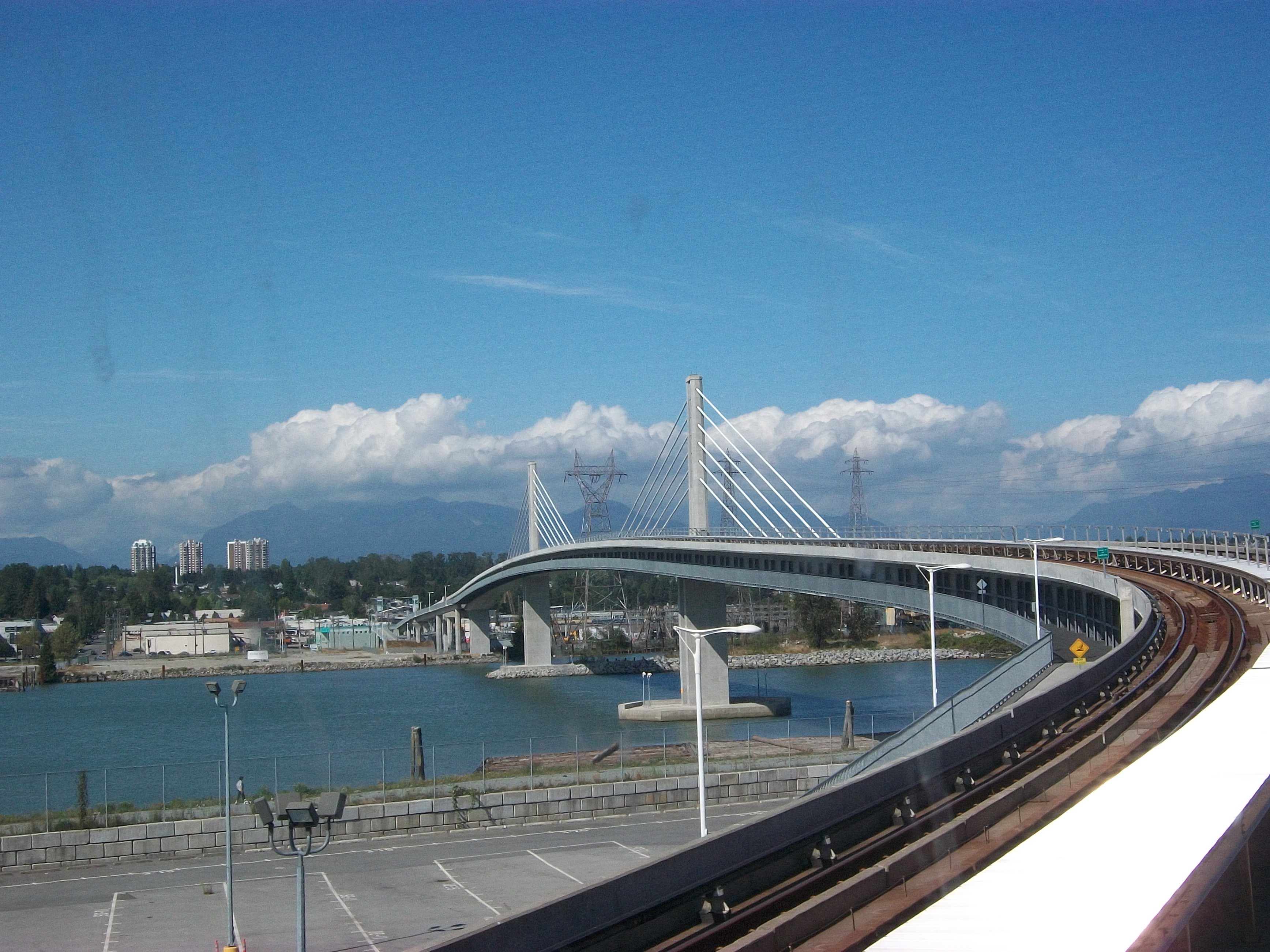
Queensborough Bridge in BC

 https://en.wikipedia.org/wiki/Queensborough_Bridge 

The Queensborough+Bridge in NW should have opened with 3 lanes each way, with 2 wide shoulders, or 2 wide emergency lanes. It became the main bridge and link between NW and Richmond and then eventually, a link to Delta. Thus, the Queensborough+Bridge should have been designed to ultimately have 8 lanes.  

There is still enough space just east of the Queensborough+Bridge for there to be a 4 lane northbound bridge. Thus, two 4 lane bridges would allow for 3 general lanes each way, plus the 4th being an express or BRT lane & route between NW and YVR. 

Since there is no direct express bus route between NW, Richmond & YVR, an improved Highway_91A and Highway_91 would be of great regional benefit.

https://en.wikipedia.org/wiki/Queensborough,_New_Westminster

https://en.wikipedia.org/wiki/New_Westminster 


https://jfdatalinks.blogspot.com/search?q=Queensborough+Bridge+in+BC

Monday, August 31, 2026

Why New York City has a Two-Car Subway Train and provincial Vancouver is stuck with a 2 car airport train

 https://www.youtube.com/watch?v=xH37SqlW0Ks 

https://en.wikipedia.org/wiki/Franklin_Avenue_Shuttle 

https://en.wikipedia.org/wiki/R68_(New_York_City_Subway_car) 75-foot (22.86 m) length for each car. So roughly, a 2 car joke of a train is almost 46 m, or 150 ft. The absurd Canada_Line-Stations with its 2 car trains are in the 40 m to 50 m range. Thus, only two car & 2.5 car trains are only possible. In contrast, a 9 car Montreal_Metro train can be up to 152.5 m, or 500 ft.

Train length
  • 2 car train: 150 feet (46 m)
  • 4 car train: 300 feet (91 m)
  • 8 car train: 600 feet (180 m)

https://en.wikipedia.org/wiki/R68_(New_York_City_Subway_car)#Description So, an 8 car, 600 foot long train is 100 feet longer than a 500 foot, 9 car Montreal train. 

The end of the line for the Franklin_Avenue_Shuttle is only a single track platform. 

Unfortunately, the YVR and the Richmond end if the Canada_Line stations are also a single track platforms. Even if this was initially decided as a cost saving measure, a double track guideway still should have been built. Then, a proper double track station could eventually be completed. Especially if the line is ever extended to the Delta Ferry terminal.

The YVR-Airport_station was deliberately designed to be narrower and shorter than what a proper big city airport station should be. Its another example of the unofficial BCMV reducing and thwarting the scale of things. 

https://en.wikipedia.org/wiki/Pearson_Airport_station Almost like REM quality for Toronto, but not for provincial Vancouver. https://www.upexpress.com/en/up-express-stations/pearson-station , https://www.torontopearson.com/en/transportation-and-parking/up-express Wow, Toronto like Perth can run 3 car big city type trains. https://en.wikipedia.org/wiki/Union_Pearson_Express#Rolling_stock Vancouver can only hope for a 2.5 car train, someday. 

https://en.wikipedia.org/wiki/Union_Pearson_Express#Route Sometimes, a 2 car joke of a train might be OK to start with, but there should already be enough station clearance for at least 3-5 car trains. Then, as long as its a walk-through train, Selective_Door_Operation (SDO) can make it possible to add an extra car at both ends of a short train. SDO can be an intermediate step before having to extensively lighten each station. 

Stubborn, backwards Vancouver will eventually have to seriously consider SDO in order to have longer big city type trains. Unfortunately, as long as its stuck in the BC backwater mentality or under the spell of the BCMV, things won't improve.

https://canada.constructconnect.com/dcn/news/projects/2026/05/montreals-airport-rem-station-will-have-signature-iceberg-motif , https://montrealgazette.com/news/rem-has-begun-testing-trains-on-airport-branch Of course the YUL-P.E. Trudeau_station, like the Honolulu Airport station, will be longer and wider than the one at YVR.

Perhaps the short, single track & platform at the YVR-Airport_Station would be impressive if it were in Victoria, Prince George, Kamloops or Kelowna, but its hardly impressive when compared to the SeaTac/Airport_station, Portland_Airport_station, Lelepaua_station in Honolulu, Brisbane_Airport station, Sydney_Airport stations, the future Melbourne_Airport station and Perth_Airport station. The scale of the San_Francisco_International_Airport_station, which can accommodate 10 car trains, is on a whole other scale. All major airports and their train stations in Asia & Europe are so far beyond what Canada has. There is no reason as to why Greater Vancouver and some other cities in BC, can't be upgraded to a Pacific Rim infrastructure level, instead of  being stuck in a perpetual BC backwater mindset. 

The VMV, under the umbrella of the larger BCMV, is such a horrible impediment and it doesn't even officially exist. 

Monday, July 27, 2026

Major water tunnel project between Richmond and Delta put off a few years

 https://www.westerninvestor.com/british-columbia/major-water-tunnel-project-between-richmond-and-delta-put-off-a-few-years-12580852 

Just like the new highway tunnel is pushed back to at least 2031. 

There should have been better highway, LRT and freshwater crossings between Richmond and Delta decades ago. Unfortunately, in backwards BC, things take a very long time to get done and not always properly or efficiently.

Wednesday, July 15, 2026

Richmond has announced that it is starting to roll out the new residential speed limit that’ll apply citywide.

 https://dailyhive.com/vancouver/richmond-drivers-speed-limit-30 

While Richmond has a couple of freeways, having slower residential streets makes sense. However, the major streets and roads require faster speeds than a country road, but still slower than a freeway. Richmond has airport road traffic and lots of truck traffic between Vancouver, Delta & NW.

Monday, July 6, 2026

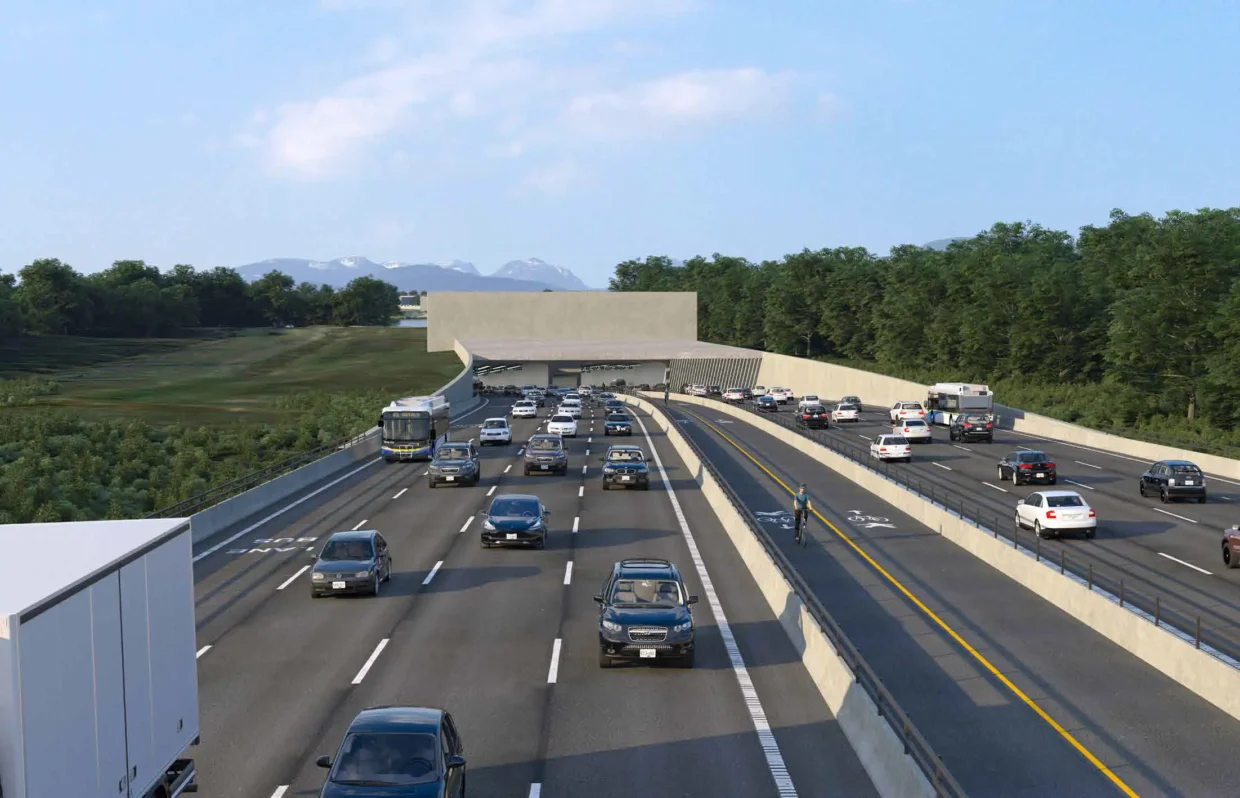
New replacement George Massey Tunnel to cost $8.5 billion and opening in September 2031

 https://dailyhive.com/vancouver/george-massey-tunnel-new-replacement-cost-timeline-update 

Of course with all the extra delays costs, there still won't be an LRT tube and no HOV lanes. While the new tunnel will be 4 lanes each way, there should have been an extra section for 2 LRT tracks and 2 rapid bus lanes. BC has a problem providing 24hr rapid rail transportation, so 24hr BRT is essential. 

A 10 lane version of an Alex_Fraser_Bridge with a provision for LRT, could have been completed a few years ago. However, just because some people didn't want a bridge crossing that part of the river, the plan was scrapped. The result is more cost and delay in what should have been completed a few decades ago. 

If ever a proper LRT and rapid bus crossing can be built parallel to the new tunnel, then that 8 lane tunnel could still have 3 general lanes each way, plus the 4th being an HOV lane. A parallel LRT and rapid bus needs to be built between Richmond and Delta so that there can be an efficient connection between YVR and the 2 ferry terminals.

Something like a Tilikum_Crossing between Richmond and Delta should have already been built decades ago, but there just isn't proper transportation planning in backwards BC.

Either an extension of an improved YVR-Canada Line, or an LRT like the C Train or MAX_Train. Since such a train won't be running 24 hours a day, there would need to be a Rapid bus_crossing as well. Such redundancy is important, especially if there is an occasional problem with the train. A Streetcar_Crossing would also be nice, because the Skytrain, LRT and BRT can't go everywhere. Where as express and local buses and streetcars can fill in the gaps. 

Of course more bicycle and footpaths can be a great improvement.  


https://jfdatalinks.blogspot.com/search?q=Richmond-Delta+Tunnel

Tuesday, June 2, 2026

Burnaby 2050 sets the city’s long game

 https://www.straight.com/burnaby/burnaby-2050-sets-citys-long-game 

While Burnaby is smaller in area and population compared to Vancouver, its a lot bigger than tiny NW.

https://www.straight.com/burnaby/how-burnaby-approached-public-engagement-in-creating-its-latest-plan 

Unlike Vancouver, Burnaby can build taller than Vancouver, because it isn't bound by Vancouver's imposed height restrictions.

https://www.straight.com/burnaby/what-burnaby-builds-next-depends-on-urban-design-getting-it-right 

Unlike Vancouver, Burnaby has more than just a few kilometers of freeway going through it. The highway right of way was acquired when Burnaby was still mostly undeveloped. That's the same case for Richmond, Delta, Surrey, Langley & Abbotsford. 

https://www.straight.com/burnaby/in-defense-of-burnaby-middle-child-of-metro-vancouver 

https://en.wikipedia.org/wiki/British_Columbia_Highway_1#Lower_Mainland_section There should eventually be an elevated, high-capacity interregional commuter train along BC_Highway_1. However, BC takes a very slow approach towards dealing with congestion and mobility.

Sunday, May 3, 2026

What is Happening with Lansdowne Mall in Richmond?

 https://www.youtube.com/watch?v=H9_GQWyo8h0 

Boston and Las_Vegas allow much taller buildings than what's permitted in Richmond. Those cities don't use their airport as an excuse to have stumps. Even San_Diego has taller towers than Richmond. 

Despite New_Orleans being on a delta, it has much taller buildings than Richmond as well. 

Boston & LV have longer trains, while N.O. never totally got rid of their streetcars like Richmond had.

https://en.wikipedia.org/wiki/Lansdowne_station_(SkyTrain) A little 2 car joke of a train that's expected to do the job of what a big size or at least medium size city can do. 

https://en.wikipedia.org/wiki/Rseau_express_metropolitain#Rolling_stock 4 cars.

https://en.wikipedia.org/wiki/Skyline_(Honolulu) 4 cars.

Fortunately, Montreal & Honolulu opted to not have something like a 2 car YVR-C Line joke of a train. 

When stations can't easily be extended, Selective_door_operation can turn a 4 car rain into a 6 car train.

https://en.wikipedia.org/wiki/Selective_door_operation#International_variations  

Unfortunately, the YVR-Canada_Line wasn't designed to have 4 or 5 car trains. The stations were only designed to just accommodate a 2.5 car train. However, with Selective_door_operation, a 2.5 car train could become a 4.5 car train. Perhaps, even a 5 car train with 3 full-length cars accessing the station platform. To still be running a 2 car train to Richmond and a Richmond-Delta tunnel that's still only 2 lanes each way, is a very sad joke.

So much more should have been done between 1986 and 2010. Especially, since 2010 and 2026.

https://vancouver.citynews.ca/2026/05/02/expo-86-40-years-later-the-memories-live-on 

Everything is so much more difficult & costly to do in backwards BC.

Wednesday, April 22, 2026

Temporary stal̕əw̓asəm Bridge closure will impact all traffic this weekend for construction

 https://dailyhive.com/vancouver/bridge-temporary-closure-surrey-new-westminster 

Lets open a bridge without 2 wide emergency lanes or 2 wide shoulders. Especially make sure that it didn't open with enough space for 2 bus lanes and 2 HOV lanes. Of course don't design the Bridge to have a potential lower deck for trucks and trains. Its an instant classic BC bottleneck chokepoint! 

https://www.pattullobridgereplacement.ca/about/projectoverview Just like the SkyBridge, apparently, there was no need to open it with 2 bus lanes, despite the train not running 24/7.

Unfortunately, the Bridges_over_the_Fraser_River in the BC Lower_Mainland just weren't designed to have proper bus lanes. Its so strange that the narrow SkyBridge was_for_SkyTrain only. 

Just like the new tunnel between Richmond and delta, there is no provision for 2 train tracks. While there are 2 bus lanes, there won't be any exclusive HOV lanes. Eventually, there will have to be a proper train and rapid bus bridge or another tunnel beside it. 

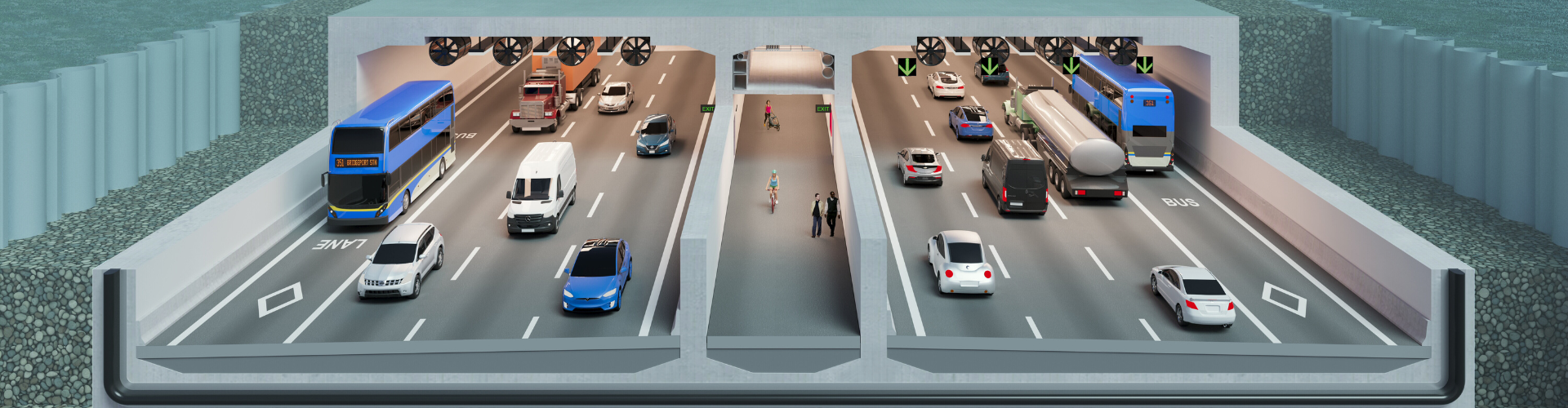
https://www.highway99tunnel.ca/project-overview-frt "The Fraser River Tunnel Project includes a new, eight-lane immersed tube tunnel that will replace the existing George Massey Tunnel on Highway 99. The new tunnel will have three vehicle lanes and a dedicated transit lane in each direction, with a separated active transportation corridor for cyclists and pedestrians." 

Given that this is supposed to be a major port region, a train and rapid bus crossing needs to eventually be there. A train connecting YVR to the Tsawwassen Ferry terminal and 2 rapid bus lanes. Then the main tunnel could still provide 3 general lanes each way, plus a HOV lane each way. https://www.infrastructurebc.com/project/fraser-river-tunnel-project/  

Unfortunately, proper big city size infrastructure is a difficult thing to achieve in backwards BC. Since the decision was made to not have a rail component in the new highway99tunnel, the middle 2 bike lanes should have been wide enough to eventually become 2 rapid bus lanes. Then a new bridge or parallel tunnel could have a YVR to ferry terminal train, plus 2 truck lanes, 2 bike lanes an 2 sidewalks. 

This is what a proper big regional port crossing should be like, but for backwater BC, its a different set of priorities. 

Tuesday, March 31, 2026

George Massey Tunnel Replacement

 https://en.wikipedia.org/wiki/George_Massey_Tunnel#Replacement 3 lanes each way and a bus lane each way.

https://dailyhive.com/vancouver/george-massey-tunnel-new-replacement-potential-cost-increase

https://www.cbc.ca/news/canada/british-columbia/massey-tunnel-design-team-chosen-1.7273022# 

https://www.highway99tunnel.ca Of course the new tunnel is missing the crucial train section.

While a 10 lane bridge would have allowed a provision for a train to eventually run between Richmond and Delta, such a train would go against the congestive planning mentality that is BC. 

Of course a train tunnel or bridge will have to eventually link Richmond and Delta, someday. Despite an opportunity to improve regional rail transportation, the BC government just doesn't see it as important enough of a project yet. 


https://jfdatalinks.blogspot.com/search?q=Richmond-Delta+Tunnel

Sunday, March 29, 2026

YVR-Canada Line and REM Train in Montreal

 https://www.youtube.com/watch?v=a1ouk0VifwM&t=42s Its as if the YVR-Canada Line had to be built as a symbolically small city train for provincial Vancouver. Urban transportation infrastructure can be designed in ways that can double or even triple capacity to meet future demand. Unfortunately, its very difficult to build anything in backwards BC with significant future capacity in mind.

Ultimately, the YVR-Canada Line should have had level station clearances to eventually be able to accommodate 5-10 car trains. Unfortunately, in typical backwards BC planning the stations weren't even designed with enough level clearance to accommodate 5 car trains. The joke that is the Canada Line only has a level station clearance of 50m to eventually accommodate just a 2.5 car train. 

Most other cities actually build long stations to accommodate long trains, right in the first place. Or, at least allow for enough level clearance so that the stations can eventually be doubled or tripled in length. 

The YVR-Canada Line should have started with the Vancouver & Richmond segment, then the Vancouver and Horseshoe+Bay+ferry+terminal segment. Then finally, the YVR to Delta and the Tsawwassen+ferry+terminal through a proper Richmond-Delta+Tunnel or bridge crossing. 

The short SkyTrain Stations in Greater Vancouver https://www.youtube.com/watch?v=6Qg78Bmf1fk

Unfortunately, proper big city transportation planning is very difficult to achieve in backwards BC. So many things are watered down in small-scale Vancouver.

-----------------------------------------------------------------------

Montreal’s Biggest REM Expansion Yet https://www.youtube.com/watch?v=4G1oeIAfxDU&t=106s 

The Montreal REM https://www.youtube.com/watch?v=g9O6RzsXIqQ 

While the REM was designed to help the Metro, it should have the capability to be gradually expanded. Eventually, REM trains should be lengthened from 4 car trains to 6 car trains, perhaps even 8. 

In contrast, every Skytrain line should have been designed with enough level future station clearance to eventually accommodate a train as long as a 152.5 m (500 ft.) long Montreal Metro train. The first 2 Skytrain lines have 80m stations and the joke that is the Canada Line only has 50m stations. 

While the first 2 lines can accommodate 5 car trains, the C Line wasn't designed to accommodate 5 car trains. Just 2.5 car trains, someday. 

Despite there being such a symbolic push for Vancouver to keep having short trains, narrow bridges and stumpy buildings, things are gradually changing in backwards BC. The Vancouver or BC Mind Virus should have been challenged decades ago, but too many loud people wanted to perpetuate the, KEEP THINGS SMALL AND INDEQUATE agenda.

Given how most of the bridges in Greater Vancouver are so narrow, there isn't enough room for proper bus and HOV lanes, or even wide emergency lanes. One would think that at least the trains & stations would have been designed to eventually be doubled or tripled in length. But that would go against the mutigenerational congestive planning agenda. That's why there still is only a 3 lane LGB when there should have been at least a parallel bus, HOV and train tunnel. The Pattullo+Bridge replacement didn't open with 2 bus and 2 HOV lanes, not even wide shoulders or emergency lanes. NW really likes the congestive planning approach. Of course the new tunnel between Richmond and Delta won't have an additional provision for a train tube. This will also help to perpetuate the congestive transportation mandate. 

Fortunately, Selective_door_operation technology can eventually allow more sensible transportation planners to enable longer trains. 

https://en.wikipedia.org/wiki/Selective_door_operation#International_variations , https://www.youtube.com/watch?v=YdH5d1ZthmM 

This means that a 5 car Skytrain (85m) could eventually become a 7 car train, despite the 80m stations. 

https://en.wikipedia.org/wiki/SkyTrain_(Vancouver)_rolling_stock#Alstom_Mark_V Thus, an 80m train can become a 117m train.

A two car and 2.5 car (50m) train on the multibillion dollar Canada Line is so absurd and inept! With some slight station modifications, there could be a potential to eventually accommodate three, 20m cars at the very short platforms. Then, once 3 car trains could become possible, its just a matter of having an extra 20m car at both ends of each train. Thus, a 5 car train of 100m is so much better than a 50m joke of a train. 

https://en.wikipedia.org/wiki/SkyTrain_(Vancouver)#Alstom_Mark_V_fleet 


https://jfdatalinks.blogspot.com/search?q=SkyTrain-Canada+Line

https://jfdatalinks.blogspot.com/search?q=REM+Train

Friday, March 13, 2026

The Dunsmuir Tunnel in Downtown Vancouver, SkyTrain service to be reduced on weekends until June

https://dailyhive.com/vancouver/downtown-vancouver-skytrain-service-delays-weekends Had the old railway tunnel been originally designed to be double tracked, it could have been converted into a double level, 4 track LRT tunnel, instead of a 2 track LRT tunnel.

Ideally, if a subway or metro line doesn't have 4 tracks, 3 would be the next best thing. Then, 2 tracks could always remain operational while the 3rd is being repaired. For the most part, Skytrain is just a double track system. Unfortunately, the YVR-Canada Line is even single tracked at the end of the line in YVR and in downtown Richmond. 

The Canada Line should have been the 1st phase of an eventual south extension to Delta and the BC ferry terminal. Plus, a north extension from Waterfront_station_in Vancouver to Lonsdale_Quay and the ferry terminal. This would be a vital link between Canada_Line and the two regional ferry terminals. Unfortunately, Vancouver and BC are about maintaining congestion and transportation inefficiency.

Perhaps someday, if Vancouver is ever allowed to function like a proper big city, the Dunsmuir_Tunnel could be extended under Stanley Park and the 1st Narrows to Park Royal and to the ferry terminal. However, what's more likely to happen is that after the Dunsmuir_Tunnel reaches Waterfront_station, the line will continue east. 

https://evelazarus.com/the-dunsmuir-tunnel 

https://buzzer.translink.ca/2022/04/new-tunnel-technology-will-transform-your-skytrain-trip/ 

https://searcharchives.vancouver.ca/construction-progress-photo-of-cpr-dunsmuir-tunnel-10 

https://searcharchives.vancouver.ca/construction-progress-photo-of-cpr-dunsmuir-tunnel-9

Thursday, March 5, 2026

Why the Widest Freeway on Earth still Made Traffic Worse in Houston

 https://www.youtube.com/watch?v=vMwKgT4ZUvQ It is utterly foolish to not have enough space for a commuter train to run above, or in the middle or underneath the widest highways. 

https://kinder.rice.edu/urbanedge/houstons-15-year-growth-three-charts Simply building wide roads like in Houston, L.A. and Toronto is just as bad as having mostly narrow bridges in Greater Vancouver.  

Whether its 10 lanes or 20 lanes wide, there should always be 2 dedicated bus lanes and 2 HOV lanes. While the highway will get clogged up during the day, at least the buses and trains can still get through quickly. 

The Pattullo+Bridge+replacement is only 2 lanes each way with narrow shoulders. It should have opened with enough space for 2 bus lanes and 2 HOV lanes, but that would go against the congestive urban planning mentality of BC.

The Samuel-De+Champlain+Bridge in Montreal is just as good as similar wide highway and train bridges in Seattle+and+Perth. All were possible, simply because they aren't limited by anything like the Vancouver and BC Mind Virus.

The narrow-minded Vancouver and BC approach is to try to funnel everything into just 2 or 3 lanes each way. Then there just isn't enough space to have 2 bus lanes and 2 HOV lanes. Greater Vancouver has certainly gone in the extreme opposite direction of Houston, L.A. and Toronto...

A wide Greater Houston highway has lots of space, but without 2 bus lanes and 2 HOV lanes, everything gets plugged up. In contrast, Greater Vancouver has most of its bridges and highways so damn narrow, there isn't enough space to accommodate a proper express bus and HOV network. 

This deliberate backwards BC bottleneck-chokepoint planning approach is totally absurd. 

There is no commuter train tunnel near the Lions+Gate+Bridge or even for the Massey+Tunnel+replacement. Thus, they are the best examples of BC choke-point urban planning. Despite having twice the lanes as the inept 3 lane LGB, the newer Iron+Bridge never had any emergency lanes. A bus and HOV bridge was never built next to it. Plus, no commuter train bridge. It's another fine example of BC choke-point, bottleneck planning. 

A north and south Boundary+Road bridge system would provide direct access between the North+Shore, Richmond+and+Delta, but that's what a proper big city would do. Backwards BC has quite a problem with thinking and building big. The 2 car Canada+Line is another example. Don't build it to at least have a 5 car train, just design it to only have 2.5 car trains, someday.

https://en.wikipedia.org/wiki/Greater_Houston#Transportation

https://en.wikipedia.org/wiki/Interstate_610_(Texas)#Lane_configurations There is a point when simply adding more lanes won't provide long-term improvement. However, when combined with dedicated bus and HOV lanes, other options become available. Especially, if there is rail rapid transit and commuter rail as well. 

https://en.wikipedia.org/wiki/METRORail While not as extensive as DART_rail, it still works like a tram-train. 

Of course longer streetcars or tram-trains are still slow on the actual surface street segments.

https://en.wikipedia.org/wiki/Trams_in_Melbourne#System_upgrades 

https://en.wikipedia.org/wiki/Toronto_streetcar_system

https://en.wikipedia.org/wiki/Muni_Metro SF 


In the case of backwards BC, the new Richmond-Delta+Tunnel should have been designed to have 8 lanes for the first phase. Then a 2nd phase should have had a 2 lane BRT tunnel, a 2 lane truck tunnel and a provision for 2 LRT tracks. Then the first phase of the new tunnel could be 3 lanes each way, with the 4th being a HOV lane. 

Had this new tunnel or bridge been built decades ago, it would have cost half as much. Unfortunately, its like a choice was made for the new tunnel. Two bus lanes, but no HOV lanes and certainly no separate section for BRT and LRT. Apparently, an LRT line between YVR and the Tsawwassen Ferry terminal would have made too much sense.

Wednesday, December 3, 2025

Westham Island Bridge, B.C....

https://en.wikipedia.org/wiki/Westham_Island_Bridge So, it would take until the mid 2020s for this wagon road era bridge to be seriously considered for upgrading.

 https://dailyhive.com/vancouver/westham-island-bridge-new-replacement-crossing-planning-transink-delta 

https://deltasheritage.com/buildings/wib.html Whenever a new bridge is built, it should have 2 wide lanes, 2 bike lanes & 2 sidewalks. 

https://lifesincrediblejourney.com/explore-historic-westham-island/

https://seabc.ca/rehabilitation-of-westham-island-bridge-and-alexandra-bridge/ 


The Marpole_Bridge_(1889) was another wagon road era crossing that took a very long time to be upgraded. 

https://en.wikipedia.org/wiki/Marpole_Bridge_(1889)#Congestion_and_replacement 


The 1970s Arthur_Laing_Bridge (ALB) should have had at least 6 lanes, plus 2 wide shoulders. 

https://en.wikipedia.org/wiki/Arthur_Laing_Bridge#Since_opening There also should have been 2 sidewalks & 2 bike lanes. By now, there should have been a bus+and+bike+bridge built next to it.


Several decades after the removal of the (wagon road) Fraser_Street_Bridge_(1894), no replacement has ever been built. 

https://en.wikipedia.org/wiki/Fraser_Street_Bridge_(1894)#Provincial_government_headache  

At the very least, it should have been replaced with a bus+and+bike+bridge in the 1970s.

https://www.richmond-news.com/local-news/photos-and-video-was-this-the-unluckiest-bridge-between-richmond-and-vancouver-4475444 However by now, there should have been a new 4 lane bridge with 2 emergency lanes, 2 bike lanes & 2 sidewalks. 

https://evelazarus.com/the-fraser-street-swing-span-bridge


The joke that is the Knight_Street_Bridge (KSB) was deliberately designed to be another quintessential BC bottleneck-chokepoint. The bridge should have opened with 6 lanes & 2 wide shoulders or emergency lanes. Pulse, 2 wide sidewalks & 2 bike lanes. 

https://en.wikipedia.org/wiki/Knight_Street_Bridge#Maintenance,_upgrades_and_incidents Instead, the middle of the bridge is just 2 lanes each way, with 2 narrow sidewalks & no bike separate bike lanes. The KSB should have had a parallel bus+and+bike+bridge built next to it decades ago.  


https://jfdatalinks.blogspot.com/search?q=Westham+Island

Thursday, November 6, 2025

Expect noise, vibration during upcoming Massey Tunnel replacement

 https://www.delta-optimist.com/local-news/expect-noise-vibration-during-upcoming-massey-tunnel-replacement-11436394 This B$ should have been done a few decades ago.

A 10 lane bridge with 2 bus lanes, 2 HOV lanes & 2 wide shoulder-emergency lanes, plus at least 3 general lanes each way, could have been a nice wide crossing. Some 12 lanes, including the 2 emergency lanes. Plus, a provision for at least 2 LRT tracks. 

Instead, it's a 3 lane each way tunnel with the 4th being a bus lane. No HOV lanes and no emergency lanes & especially, no train tube section. 

So, just like the YVR-Canada (embarrassment) Line, this new 8 lane tunnel will eventually require some major upgrades. 

Eventually, a YVR-Canada Line bridge or tunnel will have to be built so that someday, trains can go between the airport and the ferry terminal. Such a train crossing should be parallel to the new highway tunnel. A new train tunnel or bridge should have at least 3 tracks, 2 rapid bus lanes and 2 bike lanes and sidewalks. Then the bus lanes in the highway tunnel could become HOV lanes. 


https://jfdatalinks.blogspot.com/search?q=Richmond-Delta+Tunnel

https://jfdatalinks.blogspot.com/search?q=Massey+Tunnel+replacement 

https://jfdatalinks.blogspot.com/search?q=Richmond+and+Delta

Wednesday, October 15, 2025

The Battle continues over Vancouver Aquatic Centre

 https://globalnews.ca/video/11480236/battle-continues-over-vancouver-aquatic-centre-renovations 

There isn't officially a Vancouver Mind Virus (VMV), but somehow through the decades, the KEEP VANCOUVER SMAL AND BACKWARDS mentality keeps manifesting.

https://cityhallwatch.wordpress.com/2025/10/15/aquatic-centre-25vs50m-officials-misled "This scandal exposes how Vancouver’s development approval processes can be corrupted if staff predetermine outcomes and manufacture justifications rather than conducting evidence-based analysis. If municipal staff can systematically mislead elected representatives on a project this significant—with technical evidence this clear—what other decisions have been corrupted in the past or could be corrupted in the future?"

Why have a modern full-size pool, when there can be a half size, Half-A$$ED pool? That's the VMV resurfacing again.

https://vancouversun.com/news/proposed-vancouver-aquatic-centre-seeks-height-density-relaxations "Swimmers have mounted a court petition over plans to replace the 50-metre Olympic-sized pool with one half that length"

A scaled down Vancouver+Aquatic+Centre is part of the pay more to get less mentality. One of the most obvious ways to perpetuate the BC antigrowth agenda is to go backwards and build smaller infrastructure. Where does the money go if it's not always going towards proper big city size infrastructure?

Half sized buildings, half sized trains, half sized bridges, that's the VMV & BCMV in action. 

https://jfdatalinks.blogspot.com/search?q=SHIT-BOX 

https://jfdatalinks.blogspot.com/search?q=Lions+Gate+Bridge An absurd 3 lane bridge without a parallel bus and train tunnel to help relieve this quintessential chokepoint. 

https://jfdatalinks.blogspot.com/search?q=Canada+Line A 2 car train that should have started with 5 cars, but can only be expanded into a 2.5 car train, someday. 

https://jfdatalinks.blogspot.com/search?q=Richmond-Delta+Tunnel No provision for a train tunnel, because that would make it easier to have a line connecting YVR with the Tsawwassen+ferry+terminal. Just like there is no desire to have a train between YVR and the Horseshoe+Bay+ferry+terminal.

The Vancouver+Mind+Virus (VMV) and the BC Mind Virus (BCMV) are so horrible, because they keep stunting or thwarting the potential of BC by watering down the infrastructure. 


https://jfdatalinks.blogspot.com/search?q=VMV

Tuesday, October 14, 2025

Granville Bridge, Vancouver, etc.

 https://vancouver.ca/streets-transportation/granville-bridge.aspx 

Even after 3 tries, Vancouver still couldn't quite get the Granville_Street_Bridge (GSB) correct. Of course the 3rd bridge wasn't designed to have a lower deck for streetcars or tram-trains. Even though it was generally designed to be a car, truck and bus bridge, the sidewalks should have been double width and have an inner railing. If the city couldn't wait until late March, it should have had the official dedication in early March, not in crappy February 1954.

https://en.wikipedia.org/wiki/Granville_Street_Bridge#Third_bridge_(1954) "On February 4, 1954, the current Granville Street Bridge opened to traffic after five years of planning and construction; its dedication ceremony was attended by 5,000 spectators after it had been delayed a week due to heavy snow." 

https://en.wikipedia.org/wiki/Granville_Street_Bridge#21st_century Unfortunatly, new bike lanes and extra sidewalks couldn't be installed below the 8 lane deck. Thus, Vancouver went for strike 3 and removed 2 lanes from the bridge. The Burrard+Street+Bridge lost 2 lanes and the Cambie+Bridge lost 1 lane. A bike and foot bridge could have been built on the west side of the Burrard Bridge, then no lanes would have been removed. The Cambie Bridge already had a wide sidewalk on its east side. The west sidewalk should have been widened, then no lane would have been removed. 

The Granville+Bridge could have had 6 lanes and 2 bus lanes. Now, if there are ever 2 bus lanes, there will only be 2 general lanes each way.

Several cities around the world have bike & foot bridges and don't have to remove lanes from the existing bridges.

For such a congested city to have removed 5 lanes from 3 bridges, could there even be more of a reduction of lanes Well, there are some who would like to have the LGB just for bike and foot traffic.

https://globalnews.ca/news/1946543/government-says-lions-gate-bridge-will-not-close-to-cars-come-2030 

That would be OK if an 8 lane tunnel could be built near it. Such a First Narrows Tunnel could have 3 lanes each way, plus a bus lane each way. A parallel triple track commuter train tunnel should be built close to it as well.

The new & improved tunnel between Richmond and Delta won't be ready until 2030. Since things move so slow in constipated, backwards BC, perhaps a First_Narrows_Tunnel might not be completed until 2040, or even 2050.


https://jfdatalinks.blogspot.com/search?q=Granville+Bridge

Friday, October 10, 2025

Rainbow Bridge (Tokyo)

 https://en.wikipedia.org/wiki/Rainbow_Bridge_(Tokyo) Unfortunatly, such double deck bridges just aren't allowed in Vancouver and BC in general.

https://www.instagram.com/p/DEjugfrP3wS/?img_index=2 

https://www.kanpai-japan.com/tokyo/rainbow-bridge 

https://www.alamy.com/rainbow-bridge-to-rainbow-town-daiba-tokyo-japan-image921088.html Tokyo has no problems with curves and loops. Unfortunatly, the Vancouver Mind Virus (VMV) and the BC Mind Virus keeps the city and metropolitan region as a warped mess just going round in circles.

https://www.gov-online.go.jp/eng/publicity/book/hlj/html/202403/202403_02_en.html 

https://japannews.yomiuri.co.jp/society/general-news/20230828-132566/ 

https://www.tokyobybike.com/2014/08/tokyos-rainbow-bridge-by-bicycle.html 

https://jfdatalinks.blogspot.com/search?q=Pattullo+Bridge+replacement Will open with only 4 lanes, not 6 or 8 and no provision for a lower deck. Another fine example of BC bottleneck planning. There just isn't any interest in correcting most of the chokepoints in Greater Vancouver. A key giveaway is the lack of funding for a regional network of bus-bridges. 

https://en.wikipedia.org/wiki/North_Arm_Bridge This should have had 2 tracks for the airport and another 2 tracks for an eventual Vancouver-Richmond & Delta extension to the ferry terminal. 

https://upload.wikimedia.org/wikipedia/commons/f/f9/North_Arm_Bridge_%284378906640%29.jpg

https://upload.wikimedia.org/wikipedia/commons/d/de/North_Arm_Bridge_shot_from_SkyTrain_3622.JPG

Sunday, September 14, 2025

The Boundary Road bridges (BRB)

Unfortunatly, there doesn't seem to be any BRB plan in place.

A North Boundary Road Bridge could provide an excellent BRT crossing between Burnaby and North+Vancouver. This would help to relieve pressure on the Iron Bridge.

https://movementyvr.ca/bby-heights-brt

The same with a South Boundary Roade Bridge with a BRT route between Vancouver and Richmond. 

Then another BRT bridge between Richmond and Delta to the ferry terminal. This could help to relieve some of the pressure on the new tunnel, because it wasn't designed to have 2 HOV lanes & no train section.

https://www.translink.ca/plans-and-projects/projects/bus-projects/rapidbus-projects 


https://jfdatalinks.blogspot.com/search?q=Boundary+Road 

https://jfdatalinks.blogspot.com/search?q=BRT 

https://jfdatalinks.blogspot.com/search?q=Richmond+and+Delta 

https://jfdatalinks.blogspot.com/search?q=Richmond-Delta+Tunnel